



















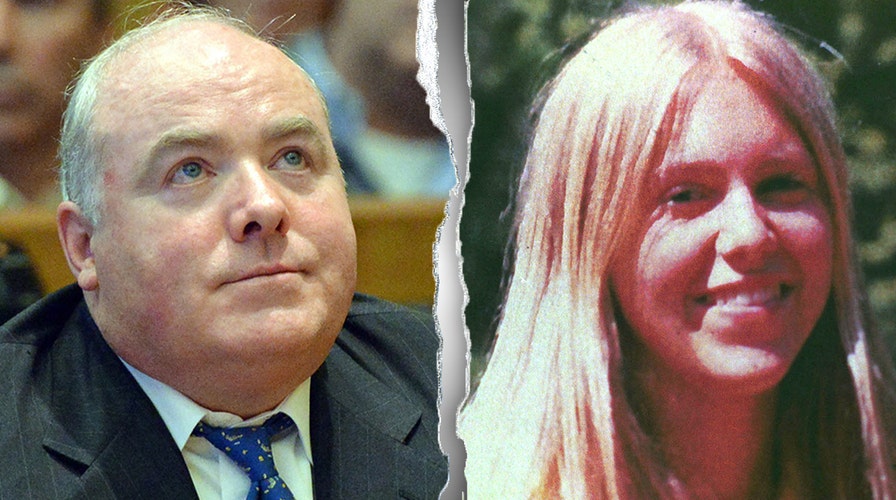
Martha Moxley's brother on Skakel's overturned conviction
John Moxley joins 'The Story' with reaction to the Connecticut court's decision to order a new murder trial for Kennedy cousin Michael Skakel, first found guilty of Martha's murder in 1975.
The Kennedy cousin formerly at the center of the notorious case involving the death of Martha Moxley, the daughter of an affluent Connecticut family, has broken his silence to reveal new loose ends and theories regarding the decades-long mystery.
Michael Skakel, cousin of Robert F. Kennedy Jr., spent 11 years behind bars for the 1975 murder of Martha Moxley. In 2013, Skakel walked out of prison as a free man and later saw his conviction vacated in a move that further deepened the mystery of who Moxley’s true killer is.
In the final episode of NBC News’ podcast, "Dead Certain: The Martha Moxley Murder," several possible suspects and additional evidence were spotlighted, though loose ends regarding the unresolved case still remain, according to Connecticut Insider.
"Being Michael Skakel has been a blessing and a curse. I've met some proudly great people in this world," Michael Skakel said on the podcast.
"At the same time, because of what this trial and this case did to me, people only know what they know. They only know what that box in their living room tells them. And most of it has been bold-faced lies."
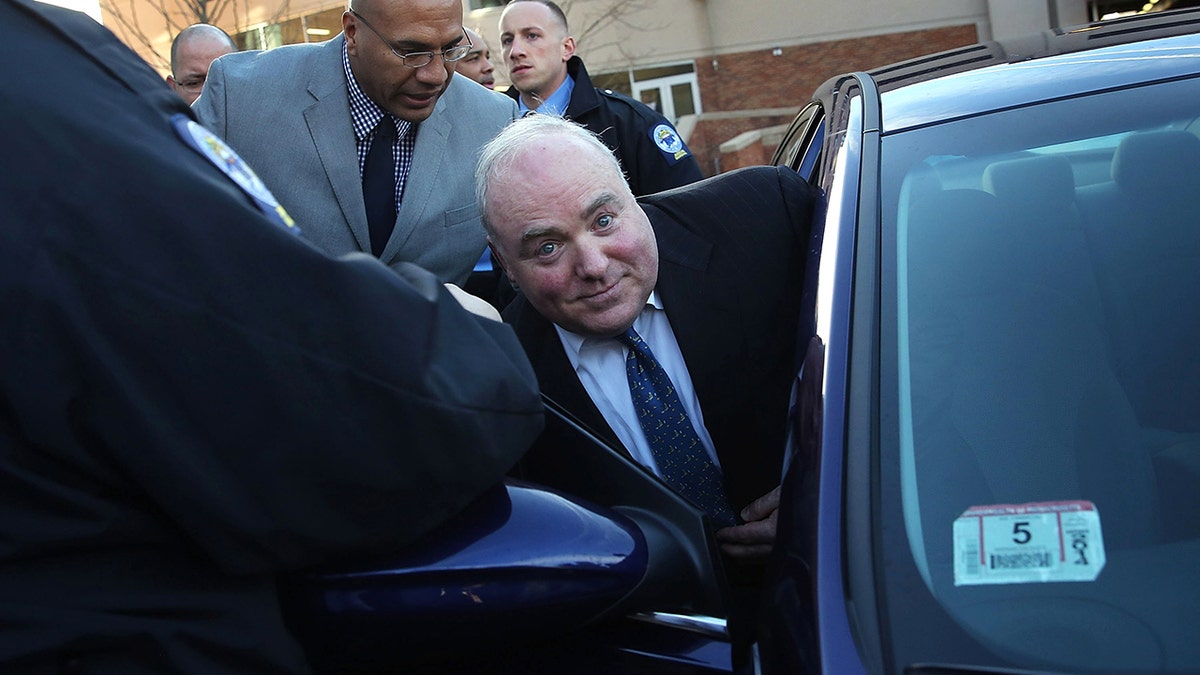
Kennedy relative Michael Skakel gets into a car after walking out of a Stamford, Conn., courthouse in November 2013 after his murder conviction in the death of Martha Moxley was vacated when a judge ruled he did not receive adequate representation in his 2002 trial. (Spencer Platt/Getty Images)
The episode reportedly highlighted a stain found in the Moxley family’s TV room by Theresa Tirado, a maid at the household, one day after the 15-year-old girl was murdered outside of her Greenwich home Oct. 30, 1975.
In Tirado’s account to police at the time, she noticed that Martha Moxley's brother John’s bed was empty and his door was open the morning of the murder, but she had not yet been told the teenager was missing. At 9 a.m., Tirado reportedly heard a loud crash in the house and witnessed John Moxley and a friend, John Harvey, watching television about 15 minutes later.
At around 11 a.m., Tirado told investigators, the two boys went outside right around the same time she heard another loud crash inside the house. The pair then returned to the house briefly before leaving, Connecticut Insider reported.
When Tirado later went into the TV room, she noticed smear marks that were believed to be blood. However, she reportedly wiped up the marks, not realizing what it potentially was.
KENNEDY COUSIN TIED TO MARTHA MOXLEY CASE BREAKS SILENCE 50 YEARS LATER AS MURDER REMAINS UNSOLVED

Martha Moxley when she was 14 years old (Erik Freeland/Corbis via Getty Images)
John Moxley later corroborated Tirado’s account regarding his and Harvey’s whereabouts, though he told investigators he did not hear any crashes coming from inside the house, the outlet reported. He suggested the smear marks could have been a food stain.
However, the potential blood stain was reportedly included in a pretrial memo by attorney Linda Kenney Baden but was never looked into by Skakel’s attorney, Mickey Sherman.
The podcast also noted that Tirado died in 2012.
Additionally, the outlet reported that John Moxley was the fourth individual mentioned in the Sutton Report in the 1990s, with investigators noting that "a few unresolved points still demand clarification and examination."
KENNEDY COUSIN MICHAEL SKAKEL SAYS COPS WITHHELD EVIDENCE IN 1975 MARTHA MOXLEY MURDER PROBE

The Moxley residence in the Bellehaven section of Greenwich, Conn., in 1975. (MediaNews Group/Boston Herald via Getty Images)
Initially, Michael Skakel, Tommy Skakel and tutor Ken Littleton were profiled in the report regarding Moxley’s murder.
One of the points of note regarding John Moxley was reportedly his statement that he returned home around 11 p.m. on Oct. 30 and was awoken by his mother at 3:30 a.m. the next morning to help look for his missing sister.
In 2002, John Moxley testified that he only spent about 15 minutes searching for Martha Moxley, which contradicted his statements to police that he had spent 2½ hours outside and did not return home until 6 a.m., when he then fell asleep on the sofa in the TV room, the outlet reported.
Harvey later claimed John Moxley called him the morning of the teen’s disappearance to help search for her, and the pair searched a pile of brush near the house, a move the Sutton Report reportedly noted was strange. However, the report also pointed out that had the two boys checked the family’s yard, they likely would not have located Martha Moxley’s body.
AMANDA KNOX FIRES BACK AT MATT DAMON OVER CANCEL CULTURE JAIL TIME COMMENTS
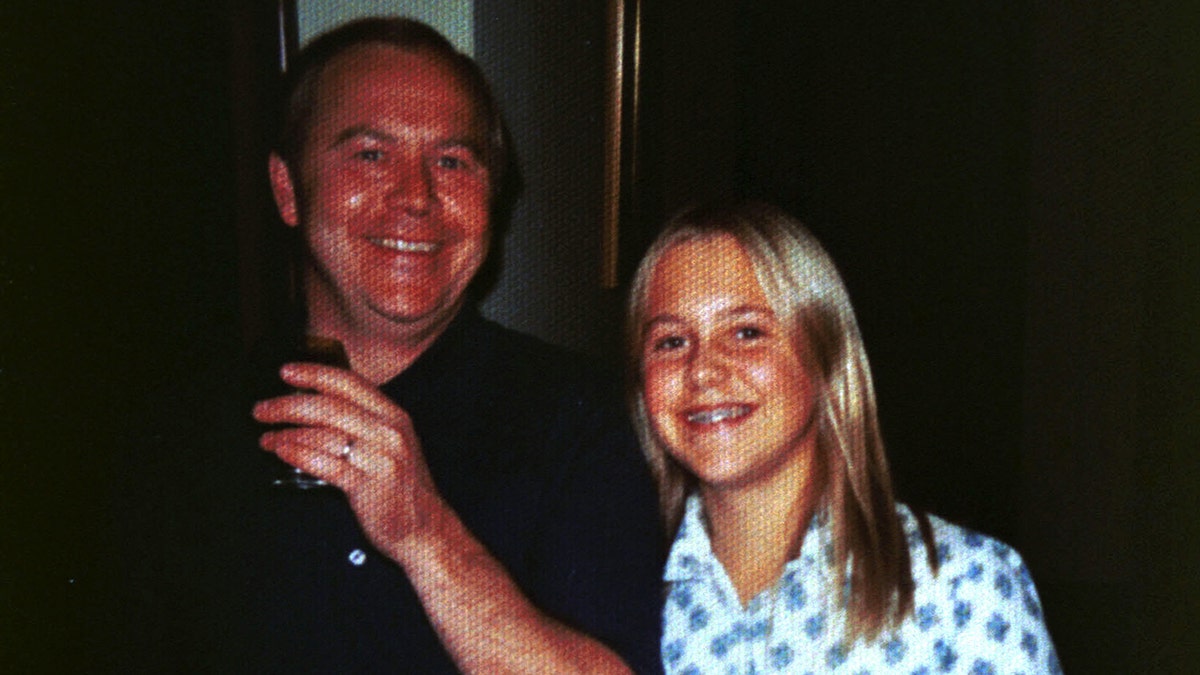
Martha Moxley at 13 with her father, David Moxley (Erik Freeland/Corbis via Getty Images)
John Moxley reportedly said he only became aware of his sister’s death after his football coach mentioned to him at practice that something happened at his house.
The Sutton team later determined John Moxley was not the murderer, with Robert F. Kennedy agreeing with investigators in his book, "Framed: Why Michael Skakel Spent Over a Decade in Prison for a Murder He Didn't Commit."
Additionally, the podcast reportedly pointed to the Skakel household’s handyman and gardener, Franz Wittine, as another guest at the home on "Mischief Night."
Michael Skakel, who was 15 years old at the time of the murder, reportedly revealed Wittine, a regular resident at the house, was the only person who said there were no golf clubs found on the Skakel house lawn despite others saying there were. In a 1991 interview with investigators, Wittine reportedly said he had no memory of saying that.
Martha Moxley was found beaten and stabbed to death by a golf club in the yard of her family’s home on "Mischief Night."
WATCH FRAMED: THE AMANDA KNOX STORY ON FOX NATION
One year after the murder, Wittine reportedly resigned from his position with the Skakel family and passed a polygraph test in 1991.
Wittine died in 1997.
The podcast pointed out various loose ends involving the investigation, including the lack of forensic evidence in the case, Connecticut Insider reported.
FOLLOW THE FOX TRUE CRIME TEAM ON X
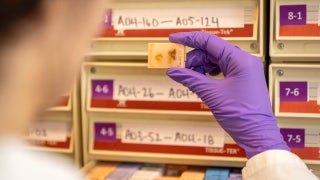
Swabs taken from Martha Moxley’s groin area in an effort to rule out sexual assault were never introduced as evidence in the trial and were considered lost until a NBC News’ production team reached out to a Connecticut forensics team, which confirmed the evidence remained in state custody.
The samples were later sent for testing in 2018 and were reportedly determined to only contain Martha Moxley’s DNA.
SIGN UP TO GET TRUE CRIME NEWSLETTER
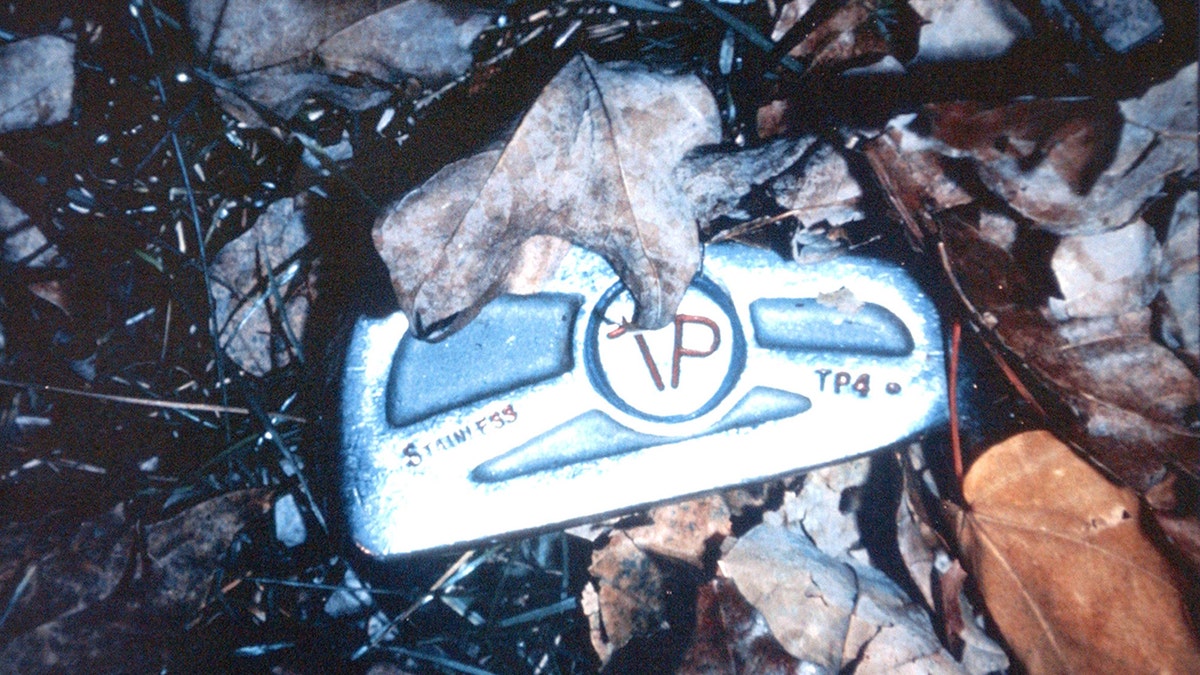
A photo from the trial evidence showing a close-up of the golf club head. (Pool Photo/Getty Images)
Additionally, Cissy Ix reportedly recalled a conversation with Rush Skakel Sr., in which he claimed that his son, Michael, allegedly confided in him that he may have killed Martha Moxley.
However, Michael Skakel was ultimately cleared by Dr. Stanley Lesse after being given sodium pentothal in an attempt to give him mental clarity regarding the situation. Michael Skakel said he felt unsure about things after attending the infamous Elan School.
Additionally, a friend of the Skakels reportedly told investigators that both boys were with him at Sursum Corda Oct. 30, 1975. However, the account directly conflicted with reports that Tommy Skakel had not traveled with his family that evening.
The series wrapped up with Amanda Knox, an American woman falsely accused of her roommate’s 2007 murder in Italy, weighing in on the mentality of "guilty until proven innocent" in criminal cases, according to Connecticut Insider.
LIKE WHAT YOU'RE READING? FIND MORE ON THE TRUE CRIME HUB
Knox was initially convicted of murder in 2009 and saw her conviction overturned by an Italian court in 2011.
Knox reportedly went on to describe how people have told her to "be a little less visible" after her conviction was overturned and described how the concept of "single victim fallacy" can harm individuals in situations where public perception suggests there is only one victim in a situation.
CLICK HERE TO DOWNLOAD THE FOX NEWS APP
Michael Skakel’s conviction was ultimately vacated by the Connecticut Supreme Court May 4, 2018, with prosecutors later deciding to not seek a second trial for Skakel on the murder charge.
With Skakel being absolved of all charges, the mystery surrounding the decades-old murder of Martha Moxley continues to plague her family and community, with no true promise that the case will ever be solved.
