Trump at United Nations: US funding cuts, Gaza war and global showdowns
Live coverage from New York: President Donald Trump returns to the UNGA 2025 stage as U.S. funding cuts, war in Gaza, Ukraine and global flashpoints on artificial intelligence and humanitarian crises dominate debate.
Coverage for this event has ended.
Fox News Digital's live coverage of UNGA 2025 to continue
This liveblog's coverage of the 2025 United Nations General Assembly has concluded.
Fox News' Digital's coverage will continue here throughout Wednesday.
Cruz blasts Macron’s UN ‘unity’ call, slams France’s push to recognize Palestinian state
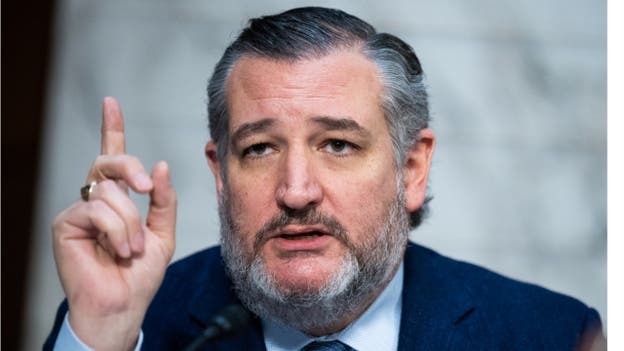
French President Emmanuel Macron’s call for global “unity” at the United Nations drew a sharp rebuke from Sen. Ted Cruz, who accused him of hypocrisy and backing unilateral recognition of a Palestinian state despite Hamas’s October 7 attack.
Macron posted his call for unity on X, writing: “We were 51 in San Francisco; today we are 193 Member States in this United Nations General Assembly.”
“And yet, we are dividing. The fracturing of our world is holding back our collective ability to resolve major conflicts and meet our common challenges,” Macron added. “Now more than ever, we must restore the spirit of cooperation that prevailed 80 years ago.”
Cruz fired back in his own post.
“‘Unity.’ This from the same leader who just proclaimed—because France is tragically dripping in antisemitism—that the UN should reward Hamas for October 7 by unilaterally declaring a Palestinian state,” Cruz wrote.
Macron opened his week at the UN General Assembly by announcing France would formally recognize a Palestinian state, seeking to reset the Gaza agenda and assert France’s role on the world stage.
Petro blasts Trump’s drug war at UN, calls policy violent, ineffective, and rooted in domination
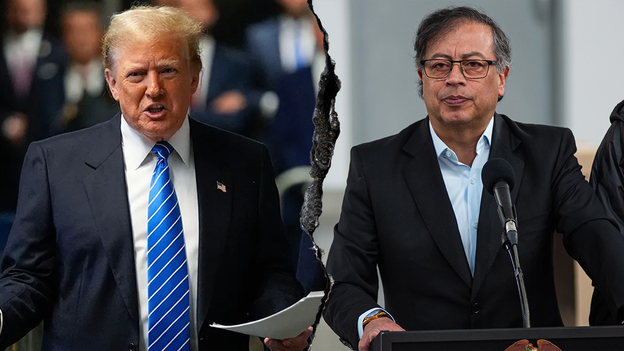
Colombian President Gustavo Petro used his UN General Assembly speech Tuesday to blast President Donald Trump’s anti-drug policy as violent, ineffective, and rooted in domination rather than public health.
Petro argued that Colombia has achieved record cocaine seizures and extraditions under his government, yet Trump “decertified” the country, a move he called unjust and politically motivated.
Petro denounced U.S. missile strikes in the Caribbean that he said killed unarmed Colombian youths under the false pretense of stopping traffickers. He insisted his approach—voluntary crop substitution and anti-trafficker enforcement—was more humane and effective than militarized crackdowns.
He also alleged that Trump’s foreign policy toward Colombia, Venezuela, and the Caribbean was influenced by Colombian politicians connected to drug mafias and paramilitaries.
“This is why I speak to you as a decertified president — I’ve been decertified by President Trump without him having any right to do this, a human right or a divine right or any sensible reason,” Petro said.
He continued, saying the anti-drug policy was not meant to stop cocaine going into the U.S.
“The anti-drug policy is to dominate the people of the south as a whole,” Petro said. “You shouldn’t look at the drugs. You should look at who has the power and who dominates.”
Melania Trump declares 'the moment is now' for new global children's initiative at UN
First lady Melania Trump used the United Nations General Assembly (UNGA) stage Tuesday to deliver a warning and a call to action: children must be protected as technology races ahead.
Trump unveiled her new initiative "Fostering the Future Together" in her remarks, a global coalition of nations dedicated to advancing children’s well-being in the digital era through education, innovation and technology.
Opening in a moment of reflection, the first lady urged leaders to see childhood imagination not as trivial, but as a rehearsal for innovation later in life.
"As children, we all played marbles, flew paper airplanes and ran with the string in our hand, watching our kites lift off," she said. "Great minds have turned marbles into microchips, paper airplanes into drones and kites into satellites."
Read more about what Melania Trump said.
This is an excerpt from a story by Fox News Digital’s Jasmine Baehr.
Zelenskyy says Trump pledged to back Ukraine ‘to the very end’ in fight against Russia
Ukrainian President Volodymyr Zelenskyy said Tuesday his relationship with President Donald Trump has strengthened, noting their teams are now more closely aligned on intelligence and battlefield assessments.
In an interview with Fox News’ Bret Baier, Zelenskyy said he welcomed Trump’s remarks after their United Nations meeting, underscoring Trump’s pledge to back Ukraine “to the very end.”
“President Trump was more positive in it, and he showed that he wants to support Ukraine to the very end,” Zelenskyy said. “It was a surprise for me, [it] was very positive signals from the side that Trump and America will be with us to the end of the war.”
He added that Trump recognized the need for greater pressure on Russian President Vladimir Putin and stressed that ceding Ukrainian territory would not halt Russian aggression.
“I think he understands…that we can't just swap territories. It's not fair,” Zelenskyy said. “I think that it's not about territories, it's about the position of Putin. He will continue. If we will give them more than he really wants, he will continue. So, the question of how to stop the war is just to stop Putin's ambitions.”
Macron urges UN to revive ‘effective multilateralism,’ warns only unity can confront global crises
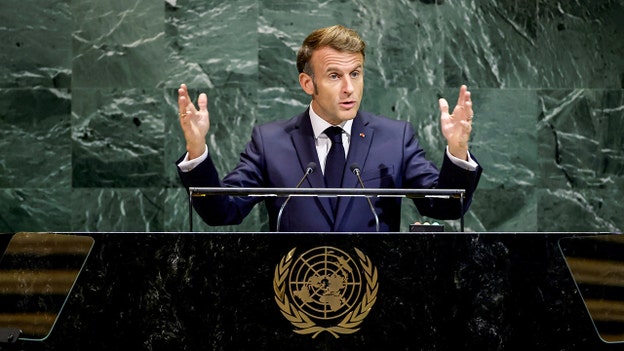
French President Emmanuel Macron urged world leaders at the UN to revive “effective multilateralism,” warning that only collective action—not divisions between blocks—can confront nuclear proliferation, climate change, and humanitarian crises, and insisting nations act with the resolve of the UN’s founders.
During a speech before the General Assembly on Tuesday, Macron argued that only collective action can address the issues facing the world.
He rejected a world split into blocks of North versus South or West versus global South, and insisted that respect, cooperation and shared rules are essential.
Macron emphasized that the UN’s failures do not stem from the institution itself, but instead from powerful states blocking progress. Ultimately, he urged leaders to act in unison.
“We have one responsibility. That is to act together and build this multilateralism once again with the same faith, with the same resolve as the founding fathers of this Assembly,” he said. “We need to do that with even more effectiveness, but with the same will.”
Macron tells UN Iran must allow inspections or face renewed international sanctions
French President Emmanuel Macron used his address to the United Nations General Assembly on Tuesday to issue a stark warning about Iran’s nuclear ambitions, calling the program a destabilizing threat that could soon trigger renewed international sanctions.
Macron said France, Germany, and the U.K. have already activated a mechanism to restore penalties in response to Tehran’s breaches. He added that Iran must grant full International Atomic Energy Agency (IAEA) access and either “make a gesture” toward accountability or face consequences.
“The next steps to come will be decisive,” Macron said. “Either Iran makes a gesture and goes back to the path of peace and accountability that make it possible to get back on course, and for the IAEA to do its work and for stockpiles to be transferred or sanctions will have to be imposed.”
Trump at UN: Reject ‘destructive globalism,’ defend borders, and protect national sovereignty
The White House said President Donald Trump’s United Nations address delivered a powerful rejection of “destructive globalism,” urging sovereign nations to defend their borders and unite against terrorism, mass migration, biological warfare, and threats to cultural identity.
During his speech, Trump emphasized the strength of America, his record on ending wars and his vision of strong borders and national sovereignty. He also sharply criticized the UN for inaction and what he described as the enabling of harmful globalist agendas.
““The entire globalist concept of asking successful, industrialized nations to inflict pain on themselves and radically disrupt their entire societies must be rejected completely and totally — and it must be immediate,” Trump said.
He argued that real peace comes from saving lives, not international prizes, and positioned his policies as a break from “failed approaches of the past.”
“A dramatically better future is within our reach — but to get there, we must reject the failed approaches of the past and work together to confront some of the greatest threats in history,” he said.
The president also targeted open borders and global migration systems while urging countries to defend free speech, religious liberty and national independence.
“Not only is the UN not solving the problems it should, too often, it is actually creating new problems for us to solve… The United Nations is funding an assault on Western countries and their borders… The UN is supposed to stop invasions, not create them and not finance them,” Trump said. “Any system that results in the mass trafficking of children is inherently evil — yet that is exactly what the globalist migration agenda has done.”
Trump revives feud with London mayor, claims push for sharia law sparks UK backlash
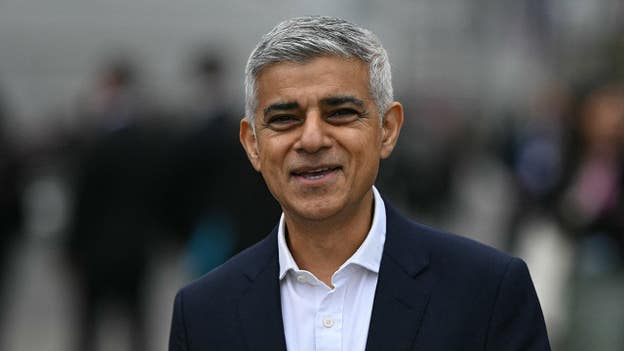
President Donald Trump reignited his feud with London Mayor Sadiq Khan on Tuesday, accusing him at the United Nations General Assembly of pushing the city toward sharia law.
“I look at London, where you have a terrible mayor, terrible, terrible mayor, and it’s been changed, it’s been so changed,” Trump said. “Now they want to go to sharia law. But you are in a different country, you can’t do that.”
The remarks drew swift backlash in the UK. Parliament Member Rosena Allin-Khan wrote on X that U.S. ambassador Warren Stephens should be “summoned and challenged over Trump’s Rampant Islamophobia.”
She added, “Trump continually spreads lies. In London, we celebrate our diversity and reject racists and bigots. London is the greatest city in the world in huge part due to Sadiq Khan’s leadership.”
Health Secretary Wes Streeting also came to the mayor’s defense, insisting Khan is not attempting to impose Islamic law on the city.
“This is a Mayor who marches with Pride, who stands up for difference of background and opinion, who’s focused on improving our transport, our air, our streets, our safety, our choices and chances,” he wrote. “Proud he’s our Mayor.”
Khan himself has previously addressed the issue. In 2008, as MP for Tooting and Minister for Community Cohesion, he said the burden was on advocates of sharia courts “to persuade us why they should do it,” warning that such tribunals could entrench discrimination, particularly against women.
Ramaphosa calls UN Security Council ‘unjust,’ demands Africa, South America gain seats
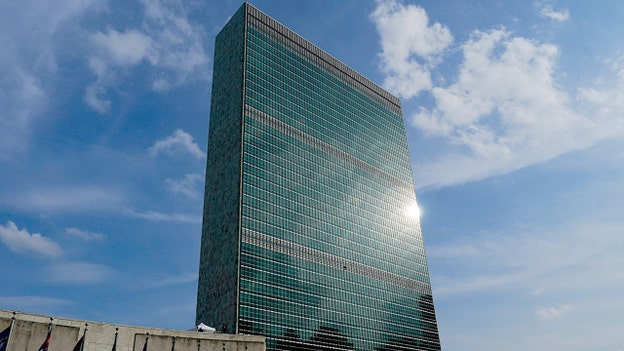
South African President Cyril Ramaphosa told the United Nations General Assembly that the UN, in its current form, is undemocratic, unrepresentative, and failing to uphold global peace, pointing to Africa’s lack of permanent representation on the Security Council.
“The United Nations Security Council has proven to be ineffective in its current form and composition, in carrying out its charter mandates to maintain international peace and security,” Ramaphosa said.
He stressed that Africa, with its 1.4 billion people, and South America are entirely excluded from permanent seats on the body, calling the omission “unjust.”
“We can no longer accept that a large portion of the world’s population is not represented in the United Nations Security Council,” Ramaphosa said. “My own continent, Africa, home to 1.4 billion people, as well as South America, are not represented in the United Nations Security Council. This is unjust.”
Ramaphosa urged urgent reforms to make the Council more democratic, representative, and accountable.
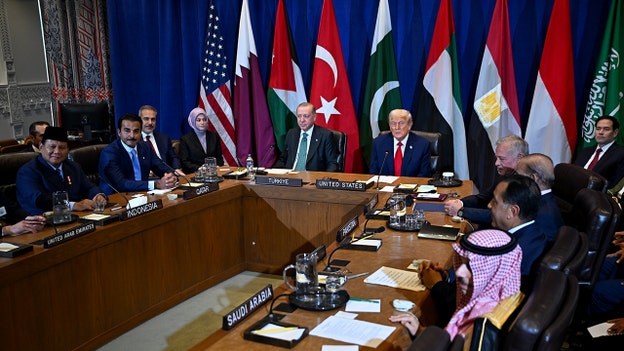
Trump calls meeting with Arab leaders at UN his ‘most important’ to free captives in Israel
President Donald Trump convened a high-stakes meeting with Arab leaders on the sidelines of the United Nations General Assembly, underscoring what he described as a critical effort to secure the release of captives being held in Israel, according to reports.
“This is the group that can do it,” Trump said as he sat alongside regional leaders, according to a report by Al Jazeera. Included in the talks was Qatari Emir Sheikh Tamim bin Hamad Al Thani, a key diplomatic player often involved in delicate mediation efforts across the Middle East.
Expressing optimism about progress, Trump added, “I think we’ll be able to do it.”
Calling the gathering “my most important meeting,” Trump positioned the talks as central to his UN visit.
The remarks highlight both the urgency of the hostage issue and Trump’s attempt to project leadership on the world stage during the General Assembly.
White House demands probe after UN escalator stops as Trump, Melania step on
White House press secretary Karoline Leavitt demanded anyone who intentionally caused an escalator at the United Nations in New York City to stop with President Donald Trump and first lady Melania Trump stepped onto it, to be investigated and fired “immediately.”
“If someone at the UN intentionally stopped the escalator as the President and First Lady were stepping on, they need to be fired and investigated immediately,” she posted on X.
Leavitt also shared a screen shot from a report by The Times, noting that the publication reported about the escalators being stopped on Sunday.
The clip read, “To mark Trump’s arrival, UN staff members have joked that they may turn off the escalators and simply tell him they ran out of money, so he has to walk up the stairs.”
The escalator was not the only thing to shut down on Trump. As the president addressed the UN on Tuesday, the teleprompters also malfunctioned, forcing him to speak on his own.
Trump: Ukraine is in position to ‘WIN’ back all of its territory
President Donald Trump said that he believes Ukraine, with the backing of the European Union, could secure back all of its territory as the war between Russia and Ukraine persists.
“After getting to know and fully understand the Ukraine/Russia Military and Economic situation and, after seeing the Economic trouble it is causing Russia, I think Ukraine, with the support of the European Union, is in a position to fight and WIN all of Ukraine back in its original form,” Trump said in a post on Truth Social on Tuesday. “With time, patience, and the financial support of Europe and, in particular, NATO, the original Borders from where this War started, is very much an option.”
“Why not? Russia has been fighting aimlessly for three and a half years a War that should have taken a Real Military Power less than a week to win,” Trump said. “This is not distinguishing Russia. In fact, it is very much making them look like ‘a paper tiger.’”
Trump to push Hungary's Orban on ending Russian oil imports
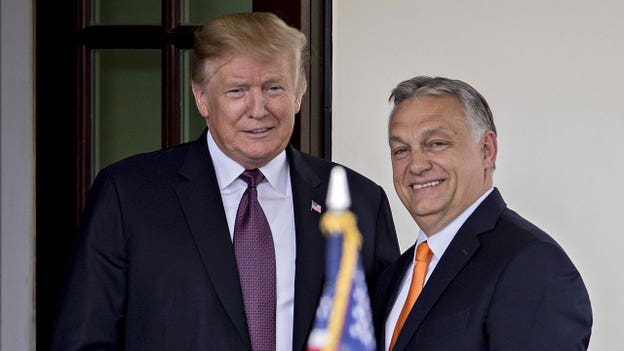
President Donald Trump said Tuesday that he plans to discuss ending Hungary's imports of Russian oil with Prime Minister Viktor Orbán.
The confirmation came when pressed by reporters about his ally continuing to purchase Russian energy despite Trump's repeated calls for NATO nations to cease all financially beneficial ties for Moscow.
“He’s a friend of mine," Trump said, according to multiple reports. "I have not spoken to him, but I have a feeling if I did he might stop, and I think I’ll be doing that."
It is unclear if Trump could see much success in getting Hungary, the largest European purchaser of Russian oil, to cease its energy dependence on the aggressor nation.
Earlier in the day, Hungarian Foreign Minister Péter Szijjártó signaled that Budapest had no plans to divert where it receives its energy needs from.
“For us, energy supplies are a purely physical question,” he told The Guardian. “It can be nice to dream about buying oil and gas from somewhere [besides Russia]...but we can only buy from where we have infrastructure.
“And if you look at the physical infrastructure, it’s obvious that without the Russian supplies, it is impossible to ensure the safe supply of the country," he added.
Why UNRWA is the U.N.’s most controversial agency
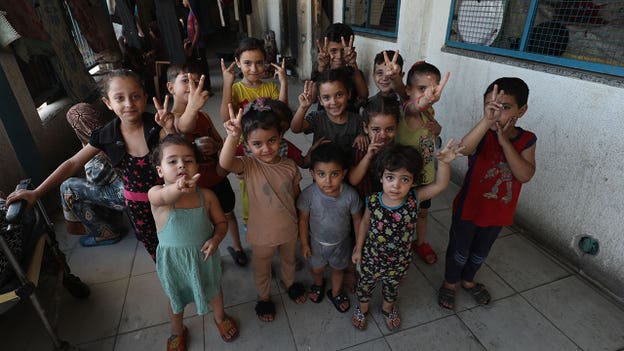
The United Nations Relief and Works Agency for Palestine Refugees in the Near East (UNRWA), which funds aid for Palestinians, has been riddled with scandal following Hamas’ attack on Israel on Oct. 7, 2023.
For years, educational materials used in UNRWA schools have come under scrutiny for fomenting anti-Israel bias. Hamas tunnels have been found beneath UNRWA facilities. Several UNRWA employees were also found to have participated in the attacks of Oct. 7, 2023.
Following the claim and subsequent proof of possible participation, multiple countries, including the United States, pulled funding from UNRWA. JNS reported that UNRWA Commissioner-General Philippe Lazzarini recently said Arab states’ donations have declined by 90% over last year’s donations.
President Donald Trump announced that he would reevaluate UNRWA’s funding in a February executive order. A State Department spokesperson told Fox News Digital in August that the organization “is irredeemably compromised” and that the Department of State “seeks its full dismantlement.”
Trump’s past UNGA speeches — what he said and why it mattered
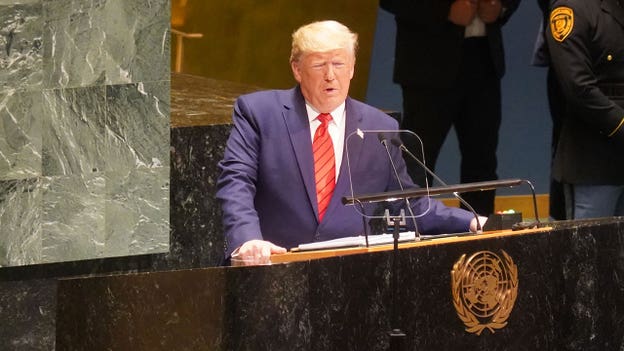
When Donald Trump took the podium at the United Nations General Assembly (UNGA), his speeches often broke from the polished, multilateral tone that typically defines the event. In 2017, his debut address was among the most fiery in recent UNGA memory. He issued a stark warning to North Korea, vowing to “totally destroy” the regime if it threatened the United States or its allies. The blunt language underscored his America First posture, signaling a dramatic shift away from diplomatic restraint.
In subsequent years, Trump leaned heavily into themes of sovereignty and nationalism. He criticized global institutions for overreach, urging countries to defend their independence and interests rather than cede authority to international bodies. He also used the platform to press allies on defense spending, confront Iran’s regional behavior, and highlight trade imbalances with China.
“We reject the ideology of globalism, and we embrace the doctrine of patriotism,” Trump said in 2018.
“The future does not belong to globalists. The future belongs to patriots,” he said in 2019.
Trump agrees that NATO countries should be allowed to shoot down Russian aircraft
President Donald Trump says countries in NATO should be allowed to shoot down Russian aircraft if they enter their territory.
“Yes I do,” Trump said while meeting with Ukrainian President Volodymyr Zelenskyy in New York City following the president’s address to the United Nations General Assembly on Tuesday morning.
The comments come as the president tried over the summer to broker a peace deal between Ukraine and Russia, including meeting with Russian President Vladmir Putin in Alaska in August, as the Kremlin says talks are currently on hold.
Prior to his comments on NATO, Trump said in his remarks to the UN General Assembly that NATO countries should stop buying Russian oil.
"China and India are the primary funders of the ongoing war by continuing to purchase Russian oil," he said in his speech. "But inexcusably, even NATO countries have not cut off much Russian energy and Russian energy products, which, as you know, I found out about two weeks ago, and I wasn't happy."
The Russian war against Ukraine kicked off in February 2022.
Trump praised on social media for slamming UN: 'Never even received a phone call'
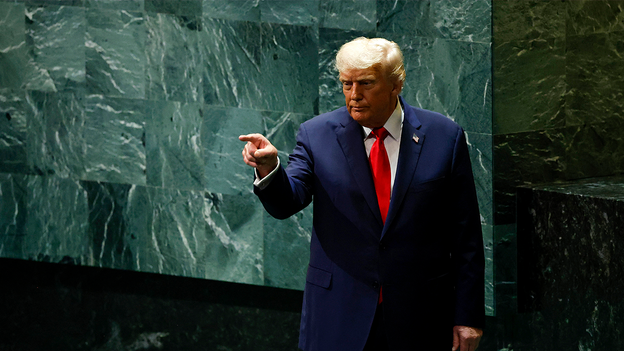
President Donald Trump gained praise from the right on social media after calling out the United Nations during his address on Tuesday morning.
"I ended seven wars, dealt with leaders of each and every one of these countries, and never even received a phone call from the United Nations offering to help in finalizing the deal,” Trump said.
"All they seem to do is write a really strongly worded letter and then never follow that letter up! It's empty words and empty words don't solve war,” he continued.
The remarks won praise from people who are critical of the United Nations.
“If you only watch one thing today, make it President Trump calling out the do-nothing United Nations to their faces,” Republican activist CJ Pearson posted to X with a clip of the speech.
“He just made the case for leaving the U.N. They do nothing for the world,” one user wrote.
“His follow-up on immigration was spot on as well!” another replied.
“This is called courage. This is called strength. We have the best leader in the world,” a third user said.
“Bold American leadership! Right to their faces. And the formula is so simple, even a child can figure it out. 1: Prioritize it. 2: Put forth an honest effort. And the results speak for themselves. So what is the U.N. for, if it can't, or won't, do the one thing it exists for?” a fourth stated.
In addition to criticizing the international body as a whole, Trump directly criticized Europe over illegal immigration and called on Hamas to release their remaining hostages.
Turkey’s Erdogan uses UN address to accuse Israel of ‘genocide’ in Gaza
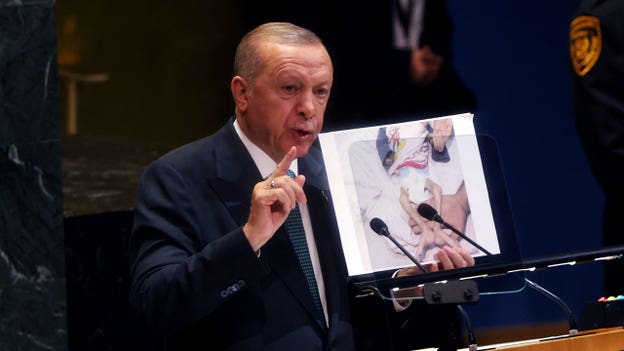
Turkish President Recep Tayyip Erdoğan used his address from the United Nations General Assembly to call out Israel's military operations in the Gaza Strip against Hamas as a "genocide" on the Palestinian people.
After nearly two years of war, about 65,000 people have been killed in the Gaza Strip, according to Gaza’s Health Ministry, a figure that includes roughly 20,000 children, Turkish President Recep Tayyip Erdogan said.
"For the last 23 months, a child has been murdered by Israel in Gaza every hour," Erdogan told world leaders from the UN. "People are now being killed not with weapons, but with the weapon of starvation.
"Can we possibly have a reasonable reason for this brutality in 2025?" he questioned as he displayed several graphic pictures of children suffering in Gaza.
"In Gaza, children's hands, arms and legs are being amputated without out anesthesia," Erdogan continued. "This represents the lowest point of humanity. Human history has not witnessed such bloodshed within the last century. All of this is happening before our very eyes."
Erdogan applauded the efforts by UN Secretary General Antonio Guterres in condemning Israel and its ongoing military operations in Gaza. He also called on more nations to recognize the "state of Palestine" - which Turkey has observed since 1988.
King of Jordan calls Palestinian statehood 'indisputable right'
Jordan's King Abdullah II said that Palestinian statehood is an “indisputable right,” as he accused Israel of violating other countries’ sovereignty amid the ongoing Israeli-Palestinian conflict.
“The international community must stop entertaining the illusion that this government is a willing partner for peace,” Abdullah said at the United Nations General Assembly's debate on Tuesday. “Far from it. Its actions on the ground are dismantling the very foundations on which peace could stand, and intentionally burying the very idea of a Palestinian state.”
“How long before we hold all nations to the same standards?” Abdullah said. “How long before we recognize the Palestinians as people who aspire to the same things you and I do? And we act on that recognition. How long before we recognize that statehood is not something Palestinians need to earn? It is not a reward. It is an indisputable right.”
Trump rejects recognition of Palestinian state as ‘reward’ for Hamas
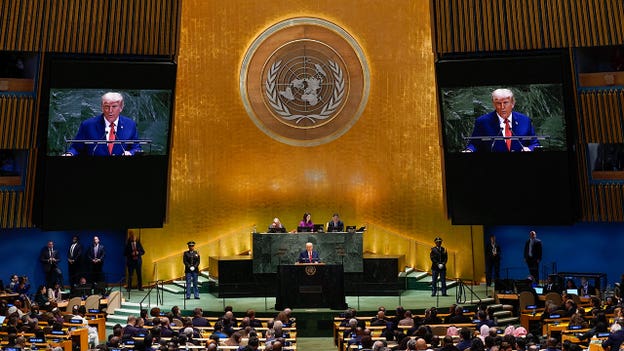
President Donald Trump on Tuesday went after the western nations who have thrown their support behind the Palestinian people by saying they will break with the U.S. and Israel, and for the first time, acknowledge Palestinian statehood.
"As everyone knows, I have also been deeply engaged in seeking a cease-fire in Gaza. Have to get that done. You have to get it done," Trump said.
"Unfortunately, Hamas has repeatedly rejected reasonable offers to make peace. We can’t forget October 7th, can we? Now, as if to encourage continued conflict, some of this body is seeking to unilaterally recognize a Palestinian state...this would be a reward for these horrible atrocities, including October 7th," he added.
Trumps comments came one day after French President Emmanuel Macron announced his nation would recognize a Palestinian state, which followed similar announcements made by the U.K., Australia, Canada and Portugal.
Why is Macron pushing a two-state solution conference at UNGA?
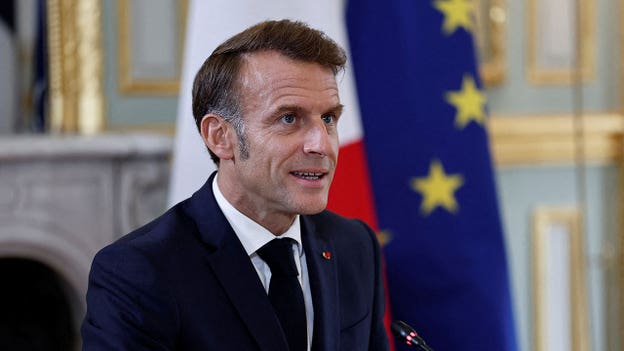
French President Emmanuel Macron is pressing ahead with a two-state solution conference at the United Nations on Monday, despite strong opposition from the Trump administration, casting it as a pathway to end the Gaza war and restart peace efforts. President Donald Trump dismissed France’s recognition of Palestinian statehood outright, while U.S. U.N. counselor Morgan Ortagus told delegates, “Make no mistake — this resolution is a gift to Hamas.”
Atlantic Council analyst Jean-Loup Samaan said Macron’s push was a gamble to boost France’s role with Arab allies and respond to domestic pressure after pro-Palestinian protests at home, warning that it may remain a “mere rhetorical exercise” without U.S. support or Israeli consultation.
Speaking in Paris ahead of the vote, Macron warned that Israel’s offensive “can only lead to disaster for both peoples and risks plunging the region into a cycle of permanent war.” Last Friday, the General Assembly endorsed the French- and Saudi-led New York Declaration by a vote of 142–10, with 12 abstentions.
The resolution calls for irreversible steps toward Palestinian statehood, condemns Hamas, and demands the release of hostages.
Trump refuses to let teleprompter issues go in post-speech message
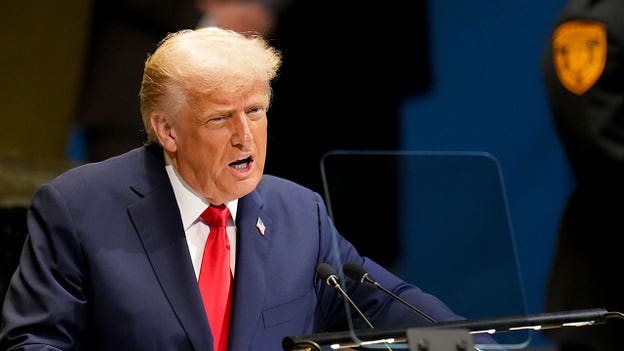
President Donald Trump refused to get over the temporary teleprompter issues he endured at the beginning of his address to the United Nations General Assembly on Tuesday, not only repeatedly highlighting it during his speech, but in a social media post after.
"It was a great honor to speak before the United Nations. I believe the speech was very well received," Trump said in a Truth Social post, noting that his address focused on energy and immigration.
"I hope everybody gets to watch it," he continued. "The teleprompter was broken and the escalator came to a sudden hault as we were ridding up to the podium, but both of those events probably made the speech more interesting than it would have been otherwise."
"It is always an honor to speak at the United Nations, even if, their equipment is somewhat faulty," Trump added.
President of the United Nations General Assembly is Annalena Baerbock confirmed following Trump's address, which was highly critical of the UN, that the teleprompter had resumed working order.
Trump slams UN for ‘creating new problems,’ questions its role in fiery UNGA speech
President Donald Trump slammed the United Nations for not aiding as he and his administration seek peace in conflicts around the globe and for "creating new problems" for the U.S. and member nations, while questioning its purpose and also offering "the hand of American leadership and friendship" to all countries in the body.
The president, during his first address of his second administration to the United Nations General Assembly, highlighted renewed American strength while slamming the international body.
"Not only is the U.N. not solving the problems it should, it, too often, is actually creating new problems for us to solve," the president said. "The best example is the number one political issue of our time: the crisis of uncontrolled migration. It is uncontrolled. Your countries are being ruined."
The president said the U.N. is "funding an assault on Western countries and their borders.""
The U.N. is supporting people that are illegally coming into the United States, and we have to get them out," Trump said. "The U.N. also provided food, shelter, transportation and debit cards to illegal aliens."
He added: "The UN is supposed to stop invasions — not create them and not finance them."
This is an excerpt of a story from Brooke Singman.
Israel conflict take center stage at UNGA80
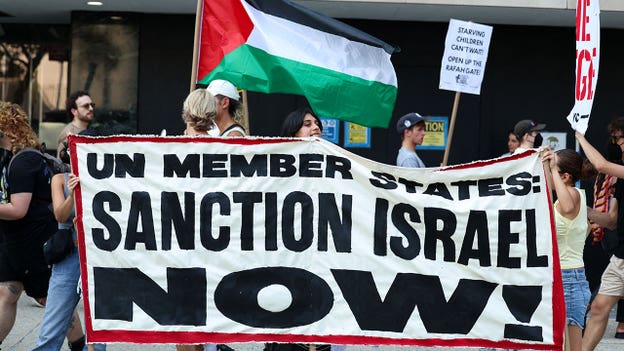
As world leaders gather in New York for the United Nations General Assembly, the debate over the Israeli-Palestinian conflict is expected to dominate the agenda.
The focus follows last week’s overwhelming passage of the French- and Saudi-led New York Declaration, which called for irreversible steps toward Palestinian statehood. France, Great Britain and Canada, along with several other countries, are expected to formally recognize a Palestinian state this week in New York.
But Israeli analyst Nadav Eyal explains that the U.N.’s credibility on the issue is deeply compromised. “In 2024, the United Nations General Assembly rebuked or condemned Israel 17 times in different decisions, while the rest of the world combined got six condemnations or rebukes,” Eyal told Fox News Digital, adding, “That’s an example of how the U.N. singles out Israel, and it’s one of the reasons why criticism that comes from the U.N. or its bodies is not considered credible in Israel, or by countries and administrations that support Israel.”
How much money does the US give the United Nations each year?
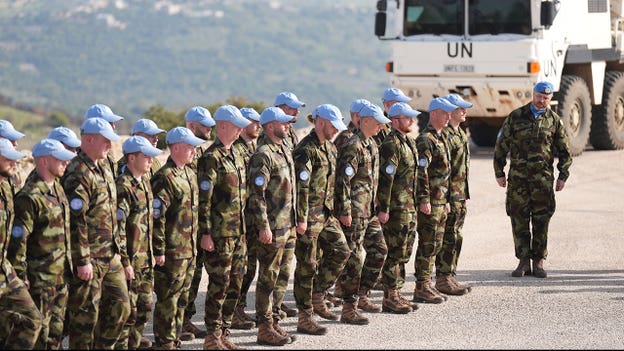
The U.S. is by far the largest contributor to the U.N.’s regular budget and peacekeeping dues, which are reassessed every three years based on a formula that considers a nation’s Gross National Income (GNI), population, and debt rates.
The U.S. currently contributes around $1.5 billion a year to the U.N., roughly 22% of the U.N.’s overall regular budget, which equates to roughly 0.2% of Washington’s annual federal budget.
But concerns over the U.N.’s spiking assessment rate in the 90s which neared 30%, prompted lawmakers in 1994 to pass a cap on what it would allow the U.S. to contribute to the U.N.’s peacekeeping dues at 25% of the U.N.’s assessed rate.
The U.S. currently pays 22% of the regular budget and is assessed at 27% of the peacekeeping budget, meaning that extra two percent of assessed dues goes unpaid.
China, which is the world's second largest economy now accounts for nearly 16% of the U.N.’s regular budget and nearly 19% of its peacekeeping dues.
Trump encourages national pride in closing remarks to the United Nations
President Donald Trump called on countries to be proud of their heritage in his closing remarks to the United Nations General Assembly in New York City on Tuesday morning.
Trump said that each country represented in the hall has “a noble history and a proud heritage that makes each nation majestic and unique, unlike anything else in human history or any other place on the face of the earth.”
“Our ancestors gave everything for homelands that they defended, with pride, with sweat, with blood, with life and with death. Now the righteous task of protecting the nations that they built belongs to each and every one of us. So together let us uphold our sacred duty to our people and to our citizens,” he later added.
“Let us protect their borders, ensure their safety, preserve their cultures, treasure, and traditions, and fight, fight, fight for their precious dreams and their cherished freedoms,” the president continued.
During his address, Trump criticized Europe over its high influx of immigration, saying that the continent is in “serious trouble” if it does not curb illegal immigration.
President Donald Trump cautioned that Europe is in a crisis due to an influx of illegal immigration, calling it “unsustainable.”
“The U.N. is supposed to stop invasions, not create them and not finance them,” Trump said. “In the United States, we reject the idea that mass numbers of people from foreign lands can be permitted to travel halfway around the world, trample our borders, violate our sovereignty, cause unmitigated crime, and deplete our social safety net.”
Fox News Digital's Diana Stancy contributed to this report.
Trump labels climate change ‘con job,’ accuses Asian countries of dropping garbage in the ocean
President Donald Trump repeatedly labeled climate change a “con job” in his address to the United Nations General Assembly's debate on Tuesday.
“This climate change, it's the greatest con job ever perpetrated on the world, in my opinion. Climate change, no matter what happens, you're involved in that,” Trump said. “No more global warming, no more global cooling. All of these predictions made by the United Nations and many others, often for bad reasons, were wrong.”
Trump also blasted Asian countries and accused them of dropping garbage in the ocean that then makes its way to U.S. shores.
“They dump much of their garbage right into the ocean. And over about a one week and two week journey. It flows right past Los Angeles. You've seen — it massive amounts of garbage, almost too much to do anything about flowing past Los Angeles, past San Francisco. And then somebody will get in trouble because you dropped a cigarette on the beach. The whole thing is crazy.”
“The primary effect of these brutal green energy policies has not been to help the environment, but to redistribute manufacturing and industrial activity from developed countries that follow the insane rules that have put down, to polluting countries that break the rules and are making a fortune and making a fortune,” Trump said.
Trump says UN countries 'going to hell' because of open borders
President Donald Trump cautioned that Europe is in a crisis due to an influx of illegal immigration, and warned that U.N. countries are “going to hell” in the “failed experiment of open borders.”
“Europe is in serious trouble,” Trump said in his address to the United Nations General Assembly's debate on Tuesday. “They've been invaded by a force of illegal aliens like nobody's ever seen before. Illegal aliens are pouring into Europe. Nobody is ever. And nobody's doing anything to change it, to get them out. It's not sustainable. And because they choose to be politically correct, they're doing just absolutely nothing about it.”
The Trump administration has taken a tough stance against illegal immigrants to advance Trump’s mass deportation agenda.
“The U.N. is supposed to stop invasions, not create them and not finance them,” Trump said. “In the United States, we reject the idea that mass numbers of people from foreign lands can be permitted to travel halfway around the world, trample our borders, violate our sovereignty, cause unmitigated crime, and deplete our social safety net. We have reasserted that America belongs to the American people, and I encourage all countries to take their own stand in defense of their citizens as well.”
Trump sends strong message to Hamas on hostages
President Donald Trump is demanding the release of hostages captured by Hamas, stressing that the Oct. 7 attacks cannot be forgotten.
“Those who want peace should be united with one message: Release the hostages now. Just release the hostages now,” Trump said during his United Nations General Assembly address in front of various international leaders, with some applause, as he also criticized “ransom demands.”
Israel estimates that there are still 48 hostages, but only 20 are still alive, Fox News previously reported.
“We have to stop the war in Gaza immediately. We have to stop it. We have to get it done. We have to negotiate. Immediately have to negotiate peace. We got to get the hostages back,” Trump said.
“We want all 20 back,” he added, highlighting the efforts of special envoy Steve Wikoff and Secretary of State Marco Rubio that got “most of them back.”
“But I always said, the last 20 are going to be the hardest. And that's exactly what happened. We have to get them back now,” he said.
Trump touts Iran strikes: ‘No other country on earth could have done what we did’
President Donald Trump touted the success of strikes against Iran earlier this year – and reaffirmed that the U.S. is committed to never permitting Iran to possess a nuclear weapon.
“Three months ago, when Operation Midnight Hammer, seven American B-2 bombers dropped the 14 30,000 pound each bombs on Iran's key nuclear facility, totally obliterating everything,” Trump said in his address to the United Nations General Assembly's debate on Tuesday.
“No other country on earth could have done what we did,” Trump said. “No other country has the equipment to do what we did. We have the greatest weapons on Earth. We hate to use them, but we did something that for 22 years people wanted to do with Iran's nuclear enrichment capacity demolished.”
Operation Midnight Hammer targeted Iranian nuclear facilities Fordow, Natanz and Isfahan in June. Altogether, the operation included more than 125 U.S. aircraft, including B-2 stealth bombers, according to Chairman of the Joint Chiefs of Staff Gen. Dan Caine. A guided-missile submarine also launched more than two dozen Tomahawk cruise missiles at key Iranian targets, he said.
Trump also said that “almost all” of Iran’s former military commanders are now dead.
Trump questions 'what is the purpose of the United Nations?'
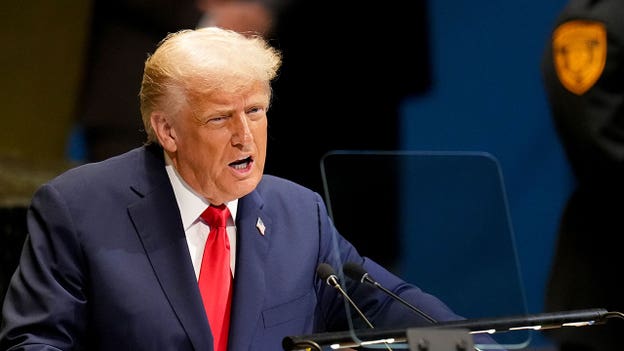
President Donald Trump struck a critical tone when he took the stage at the United Nations General Assembly debate on Tuesday and questioned "what is the purpose of the United Nations?"
Trump once again claimed that since re-taking office he has ended seven wars, including the conflicts between Cambodia and Thailand, Kosovo and Serbia, the Congo and Rwanda, Pakistan and India, Israel and Iran, Egypt and Ethiopia and Armenia and Azerbaijan.
"Its too bad that I had to do these things instead of the United Nations," Trump said as the President of the UNGA Annalena Baerbock and UN Secretary-General António Guterres looked on from behind.
"All I got from the United Nations was an escalator that on the way up stopped right in the middle," Trump continued. "And then a teleprompter that didn't work."
"The United Nations wasn't there for us. They weren't there," he said. "That being the case, what is the purpose of the United Nations? The UN has such tremendous potential."
Trump cracks jokes about broken teleprompter at start of UN address
President Donald Trump, who is known for his off-the-cuff speaking style, cracked a joke about the broken teleprompter at the opening of his United Nations General Assembly address in New York City.
“And I don't mind making this speech without a teleprompter, because the teleprompter is not working,” he said, getting laughs in the room.
“I feel very happy to be up here with you, nevertheless. And that way you speak more from the heart. I can only say that whoever is operating this teleprompter is in big trouble,” the president continued.Trump then referred to paper notes throughout his remarks.
During his address, the president said that the United States has the “strongest economy, the strongest borders, the strongest military, the strongest friendships and the strongest spirit of any nation on the face of the earth.”
He also highlighted peace efforts the U.S. was involved in, including between Armenia and Azerbaijan.
“These are the two things I got from the United Nations: a bad escalator and a bad teleprompter,” he later added, saying it appeared to be working again. “By the way, it's working now. Just went on. Thank you. I think I should just do it the other way,” he said.
Inside the UNGA80 general debate: What to expect during this key event
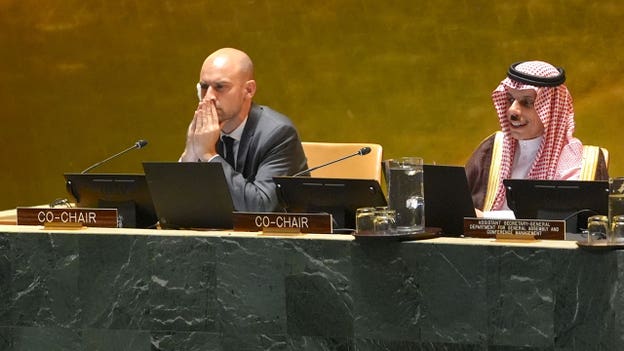
The 80th session of the United Nations General Assembly began earlier this month under the theme “Better Together: 80 years and more for Peace, Development and Human rights, highlighting the urgency of delivering Sustainable Development Goals and reinvigorating global cooperation.”
The biggest event for UNGA 80 is the High-Level Debate that begins on Tuesday, Sept. 23, when President Trump will address the world from the podium. Other world leaders scheduled to speak include the leaders of Iran, Israel, the U.K., Turkey and France.
Other events include a France–Saudi Arabia conference on the push for a two-state solution to the Israel-Palestine question, something the Trump administration has criticized as rewarding Hamas. Other events include summits on climate action, AI governance, preventing noncommunicable diseases and promoting youth involvement in policymaking.
Brazil's Lula da Silva takes jab at Trump's 'arbitrary sanctions' in UN address
Brazilian President Luiz Inácio Lula da Silva took an apparent jab at President Donald Trump in his address to the United Nations General Assembly on Tuesday when he called out "arbitrary sanctions" in the wake of the administration's objection to the prosecution of former Brazilian President Jair Bolsonaro.
"There is a clear parallel between the multilateralism crisis and the weakening of democracy, authoritarianism is strengthened when we fail to act in the face of arbitrary acts. When the international society falters in defending peace, sovereignty and the rule of law, the consequences are tragic," he said.
The Brazilian president did not directly call out Trump, but his comments came just hours after the U.S. slapped sanctions on the wife of Brazilian Supreme Court Justice Alexandre de Moraes, who oversaw the prosecution of Bolsonaro, leading to his conviction of organizing a coup in an attempt to remain in office following his 2022 electoral loss to Lula da Silva.
"There is no justification for unilateral and arbitrary measures against our institutions and our economy, the aggression against the independence of the judiciary, branch of power is unacceptable," Lula da Silva said. "This interference in domestic affairs as aided by a subservient far right who is nostalgic of past hegemonies, false patriots plan and publicly promote actions against Brazil."
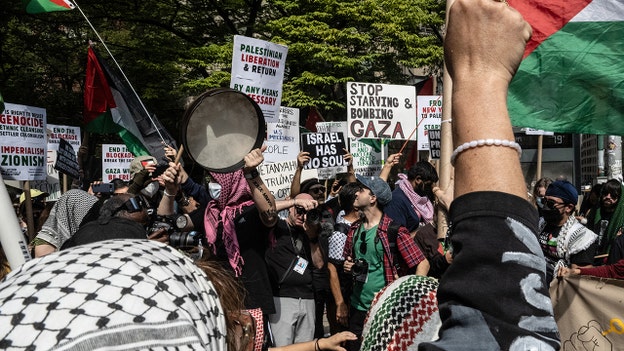
Anti-Trump protests block street outside UN prompting arrests
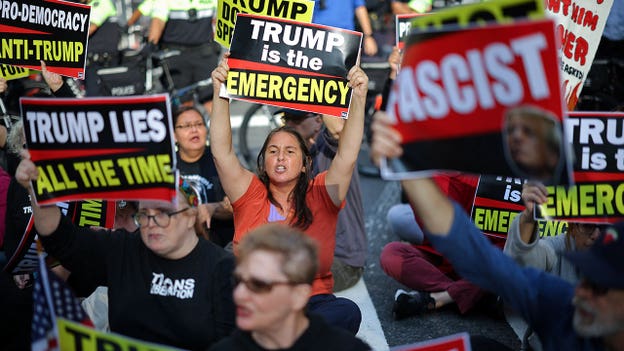
New York City police began arresting protesters outside the United Nations on Tuesday after demonstrators sat in the crosswalk on 42nd Street in an apparent attempt to block access to the building, accounts on social media said.
The protesters carried anti-President Donald Trump signs, and according to some on social media, the event was an attempt to block his entrance into the UN ahead of his address to the United Nations General Assembly.
Though the protesters appeared to be jamming up traffic, the demonstrations remained peaceful even as police officers began removing the protesters from the area.
The NYPD has limited traffic in front of the UN in a move to better secure the building housing the world's leaders for the week.
Serious telecommunications threat exposed by Secret Service ahead of UN General Assembly meeting
The United States Secret Service dismantled a serious telecommunications “threat” near the United Nations General Assembly on Tuesday.
The plot, if successful, could have taken down phone lines in New York City, where the event is being held.
The devices were located within 35 miles of the ongoing United Nations General Assembly, but there was no sign that the meeting itself would have been targeted.
"While forensic examination of these devices is ongoing, early analysis indicates cellular communications between nation-state threat actors and individuals that are known to federal law enforcement,” the Secret Service said.
Matt McCool, the special agent in charge of the Secret Service's New York field office, said in a video released Tuesday that the plan could have had extremely serious implications.
"This network had the potential to disable cellphone towers and essentially shut down the cellular network in New York City," he said.
The Secret Service said it found 300 SIM servers, along with 100,000 SIM cards at multiple locations. McCool said that investigation began in the spring, and the recovered devices no longer pose a threat to the New York tristate area."
More work is now underway to see if there are similar threats and more details about who was behind the network.
Fox News’ CB Cotton and Greg Norman contributed to this report.
Essential insights for UNGA80: From Gaza to artificial intelligence
This year’s United Nations General Assembly forum marks the 80th anniversary of when the body was established in the wake of World War II.
The theme is “Better Together: 80 years and more for peace, development and human rights,” though it comes during arguably one of the most contentious periods since the world’s deadliest war ended.
The major areas of focus will be the wars in Ukraine, the Gaza Strip, and Sudan, which are not only contributing to mass humanitarian concerns and crises, but they are threatening global security that could have far reaching consequences.
Issues like climate action, human rights, global health, hunger, international reform and emerging issues like Artificial Intelligence governance will also all be addressed in the high-level meetings.
While most of the world’s national leaders will attend the forum, including leaders embroiled in some of the most complex international conflicts like Israeli Prime Minister Benjamin Netanyahu and Iranian President Masoud Pezeshkian, Russian President Vladimir Putin, Chinese President Xi Jinping and North Korean leader Kim Jong Un are not expected to attend the UNGA this year.
Understanding the United Nations General Assembly: A key player in global peacekeeping
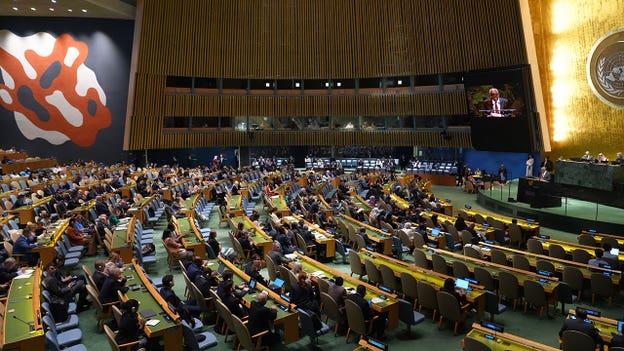
The United Nations General Assembly (UNGA) is the U.N.’s main deliberating body and includes all 193 members of the international body.
The UNGA holds power in its diplomatic and consensus-building, though it does not possess legal authority and carries weight through its unifying stances on political and morally driven issues.
Though it can pass resolutions, like this month’s endorsement of a Palestinian-Israeli two-state solution and the condemnation of Hamas in a push to end the war in the Gaza Strip, it cannot enforce geopolitical action through military action or sanctions, like the U.N. Security Council can.
The General Assembly can debate and highlight chief humanitarian and international issues, approve the U.N.’s budget, elect members to the security council and it appoints the U.N. Secretary-General based on the Security Council’s recommendation.
Trump to speak ‘bluntly’ about the ‘risk’ of globalism in United Nations General Assembly address
President Donald Trump plans to speak “bluntly” about how he thinks “globalist ideologies risk destroying successful nations around the world” in his address to the United Nations General Assembly on Tuesday morning.
This will be Trump’s first address to the group in his second administration, and he’s expected to highlight peace negotiation wins by the United States in Armenia and Azerbaijan; Thailand and Cambodia; Rwanda and the Democratic Republic of the Congo, among others.
In addition, the president will also likely discuss his efforts against narcoterrorism originating in Venezuela, including recent military strikes against drug cartel boats in the southern Caribbean."
President Trump has effectively restored American strength on the world stage," a White House official told Fox News Digital in an exclusive preview.
"His historic speech at the United Nations General Assembly will highlight his success in delivering peace on a scale that no other president has accomplished, while simultaneously speaking bluntly about how globalist ideologies risk destroying successful nations around the world."
Fox News Digital’s Brooke Singman contributed to this report.
Why does the US allow foes to come to UNGA?
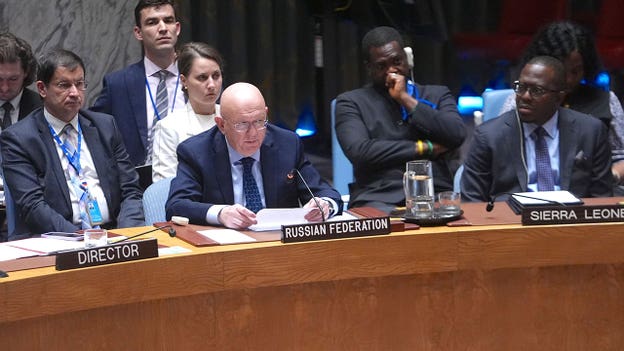
Each September, the United Nations General Assembly (UNGA) brings world leaders to New York City — friends and foes alike. That often raises a question: why does the United States allow adversarial leaders, from Iran to Venezuela, to speak on American soil?
The answer lies in the UN’s founding agreements. As host country, the U.S. is bound by the 1947 Headquarters Agreement, which obligates Washington to allow transit and access for diplomats and member-state representatives to UN facilities, regardless of political disputes. Even during the Cold War, when tensions with Moscow ran high, Soviet leaders spoke at the Assembly.
Russia is still a permanent member of the UN Security Council.
By honoring these commitments, the U.S. reinforces its role as steward of the UN system, projecting consistency and respect for international law. Denying entry to foes outright would risk undermining both America’s credibility and the legitimacy of the institution itself.
That said, the arrangement isn’t without limits or conflict. The U.S. sometimes imposes restrictions on certain delegations’ movements or issues visas selectively, citing national security or foreign policy grounds.
In a historic move this year, Secretary of State Marco Rubio revoked and denied visas for some officials of the Palestine Liberation Organization (PLO) and Palestinian Authority (PA) — including President Mahmoud Abbas — ahead of the 2025 UNGA. Washington cited U.S. laws against so-called “pay for slay” payments to terrorists and obligations under its peace-commitment legislation. Critics argue this is the first time an entire foreign delegation has been blocked.
US funding of the UN: Where America’s billions really go
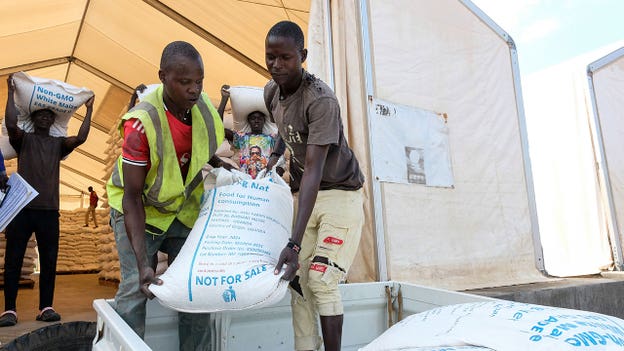
The United States remains by far the U.N.’s largest financial backer, contributing billions in taxpayer dollars every year to keep the sprawling international body afloat.
Roughly one-third of the U.N.’s funding comes from Washington: about one-fifth of its regular operating budget, plus large sums for peacekeeping, humanitarian programs, and specialized agencies like the World Health Organization and the U.N. Refugee Agency.
President Biden increased U.S. contributions to the U.N. system, from approximately $11.6 billion in 2020 to about $18.1 billion in 2022.
But in mid-July, Congress included in a rescissions package a measure to claw back $1 billion from the organization.
The U.S. gave about three times as much as the next-largest contributor, Germany ($6.8 billion), and more than six times what Japan contributed ($2.7 billion) that year.
Historically, the U.N. has particularly depended on the U.S. for funding global aid programs.
In 2022, it provided half of all contributions to the World Food Programme, and about a third of all contributions to the U.N. High Commissioner for Refugees, the United Nations Relief and Works Agency for Palestine Refugees in the Near East (UNRWA), and the International Organization for Migration.
Secret Service dismantles 'telecommunications threat' near UN General Assembly in New York
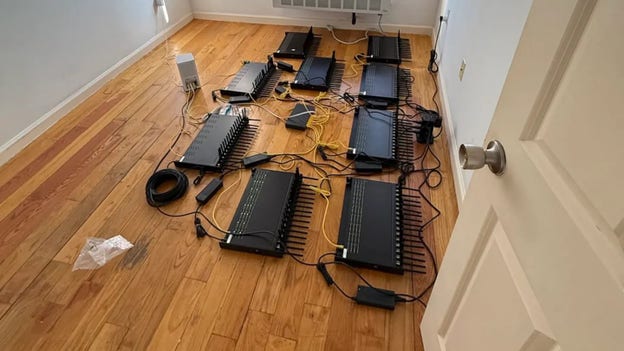
The U.S. Secret Service said Tuesday that it "dismantled a network of electronic devices located throughout the New York tristate area that were used to conduct multiple telecommunications-related threats directed towards senior U.S. government officials."
The devices were concentrated within 35 miles of the United Nations General Assembly meeting in New York City, it added.
Fox News' Greg Norman contributed to this report
US to aid Argentina's flagging economy amid UNGA80
Secretary of Treasury Scott Bessent will meet with Argentinian President Javier Milei alongside President Donald Trump in New York on Tuesday.
The meeting comes on the sidelines of the United Nations General Assembly.
On Monday, Bessent said said "all options" to aid the Argentinian president, an ally of Trump, were "on the table," suggesting the U.S. may look to providing financial aid just months ahead of Milei's race for re-election.
“Argentina is a systemically important U.S. ally in Latin America, and the U.S. Treasury stands ready to do what is needed within its mandate to support Argentina,” Bessent wrote on X.
These options could include loan provision to Argentina’s central bank, "direct currency purchases" and "purchases of U.S. dollar-denominated Argentine government debt from Treasury’s Exchange Stabilization Fund," he confirmed.
Rubio meets with Syrian leader at UNGA, ending six-decade absence
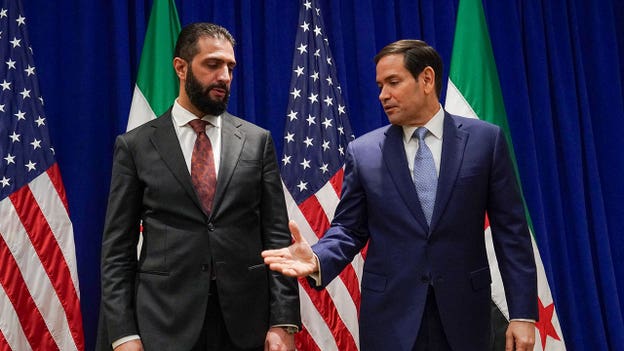
Secretary of State Marco Rubio met with Syria’s interim President Ahmed al-Sharaaat at the sidelines of the United Nations General Assembly (UNGA) on Monday.
Syrian representation at the UNGA this week is the first time any Syrian leader has been at the UN in six decades.
Details of the meeting remain unknown, but come as the Trump administration has signaled a willingness to establish diplomatic relations with Syria and as Damascus continues to lobby the U.S. to drop all sanctions previously imposed during the previous Bashar al-Assad regime.
The meeting followed the pronouncement by the Trump administration over the weekend that it was ending the protected status for all Syrians residing within the U.S. and gave them 60 days to leave the country or face deportation.
How to watch the UNGA80 general debate
The United Nations General Assembly (UNGA) begins its high-level week on Sept 22, with the debate starting on Sept. 23 at 9 am from its headquarters in New York City.
The debate will be held “without interruption for nine working days,” according to U.N. guidelines, though six days are “usually sufficient to accommodate all speakers.”
Some of the top speeches including President Donald Trump will be on Fox News and Fox News Digital. The debate can be streamed from the U.N.’s official live streaming platform, UN Web TV, or on platforms like YouTube for live and archived coverage.
The General Debate is not open to the public for in person attendance due to the extremely high security precautions that are taken, and attendees must be credentialed diplomats, staff or media personnel.
Each day will offer different themes and events, including a two-state solution for Palestinians, climate action plans, international financial initiatives, the prevention and control of noncommunicable diseases, AI governance and nuclear disarmament.
Trump to address UNGA80 in speech--here's what to expect
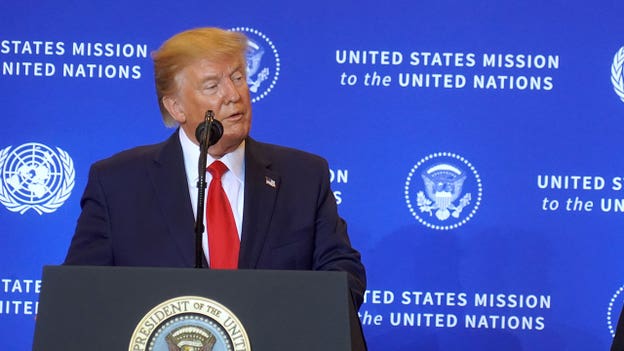
When President Trump addresses the 80th United Nations General Assembly, his message is expected to be anchored on three pillars: peace, sovereignty, and liberty. His administration has signaled that these themes will define America’s approach to the U.N. and global engagement.
On peace, Trump is expected to call for sharper accountability in peacekeeping missions, according to U.S. priorities outlined by Ambassador Dorothy Shea, Acting U.S. Representative.
The U.S. wants operations to have clear goals, measurable outcomes, and resources aligned with results — not open-ended mandates. This reflects a broader skepticism of global institutions that lack efficiency or accountability.
Sovereignty, long central to Trump’s worldview, will again figure prominently at UNGA 80: he is expected to emphasize the right of nations to chart their own course. His team has cautioned against international rules perceived to stifle innovation or weaken national independence — a continuation of his America First posture.
Finally, liberty will be presented as non-negotiable. Trump is expected to defend freedoms of speech, religion, and political opposition — and to push back against efforts to censor or silence dissent.
What’s at stake amid calls for the US to leave the United Nations
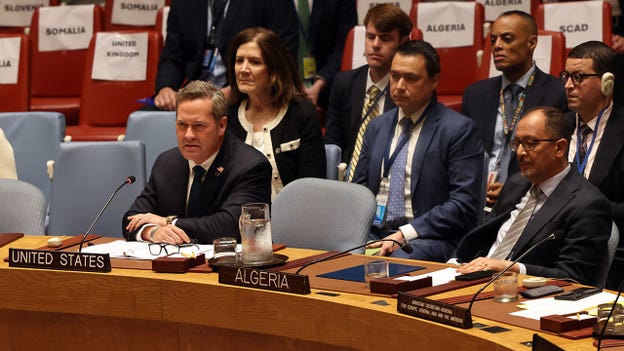
The U.S. pays about 22% of the U.N. budget, yet critics say it gets little in return, arguing that the body is dominated by non-democracies, hostile to American interests, and fixated on condemning Israel.
President Donald Trump told reporters in February that the U.N. has “got great potential...but they got to get their act together. It’s not being well run, and they’re not doing the job.”
Hillel Neuer, executive director of UN Watch, told Fox News Digital, “Calls for the U.S. to leave the U.N. reflect the deep frustration of millions of Americans who see their tax dollars funding a body that obsesses over condemning Israel while giving dictatorships a free pass.”
Critics point to the planned election of an Iranian regime official to the U.N.’s top human rights body as proof of its moral crisis.
“I’m not calling for America to pull out. But Washington must hold the U.N. to account...What’s at stake is whether the U.N. remains a moral voice—or slides further into irrelevance as a platform for tyrants,” Neuer said.
World leaders, including Trump and Netanyahu, gather in New York City for UNGA80
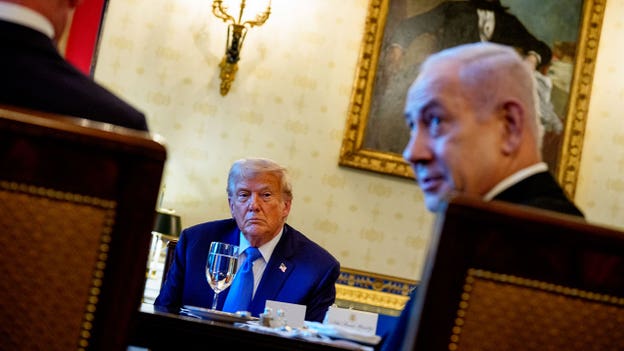
New York City takes center stage in global diplomacy this week as world leaders convene for the 80th session of the United Nations General Assembly (UNGA). The annual meeting, regarded as the preeminent diplomatic gathering of the year, brings together presidents, prime ministers, and foreign ministers from across the globe to debate pressing issues and set the tone for international relations in the year ahead.
Among the most closely watched attendees are U.S. President Donald Trump and Israeli Prime Minister Benjamin Netanyahu, whose actions often draw scrutiny at the Assembly
Russian Foreign Minister Sergey Lavrov is also expected to attend, as is Ukrainian President Volodymyr Zelenskyy.
Topics expected to dominate the week include conflicts in Eastern Europe and the Middle East, global economic stability, climate change, and the role of emerging technologies in international security.
Behind the scenes, bilateral meetings are likely to carry as much weight as the speeches delivered from the UN podium, as leaders seek to broker deals, ease tensions, and reinforce alliances.
The world’s attention turns once more to the question of whether the UN can foster cooperation in an era of growing geopolitical divides — including the war in Ukraine and Israel’s offensive in Gaza.
Live Coverage begins here