
Israel expands offensive with new wave of coordinated strikes in Iran and Lebanon
Israel continues to carry out strikes against Iran as part of a massive joint military offensive with the U.S. known as "Operation Epic Fury." President Donald Trump warned Iran against retaliating following a series of attacks during which Iranian Supreme Leader Ayatollah Ali Khamenei was killed.
Coverage for this event has ended.
Smoke seen rising near US Embassy in Kuwait amid expanded regional conflict with Iran
Smoke was seen rising in the vicinity of the U.S. Embassy compound in Kuwait after Iran and Iranian-backed militias targeted Israel and Arab states with missile attacks.
This comes after a joint U.S.-Israeli strikes against Iran over the weekend that killed the Islamic Republic’s Supreme Leader Ali Khamenei.
The U.S. and Israel struck targets in Iran as the war expanded on Monday.
Fire and smoke rose from the vicinity of the embassy compound in Kuwait City and an alarm was heard after the Iranian attack, which came shortly after the U.S. issued a warning to Americans in the area to take cover and for others to stay away.
There were no immediate reports on damage or casualties.
This came amid reports of several U.S. warplanes crashing in Kuwait, according to the country's defense ministry. All the pilots were safely bailed out. The ministry did not say what caused the crashes, but they happened during an intense period of Iranian fire toward Kuwait.
The pilots had been transported to a hospital in stable condition.
The Associated Press contributed to this report.
Coverage continues at March 2 live blog
Coverage for Monday, March 2 is continuing at a new live blog. Thank you for continuing to follow Fox News' coverage of the war with Iran.
Iran's foreign minister says Tehran 'has always been open to diplomacy'
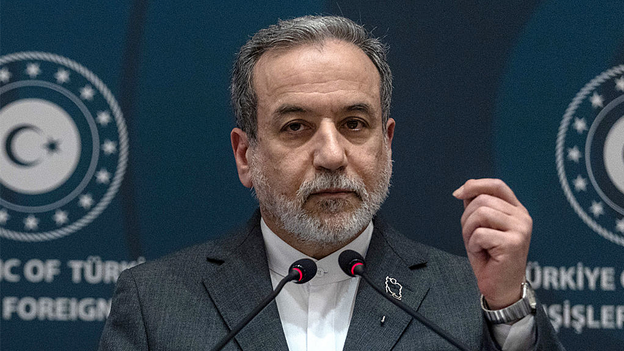
Iranian Foreign Minister Abbas Araqchi said on Sunday that Tehran "has always been open to diplomacy" after joint U.S.-Israeli strikes against Iran that killed the Islamic Republic’s Supreme Leader Ali Khamenei.
"Iran has always been open to diplomacy, and I think we have a very good record of that," Araqchi said on Sunday, according to Reuters. "Contrary to Americans, their record is bad and very negative."
"This is the second time that we negotiated with the Americans, and they decided to attack us right in the middle of negotiation," he continued.
Araqchi added that "what we are doing is, in fact, an act of self-defense and retaliation to the American aggression against us."
"We are not attacking our brothers in the Persian Gulf," he said. "We are not attacking our neighbors. But we are attacking American targets. And this is obvious. The United States military, is targeting us, and we have no way but to defend ourselves."
At least 31 people killed in Lebanon after Israeli airstrikes, officials say
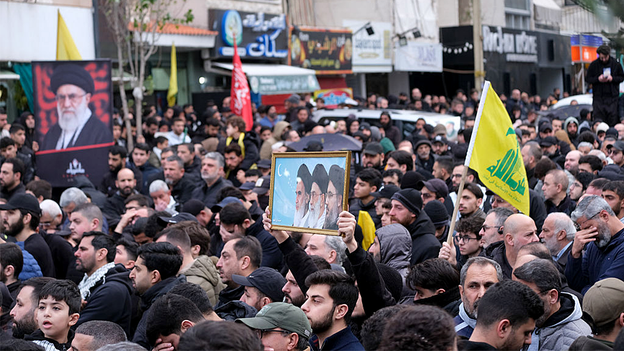
Israeli airstrikes killed at least 31 people in Lebanon after the terror group Hezbollah attacked the Jewish State, Lebanon's Health Ministry announced on Monday.
The Health Ministry said that 149 people were also wounded in the strikes. About two-thirds of the people killed were in southern Lebanon.
The attack from Hezbollah and Israel’s retaliatory strikes expanded the conflict in region following joint U.S.-Israeli strikes against Iran that killed the Islamic Republic’s Supreme Leader.
"We have launched an offensive campaign against Hezbollah," said Israel Defense Force Chief of the General Staff LTG Eyal Zamir.
"We are not only operating defensively — we are now going on the offensive as well," he added. "We must prepare for many prolonged days of combat ahead. This requires strong defensive readiness and sustained offensive readiness, operating in continuous waves while constantly utilizing opportunities."
CENTCOM releases photos of USS Ford launching aircraft from Eastern Mediterranean Sea
The U.S. Central Command said on Sunday that the USS Gerald R. Ford is "in the fight" against Iran, launching aircraft from the Eastern Mediterranean Sea.
CENTCOM posted images of aircraft preparing to take off from the aircraft carrier after the U.S. and Israel attacked Iran over the weekend as part of Operation Epic Fury.
"USS Gerald R. Ford (CVN 78), the world’s largest aircraft carrier, is in the fight with U.S. forces supporting Operation Epic Fury – launching aircraft from the Eastern Mediterranean Sea," CENTCOM wrote on X.
Iran security chief says country 'will not negotiate' with US, accuses Trump of being 'Israel First'
Iran's Secretary of the Supreme National Security Council Ali Larijani on Sunday accused U.S. President Donald Trump of turning his "America First" slogan into "Israel First" and affirmed that Tehran will not negotiate with the U.S. government.
"Trump plunged the region into chaos with his 'delusional fantasies' and now fears more American troop casualties. With his delusional actions, he turned his self-made 'America First' slogan into 'Israel First' and sacrificed American soldiers for Israel's power-hungry ambitions," Larijani wrote on X after the U.S. and Israel attacked Iran over the weekend, triggering a wider conflict in the Middle East.
"And with new fabrications, it is once again imposing the cost of assassinating its own character on American soldiers and families," he continued. "Today, the Iranian nation is defending itself. The armed forces of Iran did not initiate the aggression."
He also wrote in another post that Iran "will not negotiate with the United States."
Earlier on Sunday, Larijani said Tehran does not want to attack other countries in the Middle East but that it must respond when U.S. military bases located in the region are used to attack Iran.
"To the countries of the region: We are not seeking to attack you. But when the bases located in your country are used against us, and when the United States carries out operations in the region relying on these forces, then we will target those bases. For these bases are not part of the land of those countries; rather, they are American soil," he wrote Sunday morning.
Oil prices surge after strikes kill Iran’s supreme leader, tankers hit near Strait of Hormuz
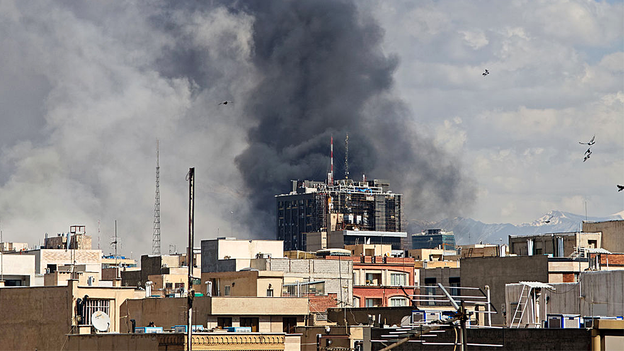
Oil prices surged late Sunday as fears mounted that the escalating Iran conflict could drag on for weeks, rattling global energy markets.
Global benchmark Brent crude briefly jumped to $82.37 a barrel — its highest level since January 2025 — in the first wave of trading following U.S. and Israeli strikes on Iran that killed Supreme Leader Ali Khamenei, according to Reuters.
By 7:54 p.m. ET, Brent had pulled back slightly but was still up more than 7% at $78.24 a barrel.
U.S. West Texas Intermediate crude also surged nearly 7%, climbing to $71.68 after briefly hitting $75.33 — its highest since June of last year.
Analysts at Citi warned that prices could climb further if the conflict persists, projecting Brent could trade between $80 and $90 a barrel in the coming days.
This is an excerpt from an article by FOX Business' Sophia Compton
Austin shooting suspect wore Iranian flag shirt during attack, sources say

Authorities said they found an Iranian flag and photos of regime leaders in the apartment of the gunman in the shooting outside a bar in Austin, Texas, on Sunday morning.
The flag and the images were discovered during a search of the suspect's home, according to CBS News, after the shooting early Sunday morning that left three people dead and 14 wounded.
The shooter was also wearing a sweatshirt that read "Property of Allah" and an undershirt featuring an Iranian flag when he carried out the attack, according to law enforcement sources.
The suspect, identified as Ndiaga Diagne, was a 53-year-old naturalized U.S. citizen who was born in Senegal and lived in Pflugerville, Texas, multiple federal law enforcement sources told Fox News.
Diagne first entered the U.S. in 2000 on a B-2 tourist visa before becoming a lawful permanent resident six years later after marrying a U.S. citizen. He became a naturalized U.S. citizen in 2013.
His criminal history includes being arrested in Texas in 2022 for collision with vehicle damage.
State Dept says highest priority is 'security of Americans' amid travel advisories for Middle East
The State Department on Sunday said its highest priority is the "safety and security of Americans everywhere," as it provided travel advisories for more than a dozen countries in the Middle East amid the conflict in the region sparked by U.S. and Israeli attacks on Iran.
"The Trump Administration has no higher priority than the safety and security of Americans everywhere," Assistant Secretary for Consular Affairs Mora Namdar said on X.
The department issued a "Level 4: Do Not Travel for Any Reason" alert for Iran, Iraq and Lebanon.
Americans in Israel, Bahrain, Kuwait, Pakistan and Qatar were urged to reconsider travel as part of the travel guidance.
The department also encouraged Americans in Egypt, Jordan, Oman, Saudi Arabia and the United Arab Emirates to exercise increased caution.
Israel issues urgent evacuation order to villages in southern Lebanon
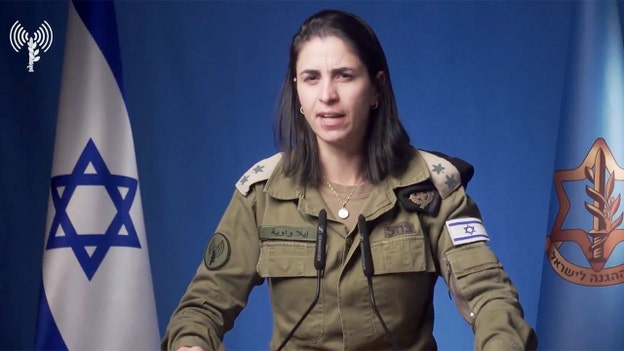
An Israeli military spokesperson issued an urgent evacuation warning to residents of dozens of villages across southern Lebanon, urging civilians to move at least 1,000 meters away from areas where the Israel Defense Forces say Hezbollah is operating ahead of expected strikes.
Lt. Col. Ella Waweya directed the warning at residents in dozens of villages across southern Lebanon and the Western Bekaa, including Sarafand, Al-Ma’roub, Saida and areas near Beaufort Castle.
“Hezbollah activities are forcing the Defense Army to act against it; the Israeli Defense Forces do not wish to harm you,” the statement posted to X read. “For your safety, you must immediately evacuate your homes and move away from the villages by at least 1,000 meters to open areas.
“Anyone present near Hezbollah elements, facilities, and combat means endangers their life,” she added. “Keep yourselves and your loved ones safe.”
US strikes Iranian aircraft, drone hangar as campaign expands
U.S. Central Command (CENTCOM) posted a new video showing U.S. forces targeting and destroying Iranian threats, including an airplane and a hangar containing drones.
“U.S. forces are taking bold action to eliminate imminent threats posed by the Iranian regime,” CENTCOM said on X. “Strikes continue.”
The footage comes as U.S. forces expand operations targeting Iran’s military infrastructure, including ballistic missile systems and drone capabilities that officials say pose an imminent threat to American forces and regional allies.
Gang of Eight to receive urgent Iran briefing Tuesday
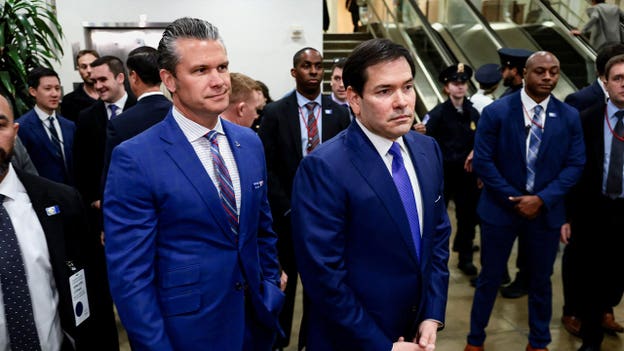
Administration officials are expected to brief the bipartisan “Gang of Eight” – the top Democratic and Republican leaders in Congress and the chairs and ranking members of the intelligence committees – on developments involving Iran during an urgent closed-door session Tuesday afternoon, Fox News has confirmed.
The meeting comes as broader classified briefings are scheduled the same day, when administration officials are set to update the full Senate at 3:30 p.m., followed by a House briefing at 5 p.m.
Speaker Mike Johnson announced Sunday that the Trump administration would brief lawmakers this week on the war in Iran, revealing the plans during a House GOP conference call, Fox News Digital has learned.
Secretary of State Marco Rubio, Defense Secretary Pete Hegseth, CIA Director John Ratcliffe, Chairman of the Joint Chiefs of Staff Gen. Charles Q. Brown Jr. and Gen. Dan Caine are expected to participate in the congressional briefings.
After 47 years, Iran’s regime shows signs of cracking under pressure
For the first time in nearly five decades, the Iranian regime’s grip on power appears to be cracking, and the Iranian people – long suppressed by what critics call a brutal Islamist system – are seizing what some see as a historic opening to demand freedom and regime change.
Iranian-American communications strategist Sarah Raviani said the moment marks a turning point.
“I think this is the first time that we have seen the illusion of permanence crack within the regime for the first time in 47 years,” she said, adding that Iranians have been waiting for “that crack in the system” after decades of repression.
Raviani pointed to past uprisings, including demonstrations in January, when young protesters faced live fire in the streets.
“You had teenagers that were facing live fire and still decided to stand up … shouting for their freedom and for regime change in Iran,” she said, describing a population that has grown increasingly unapologetic in its demands.
She also said there is little daylight between Iranians inside the country and the diaspora abroad when it comes to calls for change. After living under what she called a “brutal system of repression” for 47 years, many Iranians have become even more resolute in demanding freedom.
Still, Raviani acknowledged the danger ahead, noting that previous uprisings have been met with deadly crackdowns.
“Every single time the Iranian people have risen up to demand their freedom, there have been brutal massacres,” she said, expressing hope that one day she will be able to show her children “a free and prosperous Iran.”
US strikes on Iran could spark retaliation from cyberattacks, sleeper cells, former DHS chief warns
U.S. military operations against Iran could trigger retaliatory threats inside the homeland, including cyberattacks, sleeper cells and radicalized lone actors sympathetic to Tehran, according to a former senior homeland security official.
Former Acting DHS Secretary Chad Wolf told Fox News’ “The Big Weekend Show” on Sunday that when the United States conducts offensive operations overseas, officials must anticipate possible blowback at home.
“Any time that there are offensive operations by the United States government overseas, you have to anticipate that somehow some way that's going to find its way back to the homeland, or at least you need to prepare for that,” Wolf said.
Wolf said the Department of Homeland Security has previously responded to similar scenarios by raising its protective posture in areas such as cybersecurity, border security and aviation.
Wolf said the most concerning threat vectors include potential Iranian cyberattacks and activity by sleeper cells or lone individuals inside the U.S. who may be sympathetic to Tehran’s cause and could carry out violence against everyday Americans.
Acknowledging the difficulty in preemptively stopping such threats, Wolf said intelligence and law enforcement cooperation remains critical.
Wolf said these types of attacks are especially hard to stop because lone actors often leave little to no trail, even as Joint Terrorism Task Forces nationwide work to identify emerging threats and prevent violence.
He also stressed the importance of fully funding DHS, saying that gaps in pay and resources undercut morale and readiness.
“You wouldn’t want the Department of War operating without full funding, and you don’t want the Department of Homeland Security operating without full funding,” he said, noting the role of aviation screeners, the Coast Guard and cybersecurity teams in protecting the homeland.
Suspected drone strike targets Britain's RAF Akrotiri base in Cyprus
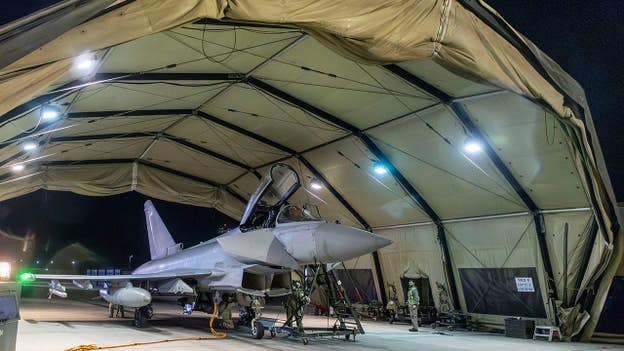
British forces responded to a suspected drone strike at RAF Akrotiri in Cyprus around midnight local time, the Ministry of Defense said, adding that the base activated its highest level of force protection and that no casualties were reported.
“Our Armed Forces are responding to a suspected drone strike at RAF Akrotiri in Cyprus at midnight local time,” a Ministry of Defense spokesperson said. “Our force protection in the region is at the highest level and the base has responded to defend our people.”
The spokesperson described the situation as ongoing and said additional details would be released as they become available.
The Defense Ministry said it regularly reviews security at its overseas bases, including the Sovereign Base Areas in Cyprus, and recently deployed additional defensive capabilities – including radar systems, counter-drone systems, F-35 jets and ground-based air defense – to support regional stability and counter airborne threats.
Israel bombs Hezbollah positions after cross-border attack
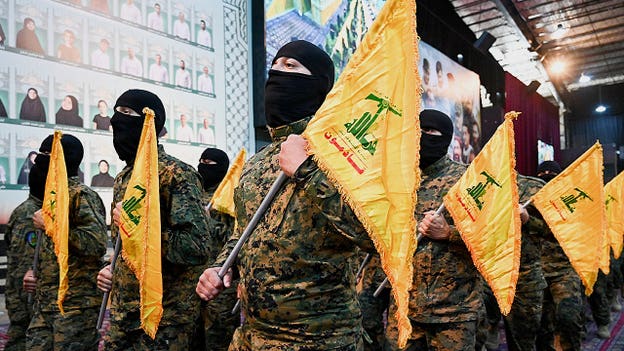
Israel launched airstrikes across Lebanon targeting Hezbollah positions after the Iran-backed militant group fired projectiles into Israeli territory, opening what the Israel Defense Forces described as a new front in the expanding regional conflict.
The strikes came in response to what the IDF said was Hezbollah fire toward Israel, marking the first such attack since 2024. In retaliation, Israeli forces began hitting Hezbollah targets, which the military said are acting on behalf of the Iranian regime.
“The IDF will operate against Hezbollah’s decision to join the campaign, and will not enable the organization to constitute a threat to the State of Israel and harm the civilians of northern Israel,” the IDF said. “The Hezbollah terrorist organization brings ruin to the State of Lebanon, and the IDF will forcefully respond to such actions.”
The military added that troops had prepared for this scenario under Operation Roaring Lion and are ready for an “all-fronts” conflict against any threat to Israel.
US, Gulf nations call Iran attacks ‘dangerous escalation’
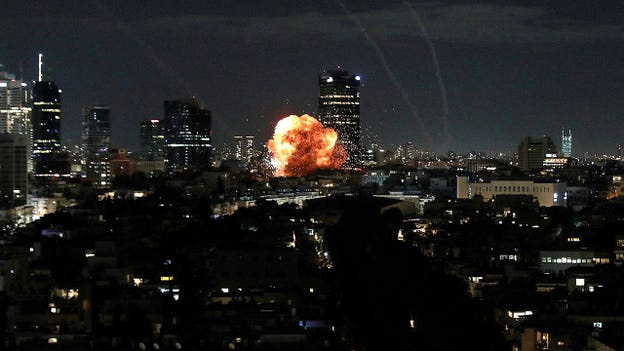
The U.S. and several Gulf allies issued a joint statement condemning what they described as Iran’s “indiscriminate and reckless” missile and drone attacks across the region, calling the strikes a dangerous escalation and reaffirming their collective right to self-defense.
The statement – issued by the governments of the United States, Bahrain, Jordan, Kuwait, Qatar, the Kingdom of Saudi Arabia and the United Arab Emirates – signaled a unified front against Tehran and underscored deepening regional coordination in response to Iran’s cross-border missile and drone attacks.
“The United States, Bahrain, Jordan, Kuwait, Qatar, the Kingdom of Saudi Arabia and the United Arab Emirates strongly condemn the Islamic Republic of Iran’s indiscriminate and reckless missile and drone attacks against sovereign territories across the region,” the statement read. “These unjustified strikes targeted sovereign territory, endangered civilian populations and damaged civilian infrastructure.”
“The Islamic Republic’s actions represent a dangerous escalation that violates the sovereignty of multiple states and threatens regional stability,” it continued. “The targeting of civilians and of countries not engaged in hostilities is reckless and destabilizing behavior.”
“We stand united in defense of our citizens, sovereignty and territory, and reaffirm our right to self-defense in the face of these attacks,” the statement added. “We remain committed to regional security and commend the effective air and missile defense cooperation that has prevented far greater loss of life and destruction.”
Israel unleashes new wave of strikes in heart of Tehran
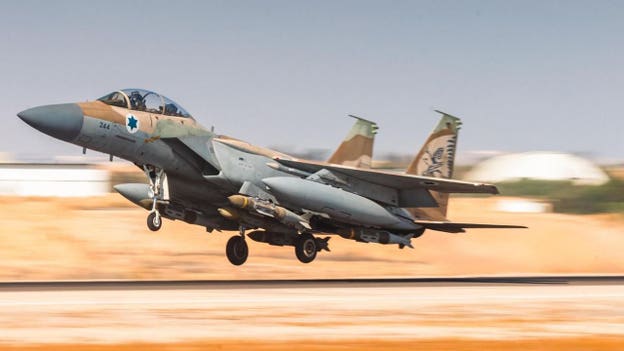
The Israel Defense Forces (IDF) said the Israeli Air Force has launched a new wave of strikes against Iranian regime targets in the heart of Tehran.
“The IDF continues to carry out large-scale strikes against targets of the Iranian terror regime across Tehran,” the military said in a statement.
In an initial report, the IDF said the operation was guided by military intelligence and marked an additional phase of attacks inside the Iranian capital.
Family of missing ex-FBI agent says Khamenei death won’t erase Iran’s guilt
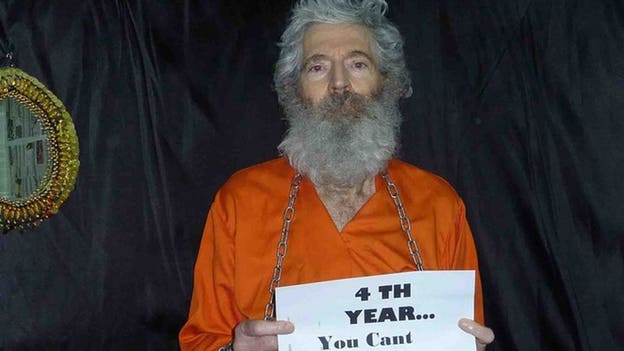
The family of retired FBI Special Agent Robert Levinson said the death of Ayatollah Ali Khamenei does not erase Iran’s responsibility for their father’s kidnapping and presumed death, renewing their call for accountability nearly two decades after he disappeared in Iran.
Levinson was working as a private investigator when he vanished in 2007 after traveling to Iran’s Kish Island. He had reportedly taken part in an unauthorized CIA mission and was presumed dead in 2020.
“For nearly 19 years, Iran has lied, obstructed, and refused to answer for the kidnapping, detention, and death of our father, Robert Levinson,” the family said. They said he was taken by Iranian officials in 2007, held for years without basic human rights, denied contact with his family and never returned home.
The family directly blamed Iran’s leadership, saying Khamenei “led the regime responsible for these crimes.” While noting that his death marks “a significant moment,” they stressed that it “does not erase what Iran did to our father, and it does not end our fight for accountability.”
They also expressed gratitude to President Donald Trump and Secretary of State Marco Rubio for confronting Tehran, saying they were “grateful” for efforts to recognize and address Iran’s long-standing practice of wrongful detention.
“Now Iran must do what it has refused to do for nearly two decades,” the family said, calling on the regime to provide full accountability, return Levinson’s remains and disclose the truth about his kidnapping, imprisonment and death. “Our family will not stop demanding the truth. And we will not stop demanding justice.”
Strike followed months of tracking Iran’s supreme leader
U.S. and Israeli intelligence agencies had tracked Iran’s supreme leader for months before launching a strike timed to a high-level meeting with dozens of top commanders, a move officials say was executed after surveillance revealed a rare gathering of senior regime figures.
Fox News senior correspondent Benjamin Hall reported that U.S. intelligence had been tracking the Ayatollah’s movements for months and moved quickly when surveillance revealed he was meeting with as many as 40 senior Islamic Revolutionary Guard Corps (IRGC) commanders.
“What an incredible way to start this sort of attack on Iran was to hit the Ayatollah and perhaps take out up to 40 of his colleagues, IRGC commanders across the board,” Hall said. “We're hearing that perhaps the U.S. weren't planning on starting so soon, but when they found out the Ayatollah was moving and meeting these people, they decided to act.
“For months, the CIA had been following the Ayatollah, they'd been mapping out how he moves,” Hall continued. “They had a really good understanding of how he communicated with people around him.
“You look back to the conflict in June last year, we looked at how Mossad had been watching how they were in communication, but also with tracking the bodyguards' phones, because many of the leaders of Iran said no more cell phones, but their bodyguard continued to track, travel with cell phones,” he added. “So they were monitoring signal intelligence. They were monitoring human intelligence. And that's why on Saturday morning when the Ayatollah met with up to 40 of these leaders, they were ready and they acted quickly.”