






















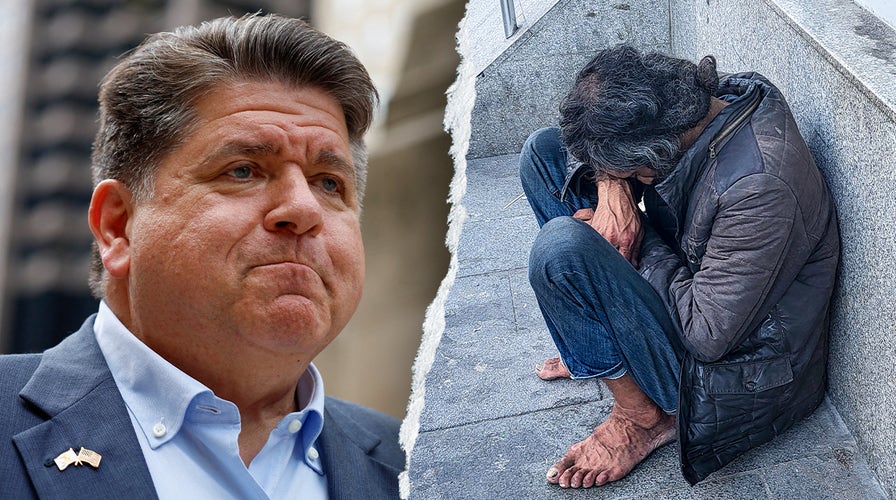
Illinois sheriff blames America’s ‘most dangerous’ law on spike in drugs, homelessness
Sheriff of Franklin County, Illinois delivers his take on the SAFE-T Act and it's impact on his community after eliminating cash bail.
More than two years after Illinois eliminated cash bail under the SAFE-T Act, statewide crime data shows no increase in violent crime, but law enforcement leaders in rural parts of the state say the reform has created new public safety and addiction-treatment challenges that statistics alone do not capture.
The Illinois SAFE-T (Safety, Accountability, Fairness and Equity-Today) Act was passed in January 2021 and signed by Gov. JB Pritzker the following month. Its most controversial provision, the end of cash bail under the Pretrial Fairness Act, took effect Sept. 18, 2023, after the Illinois Supreme Court upheld the law’s constitutionality.
Supporters argued the reform would prevent low-risk defendants from being jailed simply because they could not afford bail. Opponents warned it would lead to repeat offenses, failures to appear in court and harm to victims of crime.
In a previous interview, Mayor Keith Pekau of Orland Park, a Chicago suburb, told Fox News, "When I said that this is the most dangerous law I've ever seen, I believe that."

Crime stabilized during the SAFE-T Act’s phased rollout in 2021 and 2022, followed by a small decline after rampant criminal activity during the COVID-19 pandemic.
A year later, statewide data largely undercuts those warnings, but some sheriffs say the law has worsened conditions for communities already struggling with addiction and limited treatment access.
Research from Loyola University Chicago’s Center for Criminal Justice shows that between September 2023 and September 2024, violent crime in Illinois declined by approximately 6%, while homicides fell by roughly 10%. Property crime rose by less than 1% statewide.
Failure-to-appear rates also remained stable at around 15%, consistent with pre-reform levels. Research found no statistically significant increase in re-offenses among defendants released under the new risk-based pretrial system.
Those findings align with Illinois State Police crime data showing that after a sharp pandemic-era spike in 2020, crime stabilized during the SAFE-T Act’s phased rollout in 2021 and 2022, followed by modest declines.
Cook County, which sharply curtailed the use of cash bail years before the statewide reform, saw slightly lower re-arrest rates and improved court appearance outcomes after 2023, according to Loyola University and Cook County court data.
CHICAGO RESIDENTS BEG FOR MORE HELP AS CRIME WREAKS 'HAVOC’ ON NEIGHBORHOODS

But in southern and rural Illinois, some law enforcement officials say the SAFE-T Act fails to address the realities of addiction-driven crime, particularly in areas with limited access to treatment.
"I don’t think the SAFE-T Act serves the public," Franklin County Sheriff Kyle Bacon, a 25-year law enforcement veteran whose county sits roughly 300 miles south of Chicago, told Fox News Digital.
Bacon said deputies routinely arrest people who are "high on methamphetamines or fentanyl" only to see them booked and released within minutes. He noted that under the new law, drug possession alone is no longer a detainable offense unless it involves additional charges, such as firearms or distribution crimes.
"We bring them into the jail, book them in, and immediately book them out, without even an hour of clean time," Bacon said. "They come in high; they leave high. And I ask myself often: how does that serve the public? How does that serve those people? It does not."
FUGITIVE REPEAT OFFENDER KEEPS WALKING FREE AS COURTS LET HIM LOOSE TO HURT PEOPLE, EXPERTS WARN
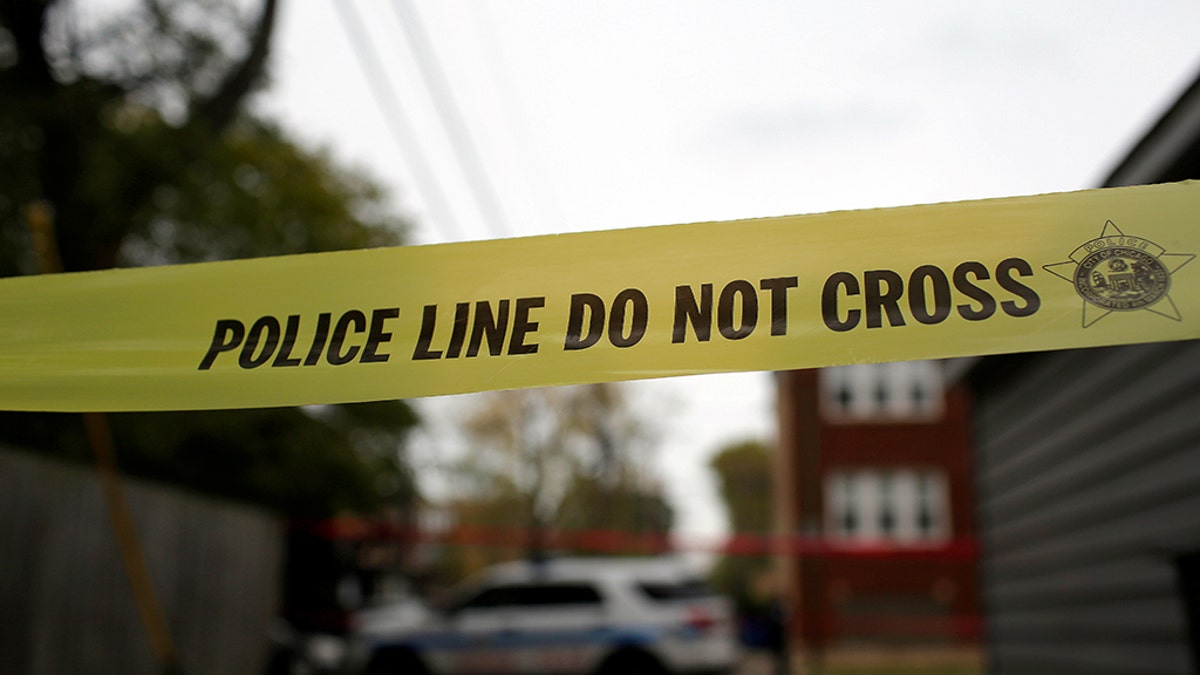
Yellow police tape is displayed at a crime scene in Chicago, Illinois. (Joshua Lott/Reuters)
Under the SAFE-T Act, judges may detain defendants before trial only if prosecutors show they pose a flight risk or a danger within the community. Addiction or intoxication alone does not necessarily qualify.
Bacon said that in counties like Franklin, the lack of detention options is compounded by what he described as a "treatment desert," where detox beds and rehabilitation services remain scarce.
"Many people in recovery tell the same story," he said. "They say, ‘I was arrested, I was in jail, I sobered up, and I knew it was time to make changes.’ We don’t even give them that opportunity anymore."
Supporters of the SAFE-T Act argue that jail should not function as a default detox center and that pretrial detention for addiction alone risks criminalizing poverty and illness. They also note that the law still allows judges to detain defendants charged with serious violent crimes.
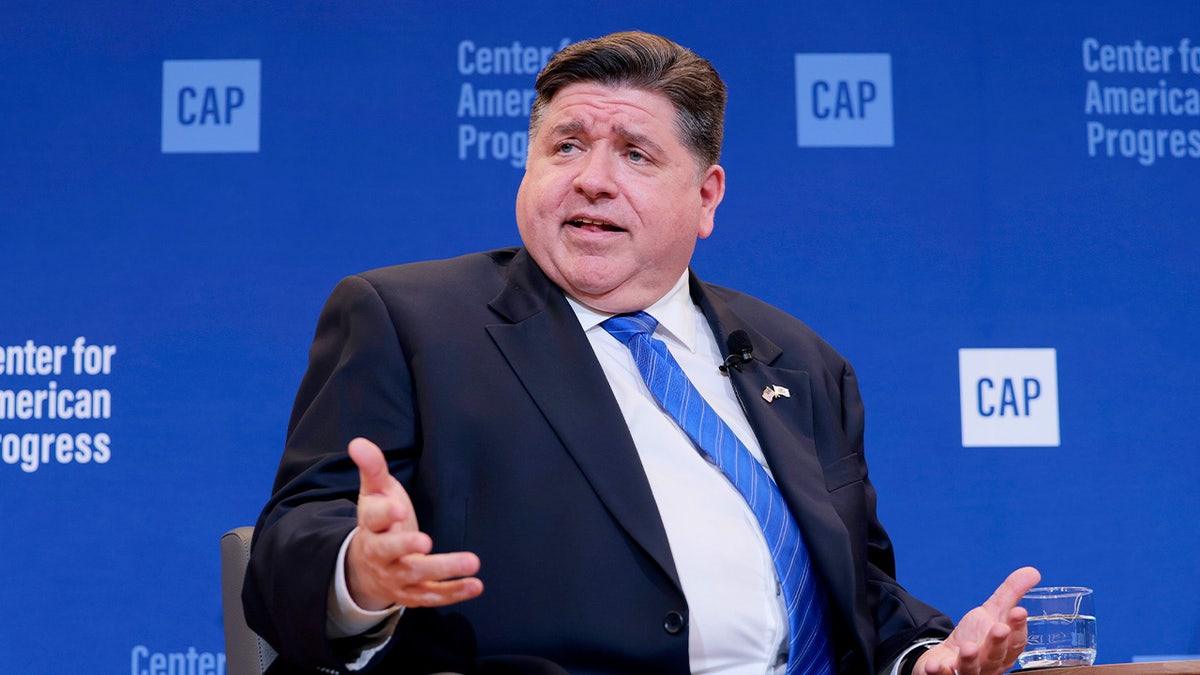
Illinois Gov. JB Pritzker has acknowledged that "tweaks" to the law could be considered, but no major legislative revisions have been enacted. (Anna Moneymaker/Getty Images)
Still, Bacon said addiction-driven thefts and burglaries remain a persistent problem in his county, and he believes the inability to hold people long enough to stabilize or mandate treatment undermines both public safety and recovery.
"Some people say addiction is a victimless crime. I don’t believe that," Bacon said. "Our burglaries, our thefts, our property crimes, the vast majority are driven by addiction."
He added that law enforcement often bears the brunt of public frustration when defendants are quickly released.
"People say, ‘The police let them go,’" Bacon said. "We’re just as frustrated. We work within the law. But when someone is victimized, an arrest is made, and the defendant walks right back out the door, that doesn’t feel like justice to victims."
Police unions and prosecutors were among the strongest opponents of the SAFE-T Act and backed a lawsuit by roughly 60 counties seeking to block implementation. The Illinois Supreme Court rejected those arguments in July 2023, ruling that the constitution does not guarantee cash bail and that lawmakers have broad authority over pretrial policies.
CLICK HERE TO GET THE FOX NEWS APP
Gov. Pritzker has acknowledged that "tweaks" to the law could be considered, but no major legislative revisions have been enacted.
Meanwhile, misinformation surrounding the reform, including viral claims that Illinois "legalized crime," fueled backlash during the 2022 election cycle.
More than one year after Illinois ended cash bail, crime is down statewide and court appearance rates remain stable. But for sheriffs in rural, treatment-poor regions, the SAFE-T Act has exposed a gap between criminal justice reform and addiction policy, raising questions about whether pretrial reform alone can address the root causes of crime.
As Bacon put it, "I don’t think this law takes the same consideration for victims as it does potential defendants."
Pritzker's office did not return Fox News Digital's request for comment.
