



























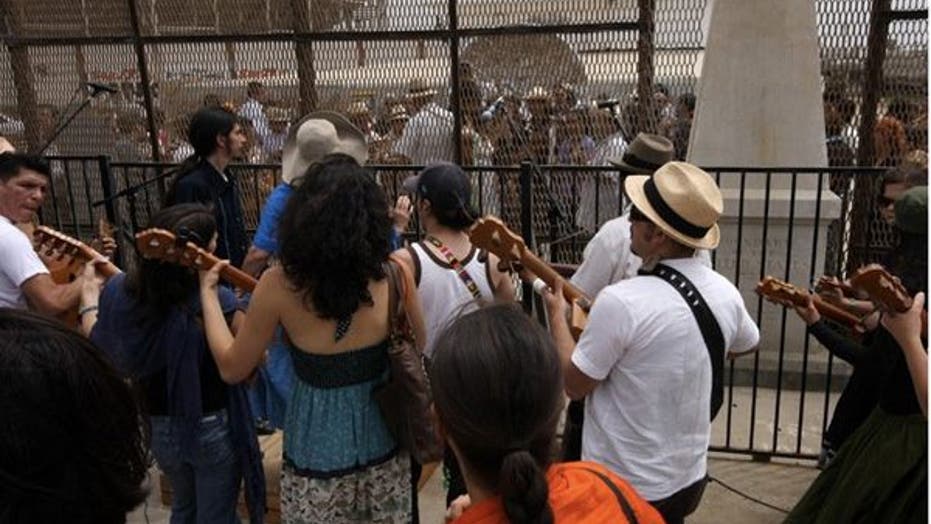
A Kinder, Gentler Approach to the Border
Border Encuentro is a bi-national, non-profit interest group made up of US and Mexican citizens who meet at the Tijuana and US borders.
Fifty dead leopard sharks were spotted on the banks of the Tijuana River in Imperial Beach, California Tuesday.
As reported by the San Diego Union-Tribune, the sharks were likely trapped by a natural dam caused by El Niño made up of sediment flowing from canyons of Mexico into the river, which crosses the border into the U.S. a few miles from where it flows into the Pacific Ocean, as well as a 2012 sand-replenishment project that deposited some 450,000 cubic yards of sand onto the shores of the Imperial Beach, north of the estuary.
The problem was further complicated by sewage spilling from the International Wastewater Treatment Plant due to malfunctioning equipment.
The result was a bacteria bloom that drew out the oxygen from the water and suffocated the fish that were trapped at the mouth of the river.
The mayor of Imperial Beach, Serge Dedina told the Union-Tribune he counted at least 50 dead leopard sharks.
- Academy Awards: Inocente, a Film About Undocumented Artist, Wins for Documentary Short
- Lolita Fashion Hits Tijuana
- A New Breed of Younger, Hipper Expats Flock to Tijuana
- The New Face of Tijuana
- Scientists Aim to Map and Save Endangered Habitats
- Clowns And Other Circus Performers Protest In Response To Circus Animal Ban
“The mouth of the river had not been blocked like this since 1983,” Brian Collins, manager of the San Diego Bay and Tijuana Slough national refuges told the newspaper.
“There were millions and millions and millions of gallons of water backed up in the estuary, and it’s stinky because it has sewage in it,” Collins said. “It turned into a public health problem.”
Officials used an excavator to dredge out the opening. It took more than two hours to break through and restore the river's flow to the sea.
Collins told the Union-Tribune it would be a few days before the contaminated water was fully discharged into the ocean. In the meantime, signs have been posted along the beach warning people to stay out of the water.
