




































Medieval skeletons found in heart of Brussels during archaeological excavation
Archaeologists in Brussels, Belgium, recently came across the remnants of an old cemetery located in a busy part of the city. The remains date back to the Middle Ages. (Source: @mijnmivb via Facebook)
New historical research is challenging centuries of assumptions about why the Bayeux Tapestry — one of the most iconic pieces of medieval art — was created.
The tapestry vividly depicts the Norman Conquest and the Battle of Hastings — and is widely believed to date to the 1070s.
The scenes show how the Normans invaded England from France and seized power from the Anglo-Saxons, all culminating in the death of Harold Godwinson at Hastings.
ANCIENT ROMAN FORT YIELDS 2,000-YEAR-OLD FRUIT THAT SURVIVED THE CENTURIES, PLUS OTHER TREASURES
Scholars have traditionally believed that the Bayeux Tapestry was meant to be hung inside the nave of Bayeux Cathedral, which was built in 1077 — but new research suggests it was meant for monks' mealtime viewing instead.
Benjamin Pohl, a medieval history professor at the University of Bristol, published his research in the journal Historical Research on Dec. 12.
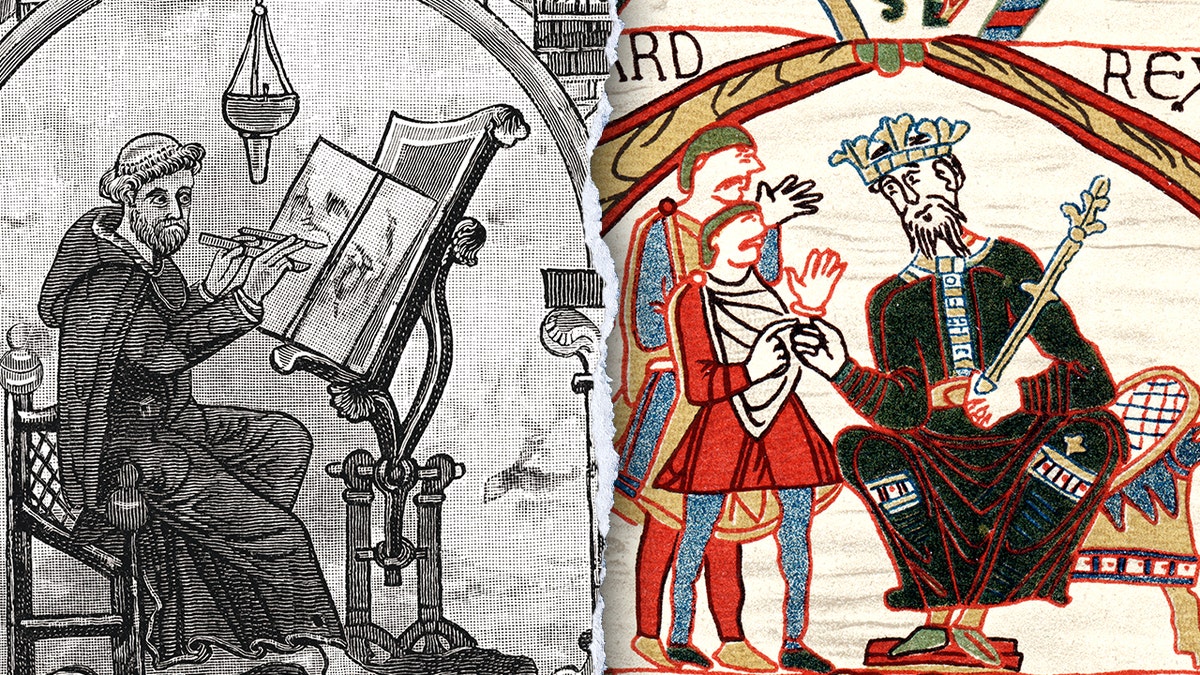
New research suggests the Bayeux Tapestry may have been designed for monastic dining halls rather than cathedral display. (Universal History Archive/Universal Images Group via Getty Images; Ann Ronan Pictures/Print Collector/Getty Images)
Speaking to Fox News Digital, Pohl said he believes the tapestry was designed specifically for the monastic refectory of St. Augustine's Abbey in Canterbury.
Pohl's research suggests the masterpiece "only came to Bayeux in the 15th century, more by accident than by design."
"From a practical perspective, a cathedral nave does not offer a particularly suitable space for hanging an embroidery of this length and weight in such a way that its contents can be seen and understood easily," he said.
CLICK HERE TO SIGN UP FOR OUR LIFESTYLE NEWSLETTER
On the other hand, he said a monastic refectory would have been "a much better-suited space, one in which the artifact could have been suspended easily at head height so that its images and text could be appreciated most effectively."
The expert also noted that the Bayeux Tapestry's text is written in a particular type of Latin — one that he says "matches the diverse levels of literacy found in a medieval monastery."
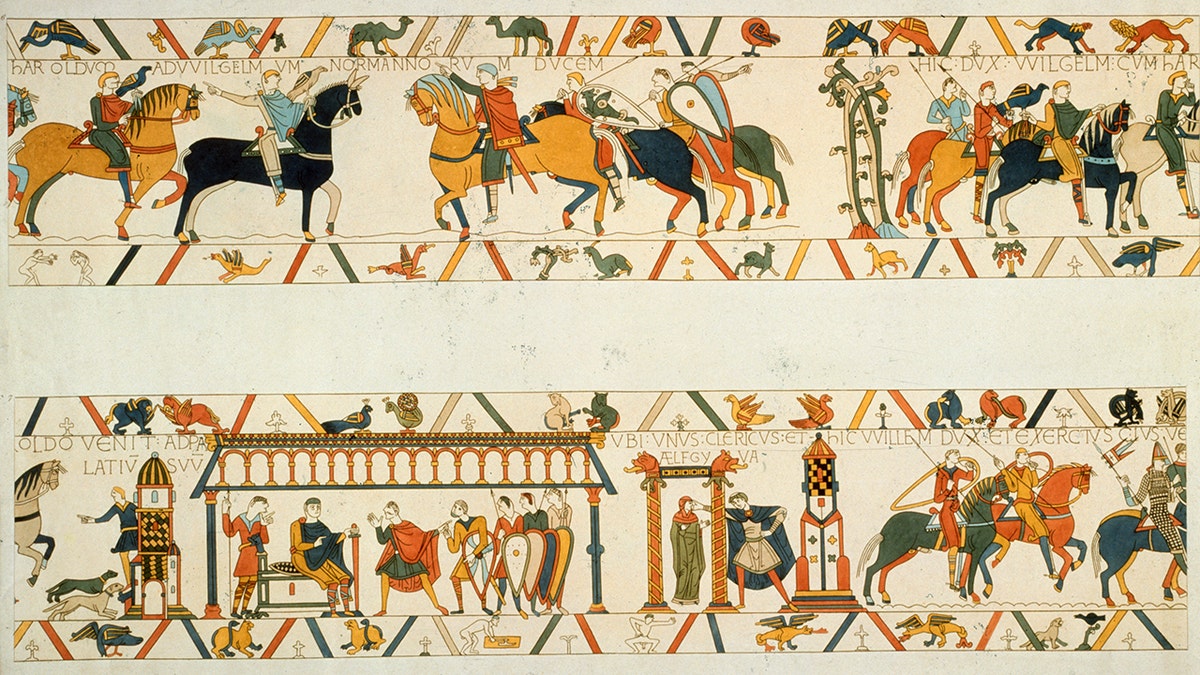
The Bayeux Tapestry depicts the Norman Conquest and the Battle of Hastings, culminating in the death of Harold Godwinson. (Hulton Archive/Getty Images)
"The Bayeux Tapestry's narrative can be interpreted as a moral story in keeping with the kinds of texts monks were contemplating regularly during mealtimes," he said.
"The surviving evidence we have… indicates that the refectory walls of St Augustine's would have been large enough to hang the Bayeux Tapestry in its entirety, probably covering most of its four internal walls," added Pohl.
CLICK HERE FOR MORE LIFESTYLE STORIES
But if anyone is imagining medieval monks toasting mugs of beer and enjoying a royal feast while viewing the tapestry — they would be mistaken.
Instead, the artwork was probably viewed in silence, Pohl said — while the monks ate plain and simple food, like light beer, bread, fish and a rare serving of meat.
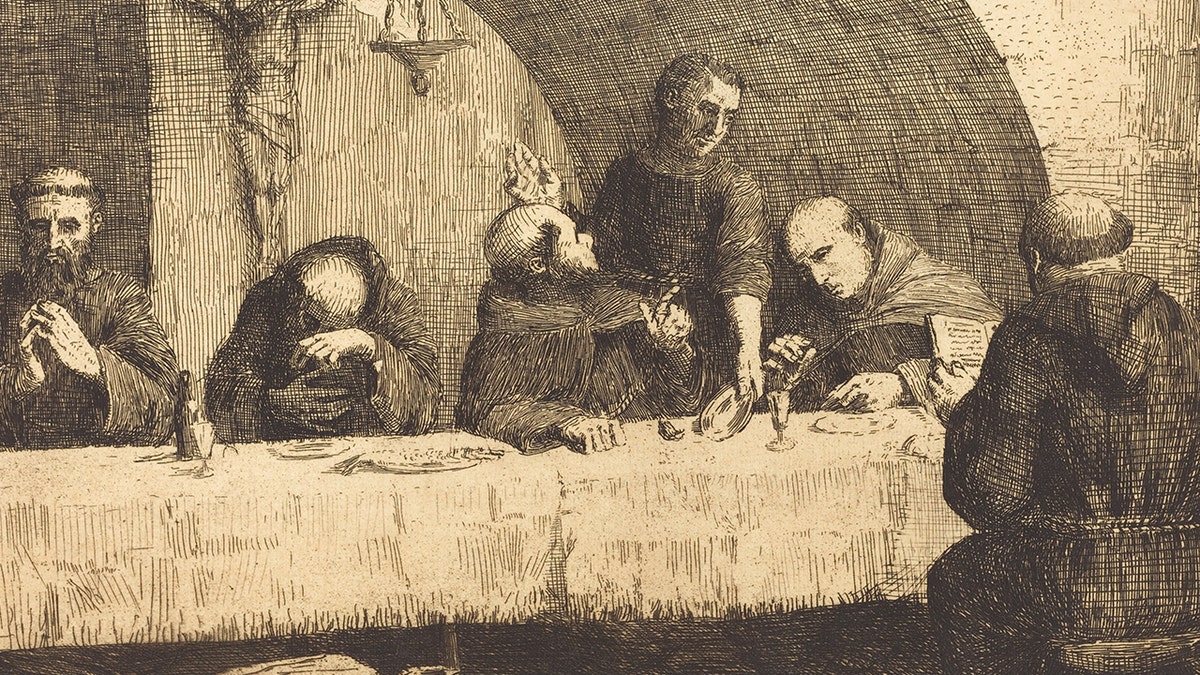
The embroidery's moral narrative aligns with religious texts traditionally read during monastic meals. (Heritage Art/Heritage Images via Getty Images)
"Following the rule of St. Benedict, which governed monastic life across much of medieval Europe, medieval monks were expected to maintain complete silence while eating, aside from the voice of the reader delivering the day’s text," he said.
Pohl added, "These readings delivered moral instruction to the diners, in a setting where any visual imagery would have reinforced spoken words and offered a focus for contemplation."
TEST YOURSELF WITH OUR LATEST LIFESTYLE QUIZ
If Pohl's theory proves correct, it would mean the refectory of St. Augustine's was meant to be built in the 1080s — and the Bayeux Tapestry may have been "kept in a box and was perhaps forgotten about" before the refectory was finished in 1120.
The latest research comes after the medieval masterpiece made several headlines in 2025.
"[N]obody could have foreseen that it would take almost 50 years for the refectory to be completed, so the plan might well have been to only keep it in storage for a few years," the professor added.
"But the massive delay may have extended this storage period for nearly two generations."
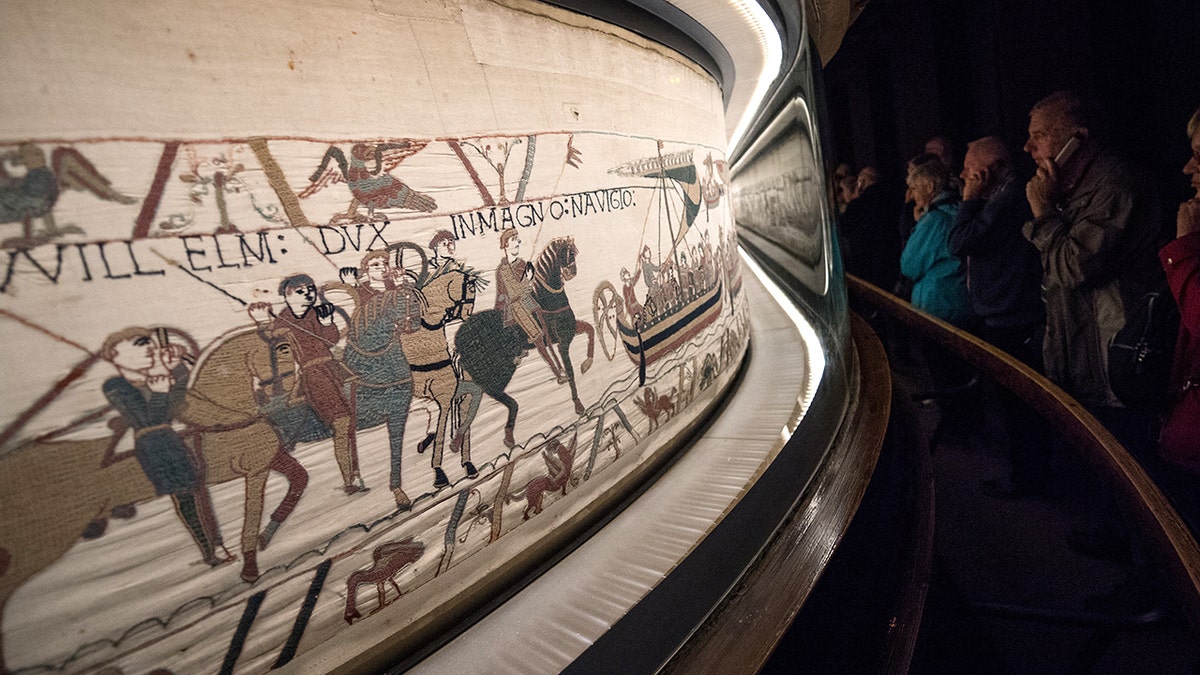
"From a practical perspective, a cathedral nave does not offer a particularly suitable space for hanging an embroidery of this length and weight in such a way," said an expert. (Loic Venance/AFP via Getty Images)
The latest research comes after the medieval masterpiece made several headlines in 2025.
In July, officials announced that the Bayeux Tapestry would be shown in the British Museum from September 2026 to July 2027 — the first time it would cross the English Channel in centuries.
CLICK HERE TO GET THE FOX NEWS APP
Earlier in 2025, Newcastle University announced the discovery of Harold Godwinson's residence in Bosham, a site that was depicted in the tapestry.
