





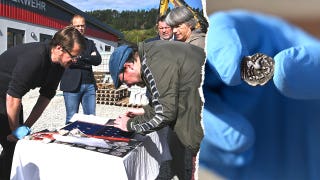

















Stone Age dog buried with 5,000-year-old dagger found in Sweden
Archaeologists have discovered an exceptionally well-preserved Stone Age dog skeleton buried with a 5,000-year-old bone dagger in a Swedish bog.
Archaeologists have unearthed an "exceptionally well-preserved" dog skeleton from the Stone Age — laid to rest alongside a 5,000-year-old dagger.
The discovery, announced by Arkeologerna, a Swedish archaeological consultancy, occurred around a site near Järna, southwest of Stockholm.
Arkeologerna worked with its parent organization, Sweden's National Historical Museums (SHM), during the excavation, which took place ahead of railway construction last fall.
SCIENTISTS SHATTER TIMELINE OF HUMAN FIRE-MAKING WITH 400,000-YEAR-OLD DISCOVERY IN ENGLAND
"Several thousand years ago, the 3,500-square-meter [37,700-square-feet] area looked very different," the release said.
"At that time, the bog was a shimmering lake used for fishing."
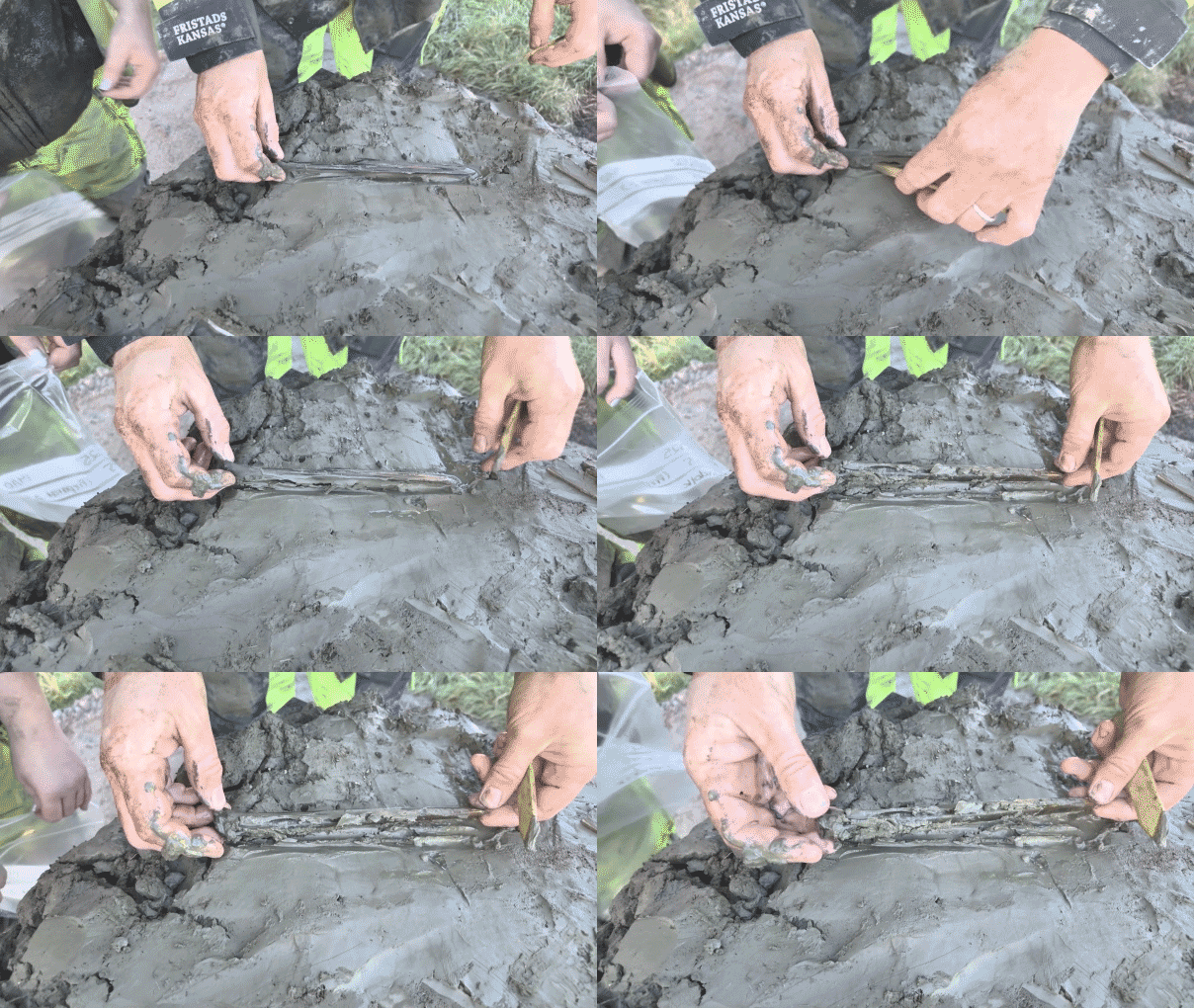
Archaeologists in Sweden uncovered an exceptionally well-preserved Stone Age dog burial site — containing a finely polished bone dagger dating back roughly 5,000 years. (Arkeologerna, SHM)
The dog was "deliberately" deposited with the bone dagger, which officials said was just under 10 inches long and was finely polished.
It was likely made from elk or red deer bone.
Officials described the dog as a "large and powerful male." He was between three and six years old when he died.
CLICK HERE TO SIGN UP FOR OUR LIFESTYLE NEWSLETTER
Archaeologists believe the dog was placed in a bag or container with stones and deposited about 100 to 130 feet out into the lake.
Linus Hagberg, project manager of the excavation, told Fox News Digital his team is still in the process of analyzing the remains, which they hoped would shed light on when the dog lived and what he ate.
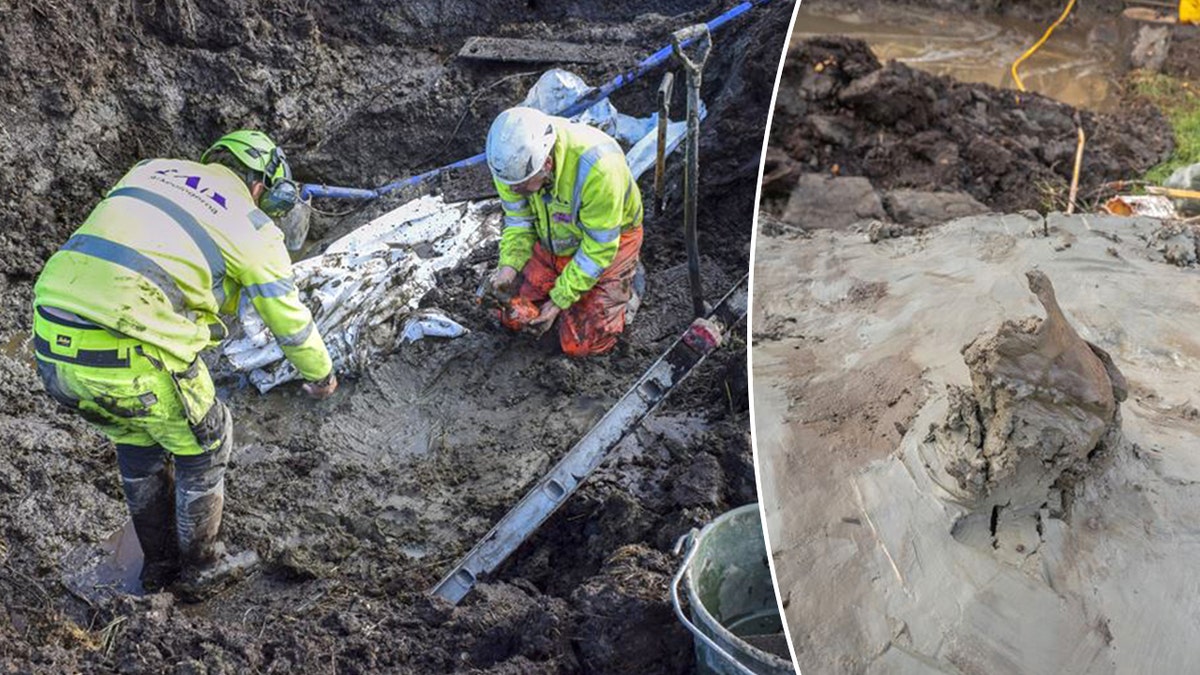
Officials say the dog was deliberately deposited in a lake near present-day Jarna, southwest of Stockholm, during the early Neolithic period. (Arkeologerna, SHM)
"Dog burials from early Neolithic times are very rare," said Hagberg.
"A couple of thousand years earlier, during the Mesolithic, dog burials appear on burial grounds and on settlements, but they were not common in those days either."
CLICK HERE FOR MORE LIFESTYLE STORIES
Researchers believe that the dog's skull was crushed when it died, as opposed to being crushed during the burial.
The bones survived the millennia because they were deposited in water — and Hagberg described their good condition as "rare as well."
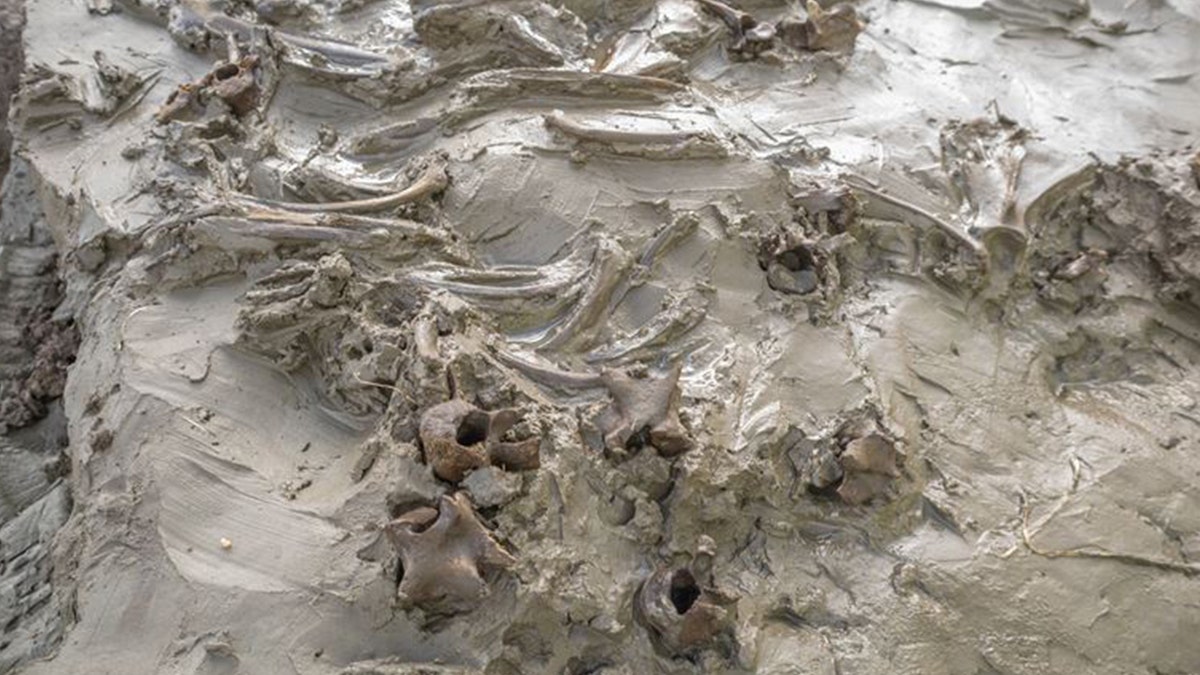
Officials said the waterlogged conditions helped preserve the dog’s bones for thousands of years. (Arkeologerna, SHM)
"The most surprising and unexpected event [of the excavation] was the finding of the deposited dog remains," he said. "Without a doubt."
TEST YOURSELF WITH OUR LATEST LIFESTYLE QUIZ
He also said that, while it's impossible to describe the dog in terms of modern breeds, the dog was "relatively large, with broad jaws and big teeth."
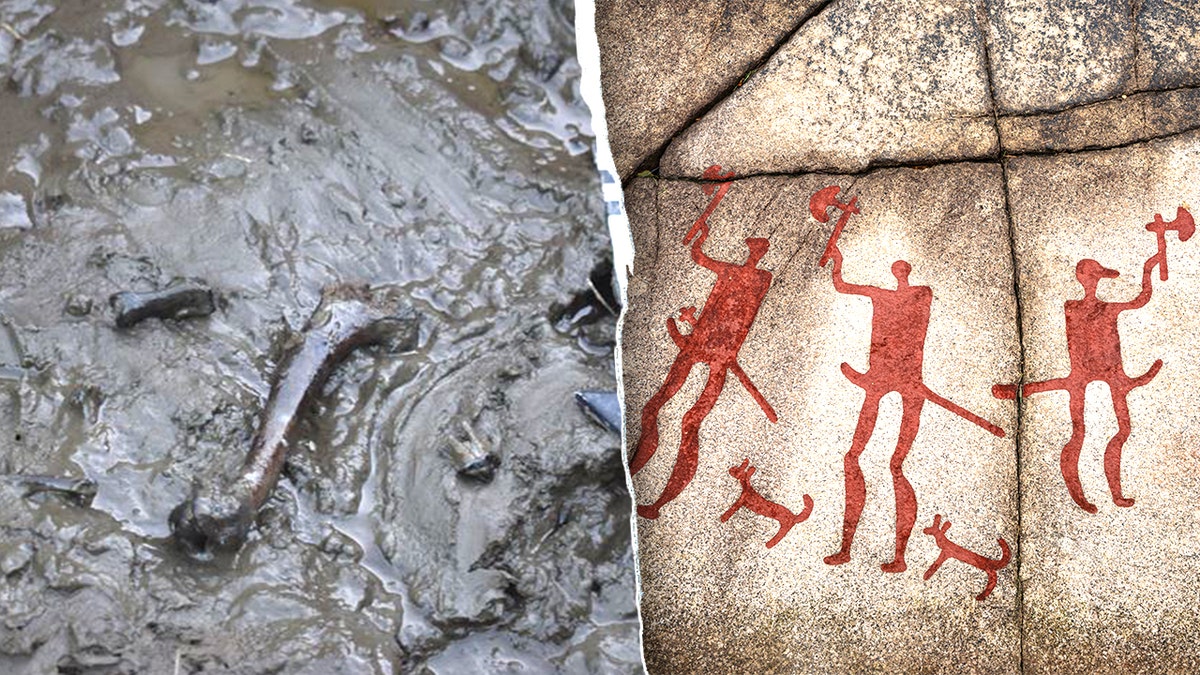
An excavation image shows the Swedish wetland where a 5,000-year-old dog burial was discovered, alongside the Fossum rock carvings in Sweden depicting prehistoric humans and animals. (Arkeologerna, SHM; iStock)
The discovery comes less than a year after archaeologists found another well-preserved dog burial from ancient Rome.
CLICK HERE TO GET THE FOX NEWS APP
Archaeologist Arne Verbrugge told Fox News Digital that the burial, which was found in Belgium, was preserved "quite well," thanks to the calcareous sandstone under which it was buried.
