




















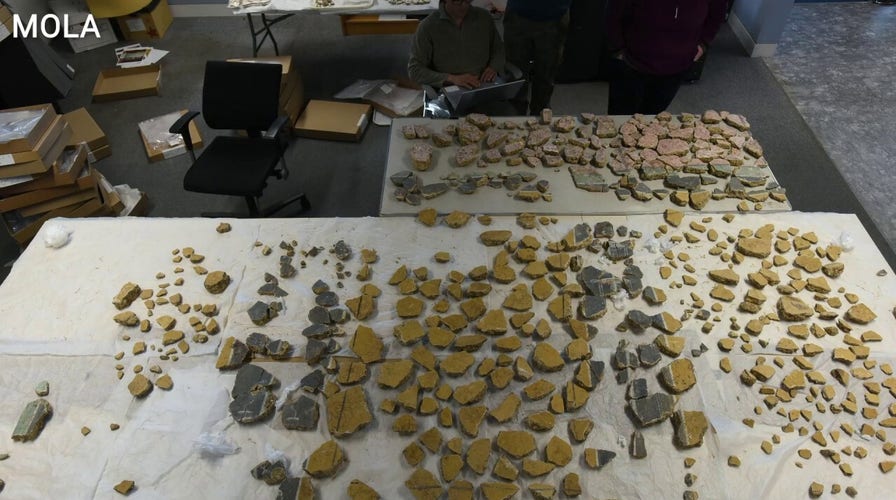
Archaeologists solve 1,800-year-old Roman fresco puzzle in London
London researchers have reconstructed a large Roman wall plaster collection, revealing 1,800-year-old frescoes that decorated a high-status building. (Source: MOLA)
Scientists recently discovered what may be the earliest evidence of deliberate fire-making by humans — and it's far older than scholars previously believed.
The study, which was published in the journal Nature on Dec. 10, centered around a site in Barnham, England, that dates to the Paleolithic era, the longest era of human prehistory.
Although the Paleolithic spans from about 2.5 million to 10,000 years ago, the newly uncovered evidence is dated to roughly 400,000 years ago.
Until now, the earliest known evidence of deliberate fire-making dated to about 50,000 years ago in northern France, which makes the new discovery a major chronological shift.
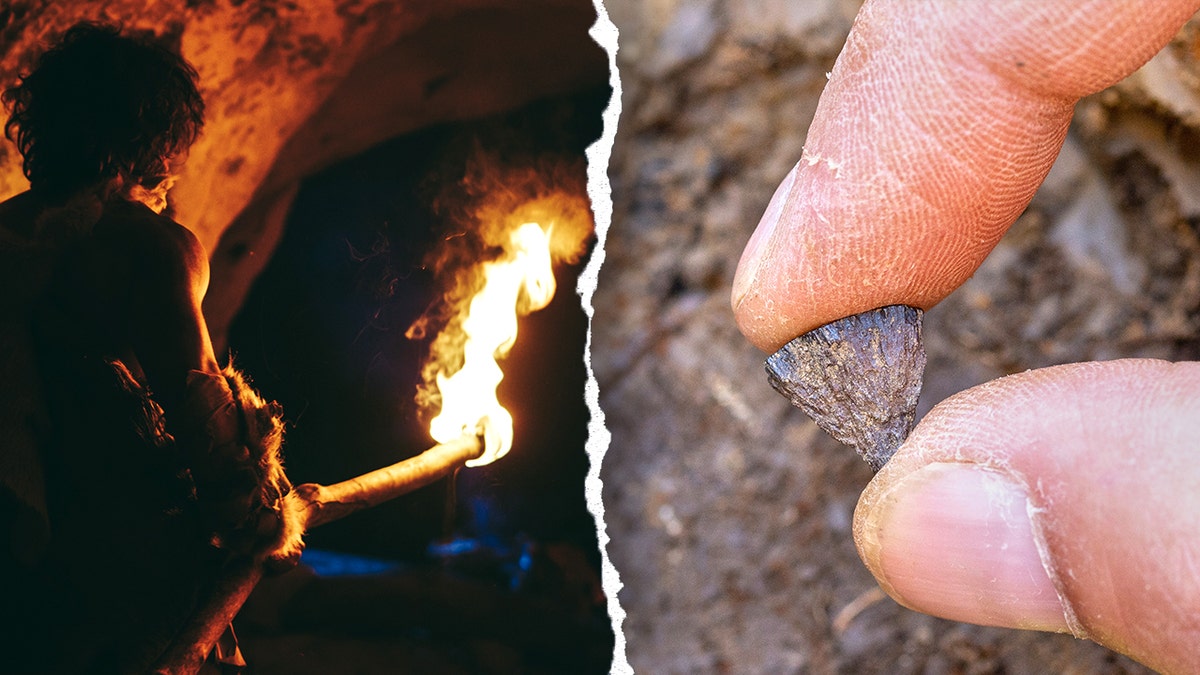
Scientists uncovered what may be the oldest deliberate fire-making evidence ever found, dated to 400,000 years ago. (iStock; Jordan Mansfield/Pathways to Ancient Britain Project via AP)
During the excavation, a team led by the British Museum found flint hand axes, a patch of baked clay and fragments of iron pyrite. The iron pyrite was likely struck against flint to produce fire.
Archaeologists found the burned deposits within the sediment of ancient ponds, which helped preserve the evidence hundreds of thousands of years later.
CLICK HERE TO SIGN UP FOR OUR LIFESTYLE NEWSLETTER
Scientists found that, rather than being proof of ancient wildfires or lightning strikes, the spot showed evidence of repeated burning.
According to geochemical tests, the sediments showed that heat exceeded 1,292 degrees Fahrenheit, which suggested localized, high-intensity fire rather than a natural event.
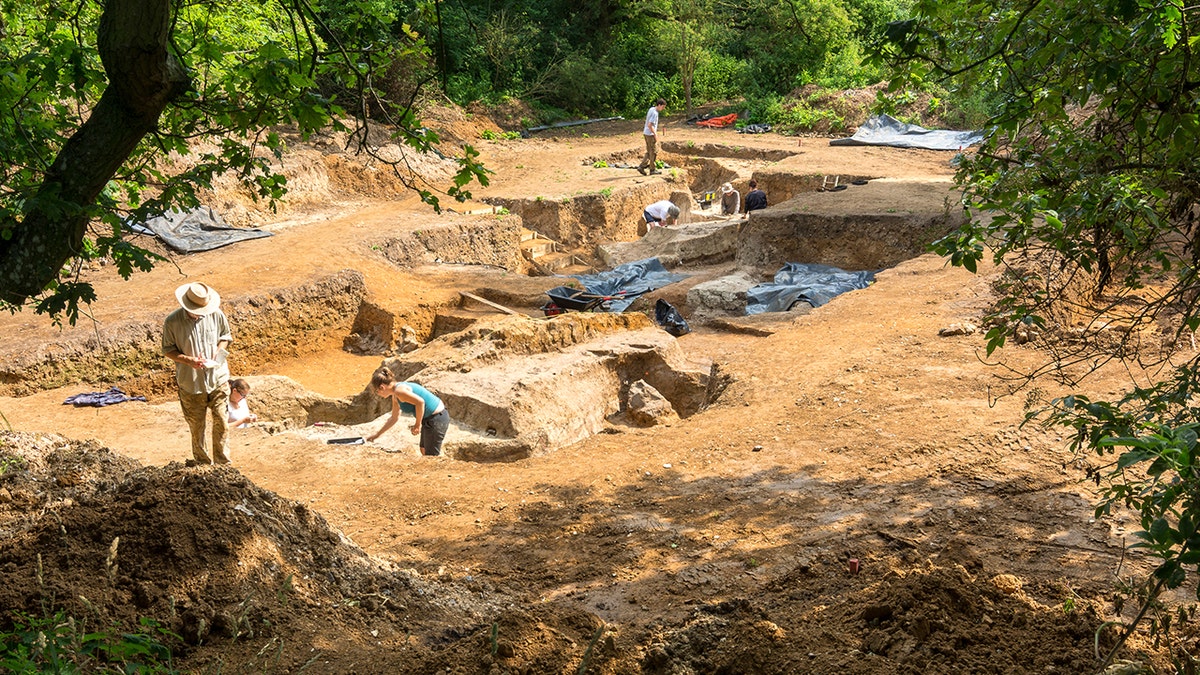
The Paleolithic site in Barnham, England, revealed signs of repeated fire use by early humans. (Jordan Mansfield/Pathways to Ancient Britain Project via AP)
Rob Davis, a Paleolithic archaeologist at the British Museum, told The Associated Press that the recently-gathered evidence shows "how they were actually making the fire and the fact they were making it."
CLICK HERE FOR MORE LIFESTYLE STORIES
In addition to allowing early humans to cook food, fires also helped them survive cold temperatures and scare off predators.
Killing toxins and pathogens during the cooking process was also a major key to survival.
"[It's] the most exciting discovery of my long 40-year career."
The results at Barnham, archaeologists say, are part of a wider pattern across Britain and continental Europe between 500,000 and 400,000 years ago, when early human brain size increased and more complex behaviors — like fire-making — began to emerge.
TEST YOURSELF WITH OUR LATEST LIFESTYLE QUIZ
For example, iron pyrite is not native to Barnham, which suggests that early humans deliberately collected it to start fires.
"[It's] the most exciting discovery of my long 40-year career," British Museum curator Nick Ashton told The Associated Press.

Fires helped early humans cook food, ward off predators and survive cold climates. (iStock)
The Barnham discovery joins a wave of remarkable prehistoric finds uncovered in 2025.
This spring, Texas officials found "colossal" megafauna bones while working on a planned state highway.
CLICK HERE TO GET THE FOX NEWS APP
More recently, Northern Irish schoolchildren recently came across prehistoric artifacts while searching for a long-lost castle.
The Associated Press contributed reporting.
