












'OUR NATION IS BACK': President Trump addresses State of the Union
President Donald Trump touts American success during the State of the Union address live from the nation's capital.
President Donald Trump’s State of the Union address prompted a range of responses from legal experts and outside observers, who used the moment to seize on the broader U.S. legal and political climate itself — including pivotal Supreme Court rulings, violent crime and Trump’s push for election security ahead of the November midterm elections.
That divide extended beyond Trump’s rhetoric and into the real-time legal battles shaping his second term, including a major Supreme Court ruling that undercut one of the administration’s cornerstone economic policies.
REACTIONS, UNFORGETTABLE MOMENTS FROM TRUMP’S RECORD-BREAKING 2026 STATE OF THE UNION ADDRESS
Trump "doubled down on the most unpopular elements of his agenda, including tariffs and tough immigration enforcement tactics that most Americans oppose," senior Brookings Institution public policy think tank fellows William Galston and Elaine Kamarck said of Trump's remarks. "This was a speech to rally his base rather than reach out to swing voters, continuing the dominant political strategy of the past year."
Others disagreed. Gene Hamilton, former deputy White House counsel and the president of conservative legal organization America First Legal, told Fox News Digital Tuesday night that Trump delivered a "resounding speech" and "could not have been more clear about the current state of our great nation."
"A vision of hope, prosperity, and strength, driven by strong borders, a strong economy, and a love of country," Hamilton said.
Tariff ruling
Both Trump and State of the Union commentators pointed to the Supreme Court’s ruling Friday that invalidated the president's use of the International Emergency Economic Powers Act, or IEEPA, to unilaterally enact tariffs on most U.S. trading partners — effectively delivering a death knell to an economic policy Trump had described as economic "life or death."
Trump lamented the decision during his address, calling the court’s 6–3 ruling "unfortunate," even as he noted he has since invoked other laws to ensure his import duties remain in place.
"It's saving the country, the kind of money we're taking in," Trump said Tuesday, reiterating his use of laws other than IEEPA that he has at his disposal to bypass Congress and ensure the tariffs remain in force.
Four of the nine Supreme Court justices attended the State of the Union — including Chief Justice John Roberts, Justice Elena Kagan and Justice Amy Coney Barrett, who had ruled against Trump's use of IEEPA to unilaterally enact his tariffs.
But some legal experts disagreed with the court, arguing that the ruling overstepped and infringed on Trump’s executive powers.
"When the Supreme Court has a close call deciding the president’s foreign-policy powers under a statute, the Court should err on the side of any president and his substantial Article II powers," Mike Davis, the founder and president of the Article III Project, told Fox News Digital.
"The three Democrat justices will almost always side with Democrat presidents and against Republican presidents," Davis added. "Those three partisan actors never let themselves get played."
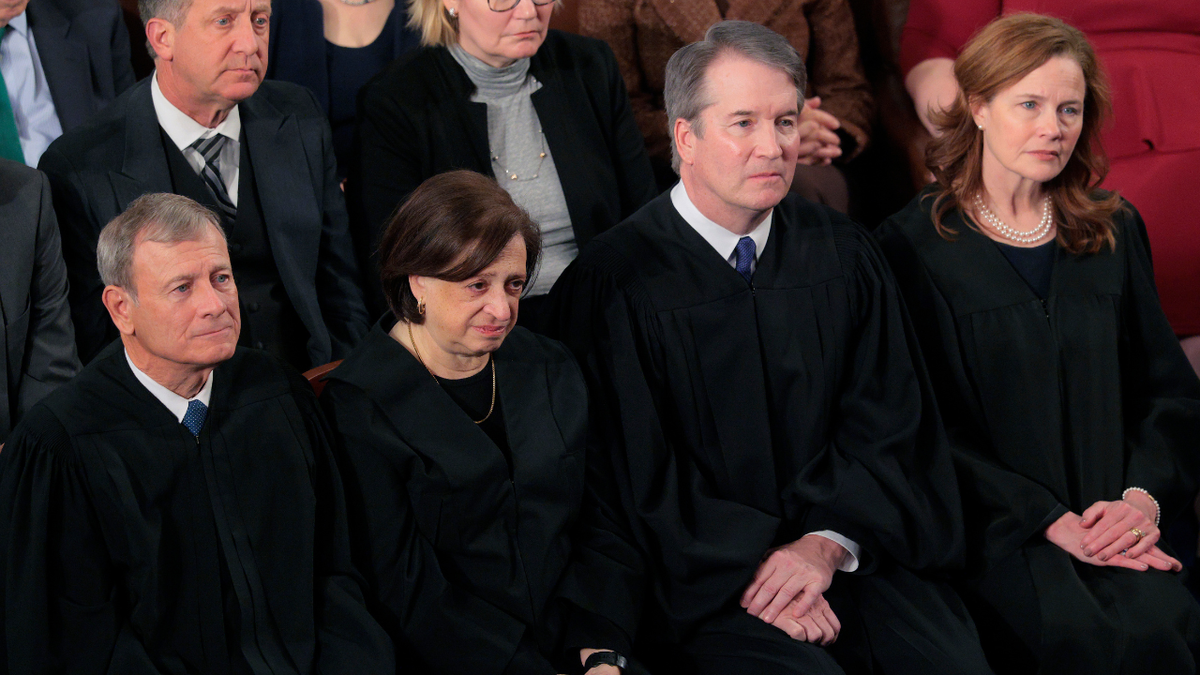
Four of nine Supreme Court justices attended the State of the Union, including Justices John Roberts, Elena Kagan and Amy Coney Barrett. (Chip Somodevilla/Getty Images)
Trump's tariff comments marked a shift from his more abrasive tone in the immediate aftermath of the tariff decision, when he said the high court was "incompetent" and that the majority should be "absolutely ashamed" of themselves "for not having the courage to do what’s right for our country."
SUPREME COURT BLOCKS TRUMP TARIFFS IN MAJOR TEST OF EXECUTIVE BRANCH POWERS
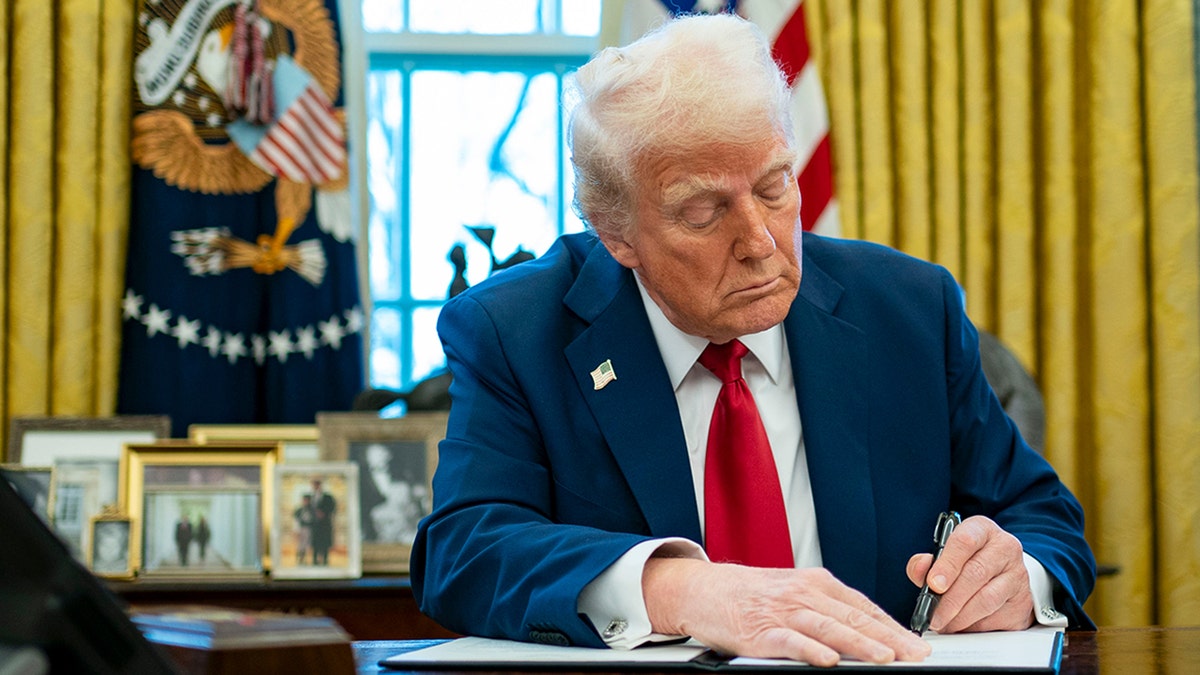
Legal experts and commentators toed a careful line Wednesday in responding to President Donald Trump's State of the Union address. (Bonnie Cash/UPI/Bloomberg via Getty Images)
Election security
Another key focus of Trump's speech was election security.
Trump urged the Senate to approve the "SAVE America Act," or legislation passed by the House that requires voters to show proof of citizenship, and a photo ID, when registering to vote. Trump said the legislation would "stop illegal aliens and others, who are unpermitted persons, from voting in our sacred American elections."
"All voters must show proof of citizenship in order to vote," Trump said. "And no more crooked mail-in ballots except for illness, disability, military or travel. None."
"Trump is right to call for voter ID and proof of citizenship to vote; and absentee ballots should be limited to the disabled, the sick, & those who can’t vote in person on Election Day or ANYTIME DURING EARLY VOTING!" said Hans von Spakovsky, a senior legal fellow at Americans Advancing Freedom and former FEC member appointed by former President George W. Bush.
Other voting rights advocates argued that the SAVE Act would disproportionately harm rural voters and low-income voters, among others.
"The SAVE Act is an attack on the freedom to vote that would block millions of American citizens from voting," Sean Morales-Doyle, the director of the Voting Rights and Elections Program at the left-leaning Brennan Center, said on social media.
TRUMP TAKES DIRECT SOTU SWIPE AT DEMOCRATS OVER TAXES: 'TO HURT THE PEOPLE'
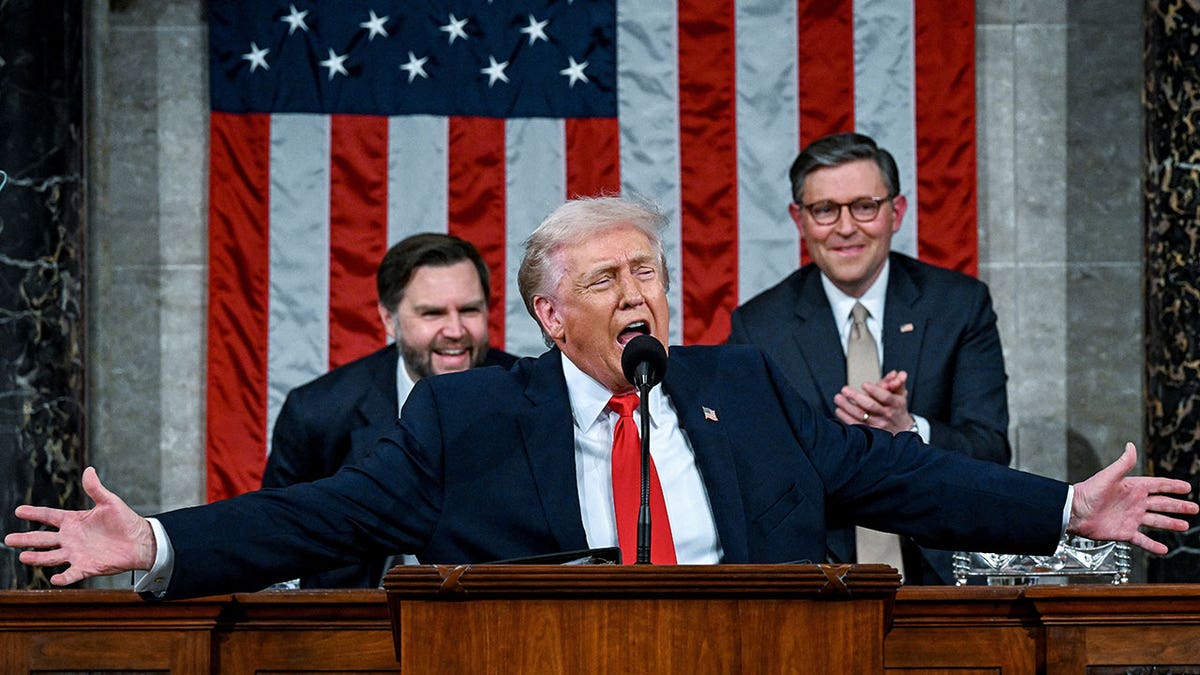
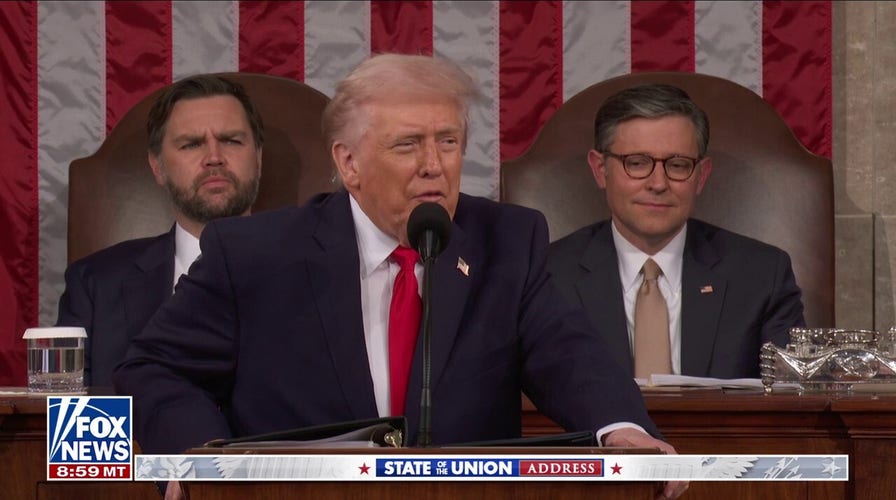
President Donald J. Trump delivers the first State of the Union address of his second term to a joint session of Congress. (Kenny Holston /Pool via Reuters)
Violent crime
Trump also used his Tuesday remarks to tout the significant drop-off in violent crime during his first year back in the White House, reiterating his administration's claim that the U.S. murder rate dropped to its lowest point in 125 years in 2025.
White House press secretary Karoline Leavitt previously pointed Fox News Digital and other outlets to recent data from the Council on Criminal Justice that she said shows that Trump is "delivering overwhelmingly on his promise" to restore law and order in the U.S.
"A study from the Council on Criminal Justice shows that the murder rate across America's largest cities plummeted in 2025 to its lowest level since at least 1900," Leavitt told reporters. "Let me repeat to put this in perspective, this marks the largest single-year drop in murders in recorded history."
Nationwide homicide data released later in 2026 could show killings in 2025 falling to roughly 4.0 per 100,000 residents — the lowest rate ever recorded in law enforcement or public health data dating back to 1900 and the largest single-year percentage drop on record.
Reactions to the speech — and Trump's policies — vary, but the president did win some praise from many.
CLICK HERE TO GET THE FOX NEWS APP
"Donald Trump saved this country with his election in 2024," Hamilton said. "His administration will keep working every day to deliver real wins for the American people."
Fox News Digital's Charlie Creitz, Emma Colton and Michael Ruiz contributed to this report.
