




















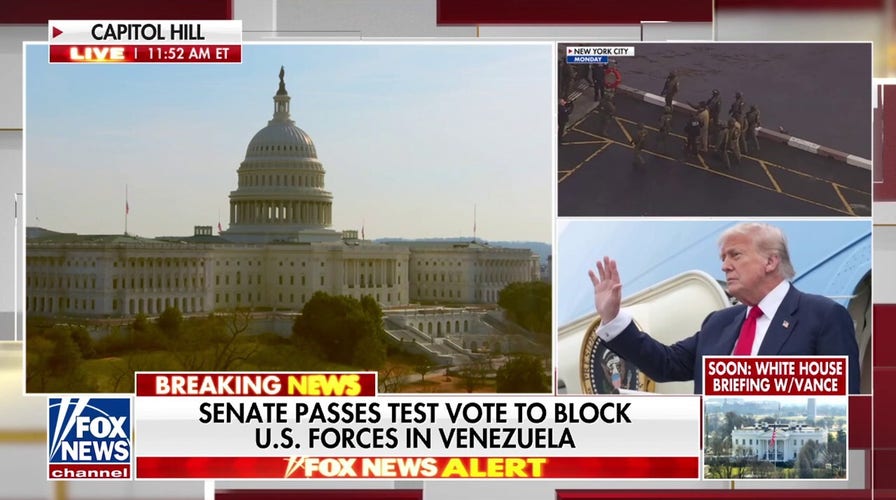
Senate advances war powers resolution to limit Trump’s military action in Venezuela
Fox News White House correspondent Aishah Hasnie reports after the Senate advanced a war powers resolution on Venezuela as President Donald Trump outlines a long-term U.S. role and an oil strategy.
President Donald Trump unleashed his fury on a handful of Senate Republicans who rebelled against him on Thursday, demanding that they never be re-elected.
Five Senate Republicans broke ranks to support a bipartisan war powers resolution from Sen. Tim Kaine, D-Va., geared toward reining in Trump’s ability to pursue further military action in Venezuela.
It served as a rare rebuke from Sens. Susan Collins, R-Maine, Todd Young, R-Ind., Lisa Murkowski, R-Alaska, Josh Hawley, R-Mo., and Rand Paul, R-Ky., in a Republican-controlled Senate that has largely accepted and advanced many of Trump’s legislative desires.
5 GOP SENATORS JOIN DEMOCRATS TO STOP TRUMP FROM POLICING VENEZUELA
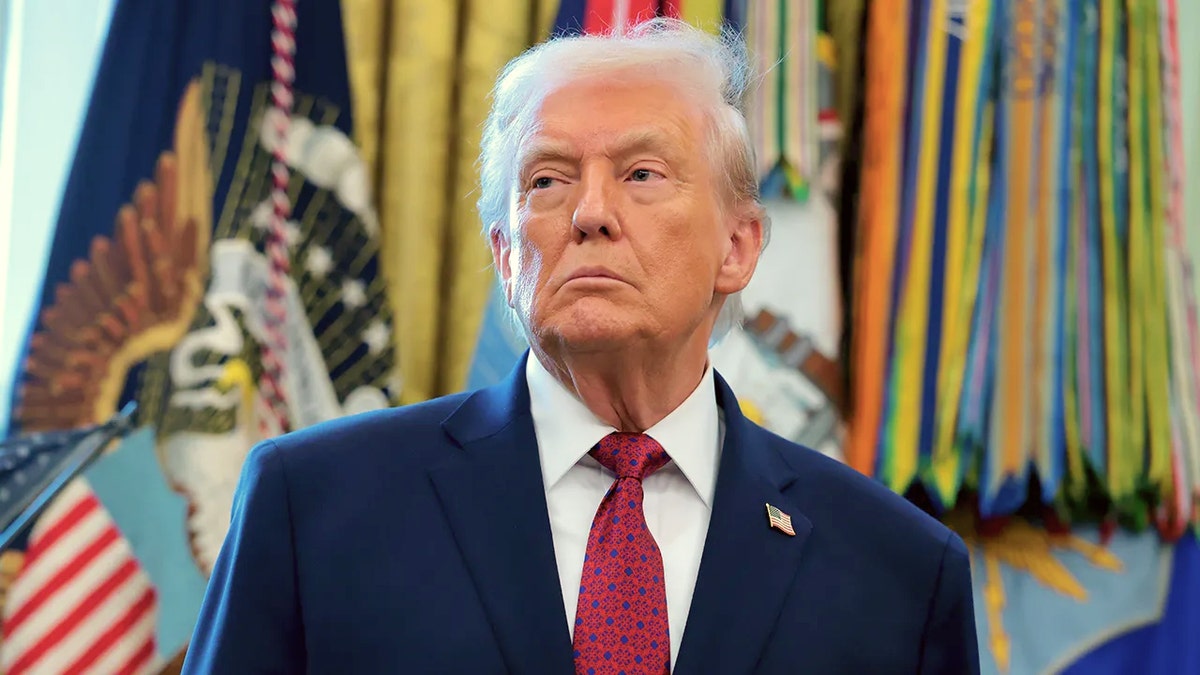
President Donald Trump in the Oval Office of the White House on Dec. 15, 2025, in Washington, D.C. (Anna Moneymaker/Getty Images)
Trump was not happy about it.
"Republicans should be ashamed of the Senators that just voted with Democrats in attempting to take away our Powers to fight and defend the United States of America," Trump wrote on Truth Social.
"Susan Collins, Lisa Murkowski, Rand Paul, Josh Hawley, and Todd Young should never be elected to office again," he continued. "This Vote greatly hampers American Self Defense and National Security, impeding the President’s Authority as Commander in Chief."
KENNEDY SAYS MILITARY ACTION ON GREENLAND WOULD BE 'WEAPONS-GRADE STUPID' AS GOP RESISTS FORCE
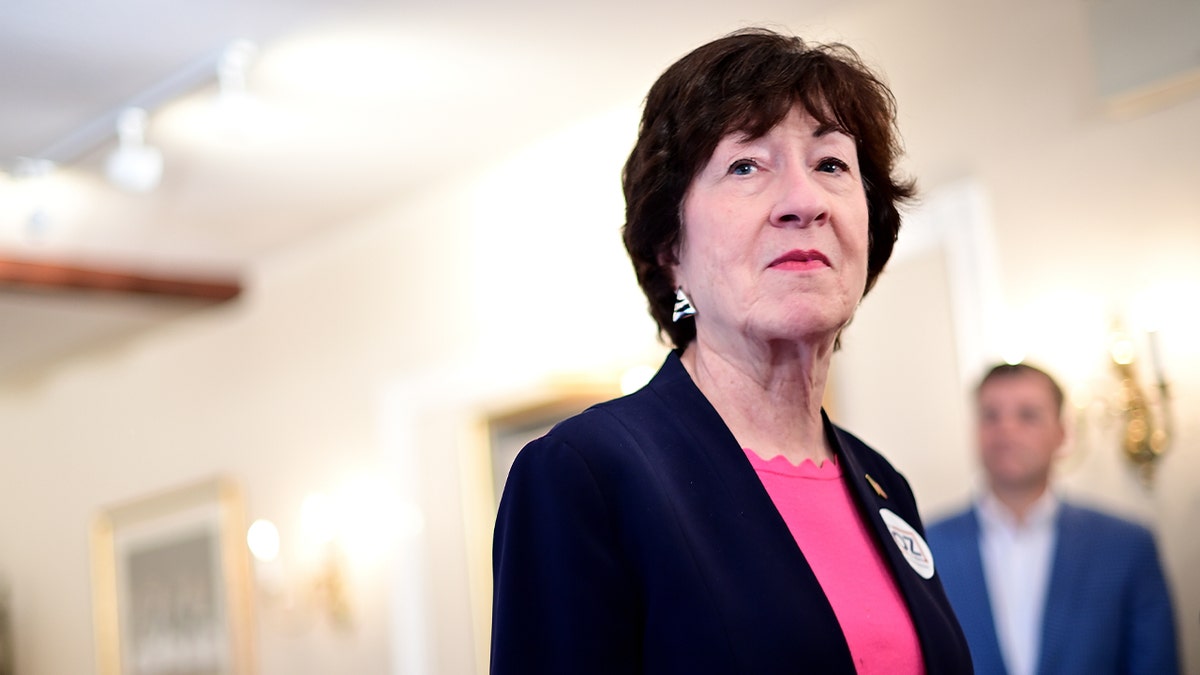
Sen. Susan Collins addresses the press on Nov. 6, 2022, in Washington Crossing, Pennsylvania. (Mark Makela/Getty Images)
Collins, in particular, faces a tough re-election challenge in Maine, where Senate Democrats got their prized candidate, Democratic Gov. Janet Mills, to jump into the race late last year.
The Republicans that voted for the resolution argued that while they supported Operation Absolute Resolve, the code name of the mission carried out to capture former Venezuelan President Nicolás Maduro, they wanted Congress to have a say should any further military action take place.
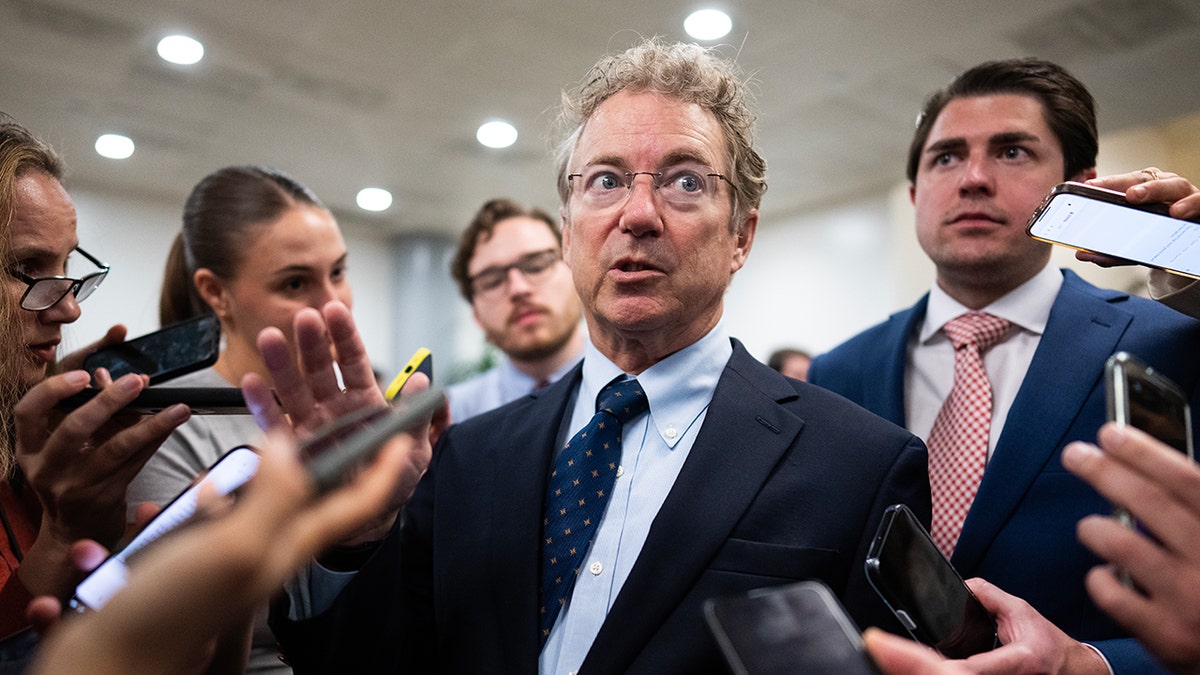
Sen. Rand Paul talks with reporters in the U.S. Capitol in Washington, May 22, 2025. (Tom Williams/CQ-Roll Call, Inc.)
That decision came in part after lawmakers received briefings throughout the week from top administration officials to explain what the next steps in the country would be.
"With Maduro rightfully captured, the circumstances have now changed," Collins said in a statement ahead of the vote. "While I support the operation to seize Nicolás Maduro, which was extraordinary in its precision and complexity, I do not support committing additional U.S. forces or entering into any long-term military involvement in Venezuela or Greenland without specific congressional authorization."
CLICK HERE TO DOWNLOAD THE FOX NEWS APP
Senate Majority Leader John Thune, R-S.D., said that Trump's response was a "short-term, immediate reaction," but noted that the president recognized the importance of maintaining a majority in the upper chamber.
"He, like all of us, want to make sure that we have a Republican majority in the Senate, and we all know that in the state of Maine, that's the way to make that happen," Thune said.
And Sen. Bernie Moreno, R-Ohio, a top Trump ally who has worked closely with Collins on crafting a bipartisan Obamacare fix, contended that he understood that the president was "absolutely pissed off," but that losing Collins would be a worse alternative.
"I wish Susan hadn't voted that way, but she has to vote her heart," Moreno said. "Do I agree that she shouldn't be re-elected? No, I think she's very, very good for Maine. If Susan isn't the senator from Maine, we're going to end up with a Democrat. That will be 10 times worse."
Still, Trump rejected Congress’ war powers authority, calling the War Powers Act "unconstitutional, totally violating Article II of the Constitution, as all Presidents, and their Departments of Justice, have determined before me."
"Nevertheless, a more important Senate Vote will be taking place next week on this very subject," he said.
