

































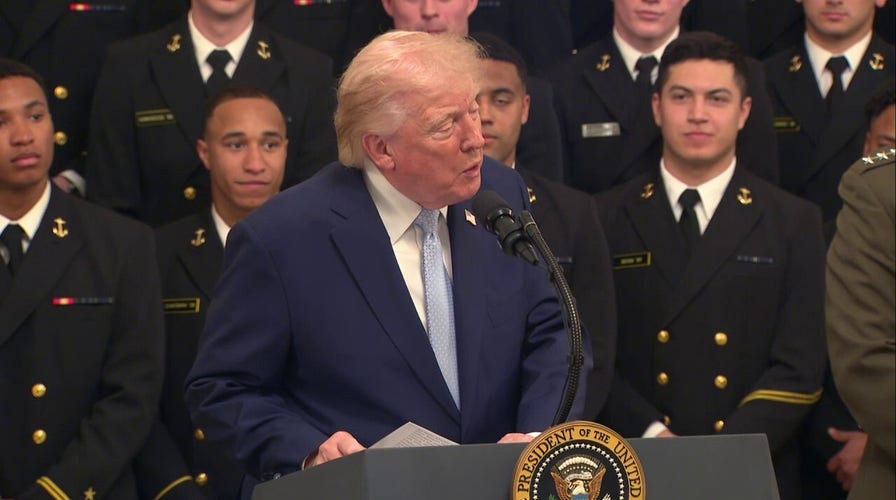
Trump signs executive order to protect Army-Navy game from CFP conflicts
President Donald Trump signs the "Preserving America's Game" executive order Friday, protecting the Army-Navy game's December time slot from CFP broadcast conflicts.
In a college athletics world dominated by debates over NIL (Name, Image and Likeness) and rising costs, discussion around expanding the College Football Playoff (CFP) is once again becoming a hot-button issue, like clockwork.
Since gathering in Miami during CFP National Championship weekend, key voices — both inside and outside the selection committee — have continued to weigh in on how many teams should be included in the next iteration of the playoff.
At this point, the question is no longer if the College Football Playoff will expand, but when.
And, couple that with athletic departments across the country trying to manage rising costs of putting together teams in a highly competitive space of NIL and roster payrolls, you start to realize why there are so many administrators looking for additional revenue.
GEORGIA COACH KIRBY SMART PUSHES BACK ON TRANSFER PORTAL HYPE, STRESSES PRACTICE OVER PUBLICITY
We are also witnessing a battle within the NIL landscape, as plaintiffs in the House v. NCAA settlement case have filed a motion in a Northern California courtroom to argue that multimedia rights partners should be allowed to provide deals without scrutiny from the CSC (College Sports Commission).
This alone could essentially demolish an agreed-upon salary cap in college athletics, if a judge grants the plaintiffs injunctive relief.
But, since there are multiple battles ongoing within college sports, it's only logical in this era that the fight over adding additional teams to the playoff continues this offseason.
CLICK HERE FOR MORE SPORTS COVERAGE ON FOXNEWS.COM
One thing remains clear: expansion is inevitable.
This week, just outside of downtown Dallas, CFP leaders are convening again before conferences hold their annual spring meetings. The only remaining questions are how many teams will be added in the future and when the changes will be implemented.
Why are we waiting until 2027 or 2028? That comes down to money, politics and scheduling.
SEC vs. Big Ten disagreement. Compromise?
A major reason the playoff will not expand for the 2026 season stems from a disagreement between the SEC and Big Ten over the size of the field.
Big Ten commissioner Tony Petitti, backed by conference leadership, has advocated for a 24-team playoff. Meanwhile, SEC Commissioner Greg Sankey has pushed for a more conservative 16-team format.
With ESPN setting a deadline for a decision, the lack of consensus ultimately stalled expansion. For fans, jumping to the addition of 12 teams within a year of moving from a four-team playoff seemed like too big of a move in such a short time, with one argument centering on the idea there are not 24 teams talented enough to win a national title.

SEC Commissioner Greg Sankey speaks during a roundtable discussion on college sports in the East Room of the White House on March 6, 2026, as Commerce Secretary Howard Lutnick looks on. The Trump administration hosted the event titled "Saving College Sports" with leaders from the Power Four conferences, media executives and former coaches. (Anna Moneymaker/Getty Images)
Due to a prior agreement among CFP stakeholders, the SEC and Big Ten currently hold significant influence over the playoff’s future structure. Rightfully so, that dynamic has prompted conferences like the ACC and Big 12 to push for more access and representation in the postseason.
FIRST 12-TEAM COLLEGE FOOTBALL PLAYOFF RANKINGS ANNOUNCED; OREGON HOLDS TOP SPOT
From their perspective, a 24-team format would provide increased opportunities — and a larger share of the spotlight, along with revenue.
In that case, conferences like the Big 12, ACC and Group of Six aren’t wrong when it comes to exposure, especially with the amount of money that comes with a postseason spot.
Though it would come with caveats, the optimism within some conferences is that college football could initially see an expansion to 16 teams, then 24 in the following years.
Rising costs, NIL payrolls drive expansion talks
Behind the scenes, financial pressure is becoming a central factor in the expansion debate.
Athletic department budgets are rapidly increasing as schools attempt to remain competitive in the NIL era. Programs are spending tens of millions annually on rosters, creating an escalating arms race across conferences.
"If we’re going to continue increasing our spending just to have a chance at making the playoff, it would feel a lot better to know there’s a greater opportunity for that investment to pay off," one Power Four athletic director told OutKick.
"We can spend millions and ask donors for more, but we’re competing to build a product worth watching. If we’re effectively eliminated by November after three losses, that’s viewed externally as a failure — and we’re already operating at a short-term loss hoping for long-term returns. If we're spending $30 million on a roster, sitting at home as other teams compete in the playoff is not going to entice donors to give more. But, we all know the risks involved, just look at how the college basketball season played out. How much did Kentucky spend?"
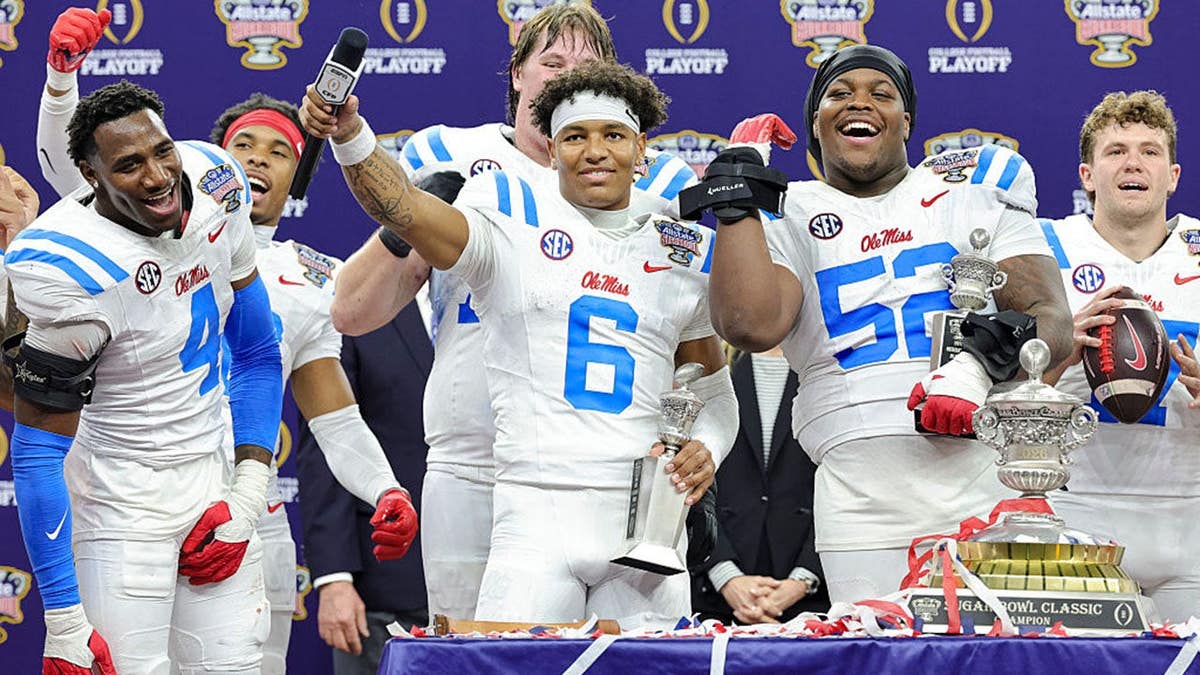
Trinidad Chambliss of the Ole Miss Rebels celebrates on stage with teammates after the College Football Playoff quarterfinal game against the Georgia Bulldogs at Caesars Superdome in New Orleans, La., on Jan. 1, 2026. (CFP/Getty Images)
This financial reality is fueling support for a larger playoff field, particularly among conferences seeking more consistent postseason access.
Why the ACC and Big 12 favor a 24-team format
For conferences like the ACC and Big 12, expansion beyond 16 teams represents a critical opportunity.
With increased spending becoming unavoidable, schools want a clearer path to the playoff. A 24-team model would provide more margin for error and more postseason berths — key factors for programs investing heavily in their football operations.
Rightfully so, if schools are essentially being forced to spend the amount of money currently being added to their spreadsheets, they'd like more of a guarantee that additional spots would be available come December each season.
On the other hand, SEC Commissioner Greg Sankey has been pushing for a 16-team playoff if expansion were to happen, again.
CLICK HERE FOR MORE SPORTS COVERAGE ON FOXNEWS.COM
Mind you, we've had only one season of a 12-team format, and that was met with resounding applause from college football fans, though there will always be detractors.

Big Ten Commissioner Tony Petitti presents the Amos Alonzo Stagg Championship Trophy to Curt Cignetti of the Indiana Hoosiers after they defeated the Ohio State Buckeyes in the 2025 Big Ten Football Championship at Lucas Oil Stadium in Indianapolis, Ind., on Dec. 6, 2025. (Michael Reaves/Getty Images)
But when the SEC decided to shift to a nine-game conference schedule, there were plenty of coaches within the league that thought playoff expansion would come with it. Now, heading into the 2026 season, the SEC will play an additional conference game, along with a Power-Four opponent, but we are still sitting at 12 teams.
"The notion that one was dependent on the other is incorrect. We looked at a value-based decision," Greg Sankey told OutKick in March. "The ability to play more games, to have a more balanced and fair ration, which is what we were asked for by our membership completely.
"The expansion beyond four was introduced and acted upon after USC and UCLA moved and then everybody in the nation forgot they were mad at the SEC and decided to advance from four to twelve, if you remember that..I thought last year we'd go to 16. I thought we could seek the agreement on 14 or 16. We had to make a decision based on the best available information, and I think it'll be a great season."
Media influence and financial stakes grow
ESPN stands to benefit from additional games involving SEC programs, while FOX Sports CEO Eric Shanks has recently advocated for a 24-team format — aligning with Big Ten interests and the potential for expanded media rights opportunities.
Obviously, the push is for Big Ten reasons, but there could come a time with expansion over 16 teams that FOX could find itself bidding on games in the future.
While NIL, eligibility rules, and legal challenges remain central offseason topics, the CFP expansion debate underscores a more critical issue: the rising cost of competing at the highest level.
Programs are willing to invest heavily in their football teams — but they also want a more predictable return on that investment.
CLICK HERE TO DOWNLOAD THE FOX NEWS APP
At its core, the push for expansion is about access, opportunity, and financial sustainability.
Unfortunately for boosters who enjoy bragging about their investments, only one team will win a national championship each year. So, the return on investment is a crapshoot in reality.
But for programs left outside the playoff picture, the financial consequences of missing out are becoming increasingly difficult to ignore.
