
























Fox News Flash top headlines for March 10
Fox News Flash top headlines are here. Check out what's clicking on Foxnews.com.
Scientists in the United Kingdom have recovered a piece of a meteorite that hit the Earth, and it’s a big find.
A fragment weighing about 10 ounces was found on a driveway in the small English town of Winchcombe after thousands of people witnessed it falling across the sky as a brilliant fireball on the night of Feb. 28, according to the Natural History Museum in London.
Other pieces of the meteorite were turned up nearby thanks to a network of cameras that track meteorites called the UK Fireball Alliance.

Other pieces of the meteorite were turned up nearby thanks to a network of cameras that track meteorites called the UK Fireball Alliance. (From a video by Ben Stanley, processed by Markus Kempf/the AllSky7 network)
NASA RELEASES AUDIO RECORDINGS OF FIRST WIND SOUNDS, LASER STRIKES CAPTURED ON MARS
The fragment is a rare "carbonaceous chondrite," meaning it contains the so-called "ingredients for life:" organic compounds and amino acids.
Carbonaceous chondrites are so rare that, of the approximately 65,000 known meteorites on Earth, only 51 are carbonaceous chondrites, according to the museum. This is the first one of the rare meteorites found in the UK, and the first of meteorite of any type recovered in the UK since 1991.
Scientists are already studying the meteorite.
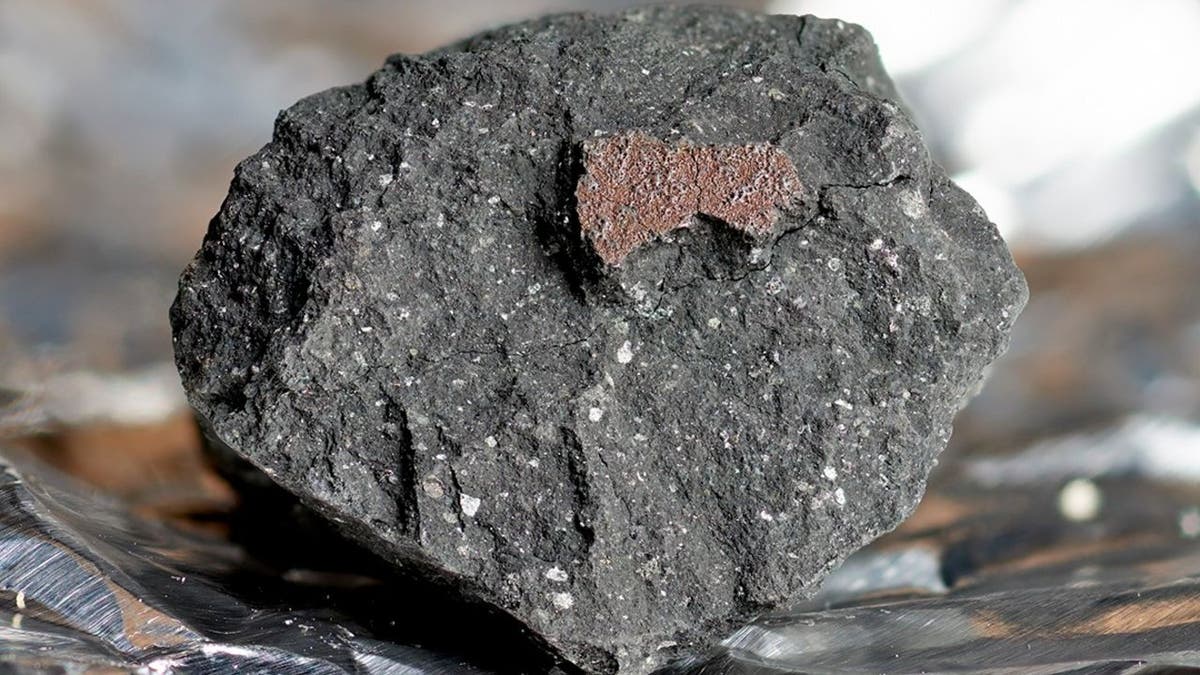
Scientists in the UK have recovered a piece of a meteorite that hit the Earth, and it’s a big find. (Trustees of the Natural History Museum)
CLICK HERE TO GET THE FOX NEWS APP
The sample was retrieved so quickly and in such good condition that it’s comparable to samples returned from space missions, according to the museum.
"I was in shock when I saw it and immediately knew it was a rare meteorite and a totally unique event," Richard Greenwood, a research fellow in planetary sciences at the Open University, said in a written statement. "It’s emotional being the first one to confirm to the people standing in front of you that the thud they heard on their driveway overnight is in face the real thing."
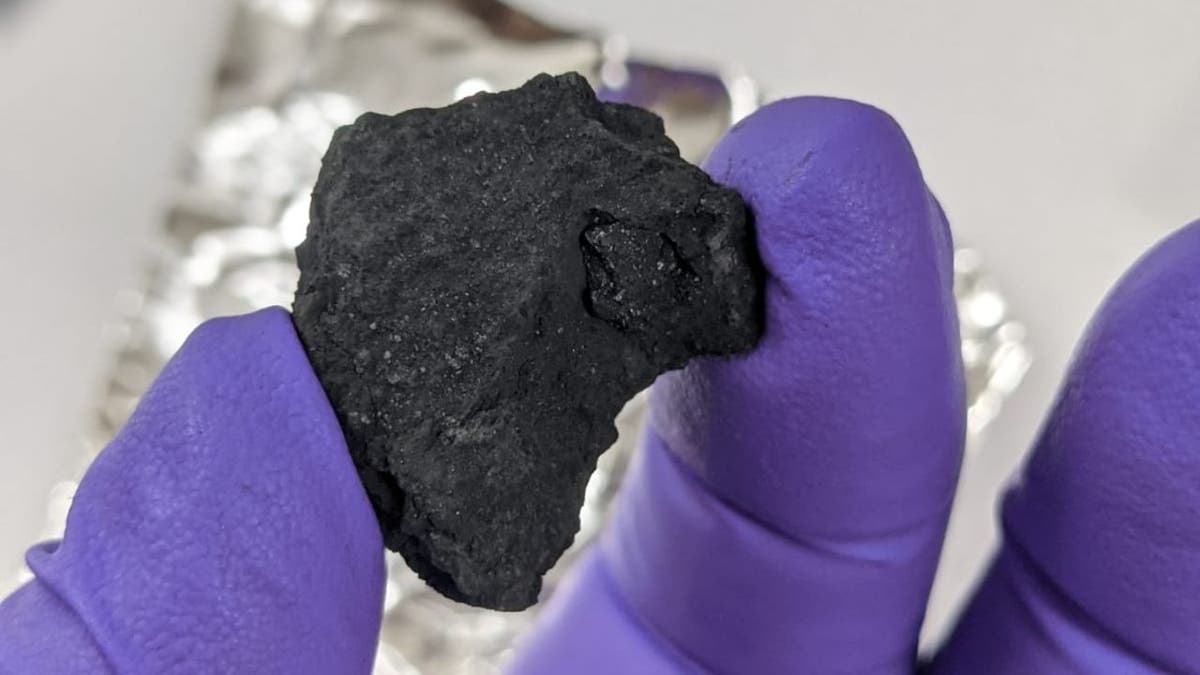
The fragment is a rare "carbonaceous chondrite," meaning it contains the so-called "ingredients for life:" organic compounds and amino acids. (Natural History Museum)
CLICK HERE TO SIGN UP FOR OUR LIFESTYLE NEWSLETTER
Meteorites are much older than the Earth and are typically pieces that have broken off asteroids.
Carbonaceous chondrites can help scientists learn about where water and other essentials for life were formed and what other planets are made of.
"Nearly all meteorites come to us from asteroids, the leftover building blocks of the solar system that can tell us how planets like the Earth formed," Ashley King, UK research and innovation future leaders fellow in the museum’s earth sciences department, said in a written statement.
