

























'Chemical trauma': What is causing a literal headache for travelers
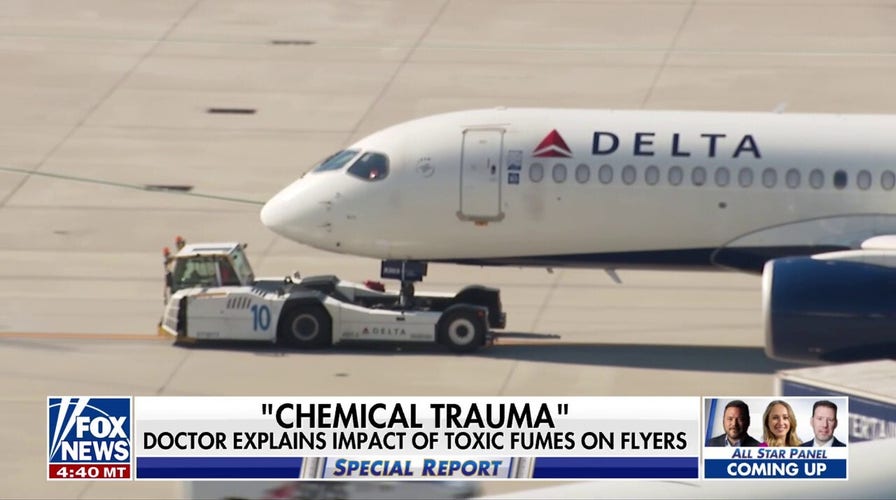
Fox News correspondent Madison Scarpino reports on the impact of toxic fumes on flyers on 'Special Report.'
Toxic fumes have been reported recently inside some airplane cabins — with the reports prompting renewed questions about passenger and crew safety.
People have said they experienced unexplained odors, smoke or haze during flights — sometimes followed by sudden illness.
A recent Wall Street Journal report examined claims from pilots and flight attendants who said they experienced serious illnesses after reported fume events.
Industry officials, however, have disputed any direct connection.
Several individual cases were highlighted in The Journal report, including that of a 54-year-old pilot who developed neurological symptoms after reporting fumes inside an aircraft cabin.

Concerns about airplane cabin safety have emerged after recent reports of toxic fumes circulating during some flights. (iStock)
Airplane cabins can intensify the body’s reaction to airborne irritants, especially for people with respiratory conditions, Kenneth J. Perry, an emergency medicine attending physician in South Carolina, told Fox News Digital.
"The symptoms that are going to be most common are cough, wheezing and other symptoms of inflammation of the airways," Perry said.
FLIGHT ATTENDANT'S COSTLY ERROR LEADS TO GROUNDING OF DELTA FLIGHT, LONG PASSENGER DELAYS
While reports of severe outcomes have drawn attention, Perry emphasized that most suspected exposures on airplanes involve irritants rather than substances likely to cause long-term harm.
Airlines have emphasized that unusual odors do not always indicate a safety threat.
The first and most effective step in treating any suspected inhalation exposure, he said, is removing the individual from the environment and providing access to fresh air.
In most cases, symptoms may improve once the exposure ends.

The most important step when inhalation exposure is suspected is removing the person from the affected area so he or she can breathe fresh air, a physician said. (iStock)
Conditions inside an aircraft can make symptoms feel more intense, Perry also noted.
Airplane cabins are pressurized to the equivalent of about 8,000 feet of elevation, meaning oxygen levels are lower than on the ground.
CLICK HERE TO DOWNLOAD THE FOX NEWS APP
That lower oxygen concentration can worsen breathing symptoms, particularly for passengers with underlying respiratory conditions. Airway irritation caused by an irritant or toxin may feel more severe while flying, he said.
In rare cases in which long-term effects are suspected, follow-up care with a specialist such as a pulmonologist may be recommended, Perry noted.
If people encounter an issue with an irritant or toxin on an airplane, Perry said it's best to stay calm.
CLICK HERE TO SIGN UP FOR OUR LIFESTYLE NEWSLETTER
"The more calm they can stay, the more likely they are to be able to improve quickly," he said.
Commercial aircraft are required to meet strict cabin air quality standards designed to protect both passengers and crew, according to the Federal Aviation Administration.

The Federal Aviation Administration requires commercial planes to be held to cabin air standards to safeguard passengers and crew members. (iStock)
The agency notes that rare mechanical issues can allow fumes to enter the cabin, but airlines are required to report those incidents.
The FAA investigates each case and ensures repairs are made before the aircraft returns to service.
CLICK HERE FOR MORE LIFESTYLE STORIES
Fox News Digital previously reported that airlines including Delta have replaced or upgraded equipment following reported cabin fume incidents, underscoring efforts to address air quality concerns.
Airlines have also emphasized that unusual odors do not always indicate a safety threat.
TEST YOURSELF WITH OUR LATEST LIFESTYLE QUIZ
"Different odors can arise for a variety of reasons and are a normal part of operating and maintaining aircraft," a JetBlue spokesperson told Fox News Digital earlier this year.
"We would never operate an aircraft if we believed it posed a health or safety risk to our customers or crew members."
Deirdre Bardolf of Fox News Digital contributed reporting.
