
























Shot Clock Violation: Jaxson Dart Under Fire, MLB Salary Cap & Jannik Sinner's Collapse | Don't @ Me w/ Dan Dakich
30 seconds are on the clock as Don't @ Me's Shot Clock Violation with Dan Dakich, Danny Z, and Jason Hammer debate the biggest topics trending in sports media each week.
Martina Navratilova wants Billie Jean King to explain herself.
King is one of the most important figures in the history of women’s sports, a tennis icon who helped build the modern women’s game and spent decades fighting for equal opportunity, equal pay and respect for female athletes.
But King has also publicly supported trans-identifying biological male athletes competing in girls’ and women’s sports.
In a 2025 interview with The Telegraph ahead of Wimbledon, King called the broader transgender-athlete debate in sports "a nightmare" and said people should listen to transgender people’s stories and make them feel included.
ZERO BS. JUST DAKICH. TAKE THE DON’T @ ME PODCAST ON THE ROAD. DOWNLOAD NOW!
That position has frustrated Navratilova, another tennis legend and longtime advocate of gay rights and women’s sports, because King has also publicly acknowledged the physical differences between men and women.
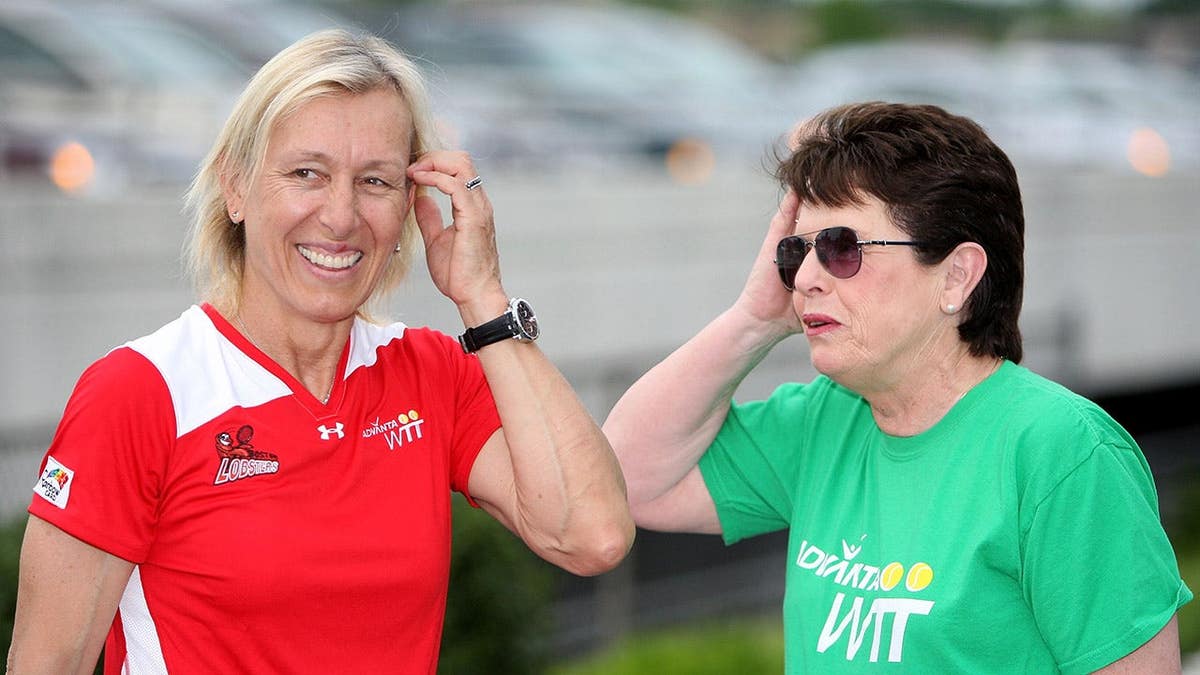
Tennis legends Martina Navratilova and Billie Jean King teach youth tennis on Youth Day before the World Team Tennis match between the Philadelphia Freedoms and the Boston Lobsters at King of Prussia Mall in 2009. (Bill McCay/WireImage)
Asked how King could reconcile those two positions, Navratilova said the contradiction is obvious.
"I honestly don’t know because it doesn’t square," Navratilova told OutKick.
Navratilova was responding to a clip of King discussing the obvious physical differences between men and women. In the clip, King said men are generally bigger and stronger, have different skeletal systems and bigger hearts, and that women never claimed they were physically the same as men.
That’s the entire reason women’s sports exist in the first place.
In 2020, King joined nearly 200 athletes in supporting a friend-of-the-court brief against an Idaho law that barred trans-identifying male athletes from competing in girls’ and women’s sports.
"There is no place in any sport for discrimination of any kind," King said at the time. "I’m proud to support all transgender athletes who simply want the access and opportunity to compete in the sport they love."
That's the gap Navratilova is pressing.
"I think she thinks that they play fair and square, meaning males identify as women, take all the hormones and do everything, like Renée Richards did 50 years ago," Navratilova said. "And that it’s just nice to include everybody."
But Navratilova said the issue can’t be reduced to kindness or inclusion.
TENNIS STAR ARYNA SABALENKA SAYS FEMALE ATHLETES FACING TRANS COMPETITORS 'JUST NOT FAIR TO WOMEN'
She offered a hypothetical scenario: a high school boys basketball team holds tryouts, 10 boys make the team, and five boys who don’t make the boys team then try out for the girls team. If they make it, which they almost certainly would, five girls lose their spots.
"That’s not equality," Navratilova said. "That’s a total takeover."
And it’s not just about who wins, she said. It’s about roster spots, podium spots, awards, prize money, privacy, safety and the entire purpose of female-only categories.
For Navratilova, the answer starts with keeping sex-based boundaries intact.
"The solution is obvious," she told OutKick. "No male bodies in women’s sports and no male bodies in women's sex-based spaces for many different reasons, not the least of which is women’s rights to safety, dignity and fairness and privacy."
Navratilova said her private conversations with King have made King's public position even more frustrating.
"Billie Jean has repeatedly told me over the last four or five years that she would love to talk to me about it, that she defers to me because I know a lot more about it than she does," Navratilova said.
But Navratilova said the conversations she expected, never really happened.
"Without talking to me really and listening to what my points were, she just went her way and put out the statement by her and the Women’s Sports Foundation about inclusion and all this stuff," Navratilova said.
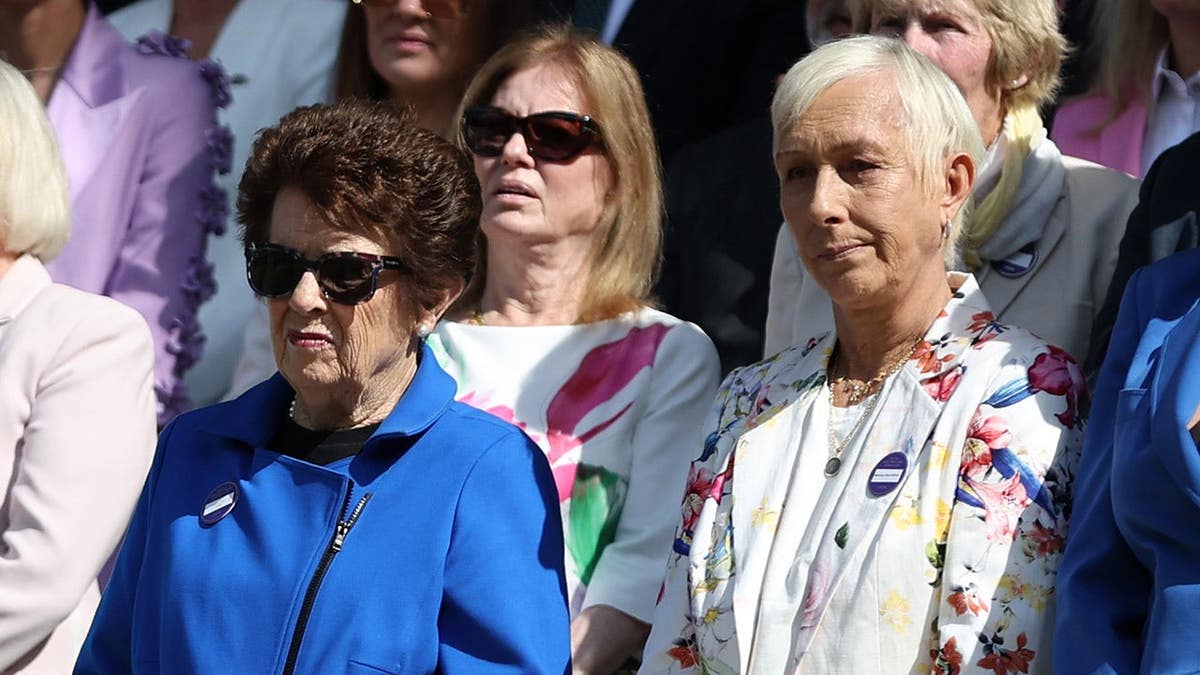
Former Wimbledon champions Billie Jean King and Martina Navratilova sit in the Royal Box on Centre Court during The Championships Wimbledon 2024 at the All England Lawn Tennis and Croquet Club. (Rob Newell/CameraSport)
That, Navratilova said, is what surprised her most.
"I don’t think she really has heard the other side of the debate, so to speak," Navratilova said.
Navratilova said she wants King to answer the question directly.
"Please get Billie Jean on record," Navratilova said. "I’d like to know how she explains it because she hasn’t been able to explain it to me."
OutKick contacted King and the Women’s Sports Foundation seeking comment and offering King an interview. Neither responded.
And Navratilova is not alone.
Nancy Hogshead, a three-time Olympic gold medalist swimmer, civil rights lawyer and former Women’s Sports Foundation president, went even further.
Navratilova and Hogshead are both members of the Women’s Policy Working Group, a think tank focused on women’s sports advocacy.
Asked whether King’s comments on male advantages suggested she was starting to come around, Hogshead rejected that premise.
"Oh no, she’s always known that," Hogshead told OutKick. "She’s a hypocrite, she’s a total hypocrite."
Hogshead said she could understand confusion several years ago, before more research and high-profile cases brought the issue to the forefront.
Her own view, Hogshead said, was not always what it is now.
"I was in favor of it too," Hogshead said. "I thought this was about inclusion and nondiscrimination. I thought it was fair."
That has changed.
"I was wrong," Hogshead said. "I was dead wrong."
Hogshead pointed to sex-eligibility disputes involving Caster Semenya, the Lia Thomas case and research on male puberty and athletic performance as part of what caused her to rethink her position.
She said the same evidence should matter for King.
"She knows, but she hasn’t made the connection," Hogshead said. "As she says, men are faster, stronger, bigger lungs structurally, but hasn’t made the connection of like, oh, so that’s unfair to the girls to have to compete with that."
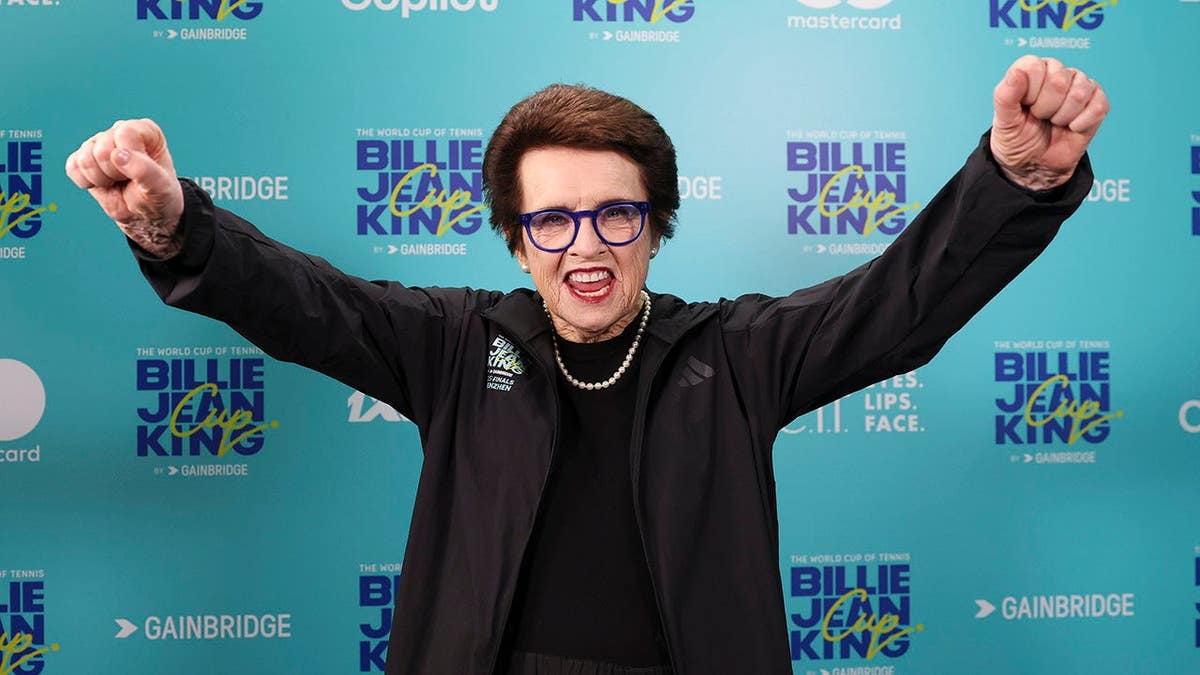
Billie Jean King poses for a portrait ahead of the Billie Jean King Cup by Gainbridge Finals 2025 at Shenzhen Bay Sports Centre Arena. (Zhe Ji/Getty Images)
Hogshead said her frustration with King and the Women’s Sports Foundation predates the transgender-athlete debate.
"I wouldn’t say I left," Hogshead said of her 2014 departure from WSF. "I would say I got fired because I would not sign a contract."
Hogshead alleged the contract would have restricted her from speaking publicly about sexual abuse and harassment involving athletes.
Asked why she believed a women’s sports organization would want to limit her ability to speak on that issue, Hogshead pointed to what she described as King’s aversion to backlash.
"Because Billie Jean didn’t want to go into any room and face hostility or having somebody be against her," Hogshead said.
Hogshead connected that episode to the current fight over transgender athletes in women’s sports.
"I think it’s more political for the same reason, for the exact same reason that she didn’t wanna be involved in the sexual abuse issue or she didn’t want the Women’s Sports Foundation to be involved," Hogshead said. "It’s hard to be the tip of the spear."
To Hogshead, both fights come back to the same issue: whether women’s sports leaders are willing to take unpopular stands when women and girls need defending.
OutKick separately asked the Women’s Sports Foundation whether Hogshead’s role ended because she refused to sign a contract restricting her from speaking publicly about sexual abuse in sports and whether King was involved in or aware of that contract decision. WSF did not respond before publication.
That leaves a central question unanswered.
If men have physical advantages over women, and King says they do, then why should biological males who identify as women be allowed into female categories?
Navratilova’s position is especially notable because she has personal history with Renée Richards, the transgender tennis player who sued to compete in the women’s draw at the 1977 U.S. Open.
Richards later coached Navratilova.
That history matters because Navratilova didn't come to the issue as an opponent of inclusion.
"Because of Renée, I was completely all-in for inclusion," Navratilova said. "Most of us welcomed Renée into the fold."
CHRIS EVERT DEFENDS MARTINA NAVRATILOVA ON TRANS ATHLETES: 'SCIENCE DOESN'T LIE'
But Navratilova said Richards competed at a very different moment and under very different circumstances.
Richards was 43 and not in peak playing shape when competing against women, Navratilova said. At the time, Richards was essentially a one-off case.
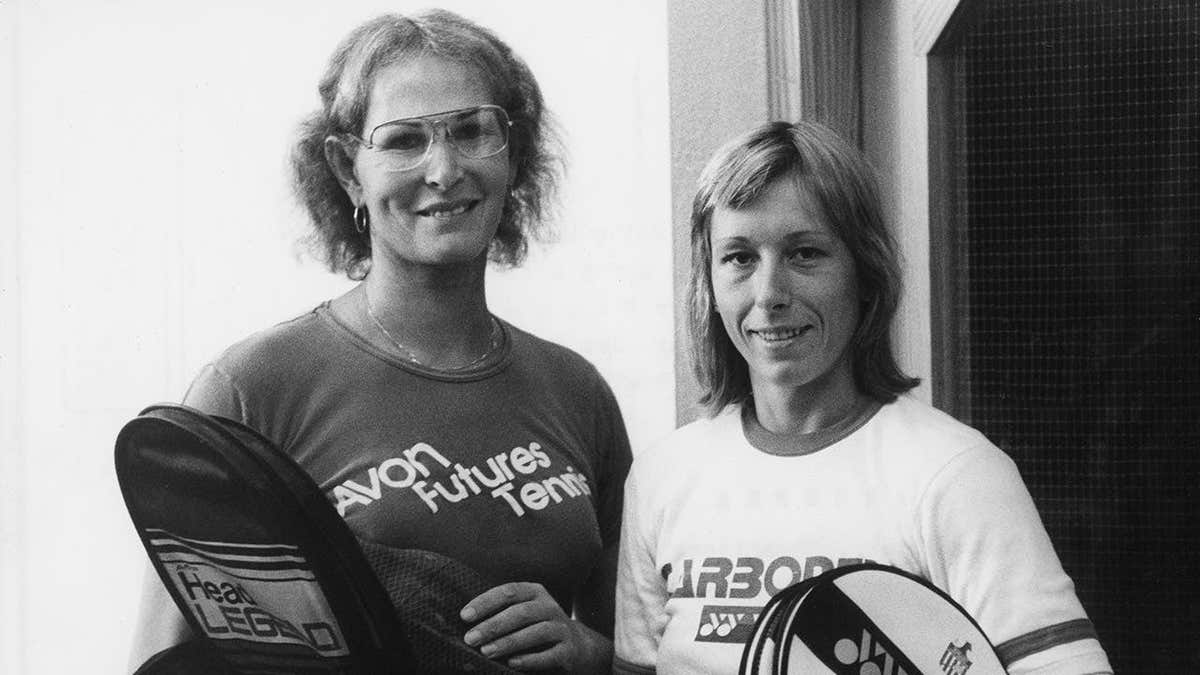
American tennis player Renee Richards and training partner Martina Navratilova carry their tennis rackets in protective covers at a tournament in Filderstadt, Germany. (Rzepka/Ullstein Bild/Getty Images)
"It was only one because she won the right to compete in a court of law," Navratilova said. "There were no others. Even if there were other transgender people, they would have to sue for the right to compete."
That has changed.
In recent years, trans-identifying biological male athletes have competed in women’s and girls’ sports across the country, from high school track and field to college and junior college volleyball to cycling, swimming and other sports.
Navratilova said the change forced her to reconsider the issue in a way she did not have to when Richards was the only example. But, more importantly, Richards also has a new perspective on the issue.
"Renée herself now says she should not have been able to compete," Navratilova said. "She realizes now she had an advantage."
Richards made a similar argument in a 2024 position paper published by Sports Illustrated in 2025. "I believe that having gone through male puberty disqualifies transgender women from the female category in sports," Richards wrote, adding that a "retained physical advantage persists" even after testosterone reduction
That’s why Navratilova says it’s no longer enough to rely on the language of inclusion without answering the competitive question.
"Boys are faster, stronger, quicker than girls," Navratilova said. "And so, if it doesn’t matter who wins, why do they have to compete as a girl? If they feel like a girl, they can still compete with the boys if they don’t care where they end up. Why is it the girls that need to suck it up?"
Navratilova came out publicly as a lesbian in 1981 and became one of the most prominent openly gay athletes in the world.
That’s part of what makes the backlash against her so striking.
Navratilova has been called homophobic, transphobic, bigoted and worse for her position on women’s sports. She told OutKick the attacks are especially frustrating because many of the people attacking her don’t know what it was like for gay athletes when she came out.
Asked what she makes of being called homophobic, Navratilova dismissed the idea.
"It’s just stupid," Navratilova said. "I came out before they were born, so they don’t know what it was like."
Navratilova said the criticism from within the LGBTQ advocacy world has been painful because she still believes in equal rights.
"I respect everybody’s right to human rights, equal rights everywhere," Navratilova said.
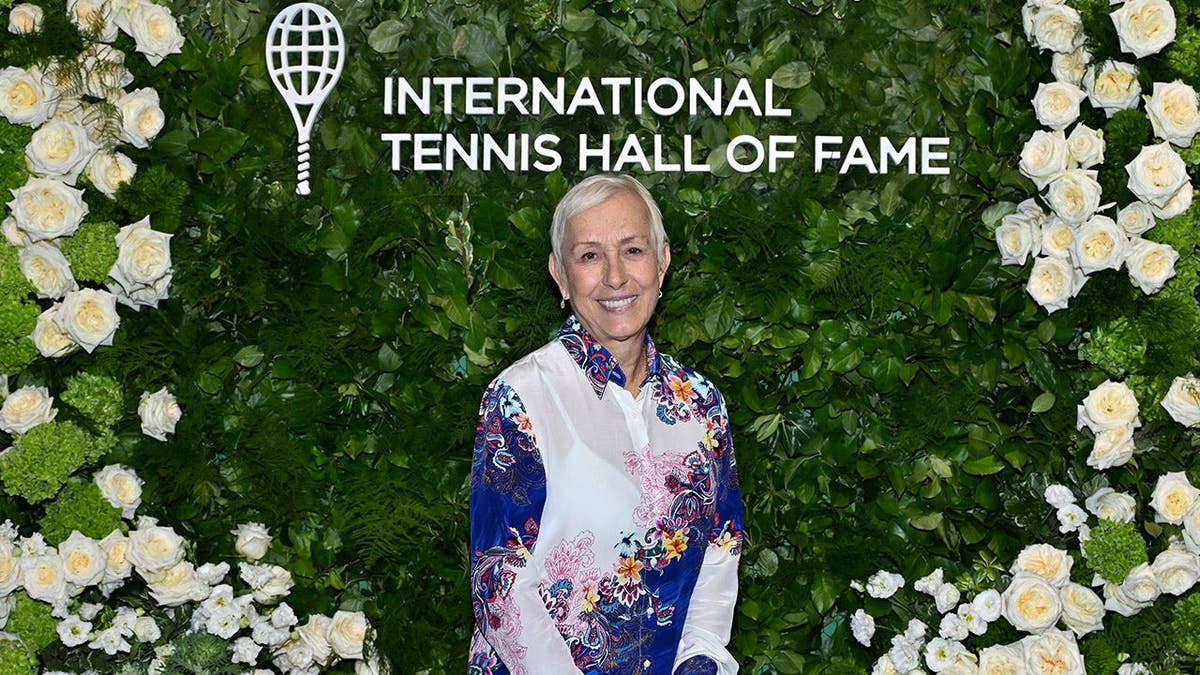
Martina Navratilova attends the Legends Ball benefiting the International Tennis Hall of Fame at The Ziegfeld Ballroom. (Roy Rochlin/Getty Images)
But she said equal rights do not include the right for male-bodied athletes to enter female sports or female-only spaces.
"You do not have a right to come into my space," Navratilova said.
That doesn't mean the verbal attacks haven't stung.
"What does it make me feel like? Just sad," Navratilova said. "Just really sad that they would just name-call rather than have a discussion and totally discount what I went through and twist it around."
King’s legacy in women’s sports is undeniable.
She fought for women to have opportunities, respect, prize money and a professional tour of their own. She famously beat Bobby Riggs in the "Battle of the Sexes," a moment that became larger than tennis and helped cement King as a symbol of women’s equality.
But that history is exactly why Navratilova and Hogshead say King’s current position deserves scrutiny.
Women’s sports were not created because women lacked talent, discipline or courage. They were created because biological sex matters in athletics.
King knows that. She has said so herself.
That’s why Navratilova wants an answer.
How does King square a lifetime spent fighting for women’s sports with a position that allows biological males to compete against females?
So far, King hasn’t answered that question for OutKick. And according to Navratilova, she hasn’t answered it for her, either.
