































Texas state lawmaker challenges ‘lottery socialism’ of guaranteed income program launched in Harris County
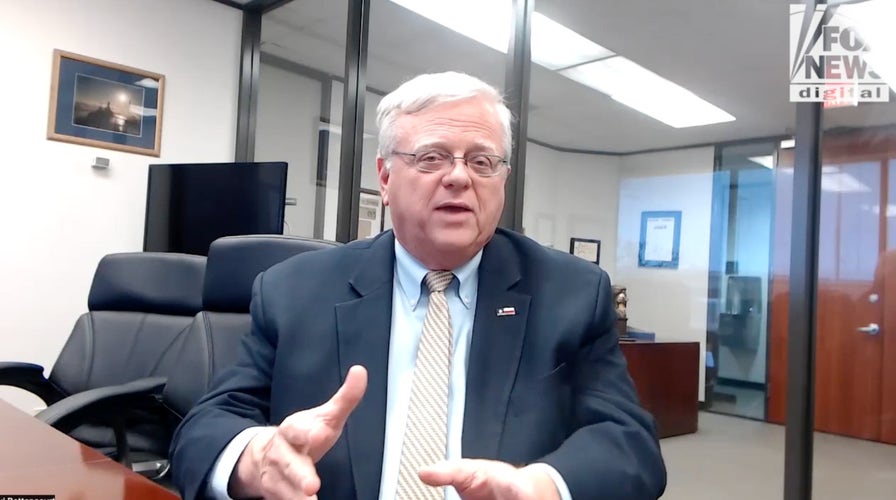
State Sen. Paul Bettencourt told Fox News Digital that a guaranteed income program should be unconstitutional and wants Attorney General Ken Paxton to weigh in.
As cities across the U.S. continue to experiment with direct cash transfers, a prominent Chicago suburb is extending its guaranteed income program while simultaneously defending a first-of-its-kind reparations initiative that pays Black residents $25,000.
Local officials in Evanston, Illinois, announced the launch of the final round of the city's Guaranteed Income Program this week. The program has been expanded to provide $500 monthly payments to 102 households over the next six months, utilizing the remainder of its federal pandemic recovery funds.
"This initiative is designed to provide direct financial assistance to help households meet essential needs such as nutrition and everyday expenses, offering a meaningful boost toward stability and well-being," the city stated in a release.
BLACK CHICAGOANS CALL ON REPARATIONS FROM GOVERNMENT, MONEY DEPOSITS LIKE 'STIMULUS' CHECKS

As plenty of cities in the U.S. launched efforts to hand out cash, a suburb of Chicago just extended its cash handout program while conducting a reparations program that pays Black residents $25,000. (Ozan Kose/AFP via Getty Images)
The program was originally launched as a pilot funded by the American Rescue Plan Act (ARPA). Under federal law, these recovery funds must be obligated by the end of 2024 and fully spent by the end of 2026.
To ensure the remaining funds are distributed, Evanston officials recently voted to broaden the program’s scope. Previously restricted to families with children in specific census tracts, the program is now open to:
- Residents across the entire city.
- Adults aged 55 and older.
- Households earning at or below 185% of the federal poverty level.
The expansion hasn't come without internal concerns. Alison Leipsiger, the city’s policy and intergovernmental affairs manager, warned that opening the application to all residents would create a significant "administrative burden."
"We had a lot of spam, and it took a long time to get through that [during the first round]," Leipsiger told the City Council. "Opening it up to everyone... is nothing we’ve ever dealt with before."
Evanston officials did not respond to Fox News Digital's request for comment.
MAMDANI ALLOCATES $500K FOR REPARATIONS TALKS AS NYC FACES $5.4B DEFICIT
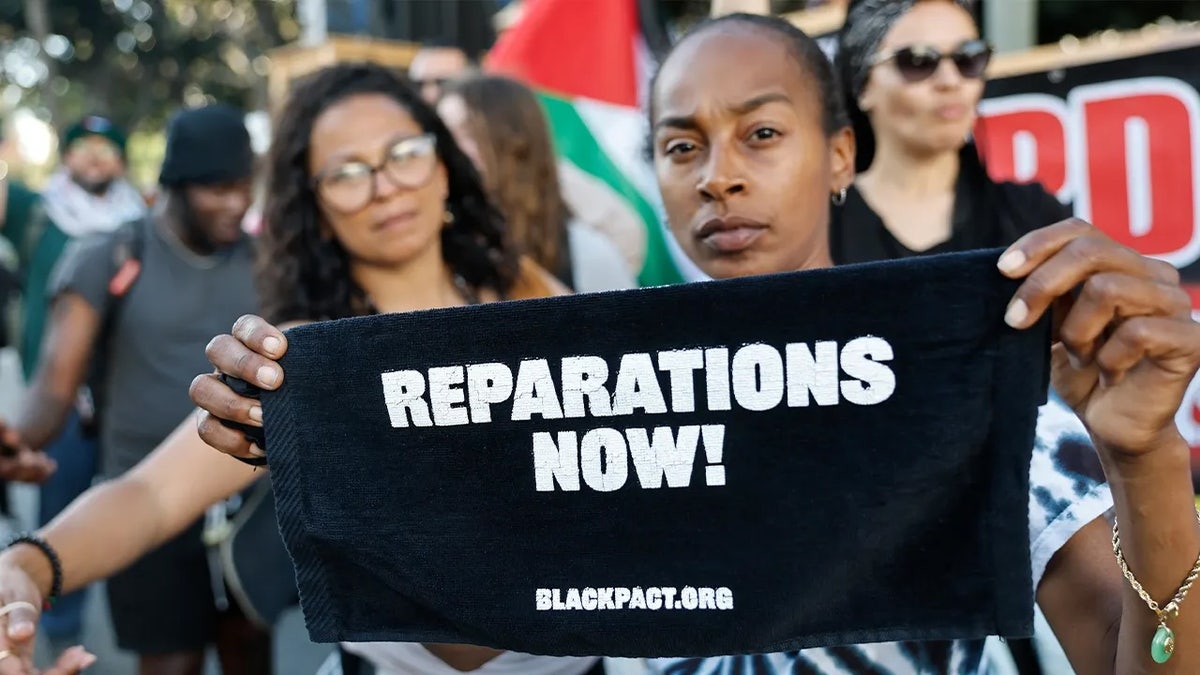
This comes after Evanston issued $25,000 to 44 residents in reparations payments, the city’s Reparations Committee announced in February. (Getty Images)
Evanston is one of more than 100 U.S. cities that have launched "no-strings-attached" cash pilots since 2018. However, it sits in a region becoming a stronghold for the policy. Nearby Cook County recently made headlines by moving to establish the nation’s first permanent guaranteed income program. While Evanston’s program is currently reliant on expiring federal one-time funds, Cook County officials have allocated $7.5 million in their 2026 budget to keep their "Promise" program running indefinitely.
The guaranteed income extension coincides with Evanston’s ongoing — and legally embattled — reparations program.
In February, the city’s Reparations Committee announced it had issued $25,000 payments to an additional 44 residents. To date, at least 193 individuals have received payments, with the city pledging a total of $10 million over a decade.
WHITE DEVELOPER SUES BALTIMORE MAYOR, CITY COUNCIL CLAIMING HE WAS FIRED BECAUSE OF HIS RACE

Similar to many cities in the US, Evanston launched a pilot guaranteed income program funded by the American Rescue Plan Act through COVID-era federal recovery funds. (Photo illustration by Thomas Trutschel/Photothek via Getty Images)
The program, the first of its kind in the U.S., targets Black residents or their descendants who lived in Evanston between 1919 and 1969, a period marked by systemic housing discrimination and redlining.
However, the program's future is currently tied up in federal court. In March 2026, U.S. District Judge John F. Kness denied the city’s motion to dismiss a class-action lawsuit filed by Judicial Watch. The conservative legal group represents non-Black residents who argue the race-based eligibility requirements violate the Equal Protection Clause of the 14th Amendment.
