
Diddy’s former employee takes the stand in rapper’s trial after getting immunity deal
Sean ‘Diddy’ Combs is on trial in New York for sex trafficking, racketeering conspiracy, and transportation to engage in prostitution. His ex, Cassie Ventura, took the stand during the first week, with her mom testifying against the rapper during week two of the trial.
Coverage for this event has ended.
Diddy's ex-associate claims he bought drugs for rapper on request
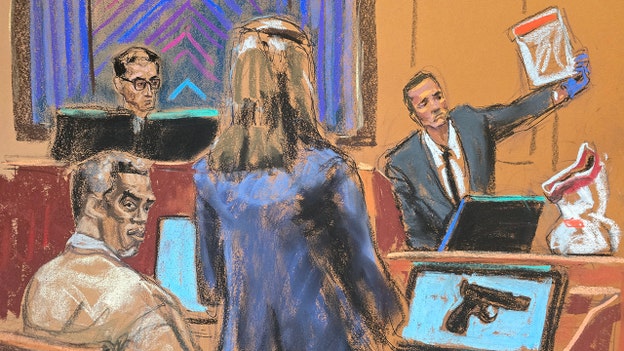
Sean "Diddy" Combs' former assistant, George Kaplan, told a federal court Wednesday that he had to pick up drugs for Diddy.
Kaplan, 34, testified to providing food, clothes, or on few occasions, drugs, to Diddy during hotel stays. He described a medicine bag that allegedly contained a number of different drugs, including Advil, Tylenol, Ketamine and Wellbutrin.
The former employee claimed he once had to pick up MDMA for Diddy. It was the first time he was aware of Combs using MDMA, a stimulant and hallucinogen more commonly known as ecstasy or molly.
Kaplan said he had to pick up drugs for Diddy in Miami. The "Last Night" rapper allegedly provided him a phone number and cash. Once Kaplan called the number, a "guy came" and Kaplan paid for the drugs.
Kaplan was also allegedly tasked with calling a person to "pick something up" for Diddy while he was staying at the BelAir Hotel in Los Angeles. He claimed on the stand that upon meeting the person, he gave them cash from Diddy and, in exchange, received a bag to give to Combs.
Kaplan, who received immunity after the judge signed an order earlier Wednesday, told the jury about how he would sometimes travel with Combs or sometimes travel ahead. Kaplan’s job was to set up the hotel rooms with clothes, speaker, candle, baby oil and Astroglide, he testified. He bought the supplies himself and paid using his corporate card. He claimed he was given a few hours notice to set up a hotel room.
Kaplan said it was his understanding Diddy would have “guests,” a female partner at the hotels. He explained Combs would stay anywhere from 12 hours to a few days. Kaplan described things he would see in the hotel rooms.
He told the jury he would see energy drinks, and lots of baby oil in the hotel rooms. He saw crystalized powder once on a counter in the bathroom, Kaplan testified.
Dr. Dawn Hughes also testified Wednesday, saying it’s not common for victims to disclose the abuse. Victims will often wait years or months to come forward, she explained.
Hughes, who previously provided testimony in R. Kelly's trial, claimed victims wait for fear of not being believed, fear of consequences and fear people will look negatively on them. Victims can also fear a change in economic situation or fear change in their network, according to Hughes.
She also claimed trauma survivors do drugs for a very trauma specific function, she said. Substance abuse can also be used as a preventative measure, according to Hughes. The clinical psychologist explained drugs can also sometimes be used to not feel or remember.
Kaplan will be back on the stand Thursday when court resumes at 9 a.m. ET, followed by Cassie Ventura's ex-boyfriend, Kid Cudi.
Fox News Digital's Lauryn Overhultz and Fox News' Maria Paronich contributed to this report.
Diddy's ex-employee tidied up hotel rooms to protect rapper's public image: testimony
Sean “Diddy” Combs’ former employee George Kaplan testified that he often tidied up hotel rooms to protect the rapper’s public image.
Kaplan, who received immunity after the judge signed an order earlier Wednesday, told the jury about how he would sometimes travel with Combs or sometimes travel ahead. Kaplan’s job was to set up the hotel rooms with clothes, speaker, candle, baby oil and Astroglide, he testified. He bought the supplies himself and paid using his corporate card. He claimed he was given a few hours notice to set up a hotel room.
Kaplan testified that he set up hotel rooms in Los Angeles at the InterContinental Hotel, New York at the Trump Hotel, and Miami at the SLS. The hotel rooms were always set up under the name “Frank Black,” he claimed.
Kaplan said it was his understanding Diddy would have “guests,” a female partner at the hotels. He explained Combs would stay anywhere from 12 hours to a few days.
Kaplan described things he would see in the hotel rooms. He told the jury he would see energy drinks, and lots of baby oil in the hotel rooms. He saw crystalized powder once on a counter in the bathroom, Kaplan testified.
Kaplan claimed he would tidy up the rooms to protect Diddy, to protect his public image. He said hotels would sell photos or videos to newspapers to try and embarrass celebrities and he wanted to avoid that. Kaplan claimed he did not see the rapper’s guests at these hotels.
Fox News' Maria Paronich contributed to this report.
Diddy's former assistant claims rapper 'threatened' his job
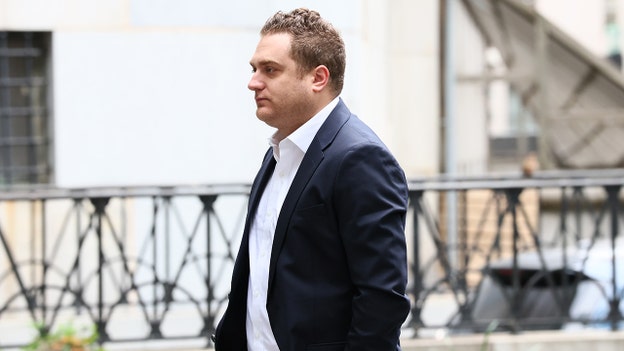
George Kaplan told the court Wednesday that his former employer, Sean "Diddy" Combs, "threatened my job on occasion."
Kaplan, 34, testified to working for Combs Enterprises as Diddy's assistant beginning in 2014, and claimed he made $125,000 per year. He said he often worked 80-100 hours per week.
Diddy allegedly threatened his employment monthly, and would tell Kaplan he's only surrounded by the best.
Kaplan recalled the first time the "I'll Be Missing You" musician allegedly threatened him. He said he purchased 2.5 gallon water bottles instead of one gallon water bottles.
Diddy was allegedly angry and got in his face.
Fox News Maria Paronich contributed to this report.
Diddy former assistant, George Kaplan, testifies in sex crimes trial
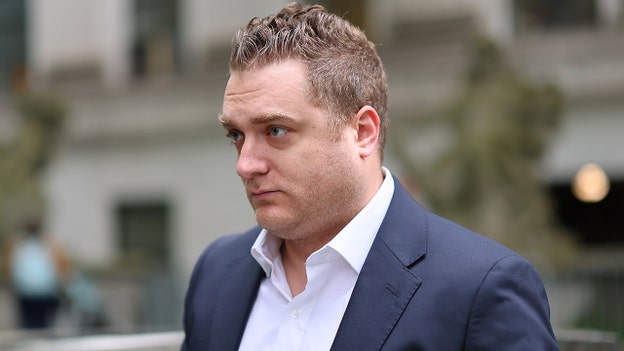
George Kaplan, Sean "Diddy" Combs' former assistant, took the stand Wednesday in the disgraced music mogul's federal trial for sex crimes.
Kaplan, 34, testified that his first job was out of college working at Nickelodeon before moving to Combs Enterprises. He left the company in 2015.
He reported to Kristina Khorram while working for Diddy as his executive assistant in 2014.
"She essentially ran Mr. Combs' life," Kaplan testified. He worked out of Diddy's Los Angeles home, and carried a number of responsibilities, including carrying bags which contained phones, medicine, computers, iPads and food.
Kaplan claimed Diddy began trusting him more, and he soon was working late nights in the studio with the Bad Boy Records founder. He allegedly worked anywhere from 80-100 hours per week.
He claimed he was paid approximately $125,000.
Fox News Maria Paronich contributed to this report.
Dr. Dawn Hughes previously worked with Diddy's defense attorney
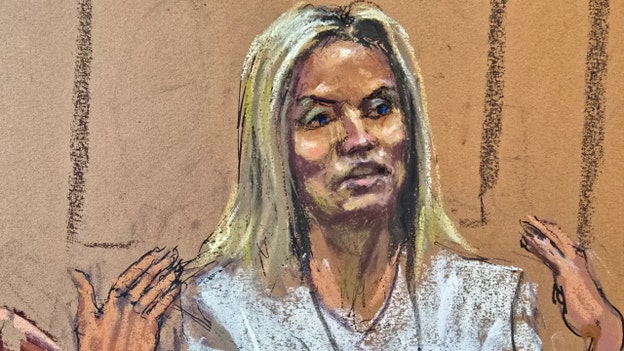
During Dr. Dawn Hughes’ re-direct examination, Assistant U.S. Attorney Mitzi Steiner asked if Hughes had been retained by defense attorneys. The clinical psychologist said yes and confirmed she had previously been retained by some of the defense attorneys on this case.
Hughes explained during re-cross examination that she worked for Diddy’s defense attorney Brian Steel who was defending a woman, a victim of domestic violence, and she was accused of shooting her husband. However, Steel did not end up calling Hughes to testify.
Fox News' Maria Paronich contributed to this report.
Jury shown gun hidden in shoebox found during raid of Diddy's home

The jury in Sean “Diddy” Combs’ sex-trafficking trial saw photos of evidence seized from the rapper’s Miami home.
Diddy’s homes in both Miami and Los Angeles were raided by Homeland Security on March 25, 2024. At the time, a U.S. official confirmed to Fox News Digital that the raids on Diddy's homes were connected to a federal human trafficking investigation.
On Wednesday, the prosecution in Diddy’s trial introduced evidence of a gun hidden inside a shoe box. The gun was found inside the disgraced music mogul’s home, former HSI agent Gerard Gannon testified.
Also visible in the photo were a few boxes of platform high heels, lingerie and toy handcuffs. Rope was visible in another box.
Fox News' Maria Paronich contributed to this report.
Psychologist on stand in Diddy's trial has never testified in defense men accused of sex crimes
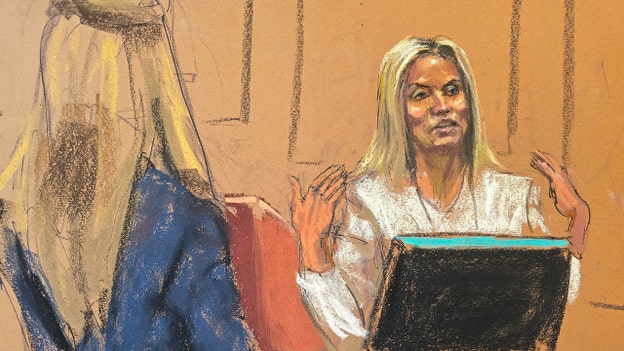
The clinical psychologist testifying in Sean “Diddy” Combs’ trial confirmed she’s never taken the stand in defense of a man accused of a sex crime.
“That’s correct…,” Dr. Dawn Hughes told Diddy’s attorney Jonathan Bach on Wednesday when questioned during cross-examination.
Hughes previously testified against R. Kelly in 2021. She also took the stand in NXIVM sex cult leader Keith Raniere’s case and testified against him.
In 2022, Hughes testified against Johnny Depp in his case against actress Amber Heard.
This year she will take the stand in Harvey Weinstein's rape re-trial, where she will testify against the former film producer.
Fox News' Maria Paronich contributed to this report.
Sean 'Diddy' Combs' kids reappear in court as support of father never wavers
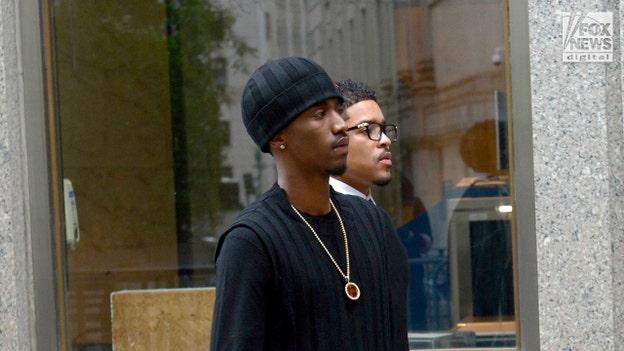
Sean “Diddy” Combs’ sons continued to support their father in court Wednesday.
Justin Combs and Christian Combs were spotted outside the Manhattan courthouse as the jury heard from witnesses.
The jury in Diddy’s sex-trafficking trial heard from a former HSI agent earlier Wednesday. Gerard Gannon testified about the weapons and drugs seized from the disgraced music mogul’s home back in March 2024. Clinical psychologist Dr. Dawn Hughes has been testifying about abuse victims. She clarified that she has not examined Cassie or Combs before taking the stand and is only giving “blind testimony.”
During Tuesday’s testimony in Diddy’s sex-trafficking trial, the jury heard from a male escort nicknamed The Punisher and Cassie Ventura’s mom.
Fox News' Maria Paronich contributed to this post.
SEE IT: Weapons, possible narcotics discovered in Diddy Miami home raid evidence
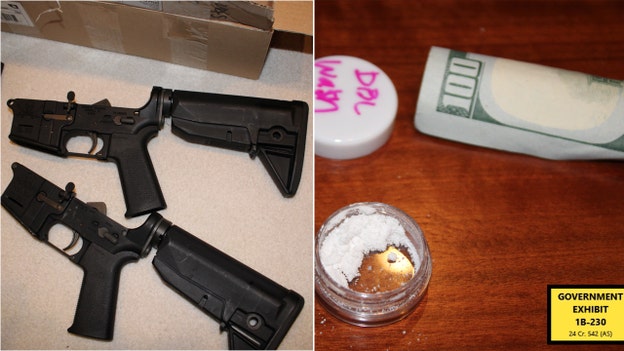
Evidence recovered from the scene of Sean "Diddy" Combs' Miami home during the raid on March 25, 2024 was introduced as evidence in the disgraced music mogul's federal trial.
Homeland Security Investigations officials recovered what appeared to be a white powder substance in a clear container, and showed a rolled up $100 bill nearby.
Detectives discovered a black Gucci bag on top of a dresser, and HSI agent Gerrard Gannon testified officers found an assortment of pills inside the bag, presumably narcotics and powder.
Authorities also recovered a number of weapons, including a handgun found inside a suitcase. Photo evidence from one of the rooms included images of AT-15's on a top shelf.
Gannon testified in court that he was personally in all the rooms of Diddy's Star Island mansion except the basement.
Clinical psychologist in Diddy’s trial testifies victims of abuse may take years to come forward
Dr. Dawn Hughes testified it’s not common for victims to disclose the abuse when she took the stand Wednesday. Victims will often wait years or months to come forward, she explained.
She claimed they wait for fear of not being believed, fear of consequences and fear people will look negatively on them. Victims can also fear a change in economic situation or fear change in their network, according to Hughes.
The clinical psychologist said it’s very difficult for a victim to disclose abuse in the best of circumstances. Hughes testified that victims disclose when they are in a safe environment, when they get help and are able to put words to the abuse.
Abuse victims are most likely to disclose to trusted confidants, their mother or best friend, according to Dr. Hughes. She explained initial disclosure might be in pieces because different bits come out with different people at different times.
Hughes also testified that past threats affect disclosure in a very serious way. Sometimes victims will wait until other safety measures are in place before speaking up.
Fox News' Maria Paronich contributed to this report.
Psychology expert testifying in Diddy's trial previously took the stand in R. Kelly's case
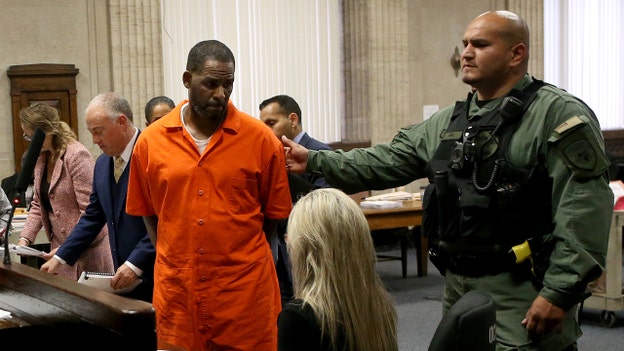
Dr. Dawn Hughes has testified in other celebrity trials.
During Wednesday’s cross-examination, the clinical psychologist’s testimony in R. Kelly’s trial was brought up by Diddy’s defense attorney Jonathan Bach.
Bach asked if a psychologist can give an opinion on the psychological characteristics about an individual without evaluating them. Hughes claimed there is debate about that. Bach then pointed out that Hughes was asked the same question during the R. Kelly trial in the Eastern District of New York court and she agreed with it.
Hughes confirmed she did not do a comprehensive examination and claimed she has not gathered evidence about this case. The clinical psychologist explained she had seen a headline about Cassie, but did not evaluate her.
Bach called Hughes’ testimony “general background.” However, she called it “general subject matter.”
Hughes testified in R. Kelly’s trial in 2021. Before that, she took the stand in NXIVM sex cult leader Keith Raniere’s case. Both were convicted.
She also took the stand in the Johnny Depp-Amber Heard defamation trial.
Hughes will also appear in Harvey Weinstein’s on-going rape re-trial. Judge Curtis Farber ruled the clinical psychologist could testify about the traumatic and psychological effects of rape and sexual assault.
Fox News' Maria Paronich contributed to this report.
Diddy's former employee invokes 5th Amendment, judge signs immunity order
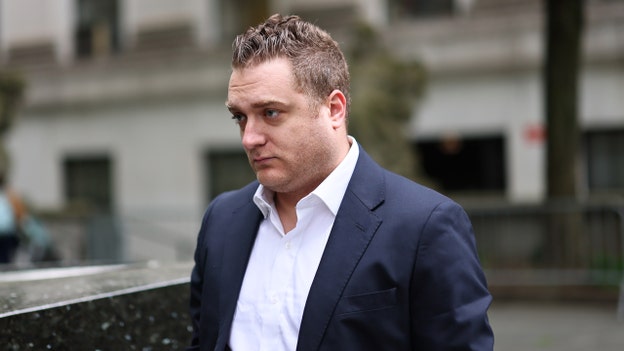
Sean “Diddy” Combs’ former employee, George Kaplan, invoked his 5th Amendment right not to incriminate himself on Wednesday.
Kaplan took the stand before the lunch break and explained he was there because of a subpoena. The former employee said “yes” when asked if he planned to invoke his 5th Amendment right.
The prosecution told Kaplan that if he is granted immunity, he will be forced to answer questions during Diddy’s trial. He said he understands.
An immunity order was then presented to Kaplan’s attorney for review.
Judge Arun Subramanian signed the immunity and it was entered as part of the record.
Fox News' Maria Paronich contributed to this report.
Diddy's defense lawyer expects trial to heat up as weeks go on
Sean "Diddy" Combs' defense lawyer, Marc Agnifilo, spoke about the on-going sex-trafficking trial outside of court Wednesday.
"It's a long trial and we're just getting started," Agnifilo told Fox News' CB Cotton on Wednesday morning. "And we have a lot of witnesses to go, we have a lot of weeks to go and as the summer gets hotter, I'm sure so will the trial."
Diddy's trial began with opening statements on May 12 after solidifying a jury panel. The trial is expected to last eight weeks and has already seen testimony from the rapper's ex-girlfriend, Cassie Ventura, Cassie's former best friend, the singer's mom along with former employees of Diddy and male escorts allegedy hired for "freak offs."
More celebrities are expected to take the stand. The jury already heard from former Danity Kane singer Dawn Richard and Kid Cudi should testify on Thursday.
Clinical psychologist uses 'healthy skepticism' with court work
Dawn Hughes, a clinical psychologist who testified on behalf of the government in the Sean "Diddy" Combs federal trial, told the court she uses multiple sources to confirm her information.
While on the stand Wednesday, Hughes admitted she approaches her forensic work for courts "with healthy skepticism."
She testified that in cases she will review police reports, medical records and educational background to perform a comprehensive evaluation.
Jonathan Bach, a lawyer on Diddy's legal team, asked Hughes about the concept of "malingering," which he claimed was a fancy way of fabricating the facts. Hughes said his terminology wasn't correct, and that it's fabricating an emotional response.
Hughes previously explained she does not have personal knowledge of this case and has not reviewed evidence or assessed anyone involved.
She confirmed she has not seen any details about what has happened in court. Her role today is to provide “blind testimony.”
Fox News' Maria Paronich contributed to this report.
Psychologist explains trauma can affect an abuse victim's memory: testimony
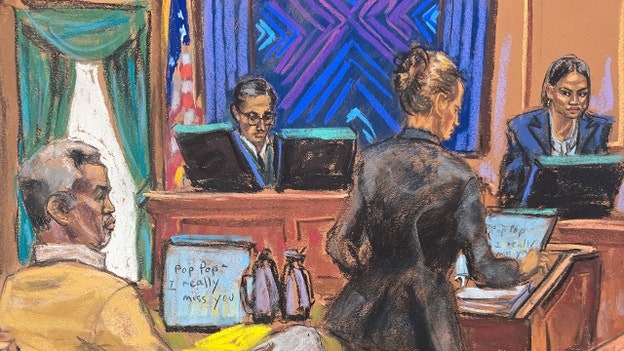
Clinical psychologist Dr. Dawn Hughes testified in Sean “Diddy” Combs’ sex-trafficking trial Wednesday.
According to Hughes, trauma affects memory. Trauma memories can be forgotten and recalled at a later time, she explained. Hughes claimed this occurs not just in domestic violence, but sexual abuse and combat.
Hughes testified memories can be fragmented. Fragmented memories, she testified, can be just as reliable, but not as complete. Coping mechanisms can also affect memory, according to the doctor. She explained sometimes victims deliberately try not to remember, which impacts the recall. Hughes said victims will try not to remember because it’s too painful.
According to Hughes, sometimes events start to blend together for abuse victims. Repeated events and routine of abuse can blend together, the doctor claimed. A victim can know they were punched a bunch of times, but can’t always place it in a timeline.
Hughes testified that connecting the memory to something else makes it more likely to be recalled.
Fox News' Maria Paronich contributed to this report.
Dr. Dawn Hughes testifies drugs can be a coping mechanism for abuse victims
Dr. Dawn Hughes testified that substance abuse can function as a coping mechanism within abusive relationships during court Wednesday.
Trauma survivors do drugs for a very trauma specific function, she said. Substance abuse can also be used as a preventative measure, according to Hughes. The clinical psychologist explained drugs can also sometimes be used to not feel or remember.
Cassie Ventura testified last week to using drugs, including ketamine and cocaine, as a way to disassociate during the "freak offs."
"For me, it was dissociative … I couldn’t imagine doing that without some sort of buffer," she previously told Assistant U.S. Attorney Emily Johnson. "I needed to remain high to stay present with the experience."
Cassie testified that she would almost always get sick from the drugs and often vomited. Diddy was allegedly aware that she was sick while engaged in a "freak off."
Fox News' Maria Paronich contributed to this report.
Psychology expert in Diddy trial testifies victim will placate abuser to stop violence
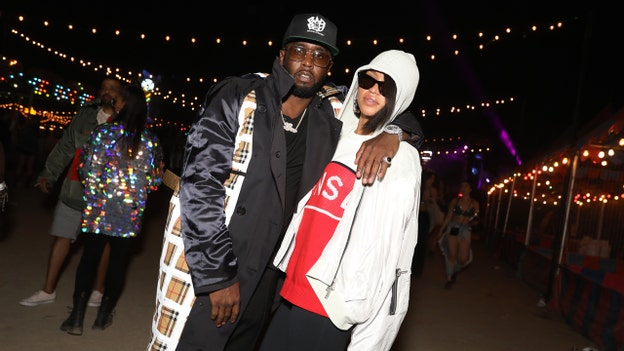
Dr. Dawn Hughes testified Wednesday that victims will try to placate their abuser in order to stop the violence.
Hughes told the jury when you placate an abuser, you are trying to soothe the abuser and often apologize unnecessarily. The victim will try to do all the things to not get hit by their partner, according to the doctor. Hughes said placating can appear in all facets of a relationship - if you can’t say no to little things, it's hard to say no to something else.
Cassie testified on May 13 that she couldn’t say no to Diddy at times. Cassie recalled one instance when there was a blow up pool filled with oil she was told to get into. She explained she got in because “you couldn’t say no.” Cassie was concerned about Combs’ temper if she didn’t get in, the singer-songwriter told the jury.
Cassie also testified that Diddy was in control of every “freak off.”
“Every freak off was directed by Sean…,” she told Assistant U.S. Attorney Emily Johnson. Combs would tell her where she would be, what the lighting was, etc. During the first “freak off,” Cassie claimed she was wearing an outfit from a sex store, something with “really high platform shoes.” She also wore a masquerade mask.
Cassie told the jury she took ecstasy before the “freak off.” The singer said she was high “so there wasn’t too much feeling…a mixture of dirty and confusion…he’s happy with me, so I did something right…”
She claimed the next “freak off” occurred shortly after. Cassie testified she experienced the same nervousness, “What am I going to do. I can’t say no.” She “ultimately said yes.”
“I didn’t want to make him upset,” she told the assistant U.S. attorney. “I didn’t want to make him angry.”
Fox News' Maria Paronich contributed to this report.
Clinical psychologist reveals trauma bond can keep a victim in a relationship with their abuser
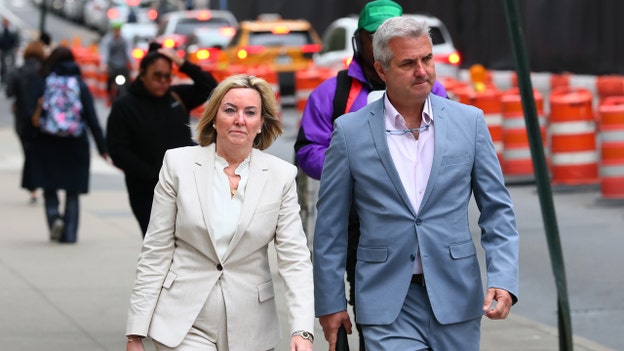
Dr. Dawn Hughes told the jury about trauma bonds during her testimony Wednesday in Sean “Diddy” Combs’ sex-trafficking trial.
Hughes explained that because these relationships start with love, the victims continue to want that feeling. When they are shown that, they want it back, and it creates a psychological attachment called a trauma bond, according to Hughes. The victim loves their partner despite the violence and abuse. When times are good, that creates a very strong bond. Hughes claimed that because the acts are so private and often humiliating, the victim only turns to the abuser, creating a very powerful bond.
The clinical psychologist claimed a trauma bond has a sense of hopelessness and makes a victim feel they are unable to leave.
During cross-examination on May 15, Cassie admitted she kept the “freak offs” a secret from her mom and friends.
She also told Diddy’s defense lawyer, Anna Estevao, that Diddy trusted her with his secrets. The “Me & U” singer explained that she wanted to earn his trust.
Fox News' Maria Paronich contributed to this report.
Victims with no financial independence unlikely to leave abusive relationships: testimony

Dr. Dawn Hughes testified that financial dependence on an abuser is a factor affecting a victim’s ability to leave a relationship. It sabotages a victim’s independence, the clinical psychologist said.
Hughes explained when a victim doesn’t have financial dependence, they are kept on unstable footing.
Cassie Ventura told the jury Sean “Diddy” Combs controlled her entire lifestyle while testifying on May 13.
The singer-songwriter claimed that Combs paid for her entire lifestyle, which included cars, clothing and trips. In addition, the "Last Night" rapper would provide Cassie spending money.
According to Cassie, Diddy would "take things away if she wasn't doing what she was asked."
Fox News' Maria Paronich contributed to this report.
Clinical psychologist testifies abuse is about power and control
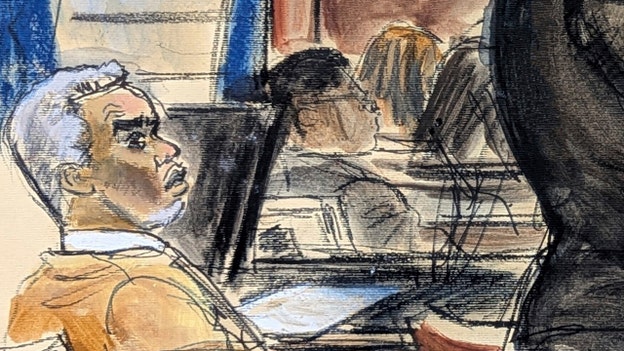
Dr. Dawn Hughes, who is being compensated $6,000 for her time, explained why victims stay in abusive relationships during her testimony Wednesday.
Victims will stay in abusive relationships because a lot of behaviors conspire to keep the victim trapped, according to Hughes. She also testified that in these relationships, there is almost always love, making it difficult for the victim to see their way out. She claimed psychological consequences from the abuse can also prevent a victim from leaving.
Hughes explained to the jury it’s about the power and control of the abuser, not just about the hitting. She continued saying when you are hit or beat up, you feel scared and it’s very hard to take that fear away. When in this high level of fear, Hughes claimed victims can’t take any other things into account – like leaving a relationship.
Hughes defined psychological abuse as the threat of physical violence. This can include intimidation.
Fox News' Maria Paronich contributed to this report.