

























Nearly 1 in 10 adults have been diagnosed with cancer, survey indicates
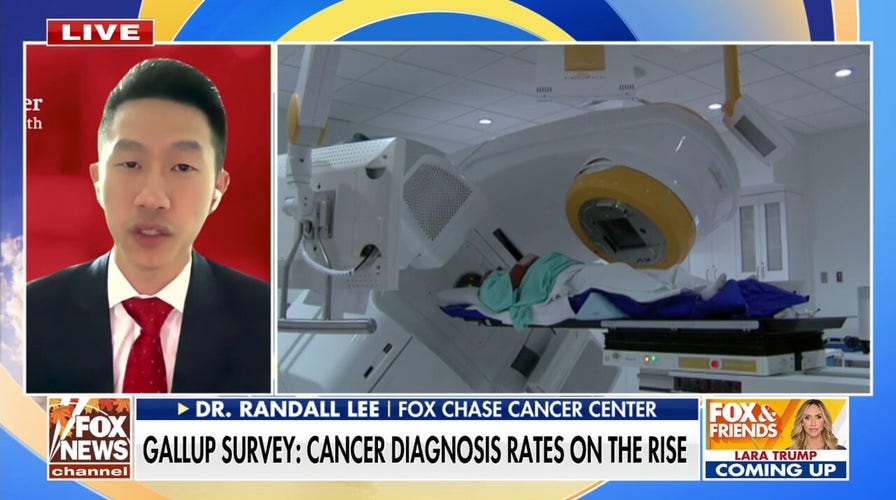
Fox Chase Cancer Center's Dr. Randall Lee joined 'Fox & Friends First' to discuss why cancer diagnosis rates are on the rise, what contributes to the trend and the benefits of a post-Thanksgiving meal walk.
The time of day patients receive cancer treatments could have an impact on the outcome, a new study suggests.
Research published in Cancer, the official journal of the American Cancer Society, found that patients who received standard immunochemotherapy for extensive-stage small cell lung cancer (ES-SCLC) earlier in the day saw "significantly greater benefit" compared to those who got the same treatment later in the afternoon.
In the study, researchers from the Affiliated Cancer Hospital of Xiangya School of Medicine at Central South University, China, analyzed data from nearly 400 patients who were treated between May 2019 and October 2023.
FAST-GROWING CANCER COULD BE SLOWED BY COMMON BLOOD PRESSURE DRUG, RESEARCH SHOWS
All patients had ES-SCLC and received first-line immunotherapy (atezolizumab or durvalumab) along with chemotherapy, according to a press release.
"Our study found that patients who received immunochemotherapy before 3:00 PM had substantially longer progression-free survival and overall survival," lead study author Dr. Yongchang Zhang, medical oncologist and chief director at the Hunan Cancer Hospital in Changsha, China, told Fox News Digital.
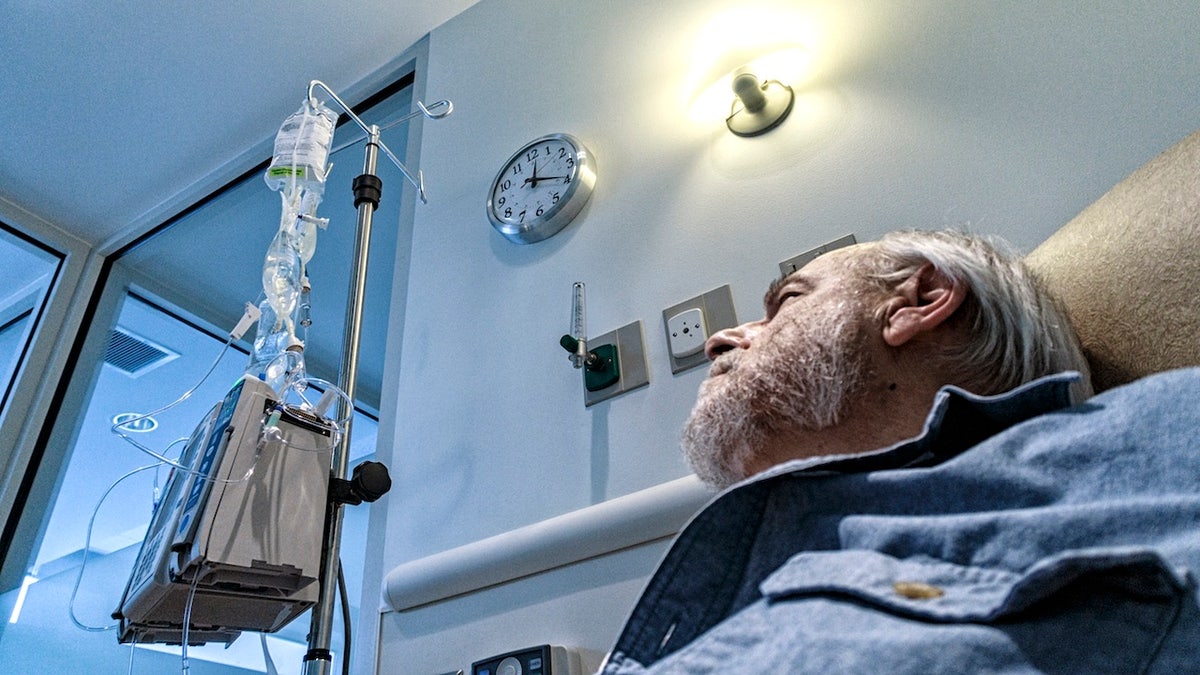
The time of day patients receive cancer treatments could have an impact on the outcome, a new study suggests. (iStock)
"After adjusting for multiple confounding factors, earlier administration was associated with a 52% lower risk of cancer progression and a 63% lower risk of death."
"It was quite surprising that simply changing the infusion time could lead to such substantial survival benefits for patients," he added.
TWO POPULAR TYPES OF EXERCISE COULD REDUCE CANCER GROWTH, STUDY FINDS
The findings align with the idea of chronotherapy, which suggests that the body’s natural daily rhythms affect how the immune system works and how drugs act in the body.
This means cancer treatments may be more effective at certain times of day, likely because immune activity and drug processing change over the 24-hour cycle, the study suggests.
"This study should not prompt patients to delay treatment or panic about appointment times."
Based on the findings, Zhang recommends scheduling immunotherapy infusions in the early part of the day.
"Research across multiple cancer types has shown that patients receiving immunotherapy earlier in the day experience longer survival," he noted. "Our findings in non-small cell lung cancer, supported by both multicenter retrospective studies and prospective clinical trials, confirm this pattern."
NEW CANCER THERAPY HUNTS AND DESTROYS DEADLY TUMORS IN MAJOR BREAKTHROUGH STUDY
Gilberto Lopes, M.D., chief of medical oncology at the Sylvester Comprehensive Cancer Center at the University of Miami Miller School of Medicine, noted that previous, similar studies in non-small cell lung cancer have shown better outcomes when immunotherapy is administered earlier in the day, reinforcing the idea that the immune system follows circadian rhythms that influence treatment response.
CLICK HERE TO SIGN UP FOR OUR HEALTH NEWSLETTER
"In that sense, the results are biologically plausible and consistent with a growing body of evidence across cancers," Lopes, who was not involved in the study, told Fox News Digital. "What is striking is that this signal now appears in small cell lung cancer, a disease where outcomes have been notoriously difficult to improve."
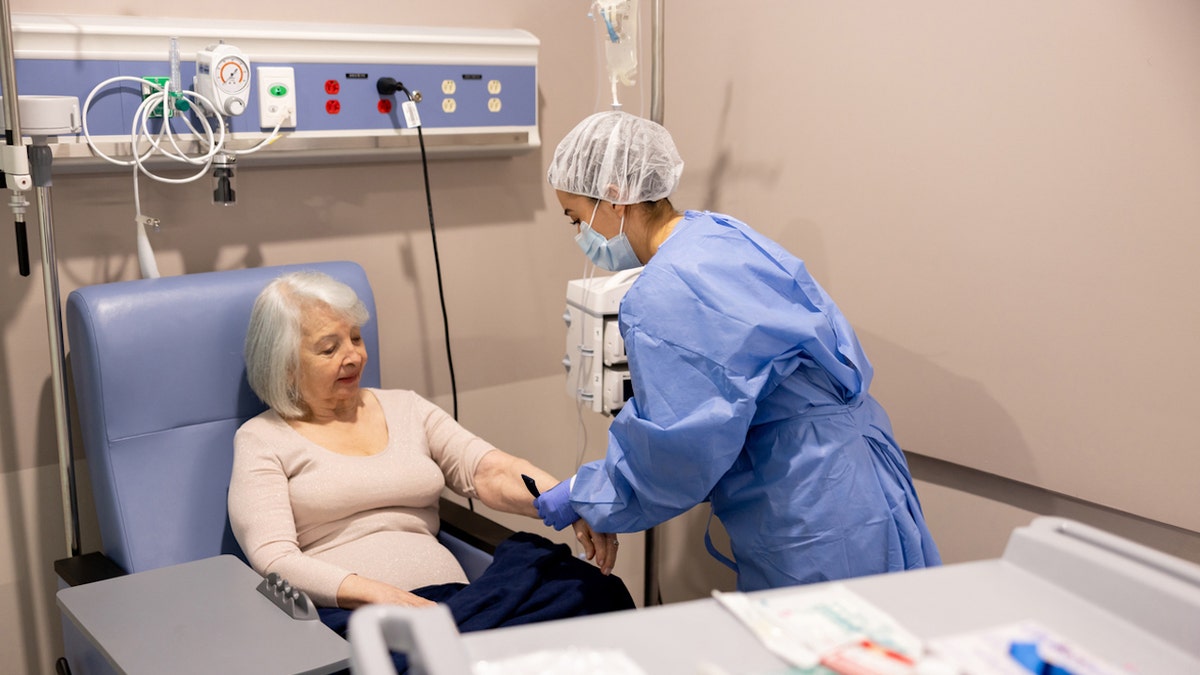
All patients had ES-SCLC and received first-line immunotherapy (atezolizumab or durvalumab) along with chemotherapy. (iStock)
The study did have some limitations, as detailed in the published study. Most notably, the study was retrospective and observational, meaning it could not prove a cause-and-effect relationship between timing of treatments and outcomes.
CLICK HERE TO DOWNLOAD THE FOX NEWS APP
With this type of study, Lopes said, "investigators start with an idea and go back and review patient records." In this case, other factors can have an impact on the outcome, according to the oncologist.
TEST YOURSELF WITH OUR LATEST LIFESTYLE QUIZ
"For instance, did patients who come early in the day have a better quality of life, performance status and socioeconomic status and that is what made the difference?" he asked. "Or something else we don’t know? These results need to be confirmed prospectively to eliminate known and unknown sources of bias."
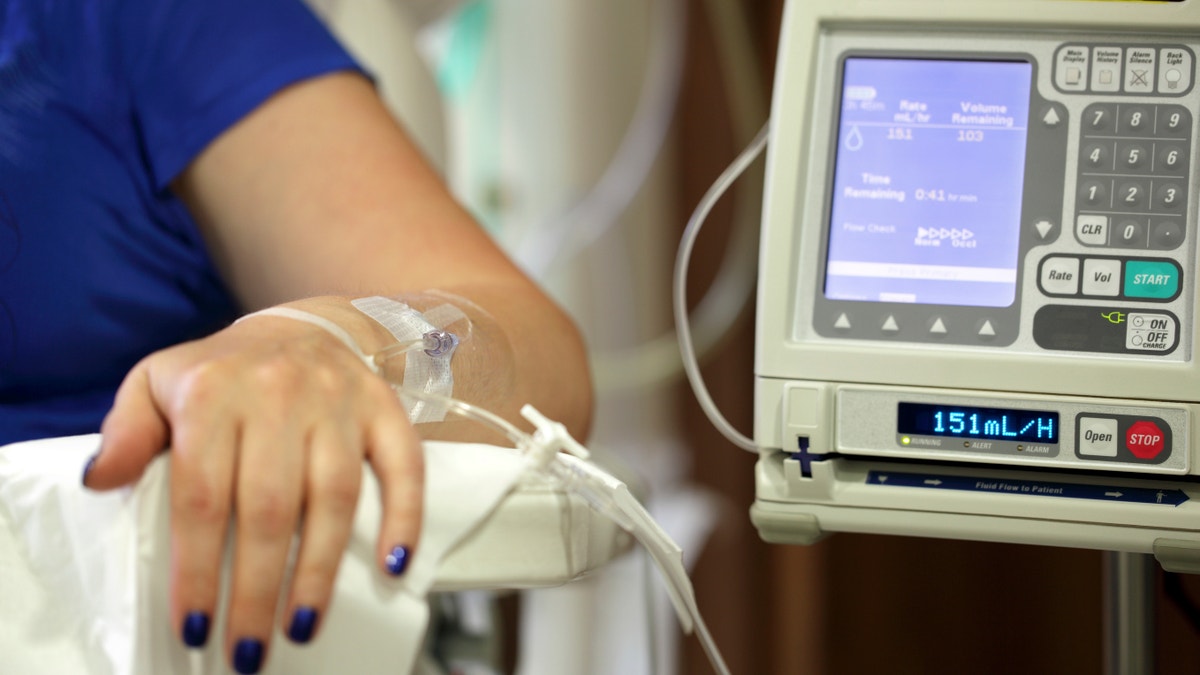
"The next step is prospective testing, but until then, this research invites us to rethink something medicine usually ignores: timing itself," an oncologist said. (iStock)
Zhang also pointed out that this was a single-center study including only Chinese patients. "To obtain more definitive evidence, prospective clinical trials conducted across multiple countries and diverse populations are needed," he told Fox News Digital.
Looking ahead, the researchers plan to conduct randomized trials to confirm these preliminary findings and pinpoint optimal treatment windows based on individual patients’ chronotypes (internal body clocks).
CLICK HERE FOR MORE HEALTH STORIES
"This study should not prompt patients to delay treatment or panic about appointment times," Lopes cautioned. "But it raises an important, low-cost question for oncology systems: If scheduling flexibility exists, should earlier infusion times be preferred?"
"The next step is prospective testing, but until then, this research invites us to rethink something medicine usually ignores: timing itself."
