





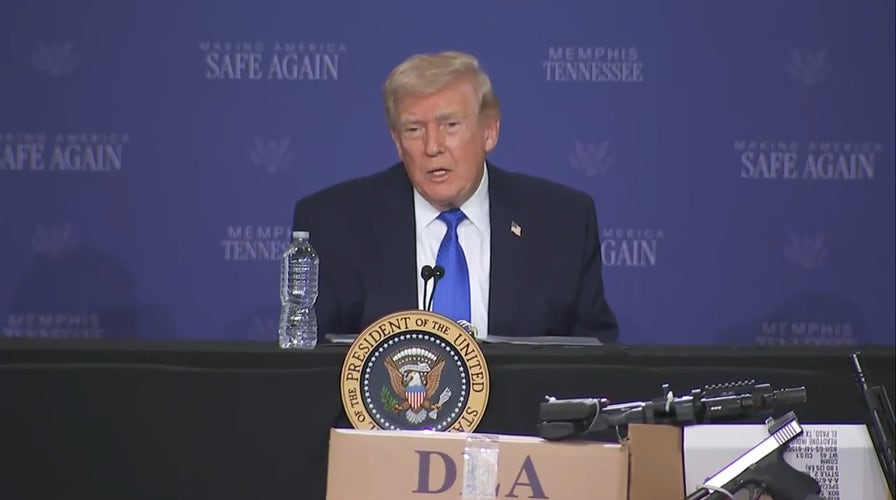
Trump says SAVE America Act should be tied to DHS funding
During a Memphis roundtable, President Donald Trump called for Republicans not to agree to a Department of Homeland Security funding deal unless it includes the SAVE America Act.
An Obama-appointed federal judge who once blocked North Carolina’s voter identification law has reversed course and ruled it constitutional, delivering a major win for Republicans and election security advocates after a seven-year court fight.
Judge Loretta Biggs upheld the law Thursday, finding the liberal voting rights groups that sued North Carolina’s election board failed to prove the voter ID law was discriminatory. The ruling leaves North Carolina’s voter ID law in place ahead of the 2026 midterm elections.
It also comes as President Donald Trump has been advocating stricter voter ID laws nationwide, alleging what he has said is widespread fraud in elections and to prevent illegal immigrants from potentially casting ballots.
The North Carolina case centered on a bill that the GOP-led Senate crafted in 2018 to govern how the state would enforce an amendment requiring voters to present a photo ID at the polls. The amendment had been approved by about 55% of North Carolina voters, and the legislation dictated how the amendment would be put into practice.
THUNE ACCUSES CRITICS OF 'CREATING FALSE EXPECTATIONS' AMID BACKLASH OVER STALLED SAVE AMERICA ACT
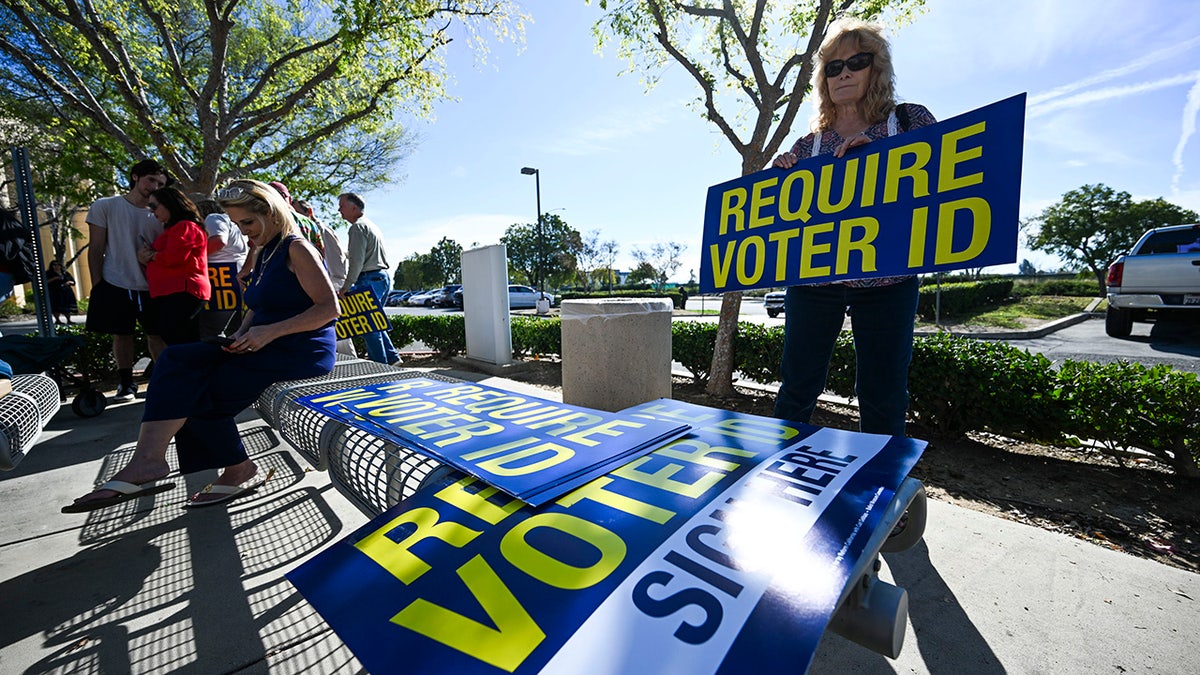
A volunteer picks up a sign at a press conference at the Riverside County Registrar of Voters March 2, 2026, in California as GOP lawmakers gather in support of placing a voter ID measure on the November ballot. (Anjali Sharif-Paul/MediaNews Group/The Sun via Getty Images)
"Finally. After seven years, we can put to rest any doubt that our state’s Voter I.D. law is constitutional," said Republican state Sen. Phil Berger, who intervened in the case to defend the law.
Biggs emphasized in her 134-page decision that North Carolina had a "history of extensive official discrimination against African Americans" that was undisputed by parties in the case. The judge said she found evidence that the voter ID law served to disenfranchise Black and Latino voters but that precedents set by higher courts meant the evidence was not enough to invalidate the law.
HOUSE REPUBLICANS PUSH JOHNSON TO GO TO WAR WITH SENATE OVER SAVE ACT
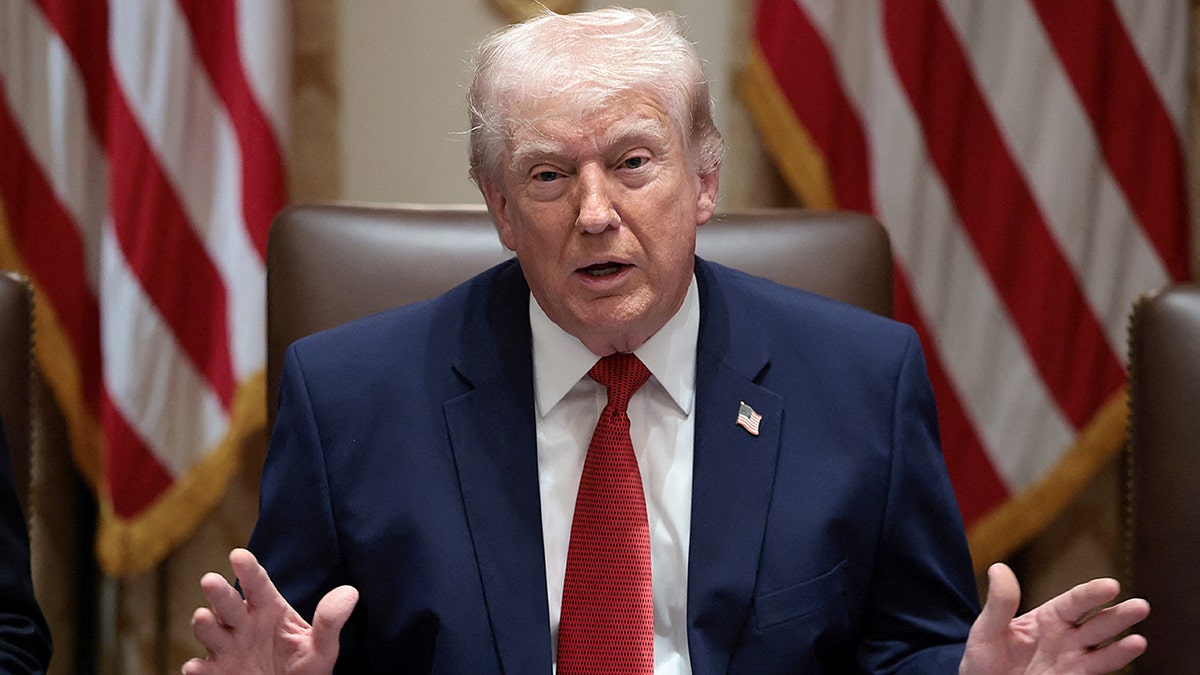
President Donald Trump holds a Cabinet meeting at the White House in Washington, D.C., March 26, 2026. (Reuters/Evelyn Hockstein)
"This Court … concludes that it is compelled by controlling case law to render Judgment in favor of the Defendants," Biggs said, tossing out the plaintiffs’ allegations that the law violated the 14th and 15th amendments and the Voting Rights Act.
The judge said the "case law requires this Court to assign less weight to the historical background. It further requires almost impenetrable deference to the presumption of legislative good faith."
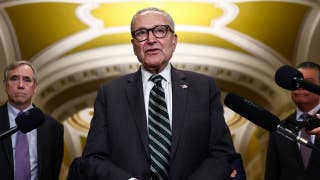
The judge's findings echo prominent Democrats, including Senate Minority Leader Chuck Schumer, D-N.Y., who have called voter ID laws "Jim Crow 2.0." Schumer has said the SAVE America Act, which he is currently blocking from Senate passage, is "a dagger to the heart of our democracy."
Trump has been aggressively urging Congress to pass the SAVE America Act, a bill that would impose a nationwide requirement that people provide a physical document proving U.S. citizenship when they register to vote. But tensions have flared on Capitol Hill after the bill passed the House but stalled in the Senate because of Democrats' opposition to it.
The decision marked a reversal for Biggs after she issued a preliminary injunction in December 2019 that blocked the state from enforcing the voter ID law for the 2020 election cycle. In that opinion, she cited the state’s "sordid history of racial discrimination and voter suppression," arguing that parts of the law were "impermissibly motivated, at least in part, by discriminatory intent."
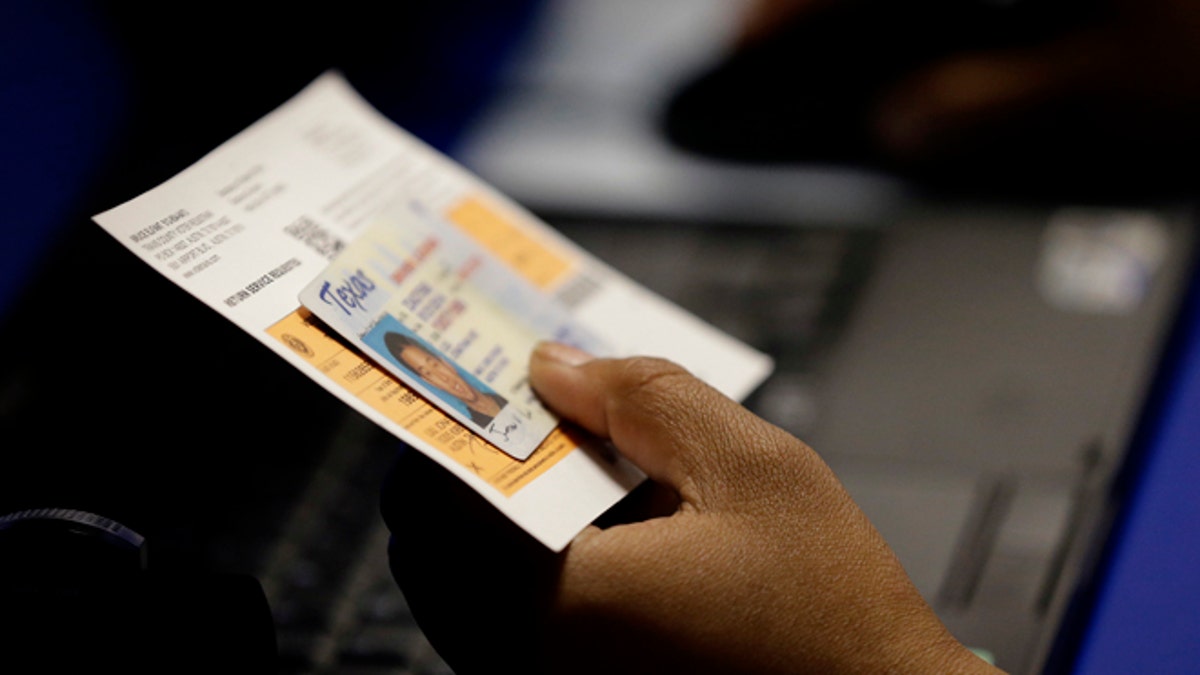
In this Feb. 26, 2014, file photo, an election official checks a voter's photo identification at an early voting polling site in Austin, Texas. (AP Photo/Eric Gay, File)
Her injunction was later reversed by the U.S. Court of Appeals for the 4th Circuit. The state Supreme Court also upheld the law in a separate state-level case.
CLICK HERE TO DOWNLOAD THE FOX NEWS APP
North Carolina Republicans have defended the law as one designed to be accommodating to all voters, saying it offered a wide range of identification options for people showing up to the polls while also boosting election integrity and confidence in elections.
