













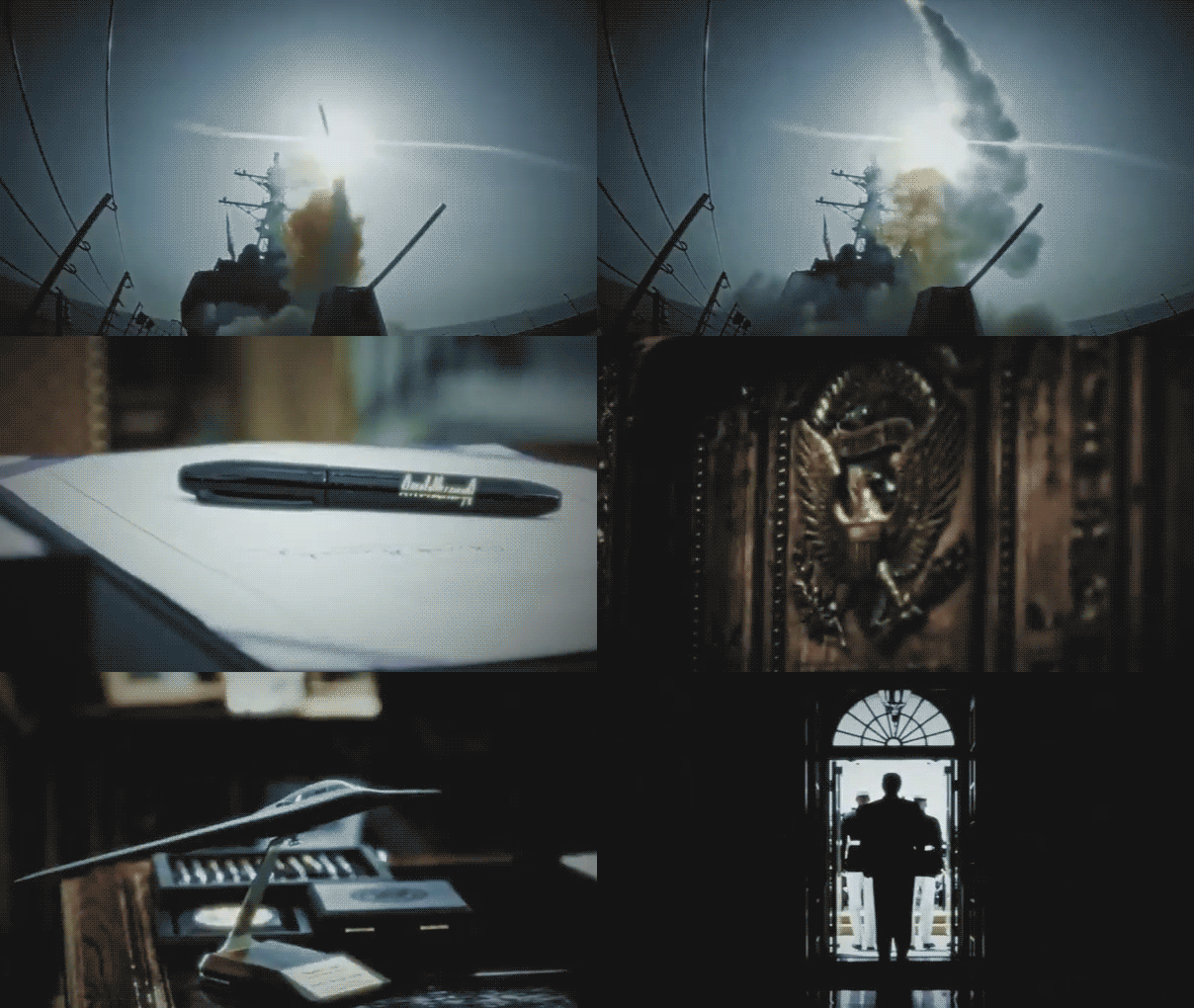






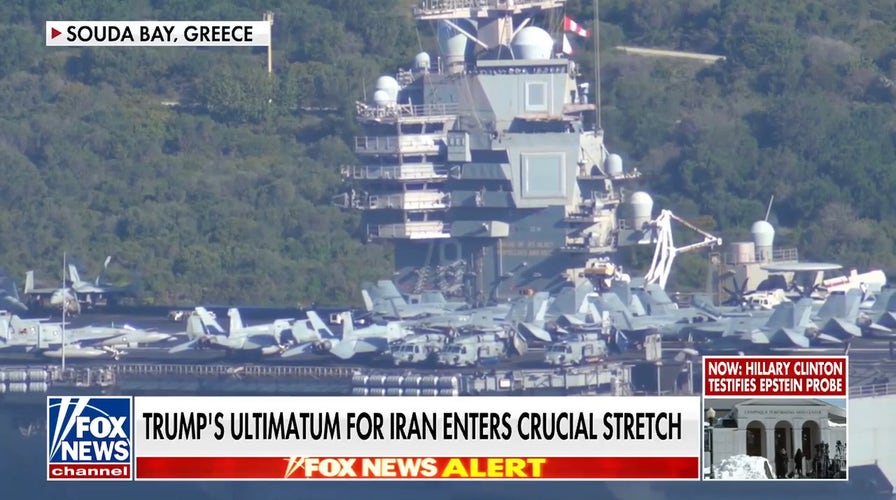
Trump's Iran ultimatum intensifies with US military build-up
Jennifer Griffin reports on President Donald Trump's ultimatum to Iran amid escalating nuclear talks and a significant US military build-up in the Middle East.
Iran launched a wave of missile and drone strikes targeting U.S. military facilities and allied partners across the Middle East Saturday in direct response to coordinated U.S.–Israeli airstrikes on Iranian territory earlier in the day.
The strikes underscore rising tensions over Tehran’s ballistic missile program — which, according to President Donald Trump, could eventually be capable of striking the continental United States.
Explosions were reported in or near areas hosting American forces in Bahrain, Qatar, the United Arab Emirates, Kuwait and Jordan, with several host governments saying their air defense systems intercepted incoming projectiles. It remains unclear whether any U.S. service members were killed or injured, and U.S. officials have yet to release definitive casualty figures or formal damage assessments. The situation remains fluid.
Trump, in a recent address to the nation, warned that Iran is working to build missiles that could "soon reach the United States of America," elevating concerns about Tehran’s long-term weapons capabilities even as its current arsenal already places American troops and bases in the Middle East within range.
What Iran can hit now
IRAN VOWS TO 'TARGET US BASES' IF AMERICAN FORCES LAUNCH AN ATTACK: REPORT
Iran is widely assessed by Western defense analysts to operate one of the Middle East’s largest ballistic missile forces. Its inventory includes a variety of short- and medium-range ballistic missiles, some with ranges of roughly 1,500 miles to 2,000 miles — far outstripping the reach needed to strike major U.S. military installations across the Gulf region.
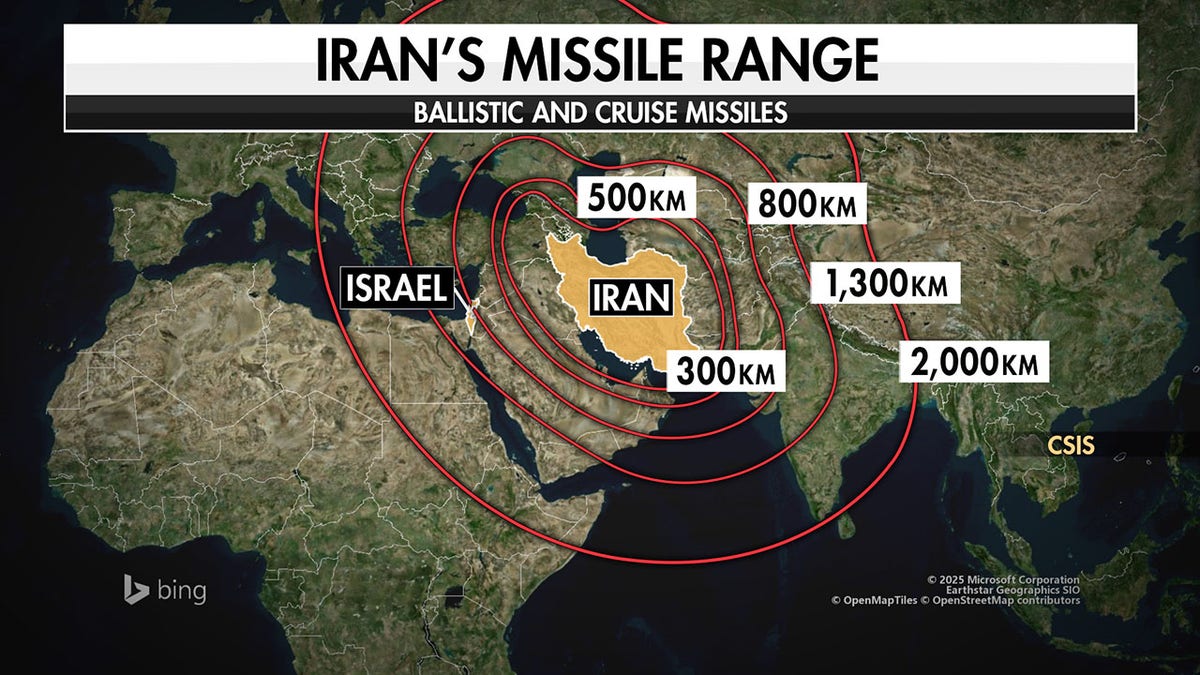
A map shows what is within range of ballistic missiles fired from Iran. (Fox News)
That footprint places a broad network of American infrastructure inside Tehran’s strike envelope, including:
- Al Udeid Air Base in Qatar, a forward headquarters for U.S. Central Command.
- Naval Support Activity Bahrain, home to the U.S. Fifth Fleet.
- Camp Arifjan and Ali Al Salem Air Base in Kuwait.
- Prince Sultan Air Base in Saudi Arabia.
- Al Dhafra Air Base in the UAE.
- Muwaffaq Salti Air Base in Jordan.
Some of these installations came under threat during Friday’s Iranian retaliation, though many regional governments reported successful interceptions by their air defenses.
Missile capabilities and limitations
Despite Trump’s warnings about future long-range threats, Iran does not currently possess an intercontinental ballistic missile (ICBM) capable of reaching the U.S. homeland. Tehran’s most capable systems are generally limited to regional ranges.
BUILT FOR WEEKS OF WAR: INSIDE THE FIREPOWER THE US HAS POSITIONED IN THE MIDDLE EAST
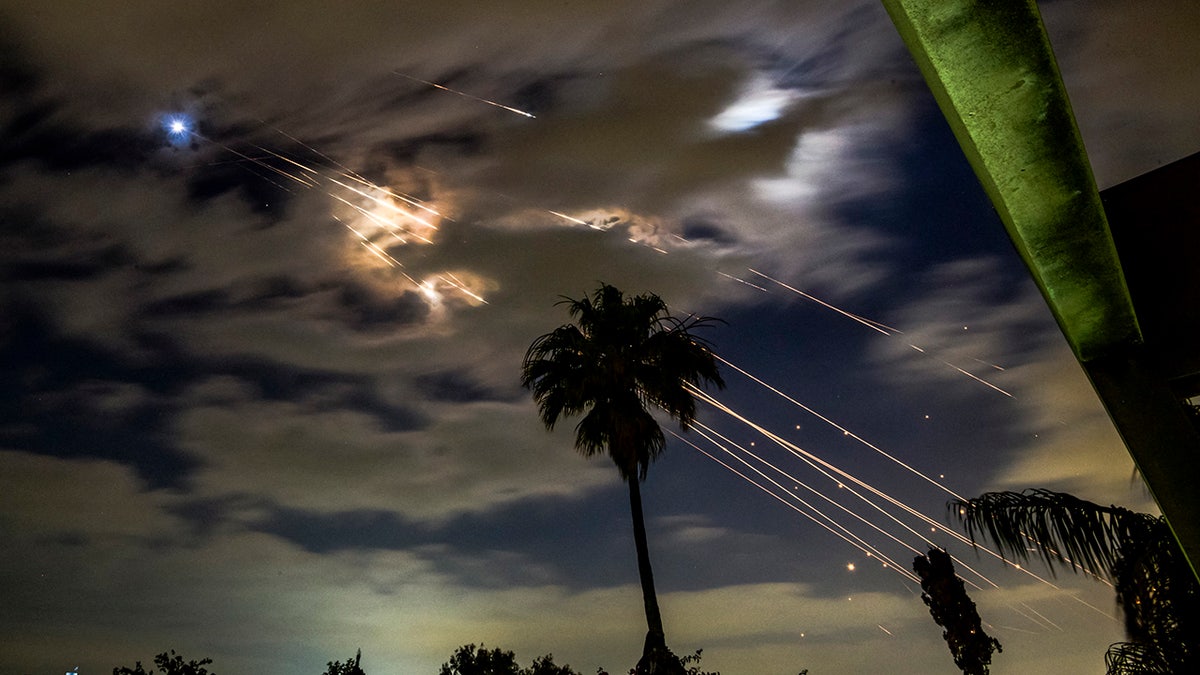
Israel's air defense targets Iranian missiles in the sky of Tel Aviv in Israel, June 16, 2025. (Matan Golan/Middle East Images/AFP via Getty Images)
Iran’s medium-range ballistic missiles such as the Shahab and Ghadr families can reach several hundred to roughly 2,000 miles, enough to strike targets across the Middle East and parts of southeastern Europe.
Cruise missiles like the Hoveyzeh have ranges exceeding 1,300 km but are similarly constrained to regional theaters.
To reach the continental United States, Tehran would need missiles with ranges exceeding roughly 6,000 miles — capabilities it has not publicly demonstrated and which U.S. officials assess remain years away even in optimistic scenarios.
WHERE IRAN’S BALLISTIC MISSILES CAN REACH — AND HOW CLOSE THEY ARE TO THE US
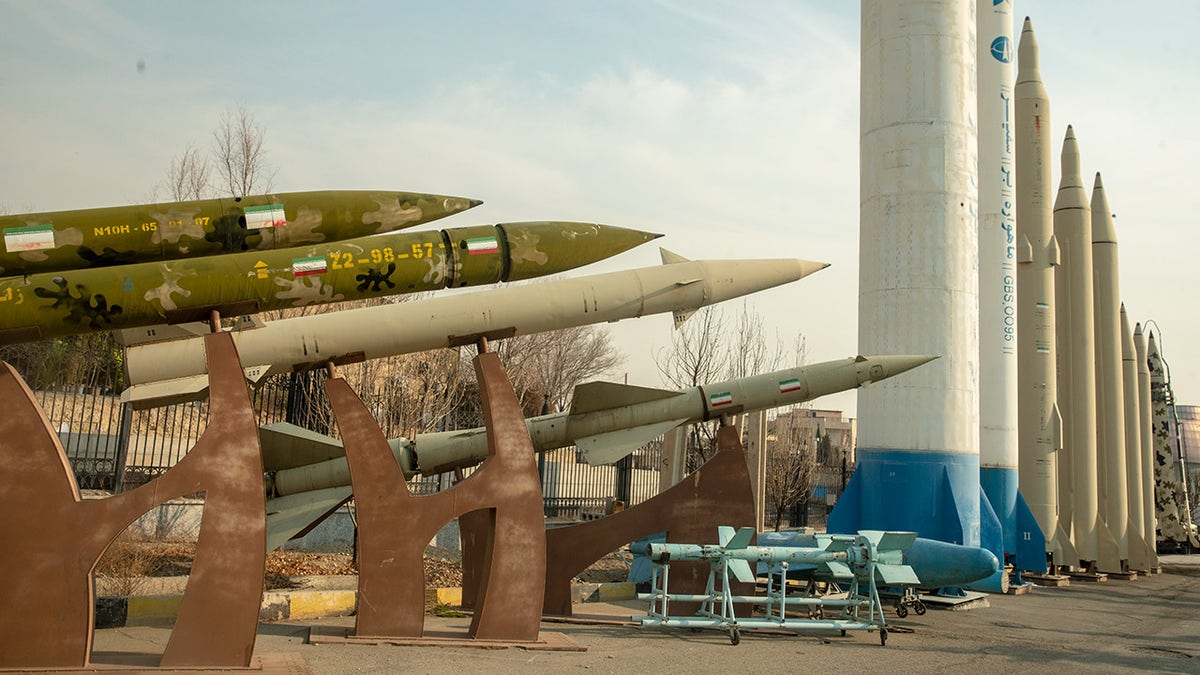
Iran is widely assessed by Western defense analysts to operate the largest ballistic missile force in the Middle East. (Majid Saeedi/Getty Images)
US defenses and strategic implications
While Iran cannot currently strike the U.S. homeland, its missile force remains a central strategic concern for Washington as long as American and allied forces are based within its regional reach.
U.S. missile defense systems, including the Terminal High Altitude Area Defense anti-ballistic missile system, Patriot batteries and ship-based interceptors, aim to protect forces and partners, but inventories are finite and could be stressed by sustained exchanges.
Analysts have noted that high-rate engagements drain interceptor stocks more quickly than they can be replenished. Pentagon officials have not published precise inventory levels.
CLICK HERE TO DOWNLOAD THE FOX NEWS APP
The ballistic missile issue also complicates broader diplomacy. While current negotiations with Iran primarily focus on nuclear materials and enrichment activities, U.S. officials increasingly argue that limits on delivery systems cannot be separated from long-term security concerns around nuclear weapons.
Iranian leaders insist their missile program is defensive in nature and non-negotiable within nuclear talks. As diplomacy and conflict unfold simultaneously, the strategic reality remains stark: Iran’s current missiles threaten U.S. forces in the region today, and future advances could further expand Tehran’s reach — even as the U.S. homeland remains outside that threat for now.
