





















California Interscholastic Federation ‘to blame’ for transgender athlete controversy, Caitlyn Jenner says
Former Olympian and Fox News contributor Caitlyn Jenner discusses the debate over transgender athletes in women’s sports after a California track event sparked controversy on ‘Fox News @ Night.’
Imagine getting put on testosterone at 14 years old because doctors convinced you that if you didn’t, you may be suicidal.
While I was physically very healthy, I was emotionally and mentally vulnerable — struggling with profound discomfort in my body after childhood sexual abuse. In the eyes of the medical system, that distress was enough to justify permanently altering my body before I was old enough to fully understand what was being taken from me.
This is my story, and one that I look back on with regret and immense pain.
A week after my 14th birthday, I was prescribed testosterone and no one meaningfully explored alternatives. No one addressed the underlying trauma beneath my dysphoria. No one suggested that adolescence itself can be painful and confusing, particularly for girls dealing with abuse.
WOMAN WHO LIVED AS MAN SAYS SHE GRIEVED ‘UNWANTED BODY PARTS’ AFTER TRANSITION

Claire Abernathy endured gender transition at the young age of 14. (Independent Women)
Eight months later, surgeons performed a double mastectomy on me. My entire life changed within months.
Now, at 21 years old, I live with the consequences every hour of my life, but I share my story to expose the dangers of irreversible gender transition procedures on minors.
The public conversation around pediatric gender transition is often sanitized beyond recognition. People speak in high-level terminology like "affirmation," "identity" and "self-expression." What they rarely discuss are the actual physical outcomes many of us now live with that we were painfully unaware of.
YOUNG MOTHER FACING PERMANENT HEALTH PROBLEMS AFTER GENDER TRANSITION WARNS SHE WAS SOLD A 'LIE'
I suffer from severe urological complications. If my bladder becomes too full, I experience intense pain. Sometimes I bleed. Sometimes I lose control of my bladder entirely. There have been periods of my life when I had to wear adult diapers because of the damage testosterone caused to my pelvic floor and urinary system.

I also suffer from vaginal atrophy, another common but downplayed consequence of testosterone exposure in female patients. Gynecological exams routinely leave me injured and bleeding. Penetration can cause tearing. Many female detransitioners and even women who continue identifying as transgender quietly endure these same injuries, often without doctors equipped to help them.
And then there is the pain most doctors barely warned me about at all.
PRISHA MOSELY: AS A DETRANSITIONER AND MOM, I KNOW WHAT GENDER IDEOLOGY STOLE FROM ME
Testosterone enlarged my clitoris to the point that it constantly chafes against clothing. Five years after stopping testosterone, the pain has never subsided. I structure my wardrobe, movement, and daily life around avoiding physical discomfort. My remaining option would be an invasive corrective surgery that carries the risk of permanently destroying sexual sensation altogether.
This was presented to me as healthcare.
The public conversation around pediatric gender transition is often sanitized beyond recognition.
One of the hardest side effects to grapple with is what was done to my voice. Before transition, I was deeply involved with choir and theater. I won awards for my performances. My voice was not incidental to who I was — it was one of the primary ways I connected with the world.
Testosterone permanently damaged it.
Today, I cannot project properly. I cannot scream without pain. If I speak for too long, my throat strains and weakens. I have recurring nightmares where I am in danger but physically incapable of calling for help. That fear is not symbolic but rooted in my reality.
This is before even getting to the surgical complications.
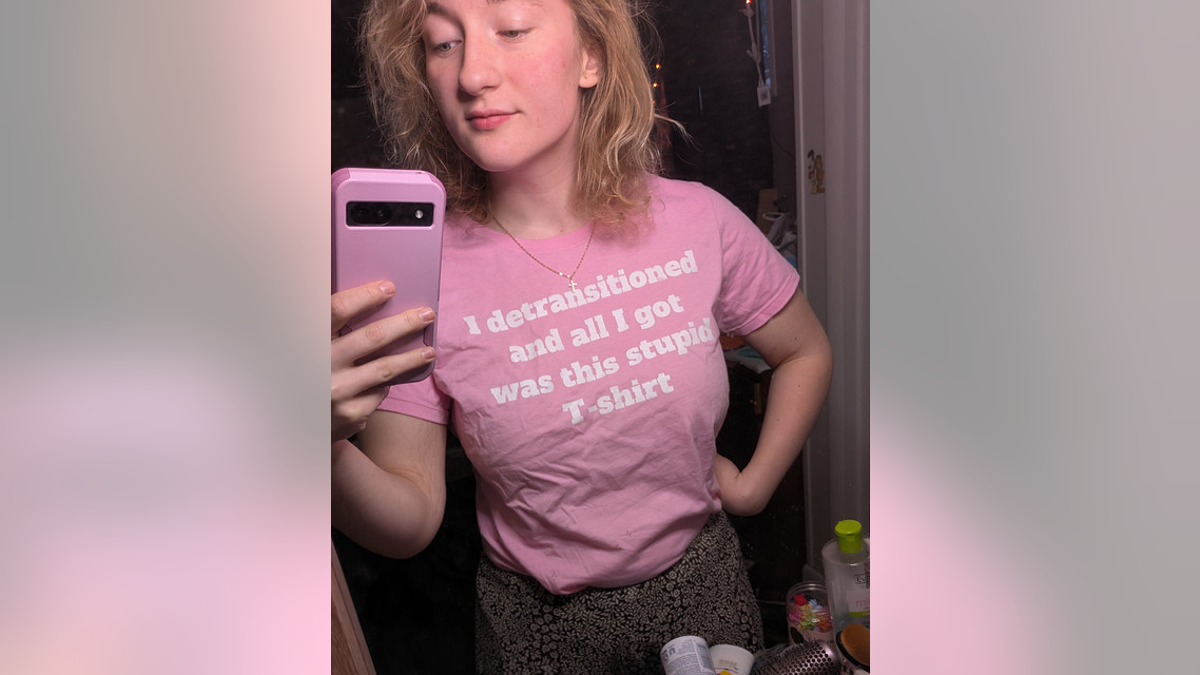
Gender detransitioner Claire Abernathy is telling the story of what she endured as a teen. (Claire Abernathy)
At 14 years old, surgeons removed my healthy breasts. I was too young to vote, rent a car, sign legal contracts, or understand motherhood in any meaningful way, but I was somehow considered capable of consenting to irreversible bodily mutilation.
The clinic specialized in "drains-free" mastectomies, a procedure associated with higher rates of nipple graft complications. Parts of my chest tissue turned black and died. I was left with open wounds and permanent nerve damage.
I never became a boy. No one can change sex. But I did permanently lose the ability to breastfeed any future children I may have.
That reality feels heavier as I get older.

I told medical professionals about my sexual abuse. I told them when my distress began. Three separate clinicians still signed off on my transition. Not one of them paused long enough to ask the obvious questions.
And the most horrifying part is that what they did to me was — and is — considered the standard of care.
Why was a young girl suddenly rejecting her body after trauma? Why was psychological suffering being treated with endocrine disruption and surgery instead of intensive therapy? Why were healthy organs being removed from a child who was clearly in distress?
The answer, increasingly, seems to be ideology and ideology only.
Healthy children should not be sacrificed to an ideology that treats self-reported gender distress as proof that a child was born in the wrong body. No fourteen-year-old is capable of understanding sterilization, lifelong sexual dysfunction, chronic pain, or the grief of losing bodily functions they were never mature enough to value in the first place.
CHILDREN'S NATIONAL HOSPITAL IN DC TO END GENDER TRANSITION MEDICAL INTERVENTIONS
And then there is the pain most doctors barely warned me about at all.
The model of pediatric gender medicine operating in America today overwhelmingly prioritizes affirmation above caution. Children present with distress, discomfort, or confusion, and too often the medical system responds by placing them onto a fast-moving conveyor belt of hormones, surgeries and irreversible interventions.
CLICK HERE FOR MORE FOX NEWS OPINION
There is no meaningful long-term evidence proving these interventions are safe for adolescents. There is no reliable tracking system for detransitioners or long-term complications. There are no adequate safeguards ensuring vulnerable children receive thorough psychological evaluation before life-altering medical interventions begin.
And as many of us grow older and realize we were harmed, we discover something even more devastating: almost no one in medicine knows how to help us recover.
CLICK HERE TO DOWNLOAD THE FOX NEWS APP
I cannot restore what doctors removed from me. I cannot recover my original voice. I cannot undo the damage done to my body.
But I can tell the truth.
