









McConnell suggests Democrats are trying to 'sabotage' coronavirus bill for political gain
The majority leader's comments come as Congress seems far apart on a potential deal for coronavirus legislation, but as there is a heightened sense of urgency to pass a bill with boosted unemployment benefits set to expire at the end of the week.
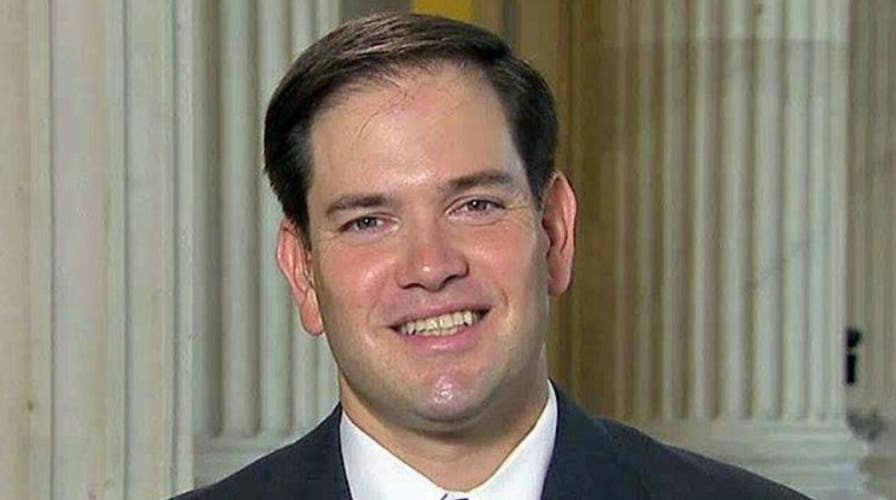
Sen. Marco Rubio on Wednesday said a short-term deal on urgent issues like the boosted unemployment benefits helping many Americans through the coronavirus crisis "may need to happen," indicating that negotiations are potentially falling apart on a new coronavirus relief package that lawmakers have been laboring on for the better part of the last two weeks.
Congress is under the gun to get its bill across the finish line because boosted unemployment benefits expire at the end of the week, just when rent will come due for many Americans. Rubio, R-Fla., while exiting a closed-door meeting with many of the top Republicans in the Senate and members of the Trump administration, cast doubt on whether there would be a deal on the $1 trillion-plus coronavirus package by Friday.
"Ultimately, it's clear we're not going to have a universal agreement in place by Friday, there may be some things that may have to be done that way," he said when asked if a short-term deal should be reached on time-sensitive issues.
MCCONNELL SUGGESTS DEMS ARE TRYING TO 'SABOTAGE' THE NEXT CORONAVIRUS BILL
Sen. John Cornyn, R-Texas, leaving the same meeting, said he is against any short-term legislation and one person in the meeting said Senate Majority Leader Mitch McConnell, R-Ky., was not pushing for a short-term extension of unemployment benefits. Sen. Kevin Cramer, R-N.D., said White House chief of staff Mark Meadows brought up a short-term unemployment benefits extension, "just putting it up as a discussion point."
Members of Congress, as they've reached this impasse on the coronavirus bill, almost all agree that something needs to be done. But what and how much money should be spent on it has been the subject of heated rhetoric, including from the highest-ranking members of each party.
McConnell on the Senate floor Wednesday suggested Democrats were trying to "sabotage" negotiations over the legislation for political gain.
"This is a more-than-fair, more-than-bipartisan framework for Democrats to engage with," McConnell said of the GOP proposal. "The only reason I can see that Speaker Pelosi and the Democratic leader would sabotage negotiations is if, as some concluded when they killed police reform in June, they actually think bipartisan progress for the country would hurt their own political chances."
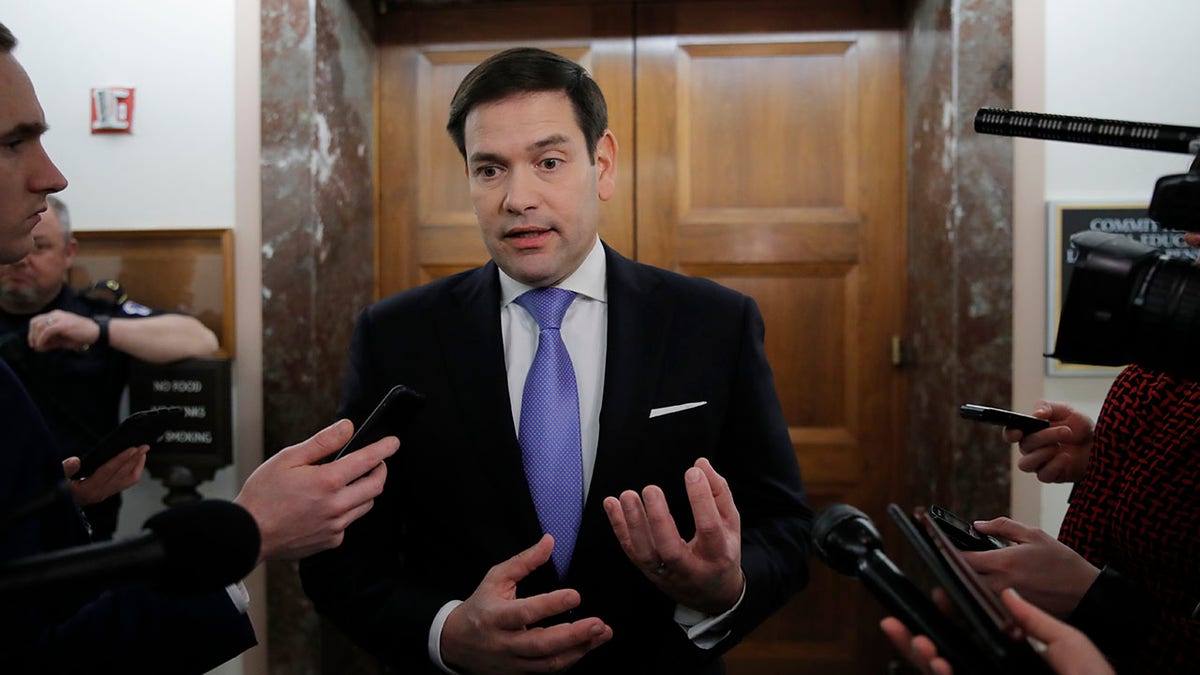
FILE - In this March 12, 2020, file photo, Sen. Marco Rubio, R-Fla., speaks to media on Capitol Hill in Washington. Rubio introduced a bill Thursday, June 18, 2020, that would protect the NCAA from being challenged in court if the association changes its rules to allow athletes to earn money for endorsement deals and personal appearances. (AP Photo/Carolyn Kaster, File)
TRUMP CALLS GOP CORONAVIRUS PROPOSAL 'SEMI-IRRELEVANT' AS DEAL APPEARS FAR OFF
He called the $3 trillion bill passed in May by House Democrats a "loony ideological fantasy" and the Senate GOP's proposal, estimated to cost $1.2 trillion by the Committee for a Responsible Federal Budget, "serious." The GOP proposal, among other things, contains direct payments to Americans that could help with rent payments coming due in a matter of days.
But Senate Minority Leader Chuck Schumer, D-N.Y., said Republicans' efforts were too little, too late, and not even supported by the president or their entire caucus.
"While the Republican proposal fails to provide crucial relief for families, workers and the unemployed, it is littered with corporate giveaways, K Street handouts and presidential pet projects. The Republican bill includes a $20 billion slush fund for large agribusinesses and tax breaks for three-martini lunches, but it doesn’t provide a dime in food assistance for hungry kids," Schumer said Tuesday.
CLICK HERE TO GET THE FOX NEWS APP
He added Wednesday: "It turns out that Senate Republicans are blocking the Republican proposal. So it's abundantly clear that the Senate Republican proposal for the next phase of COVID relief is not a useful starting point. You don't have to take my word for it. Just ask President Trump, who took the podium yesterday afternoon and called the Senate Republican proposal semi-irrelevant."
Deadlines are a strong motivating force for legislators, and Congress has many times in the past gotten bills across the finish line at the 11th hour. But it's unclear where negotiations will go, especially with McConnell and Schumer refusing to budge on multiple issues, including the dollar amount of the boosted unemployment benefits and liability protection for businesses and other organizations reopening amid the pandemic.
Meadows and Treasury Secretary Steven Mnuchin, who were present at the closed-door GOP meeting, didn't comment on the state of negotiations but said they would talk about the details of the meeting later in the day.
Fox News' Jason Donner contributed to this report.
