
Trump admin pitches 15-point Iran peace proposal as Pakistan offers to hold talks
Iran has rejected a 15-point peace agreement put forward by President Donald Trump's administration that would have ended the war this week. Meanwhile, the U.S. and Israel have in turn rejected a counterproposal from Tehran.
Coverage for this event has ended.
Iran's Revolutionary Guard Navy leader targeted in strike: senior Israeli official
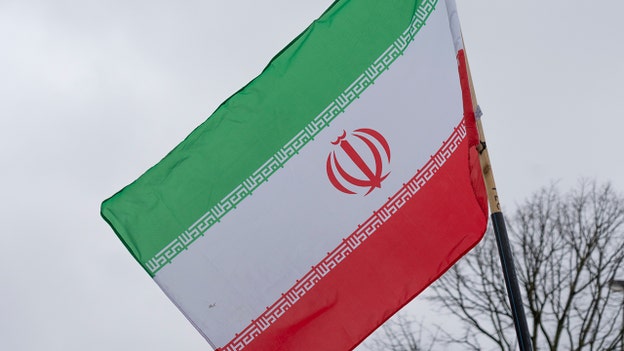
Alireza Tangsiri, who helmed Iran's Revolutionary Guard Navy, was targeted in an attack overnight, a senior Israeli official indicated to Fox News, noting that the strike was executed based on American and Israeli intelligence.
"The head of Iran’s Revolutionary Guard Navy, Alireza Tangsiri, who directly commanded the closure of the Strait of Hormuz — one of the world’s most critical energy chokepoints — was targeted in a strike overnight, along with his senior operational leadership, including intelligence and operations chiefs, at a covert naval command center. This targeted strike was based on U.S. and Israeli intelligence and continues to demonstrate how deeply it is capable of penetrating," the Israeli official noted.
Fox News' Trey Yingst contributed to this report
Rep Mace calls Graham 'Washington's war machine' over his support for conflict in Iran
Rep. Nancy Mace, R-S.C., on Wednesday described Sen. Lindsey Graham, R-S.C., as "Washington's war machine," taking issue with the senator's staunch support for the U.S.-Israeli strikes against Iran.
"Washington’s war machine is hard at work. They are [trying] to drag us into Iran to make it another Iraq. We can’t let them," Mace wrote on X.
"And yes, when we say Washington’s war machine, we mean Lindsey Graham," she added in another post.
The congresswoman also said she could not support sending troops to fight in Iran, as the conflict now nears four weeks.
"I will not support sending South Carolina's sons and daughters to war in Iran," she said. "I won't do it. President Trump has been enormously successful so far. But we cannot allow the Washington War Machine to turn Iran into another Iraq."
"Washington's war machine has spent decades sending our sons and daughters into endless conflicts in the Middle East, with no clear exit strategy, all to serve the interests of powerful politicians," she continued.
"We will not stand for it," Mace added. "We will not sacrifice American lives for the same failed foreign policies. The war machine may be willing to give the lives of your sons and daughters for the price of oil, but we are not."
Mace also wrote that "the justifications presented to the American public for the war in Iran were not the same military objectives we were briefed on today in the House Armed Services Committee."
"This gap is deeply troubling. The longer this war continues, the faster it will lose the support of Congress and the American people," she said.
Trump says he won't describe Iran conflict as 'war' because 'you’re supposed to get approval'
President Donald Trump on Wednesday said he will not use the word "war" anymore to describe the military campaign against Iran because "you’re supposed to get approval," although he has used the term on numerous occasions in recent weeks.
"I won’t use the word ‘war’ because they say if you use the word 'war,' that’s maybe not a good thing to do," Trump said at the National Republican Congressional Committee’s annual fundraising dinner in Washington, D.C.
"They don’t like the word ‘war’ because you’re supposed to get approval. So, I’ll use the word 'military operation,' which is really what it is. It’s a military decimation," he added.
Under the Constitution, only Congress can declare war.
Since the war began late last month, Democrats and some Republicans have attempted to restrain the president's military action, which they affirm is unconstitutional without congressional approval.
But senators again blocked a war powers resolution earlier this week in a 53-47 vote that would have required explicit congressional authorization for any continued military engagement with Iran.
"Only Congress can declare war," Sen. Rand Paul, R-Ky., said after the first failed war powers vote earlier this month. "That's not my opinion. That's Article 1 of the Constitution. We forced the vote. The Senate said 'no.' History will not be kind to a Congress that gave away its most solemn responsibility."
Iran reviewing US proposal to end war, foreign minister says
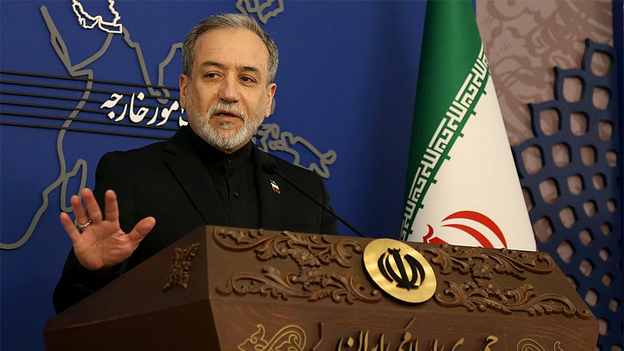
Iranian Foreign Minister Abbas Araqchi said on Wednesday that the country's officials are reviewing a U.S. proposal to end the war, but noted that they have no plans to hold talks to bring the expanding conflict in the Middle East to a close.
Araqchi suggested Tehran may have some willingness to reach an agreement to end the war if its demands were met, even after Iranian officials initially publicly dismissed the prospect of any negotiations with the U.S.
The exchange of messages through mediators "does not mean negotiations with the U.S.," Araqchi said on state television.
"They put forward ideas in their messages that were conveyed to top authorities, and if necessary, a position will be announced by them," he added.
President Donald Trump said that Iranian leaders "are negotiating, by the way, and they want to make a deal so badly, but they're afraid to say it because they will be killed by their own people. They're also afraid they'll be killed by us."
The U.S. government's 15-point proposal, sent through Pakistan, calls for removing Iran's stocks of highly enriched uranium, stopping enrichment, ending its ballistic missile program and slashing funding for regional allies.
Reuters contributed to this report.
US military struck two-thirds of Iran's munition plants, CENTCOM says

The U.S. military has struck more than two-thirds of Iran's munitions plants, according to U.S. Central Command.
"Today, we have damaged or destroyed over two-thirds of Iran’s missile, drone and naval production facilities and shipyards — and we’re not done yet," Navy Adm. Brad Cooper said on Thursday in a video statement released by CENTCOM.
"We are on a path to completely eliminate Iran’s wider military manufacturing apparatus," he continued.
Satellite images have shown U.S. and Israeli strikes targeting shipyards and missile facilities in Iran, The Associated Press reported.
Iran has not acknowledged any of its materiel losses during the war that began nearly a month ago.
German defense minister says war on Iran a ‘catastrophe’ for world economies: 'It’s not our war'
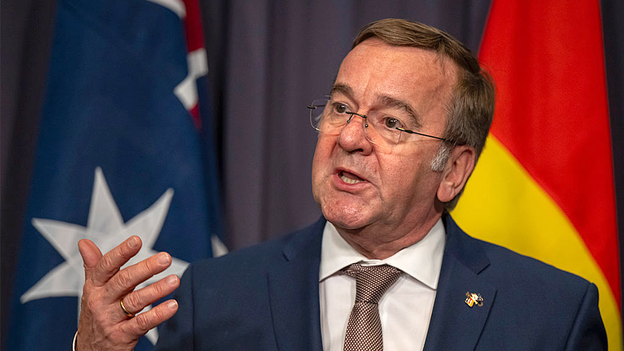
German Defense Minister Boris Pistorius on Thursday said the U.S.-Israeli war on Iran is an economic "catastrophe" for nations around the world, adding that Germany does not want to get "sucked into" the conflict.
"To make it crystal clear, this war is a catastrophe for the world’s economies," Pistorius told reporters.
"From the beginning on, we have not been consulted before. Nobody asked us before. It’s not our war and therefore we don’t want to get sucked into that war," the defense minister continued.
Pistorius said Germany was ready to help secure peace and called for a ceasefire to be reached as soon as possible.
The Associated Press contributed to this report.
Carrier flight ops continue against Iran as US signals sustained campaign
U.S. Central Command (CENTCOM) said the USS Abraham Lincoln is continuing strike operations against military targets in Iran, sharing new images of flight activity aboard the aircraft carrier.
“USS Abraham Lincoln continues flight operations against military targets in Iran while sailing in regional waters,” CENTCOM said in a post on X.
The post included four images showing aircraft launching and operating from the carrier’s flight deck, underscoring its ongoing role in U.S. operations in the region.
Blinken remarks fuel Trump claim that past presidents missed chance on Iran
President Donald Trump on Wednesday pointed to recent comments from former Secretary of State Antony Blinken as validation of his administration’s actions on Iran, saying prior leaders failed to act.
While speaking at the National Republican Congressional Committee Annual Fundraising Dinner, Trump referenced Blinken’s remarks about the Biden administration’s handling of Iran.
“I heard that today. Blinken made a statement that he should have done it,” Trump said. “They made a mistake, he should have done it, and other presidents should have done it.”
Trump also criticized previous administrations’ approach to Iran. “Obama should have done it,” he said. “Obama was worse.”
Blinken, speaking Tuesday at a Harvard forum, acknowledged that political considerations played a role in the Biden administration’s approach to Iran negotiations. “You have midterm elections: It shouldn't be, but it is too often a factor,” he said.
“I wish we had gotten there," Blinken added of a stronger nuclear deal. “We worked very hard on getting that longer and stronger agreement. And I think at various points, we were really leaning into it.”
“The Iranians were leaning back at other points. They were leaning in, and we had our own constraints,” he said. “You know, I'll acknowledge, too, that sometimes politics gets in the way.”
Trump says US 'cut out the cancer' despite oil fears as Iran strikes press on
President Donald Trump said U.S. strikes on Iran eliminated what he described as a major threat and did not trigger the economic fallout he had anticipated, vowing the mission is not yet complete.
While speaking at the National Republican Congressional Committee Annual Fundraising Dinner on Wednesday, Trump said the operation was necessary after decades of inaction.
“We had no choice, but I thought it was going to be much worse,” he said. “I thought that energy prices, oil prices, would…go up higher, and I thought the stock market would go somewhat lower.”
“But it didn’t matter to me. It’s short term,” Trump continued. “What we had to do is get rid of the cancer. We had to cut out the cancer. The cancer was Iran with a nuclear weapon. We’ve cut it out. Now we’re going to finish it off.”
US moves airborne troops, Marines as Iran rejects ceasefire, raising ground war potential
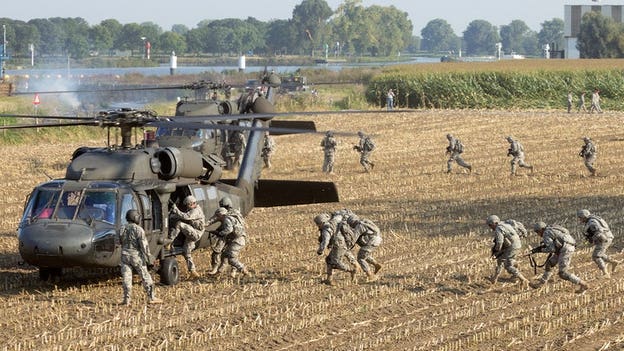
The U.S. is positioning ground-capable forces in the Middle East as Iran rejected a ceasefire proposal Wednesday, a shift that gives Washington new — though limited and high-risk — options for potential operations inside Iran.
Military experts say the deployments are not a precursor to a large-scale invasion, but instead position the U.S. for targeted, short-duration missions — options that have taken on new relevance as diplomatic off-ramps narrow.
In recent days, the Pentagon has moved ground-capable forces into the region, including around 1,000 paratroopers, with the Army’s 82nd Airborne Division — among them the 1st Brigade Combat Team, a core component of the military’s Immediate Response Force rapid-response unit designed to deploy on short notice to crises anywhere in the world — along with a few thousand Marines and sailors assigned to the 31st Marine Expeditionary Unit and its Amphibious Ready Group, led by the amphibious assault ship Tripoli.
Marine expeditionary units and airborne forces often are among the first U.S. units deployed in a conflict, designed to rapidly establish an initial presence and respond to emerging crises.
Find out more about what comes next in the Iran conflict.
This is an excerpt from a story by Fox News Digital’s Morgan Phillips.
Iran accused of risking economic 'heart attack' as UAE signals tougher response
A top United Arab Emirates official warned Iran’s attacks are threatening the global economy and signaled Gulf states are prepared to take further action as the war escalates.
“Iran's attack on Gulf allies of the United States and Jordan is an attack on the entire world and the world economy,” UAE Minister of State Lana Nusseibeh told Fox News’ Bret Baier. “Effectively, Iran is trying to give the global economy a heart attack. We should not allow Iran, a state sponsor of terrorism, to set the global price for food and gas.”
Nusseibeh pointed to the strategic importance of the Strait of Hormuz, warning that disruptions there could have widespread global consequences.
“A fifth of the world's oil and gas goes through the Straits of Hormuz,” she said. “Almost every product known to every global supply chain coming from the Gulf goes through the Straits of Hormuz.”
She said the UAE had pursued diplomatic efforts with Iran for years but was met with escalating attacks.
“We did not ask for a war in our region. We did not start a war in our region,” Nusseibeh said. “But as a result of these operations, we have now seen Iran take the irresponsible decision instead of negotiating with the United States over really well understood concerns over its nuclear program, over its ballistic missiles program, over its support of state non-state terrorist actors in the region, instead of negotiating over those issues, they chose instead to fire over 2200 missiles and drones at the United Arab Emirates.”
Nusseibeh said the path forward depends on Iran’s willingness to negotiate with the U.S. and the international community.
“The light at the end of the tunnel is in Iran's hands,” she said. “They have to negotiate with the United States and the international community.”
Asked about potential escalation, Nusseibeh said the UAE is already actively defending itself and keeping all options open.
“We are not just taking incoming,” she said. “We are assertively using all options on the table to defend our communities and our people.”
Fox News Poll: Voters oppose action in Iran but give US military positive marks
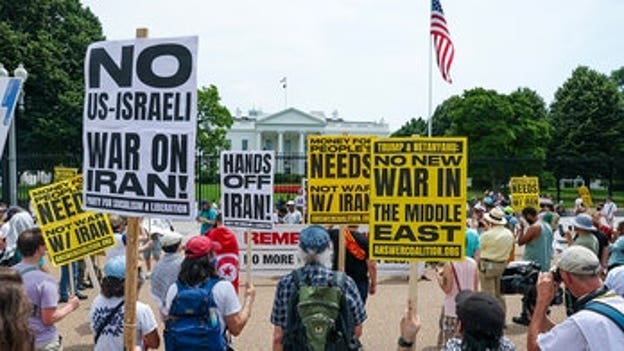
Voters are split on what role the United States should play in the world, while attitudes on the military action in Iran reflect sharp partisanship, according to a new Fox News national survey.
Forty-two percent support the current U.S. military action against Iran, and 58% oppose it, including nearly 4 in 10 who are strongly opposed.
The partisan divide is stark: 77% of Republicans support the effort compared to 12% of Democrats and 28% of independents. Within the GOP, support ranges from 90% among MAGA supporters to 52% of non-MAGA Republicans.
The gender divide is less pronounced, with support at 38% among women and 45% among men.
Find out what else was voters were split on.
This is an excerpt from a story by Fox News Digital’s Dana Blanton.
Trump says Iran wants a deal but fears internal backlash as war claims grow

President Donald Trump said Iran is eager to reach a deal with the U.S. but is afraid to openly pursue negotiations out of fear of internal backlash.
Speaking at the National Republican Congressional Committee Annual Fundraising Dinner on Wednesday, Trump said his administration has already settled eight wars and argued the U.S. is “winning” another in the Middle East.
“We're winning so big. Nobody has ever seen anything like we're doing in the Middle East with Iran,” he said. “They are negotiating, by the way, and they want to make a deal so badly, but they're afraid to say it because they figure they'll be killed by their own people.”
“They're also afraid they'll be killed by us,” Trump added.
Uganda military chief warns support for Israel if war widens as tensions grow
Uganda’s top military chief said his country would enter the war on Israel’s side if the conflict in the Middle East escalates, while also calling for an end to the fighting.
“We want the war in the Middle East to end now. The world is tired of it,” Gen. Muhoozi Kainerugaba wrote in a post on X. “But any talk of destroying or defeating Israel will bring us into the war. On the side of Israel!”
Kainerugaba, who serves as Uganda’s top military commander and is the son of President Yoweri Museveni, weighed in on the issue on social media as tensions continue to rise across the region.
US troops brace for ‘hit-and-run’ guerilla attacks as 82nd Airborne deploys to Iran
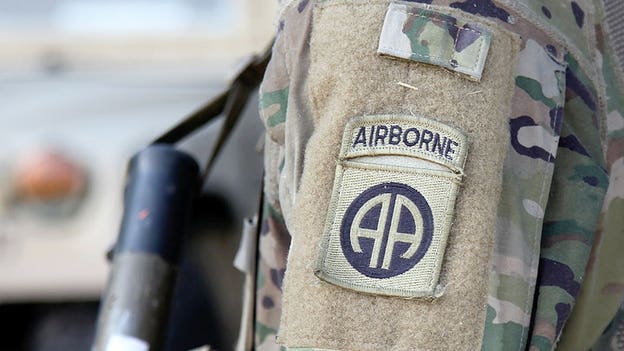
Iran could significantly increase U.S. casualties if its elite military and proxy forces shift to guerrilla-style hit-and-run attacks in the region, a leading military analyst has warned.
Michael Eisenstadt of the Washington Institute for Near East Policy spoke as the Pentagon moved elements of the Army’s 82nd Airborne Division into the Middle East amid a new escalation in the conflict, according to reports.
"Iran has large infantry units in its military that are equivalent to the brigade combat team of the 82nd Airborne," Eisenstadt, a former U.S. Army Reserve officer, told Fox News Digital.
"The 82nd Force is too small to cause significant harm to Iran, but it is large enough to be vulnerable to Iranian strikes, and this would enable Iran to significantly increase U.S. casualties," he said.
Find out what else Michael Eisenstadt said about what troops have to prepare for.
This is an excerpt from a story by Fox News Digital’s Emma Bussey.
Six countries unite against Iran as proxy attacks spark warning of action
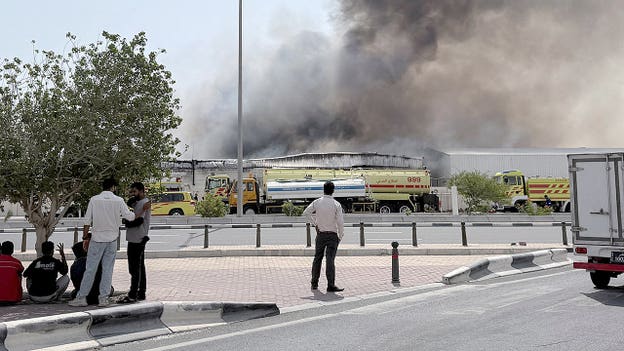
Six Middle Eastern nations issued a joint statement Wednesday condemning Iran’s attacks across the region and warning they reserve the right to defend themselves as tensions continue to escalate.
“The State of Qatar, the State of Kuwait, the United Arab Emirates, the Kingdom of Bahrain, the Kingdom of Saudi Arabia, and the Hashemite Kingdom of Jordan renew their condemnation in the strongest terms of the blatant Iranian attacks, which constitute a flagrant violation of their sovereignty, territorial integrity, international law, international humanitarian law, and the Charter of the United Nations, whether carried out directly or through their proxies and armed factions they support in the region,” the nations said.
The statement specifically highlighted attacks carried out by Iran-linked armed factions operating from Iraq, targeting multiple countries in the region as well as key infrastructure.
“These acts are a breach of international laws and conventions and a blatant violation of United Nations Security Council Resolution No. 2817 (2026), which explicitly demands that Iran immediately and unconditionally cease any attacks or threats against neighboring states, including through the use of proxies,” the statement read.
The countries also turned their focus to Iraq, calling on its government to take immediate action to stop the attacks being launched from its territory by militias and armed groups.
Additionally, the nations reaffirmed what they described as their full right to respond to the ongoing attacks under international law, “which guarantees the right of states to self-defense, individually and collectively, in the event of aggression, and our right to take all necessary measures to safeguard our sovereignty, security, and stability.”
The statement also warned of broader destabilization efforts tied to Iran-backed networks across the region. “We further condemn the destabilizing acts and activities targeting the security and stability of the region's countries, which are planned by sleeper cells loyal to Iran and terrorist organizations linked to Hezbollah, and praise our brave armed forces for confronting these attacks, as well as the vigilance of our security agencies, which serve as a strong shield and a watchful eye in preserving the safety of our nations and lives, and their sincere and dedicated efforts in apprehending these agent cells and terrorist organizations and exposing their malicious plots,” the group wrote.
Kevin O'Leary says removing Iran from Strait of Hormuz would be a global 'game changer'
"Shark Tank" star Kevin O’Leary said removing Iran's control of the Strait of Hormuz would be a global "game changer" and he addressed the economic impact of the United States' war on Iran.
"I don't want to make light of the war… but I'm thinking ahead 90 days here, and I'm liking what I see," he said Wednesday on "The Story."
The O’Leary Ventures chairman discussed how the Strait of Hormuz’s closure is impacting markets, saying a Strait no longer under Iranian reign would bring more stability.
"Every nine months, the Houthis or some other Iranian proxy would blow up one tank just to destabilize that region and cause the insurance prices to go up," O’Leary said. "We're talking about a world that doesn't have that going on anymore."
Find out what else Kevin O’Leary said about the Strait of Hormuz.
This is an excerpt from a story by Fox News Digital’s Nora Moriarty.
CENTCOM says Iran attack capacity down sharply as strike count tops 10K
The head of U.S. Central Command (CENTCOM) said American forces have struck more than 10,000 targets in Iran and significantly degraded the country’s military capabilities as the war enters its fourth week.
“We’ve struck more than 10,000 military targets and remain on plan or ahead of plan in achieving very clear military objectives,” CENTCOM commander Adm. Brad Cooper said in a video update.
“We’ve now destroyed 92 percent of the Iranian Navy’s vessels,” he said. “They’re not sailing, and my operational assessment is that they’ve now lost the ability to meaningfully project naval power.”
Cooper said Iran’s ability to launch attacks has dropped sharply. “Iran’s drone and missile launch rates are down by more than 90%,” he said, adding that U.S. forces have also damaged or destroyed more than two-thirds of Iran’s missile, drone and naval production facilities.
“U.S. forces maintain air superiority over Iran’s skies,” Cooper said, noting that American aircraft have flown more than 10,000 combat missions during the operation.
“Iran’s combat capability is declining as U.S. combat capability continues to increase,” he added.
The video showed U.S. military assets in action, including strikes on Iranian targets and ongoing operations across the region.
UAE ambassador says Iran war must end decisively and warns ceasefire would fall short
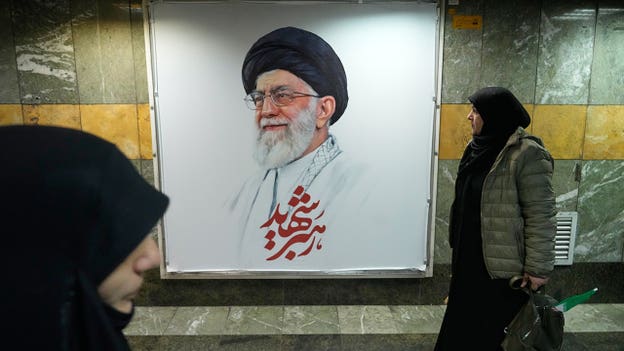
The United Arab Emirates’ ambassador to the U.S., Yousef Al Otaiba, warned that the war with Iran must end with a decisive outcome that eliminates Tehran’s threat to the region, arguing against a cease-fire.
“A simple cease-fire isn’t enough,” Al Otaiba wrote in a Wall Street Journal op-ed. “We need a conclusive outcome that addresses Iran’s full range of threats: nuclear capabilities, missiles, drones, terror proxies and blockades of international sea lanes.”
Al Otaiba said the conflict has underscored what the region has faced for decades.
“Iran’s revolution is a threat to global security and economic stability,” he wrote. “Iran has launched more than 2,180 missiles and drones at the Emirates, far more than at any other country. We have one of the world’s most effective defense shields and intercept more than 95% of these attacks.”
He warned that Iran’s actions extend far beyond the battlefield, targeting infrastructure and global supply chains.
“Iran is striking airports, seaports and energy infrastructure… blockading energy shipments and supplies for fertilizer and manufacturing and threatening theme parks and cultural sites worldwide through its proxy network,” he wrote.
Al Otaiba also called for a coordinated international response to secure critical waterways, including the Strait of Hormuz.
“The region needs a coordinated effort to reopen this vital passage and restore energy supplies to global consumers,” he wrote.
“We want Iran as a normal neighbor,” Al Otaiba added. “It can be reclusive and even unwelcoming, but it can’t attack its neighbors, blockade international waters, or export extremism. Building a fence around the problem and wishing it goes away isn’t the answer. It would simply defer the next crisis.”
Iranian missiles could have hit DC from Venezuela before Trump move, Burgum warns
Interior Secretary Doug Burgum said Iran could have hit Washington, D.C., and other major U.S. cities with intermediate-range ballistic missiles through proxies in Venezuela if the administration had not intervened in both countries.
Speaking at the CERAWeek oil and energy conference in Houston on Wednesday, Burgum pushed back on the narrative that Iran and Venezuela do not represent an imminent threat to the U.S. and global supply chains. He said the threat was demonstrated by Iran’s attempt to strike the U.S. military base Diego Garcia in the central Indian Ocean, more than 2,000 miles from the Middle Eastern country.
"That means, you know, Venezuela was a hotbed of Iranian-funded terror groups, including Hamas. If there was an Iranian ballistic missile placed in Venezuela, it could not just reach Houston; it can reach Washington, D.C.," said Burgum.
"So, again, the actions that the United States is taking to make the world safer is lowering the risk premium that I think was missing from the [oil and energy] market. Because, maybe, the market wasn’t recognizing the risk."
Find out what else Doug Burgum said about the Iranian threat against the U.S.
This is an excerpt from a story by Fox News Digital’s Peter Pinedo.