




















Dr. Siegel: Vaccines to stamp out smallpox were 'way more dangerous' than COVID vaccine
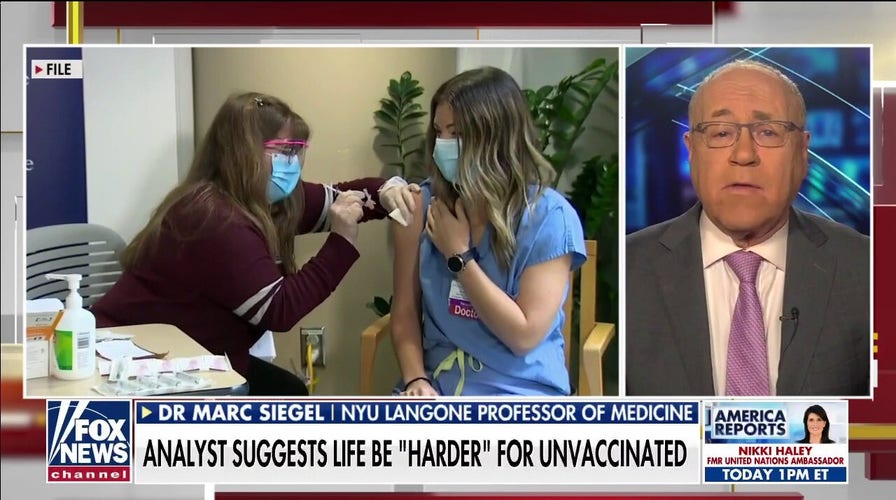
Fox News contributor Dr. Marc Siegel discusses vaccines and mask mandates on 'The Faulkner Focus.'
A top scientist at the World Health Organization warned Monday against mixing and matching COVID-19 vaccines amid uncertainty over safety and efficacy. Mixed vaccine regimens refer to vaccinations from different manufacturers, such as a Pfizer vaccine followed by the AstraZeneca shot, or vice versa.
"It’s a little bit of a dangerous trend here," Dr. Soumya Swaminathan, WHO chief scientist, said during a briefing. "We’re in a data-free, evidence-free zone as far as mix and match."
WHO CHIEF WARNS ‘VARIANTS ARE CURRENTLY WINNING THE RACE AGAINST VACCINES’ AS DELTA SPREADS
She said studies are ongoing but cited early findings from Oxford University in which researchers found a mixed vaccination schedule of Oxford’s co-developed AstraZeneca jab followed by a Pfizer vaccine "induced higher antibodies and T-cell responses," than the reverse order, per a release. However, the "highest antibody response was seen after the two-dose Pfizer-BioNTech schedule, and the highest T cell response from Oxford-AstraZeneca followed by Pfizer-BioNTech," the release reads.
CLICK HERE FOR FULL CORONAVIRUS COVERAGE
A trial investigator involved with the AstraZeneca-Pfizer study, Matthew Snape, associate professor in pediatrics and vaccinology at the University of Oxford, noted at the time of the preprint release that mix-and-match vaccine regimens may allow more flexibility in the global rollout.
Nevertheless, Swaminathan warned of a "chaotic situation in countries if citizens start deciding when and who they should be taking a second or a third or a fourth dose."
