






























Dry January: The real health benefits of giving up alcohol
Chief medical officer for Dry January USA Dr. Michael Caldwell discusses the health benefits of abstaining from alcohol on ‘Fox & Friends.’
Drinking heavily and consistently over an adult’s lifetime could lead to a higher risk of colorectal cancer, according to a study published in the journal Cancer by the American Cancer Society (ACS).
The study analyzed 20 years of data from more than 88,000 U.S. adults to determine how long-term drinking impacted the risk of developing colorectal cancer (CRC) or precancerous colorectal adenomas (polyps).
The participants reported their average weekly intake of beer, wine and liquor intake during four age periods — 18 to 24, 25 to 39, 40 to 54, and 55 and older.
DOCTOR REVEALS WHAT 30 DAYS WITHOUT ALCOHOL DOES TO THE BRAIN AND BODY AMID DRY JANUARY
"Heavy drinkers" were identified as having more than 14 drinks per week and "moderate drinkers" had between seven and 14 drinks per week.
The observational research revealed that consistent heavy drinking over adulthood was linked to a higher risk of colorectal cancer, especially rectal cancer.

Researchers found a major association between colorectal cancer diagnosis and heavy lifetime drinking. (iStock)
Heavy lifetime drinking was associated with a 25% higher overall CRC risk and nearly double the risk of rectal cancer. Moderate lifetime drinking had a lower overall CRC risk.
Compared to light drinkers, the consistently heavy drinkers had about a 91% higher risk of CRC.
EXPERTS REVEAL WHAT ‘REASONABLE’ DRINKING LOOKS LIKE – AND WHO SHOULD AVOID ALCOHOL
For colorectal adenomas (precancerous polyps), higher current lifetime drinking did not show a strong pattern, although former drinkers showed a significantly lower risk of non-advanced adenoma compared to current light drinkers.
Out of the 88,092 participants, 1,679 were diagnosed with colorectal cancer.
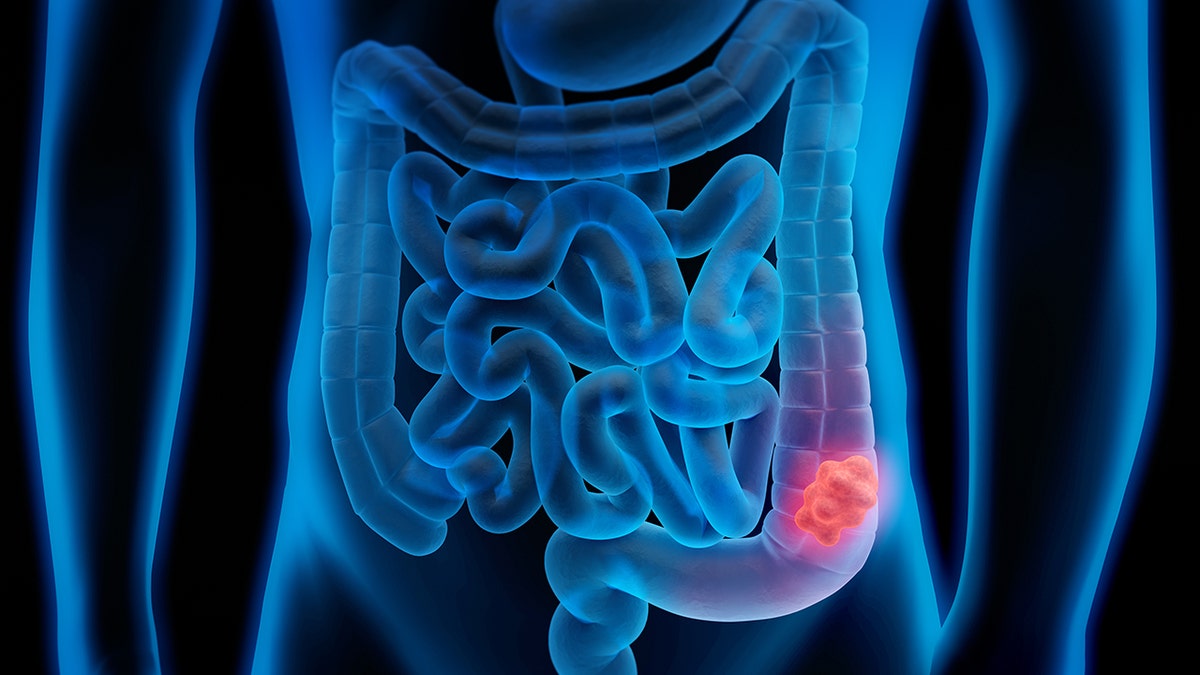
Out of the 88,092 participants in the study, 1,679 were diagnosed with colorectal cancer. (iStock)
The authors noted that the research was limited, as it was observational and not based on a clinical trial. It also hinged on self-reported alcohol use.
The findings suggest that consistently heavy alcohol intake and higher average lifetime consumption "may increase CRC risk, whereas cessation may lower adenoma risk," the researchers stated. Associations "may differ by tumor site," they added.
TEST YOURSELF WITH OUR LATEST LIFESTYLE QUIZ
Study author Erikka Loftfield, Ph.D., of the Division of Cancer Epidemiology and Genetics at the National Cancer Institute, said this study provides new evidence that supports abstaining from drinking to reduce colorectal cancer risk.
"Current advice on alcohol drinking for the prevention of colorectal and other cancer types is to minimize intake or, ideally, to not drink at all," the Maryland-based doctor wrote in a statement to Fox News Digital. "Our findings do not change this advice."
CLICK HERE FOR MORE HEALTH STORIES
The link between drinking alcohol and cancer is not a new discovery, according to health experts.
In a recent episode of the podcast "The Dr. Mark Hyman Show," Dr. Mark Hyman, chief medical officer of Function Health in California, detailed how even moderate drinking can impact "nearly every organ system in the body," due to metabolic stress, inflammation, impaired detoxification and its effect on hormones.

The link between drinking alcohol and cancer is not a new discovery, according to health experts. (iStock)
Drinking has been found to increase the risk of many cancers, metabolic dysfunction, gut microbiome disturbances and mitochondrial toxins, Hyman said.
CLICK HERE TO SIGN UP FOR OUR HEALTH NEWSLETTER
"Bottom line, alcohol taxes every major system in your body, especially your liver, your brain, your gut, your hormones," he warned.

Reducing or eliminating alcohol can lower the risk of several cancers, according to medical experts. (Getty Images)
In a previous interview with Fox News Digital, Dr. Pinchieh Chiang, a clinician at Circle Medical in San Francisco, shared that taking a break from drinking alcohol for longer periods of time can "reshape health more profoundly."
CLICK HERE TO DOWNLOAD THE FOX NEWS APP
"Over months to a year, we see sustained improvements in blood pressure, liver function and inflammation," she said. "Those changes directly affect long-term heart disease and stroke risk."
Chiang added, "Reducing or eliminating alcohol lowers the risk of several cancers, including breast and colorectal, over time."
