
























America is 'humiliating' adversaries with advanced military tech: Palantir CTO
Shyam Sankar, chief technology officer of Palantir, discusses the Iran conflict and his new book, "Mobilize: How to Reboot the American Industrial Base and Stop World War III."
As tensions boil over with Iran, Palantir Technologies CTO Shyam Sankar argues that, for the time being, America's superior weapons are humiliating adversaries on the battlefield — but the U.S. remains dangerously unprepared for a protracted global conflict, putting the global balance of power in jeopardy.
Sankar made the case that America faces an "undeclared emergency," having nearly lost the industrial deterrence necessary to prevent World War III as global rivals grow more powerful and more brazen.
"We've just started to restore deterrence. We have the Maduro operation, [Operation] Midnight Hammer, current events in Iran, but we need to... be very clear-eyed about the moment — that these could be the kind of skirmishes that lead up to a larger conflict," Sankar said during an exclusive interview with Fox News Digital.
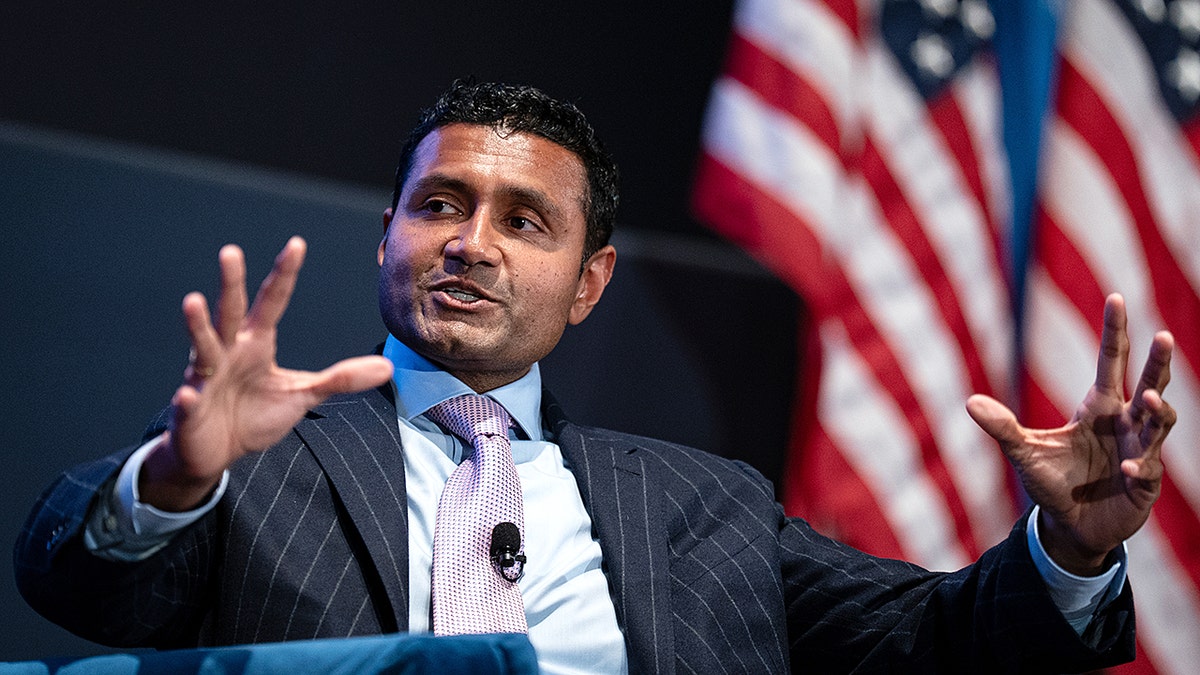
Shyam Sankar, chief technology officer of Palantir Technologies Inc., speaks during the Hill & Valley forum at the U.S. Capitol in Washington, D.C., on April 30, 2025. (Al Drago/Bloomberg)
"And we should be asking ourselves the question, 'What can we do right now to deter World War III?'"
TRUMP RALLIES DEFENSE TITANS TO SURGE WEAPONS OUTPUT AS IRAN WAR RAGES
He advocated for empowering mold-breaking industry leaders to bypass Pentagon bureaucracy, and for sweeping investment in innovation and manufacturing to make the defense space competitive again. He explores these ideas as artificial intelligence radically transforms the battlefield in his new book, "Mobilize: How to Reboot the American Industrial Base and Stop World War III."
Sankar emphasized the importance of funding technological research and development, contending that tech is the lever that directly leads to increased efficacy on the ground.
"If you look at the history of technology, it's always been the thing that's given us orders of magnitude of efficiency, of capability. Even if you look at the present day conflict in Iran, the sort of planning that we were able to do with one person in two weeks is something that in Gulf War II actually took 50 people six months," he said.
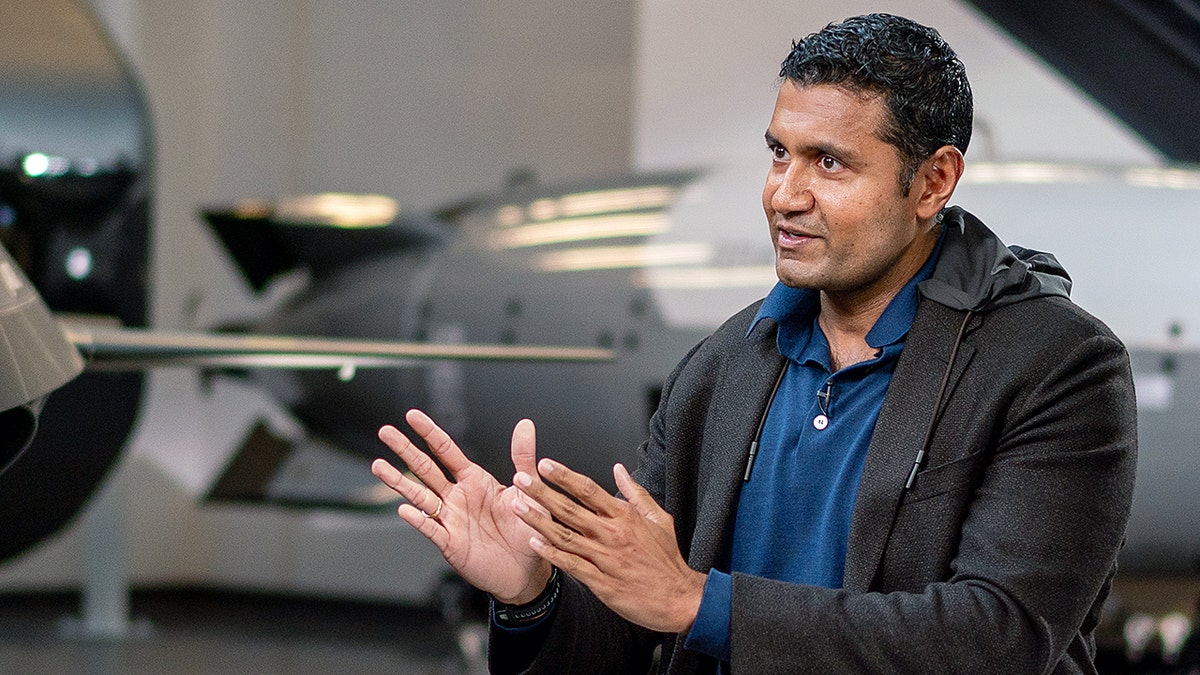
Shyam Sankar during a Bloomberg Tech interview at Anduril's headquarters in Costa Mesa, California, on Oct. 10, 2025. (Kyle Grillot/Bloomberg)
TRUMP DELAYS XI MEETING AS IRAN CONFLICT LETS US STRONG-ARM CHINA’S OIL SUPPLY
"So that sort of efficiency translates that into lethality. It translates into cost. If you're not willing to invest in the technology, though, you'll never be able to realize that."
But the way the government conceives of tech investment is misguided, he asserted, stating that the industry should reward results today rather than allowing big defense contractors to prioritize their own balance sheets over putting working weapons in the hands of soldiers as quickly as they can.
He pointed to recent events as evidence of a roiling global order, including the annexation of Crimea in 2014, the militarization of the Spratly Islands in 2015, and Iran's nuclear progress, Hamas' attack on Israel in 2023, and the chaos caused by the Houthis "holding world trade hostage in the Red Sea."
EX-NAVY SEAL WARNS WITHDRAWING FROM IRAN NOW WOULD HAND 'VICTORY' TO REGIME
"The conflict with Iran shows us that we need to continue to go faster," he said, lauding Operation Epic Fury and claiming America owes her soldiers the best technology possible.
"And I think what we see in the current conflict is that the high-low mix really does matter — that we really do own the high end of the fight. Our weapons are quite exquisite... we're also humiliating our adversaries' weapons. From Maduro on, you look at the complete failure of Chinese and Russian air defense systems... We're doing great."
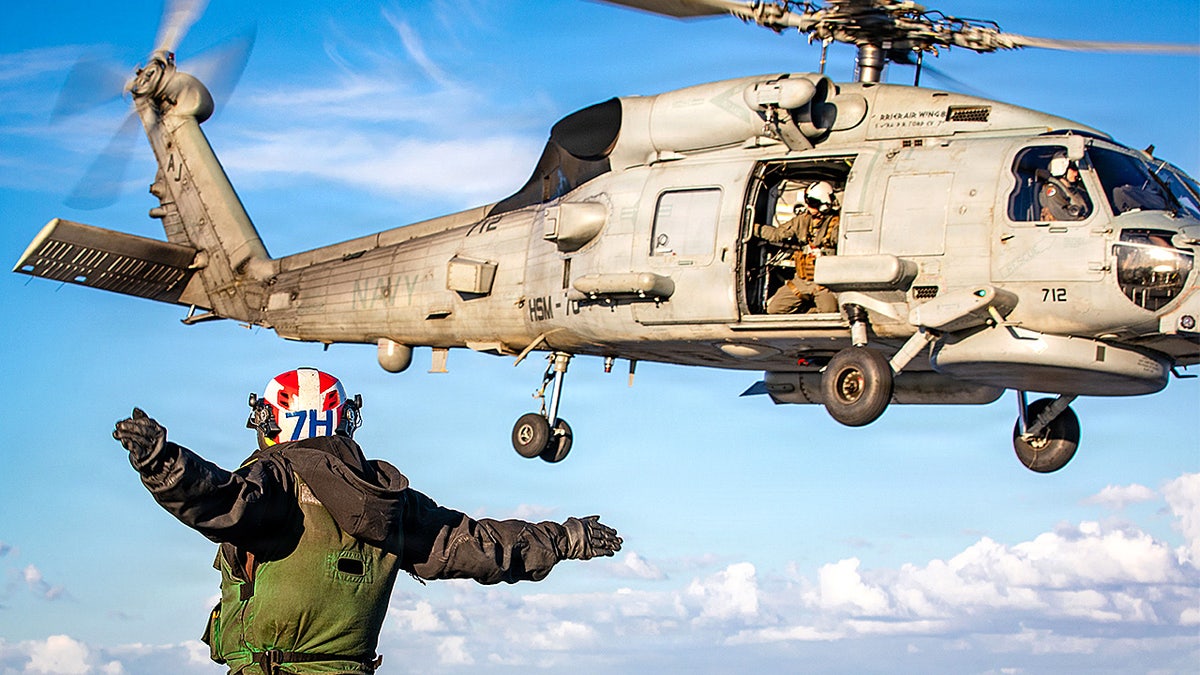
A U.S. sailor signals the launch of an MH-60R Sea Hawk helicopter aboard the aircraft carrier USS Gerald R. Ford while supporting Operation Epic Fury at sea on Feb. 28. (U.S. Navy via Getty Images)
Still, Sankar said there is much to learn from challenges present at "the low end" of the fight. America isn't in a perfect defensive posture and risks being beaten by inferior technology that is more quickly produced, he cautioned.
CLICK HERE TO DOWNLOAD THE FOX NEWS APP
"The difficulty we have countering the Shaheds, the lessons that we should be learning from Ukraine, from Iran, these are present. And we're going to need more heterodox thinking, more competing ideas, a bolus of investment to get after it."
"The good news is the department realizes this and these plans are well underway."
