



Trump says no reason to use Insurrection Act in Minnesota, for now
President Donald Trump threatened to invoke the centuries-old law amid anti-ICE demonstrations in Minnesota.
President Donald Trump responded to unrest in Minnesota this week by threatening to invoke the Insurrection Act, which critics said would amount to federal overreach and unnecessarily militarize cities.
Trump’s potential use of the Insurrection Act would be the latest of several instances of presidents using it and would allow active-duty U.S. military troops to conduct law enforcement within the state.
The statute authorizes the president to take the extraordinary step of deploying the military in the country under certain circumstances, including, according to the text of the law, when "unlawful obstructions, combinations, or assemblages, or rebellion" make it "impracticable to enforce the laws."
TRUMP THREATENS TO INVOKE INSURRECTION ACT IN MINNESOTA IF AGITATORS KEEP ATTACKING FEDERAL OFFICERS
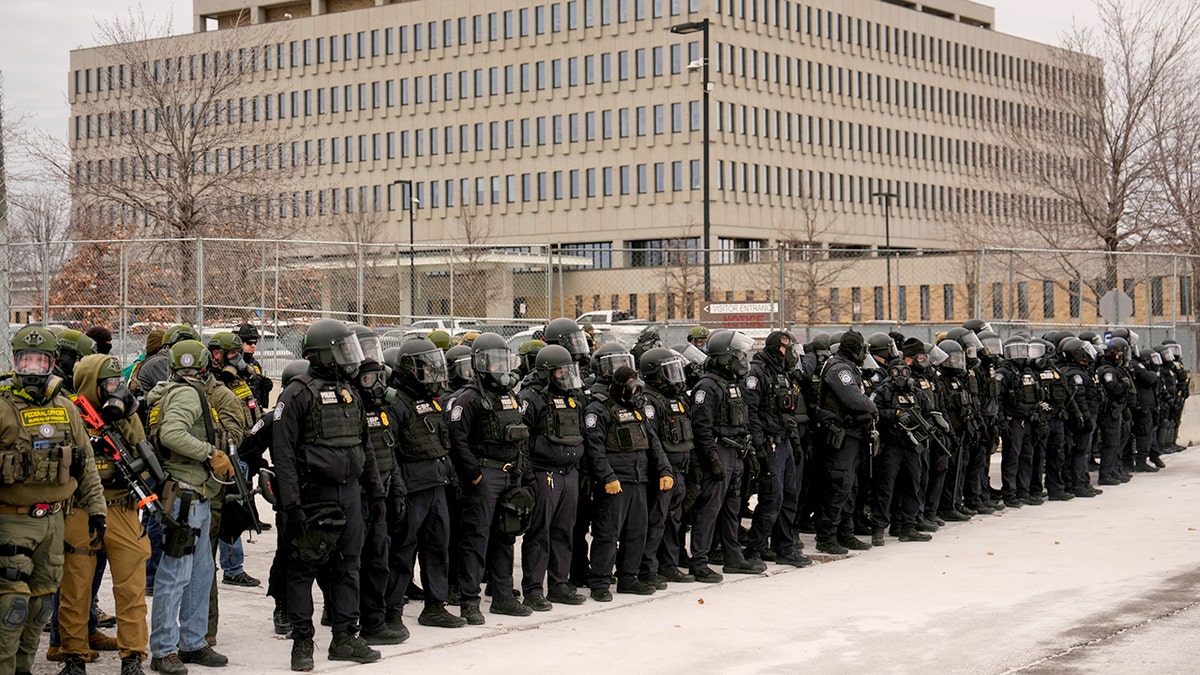
Federal immigration officers stand outside Bishop Henry Whipple Federal Building Jan. 15, 2026, in Minneapolis. (John Locher/AP)
The powerful law allows the president to "take such measures as he considers necessary to suppress [an] insurrection" when state officials are unwilling or unable to. The law functions as an exception to the Posse Comitatus Act, which says the military cannot be used as a domestic police force, and it allows the president to bypass Congress.
Trump seeks to stop ‘professional agitators’
Trump framed the possible use of the Insurrection Act as a means of addressing what he said were failures by Minnesota’s Democratic leadership.
"If the corrupt politicians of Minnesota don’t obey the law and stop the professional agitators and insurrectionists from attacking the Patriots of I.C.E., who are only trying to do their job, I will institute the INSURRECTION ACT," he wrote.
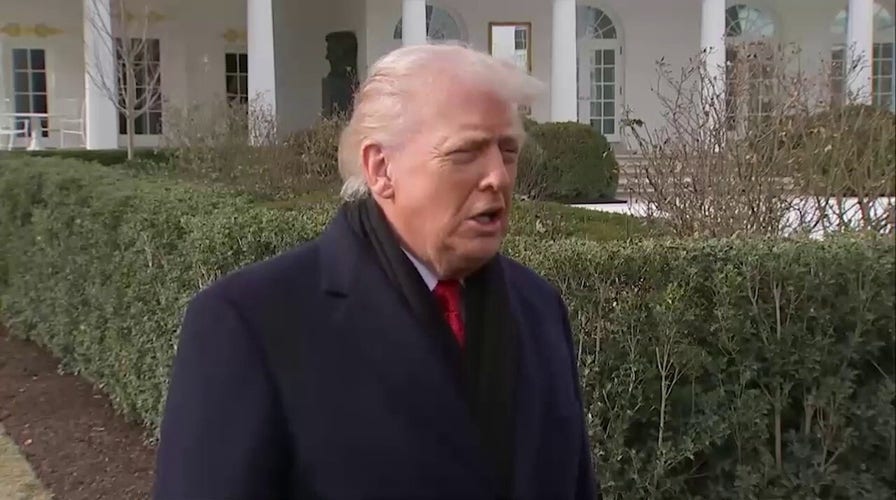
On Friday, he told reporters he did not plan to use it, for now, but that he has not ruled it out.
"It has been used by 48% of the presidents as of this moment," Trump said. "If I needed it, I'd use it. I don't think there's any reason right now to use it, but if I needed it, I'd use it."
His remarks come as protests and instances of vandalism and violence continue to rock Minneapolis. Tensions skyrocketed this month after an ICE agent shot and killed Renee Good, a 37-year-old U.S. citizen who had an altercation with ICE that the FBI is now investigating as a possible assault on the agent.
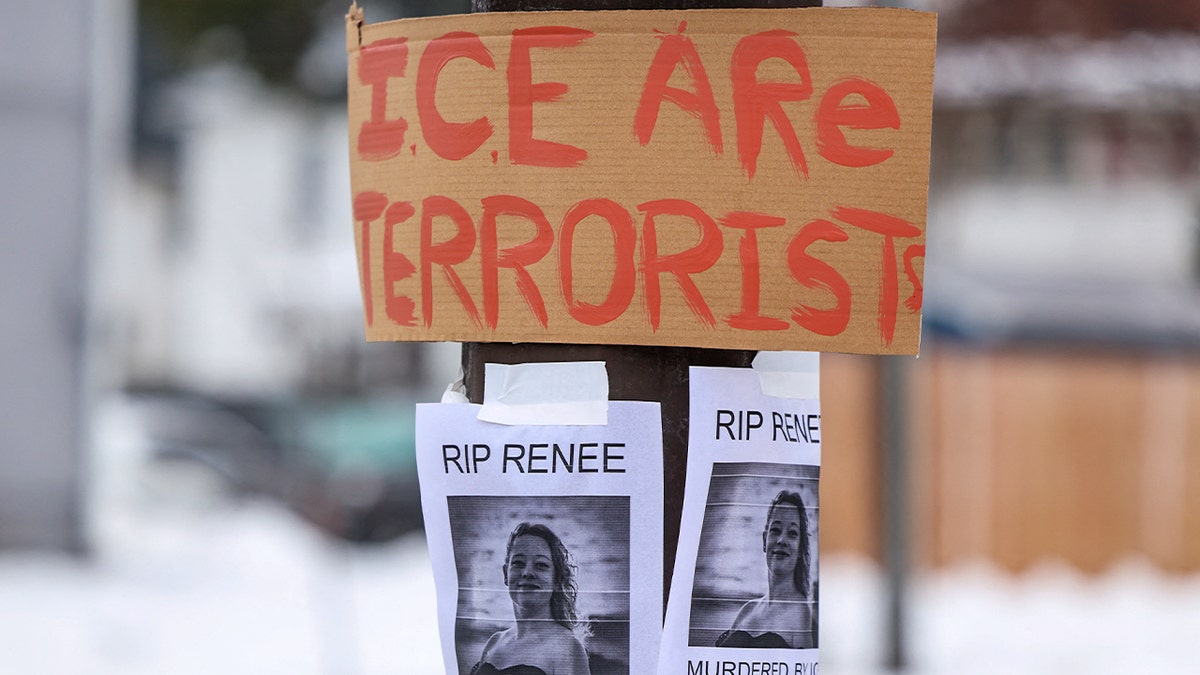
A picture of Renee Good is displayed Jan. 8, 2026, near a makeshift memorial for Good, who was shot and killed at point-blank range Jan. 7 by an Immigration and Customs Enforcement agent as she apparently tried to drive away from agents who were crowding around her car in Minneapolis. (Charly Triballeau/AFP via Getty Images)
The shooting happened after DHS deployed thousands of ICE agents to Minnesota in recent weeks as part of Operation Metro Surge, which has led to at least 2,000 arrests, according to court papers filed as part of a lawsuit Minnesota’s leaders brought against the administration over the crackdown.
A federal judge recently denied Minnesota’s request for an emergency order that would have paused ICE’s work.
Minnesota's leaders, openly at odds with the administration, argued the Insurrection Act would improperly militarize a domestic conflict that should be handled by the state.
"Minnesota needs ICE to leave, not an escalation that brings additional federal troops beyond the 3,000 [ICE agents] already here," Minneapolis Mayor Jacob Frey wrote on X. "My priority is keeping local law enforcement focused on public safety, not diverted by federal overreach."
Gov. Tim Walz responded to Trump's call by asking him to "turn the temperature down."
Asked about what would justify the use of the Insurrection Act, Chad Wolf, America First Policy Institute’s chair of homeland security and immigration, told Fox News Digital the president could have "little choice" but to invoke the Insurrection Act.
"If the situation on the ground in Minneapolis continues to grow violent, with ICE officers being targeted and injured as well as other violent acts, and Governor Walz and Mayor Frey continue to restrict local law enforcement from doing their job and encouraging their residents to resist ICE, President Trump will have little choice," Wolf, former acting secretary of DHS, said.
"Local leadership is currently taking all the wrong steps and making the situation worse. I hope common sense will eventually prevail."
What could the military do in Minnesota?
There are few restrictions on how Trump could use the military in Minnesota if he were to do so under the Insurrection Act, which legal experts say is lacking in specifics and gives the president wide latitude.
The Trump administration would first draft an order outlining which military forces would be used and how.
MIKE DAVIS: WHAT IS HAPPENING IN MINNESOTA IS WHY WE HAVE THE INSURRECTION ACT
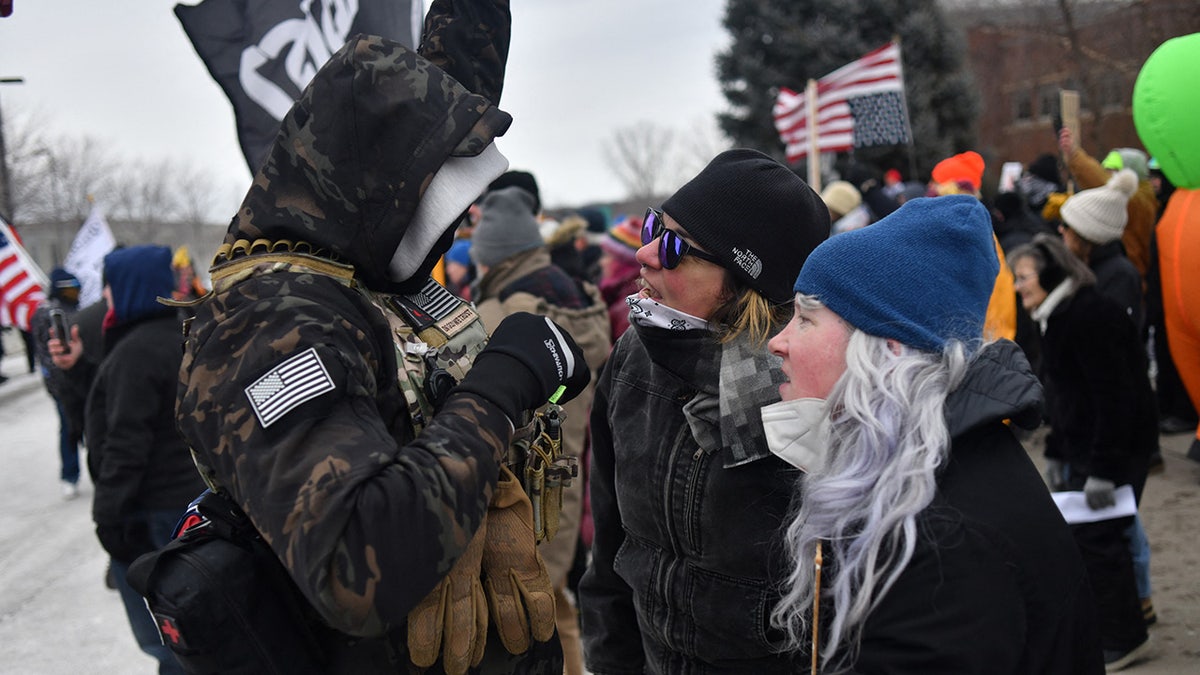
A confrontation between protesters and an ICE supporter during a demonstration outside the Bishop Whipple Federal Building in Minneapolis Jan. 15, 2026. (Octavio Jones/AFP via Getty Images)
The president could then direct the troops to carry out numerous tasks, such as enforcing federal laws, breaking up protests or otherwise suppressing what Trump deems to be rebellious activity.
What else have presidents used it for?
The Insurrection Act dates back to 1807, and although it has been used several times, Trump would be the first to invoke it since President George H.W. Bush used it to quell Los Angeles riots in 1992.
President Abraham Lincoln used what amounted to Insurrection Act powers to respond to a rebellion within the Confederacy in the Civil War era.
In the 1940s, President Franklin Roosevelt deployed 6,000 Army troops to Detroit under the Insurrection Act in response to race riots .
President Dwight Eisenhower used the law to deploy the 101st Airborne Division to Little Rock, Arkansas, in the 1950s to enforce civil rights laws in the face of resistance from the state. President John F. Kennedy later used the military for similar purposes in Alabama.
Would the Insurrection Act stand up in court?
Trump federalized the National Guard under Title 10, a separate statute, to respond to anti-ICE activity in Illinois and Oregon, but the Supreme Court recently halted those deployments.
Trump would be testing out an alternative by invoking the Insurrection Act, which has faced minimal scrutiny in the courts.
Jonathan Turley, a law professor at George Washington University, told Fox News Digital he hoped the use of the Insurrection Act could be avoided but that Trump would have a solid legal argument if it were challenged in court.
CLICK HERE TO GET THE FOX NEWS APP
"The rhetoric of the mayor and the governor has only strengthened the case for the administration in fueling the rage and protests," Turley said. "The relative lack of support from local police is analogous to the conditions used by prior presidents to invoke the act. While the Justice Department has one internal opinion emphasizing the need for a breakdown of law and order, the act itself is highly permissive and generally worded."
