





















Senators renew push to pass SAVE Act to ensure 'only citizens are voting'
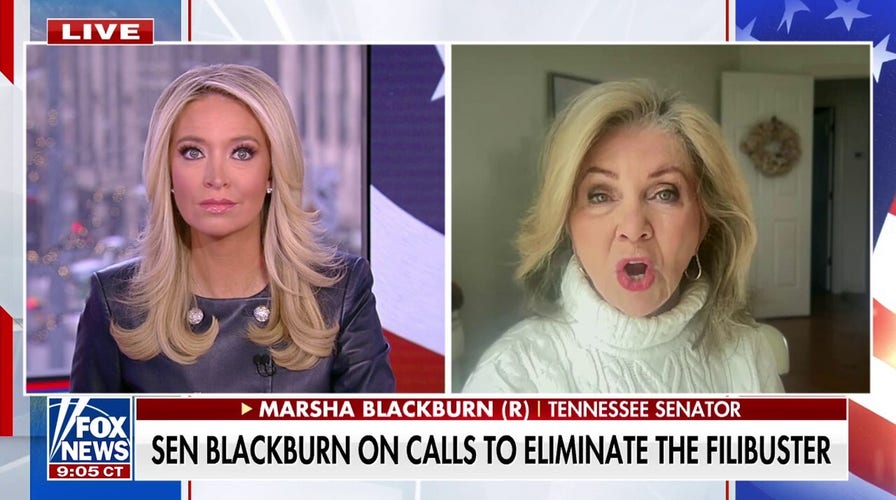
Sen. Marsha Blackburn, R-Tenn., joins 'Saturday in America' to discuss a push from U.S. senators to approve the SAVE Act and calls to eliminate the filibuster amid a partial government shutdown.
Congressional Republicans, President Donald Trump and their shared base of support want to see voter ID legislation become law, but the last barrier is the Senate, where political reality has turned the notion into a pipe dream.
The GOP’s legislative push to codify more requirements and restrictions surrounding voter registration nearly derailed Congress’ attempt to end the latest partial government shutdown on Tuesday.
In an unlikely turn of events, like Senate Democrats’ push to save expiring Obamacare subsidies’ during the last funding battle and House Republicans’ desire to attach election integrity legislation, dubbed the SAVE America Act, to the Trump-backed package this week brought the issue back into focus.
SCHUMER NUKES GOP PUSH FOR 'JIM CROW-ERA' VOTER ID LAWS IN TRUMP-BACKED SHUTDOWN PACKAGE
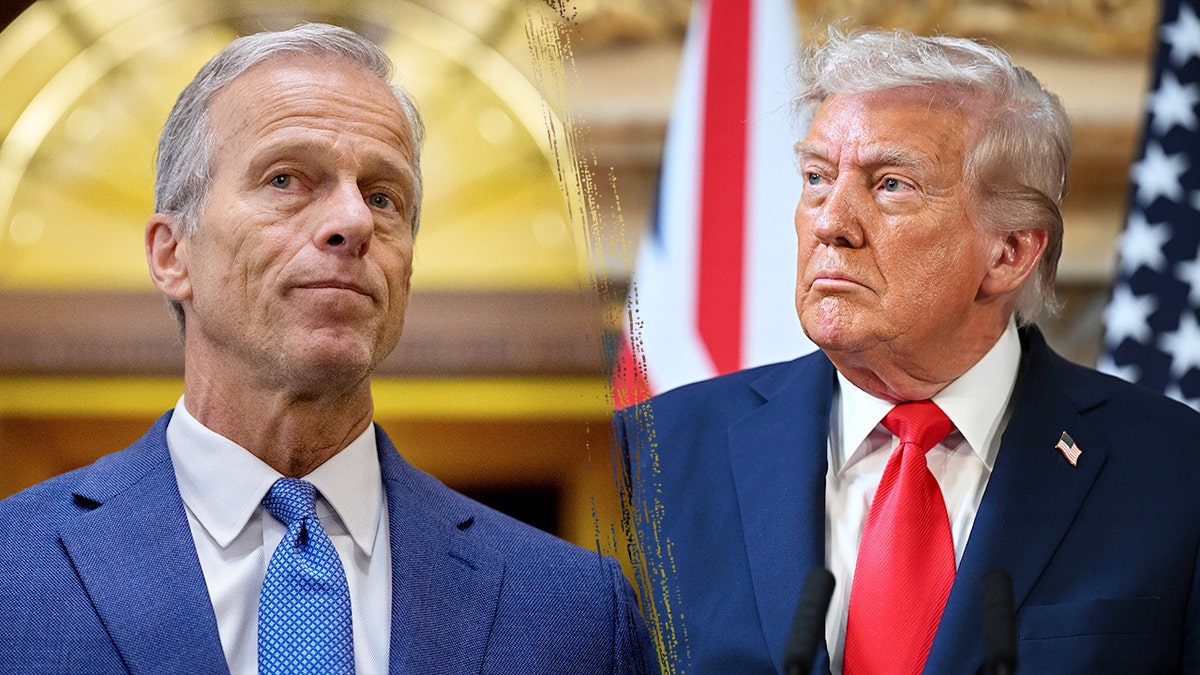
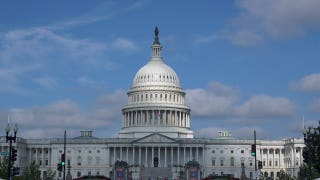
Congressional Republicans, President Donald Trump and the GOP's base want voter ID turned into law, but one barrier stands in the way: the political reality of the Senate. (Leon Neal/Getty Images; Andrew Harnik/Getty Images)
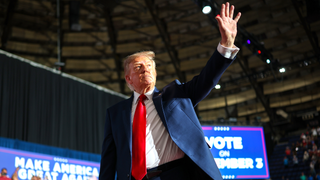
Trump, who encouraged House Republicans to stand down from their do-or-die demands, renewed his call to pass voter ID legislation while signing the funding package into law Tuesday.
"We should have voter ID, by the way," Trump said. "We should have a lot of the things that I think everybody wants to see. Who would not want voter ID? Only somebody that wants to cheat."
While several Senate Republicans support what the bill could accomplish, they acknowledge the legislation would die on the floor without a handful of Senate Democrats, who nearly unanimously despise the move.
"Democrats want to make it easy to cheat," Sen. Ron Johnson, R-Wis., told Fox News Digital. "They don't want to do anything to secure elections."
The issue at hand, as has often been the case during Trump’s second term, is the 60-vote filibuster. The president has called on Senate Republicans to eviscerate it several times throughout the last year as the precarious threshold has time and again impeded his agenda.
THUNE REJECTS TRUMP'S CALL TO NATIONALIZE ELECTIONS, WARNS DEMS TRIED THE SAME
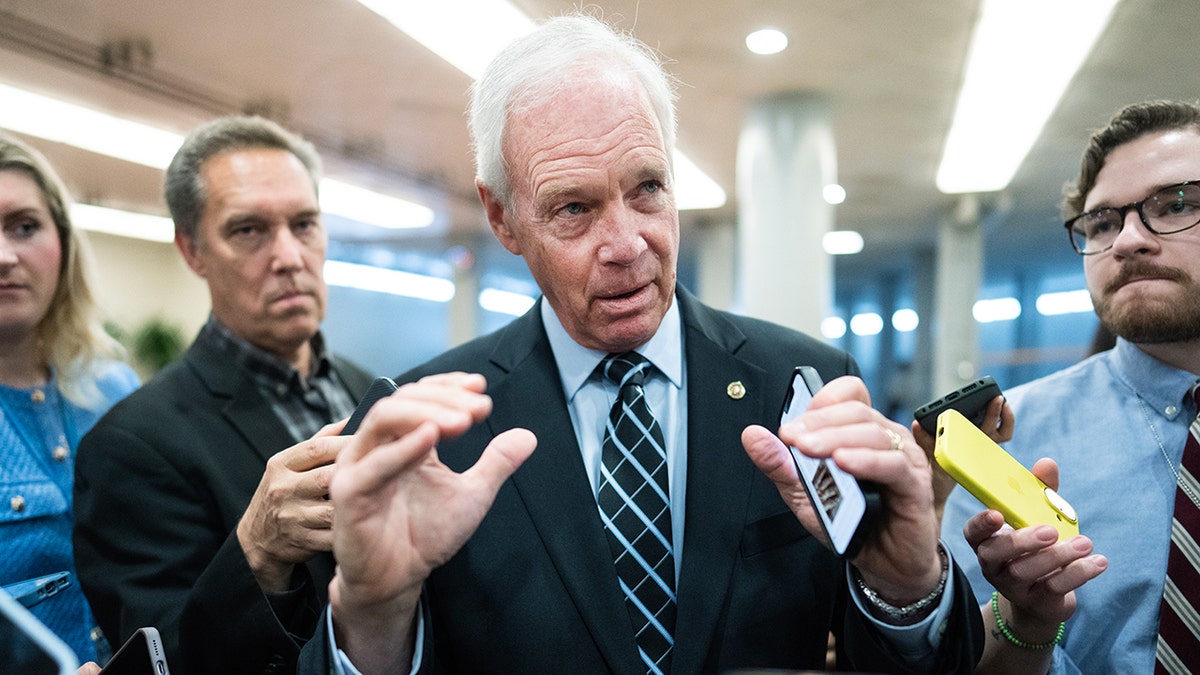
Sen. Ron Johnson, R-Wis., talks with reporters at the U.S. Capitol after the House passed the One Big Beautiful Bill Act May 22, 2025. (Tom Williams/Getty Images)
Some Senate Republicans, including Johnson, are mulling turning to the precursor to the modern filibuster — the talking, or standing, filibuster.
The modern filibuster is less strenuous, literally, than the standing filibuster. While today’s standard requires that senators hit at least 60 votes, the standing filibuster demanded that lawmakers debate on the floor, consuming one of the Senate’s most valuable commodities — time.
"The only way that's going to get passed is if we do a talking filibuster or we end the filibuster," Johnson said.
There’s little appetite among Senate Republicans to nuke the filibuster given that it could play right into the desires of Senate Democrats, who tried and failed to modify the procedure when they controlled the upper chamber under former President Joe Biden.
And many acknowledge that the votes simply aren’t there to do so.
One Senate Republican told Fox News Digital that the "filibuster is not on the table" as pressure mounts to move on the SAVE America Act, but that the legislation would likely get a shot in the upper chamber and earn 51 Republican votes. But, the lawmaker contended, the question was what happened next in the likely event the bill fails.
The notion of turning to the standing filibuster, the physical and original version of the filibuster, was also swiftly sidelined by Senate Majority Leader John Thune, R-S.D., who said while there was interest among Republicans to discuss the option, "there weren't any commitments made."
HOUSE CONSERVATIVES THREATEN EXTENDED SHUTDOWN OVER ELECTION INTEGRITY MEASURE
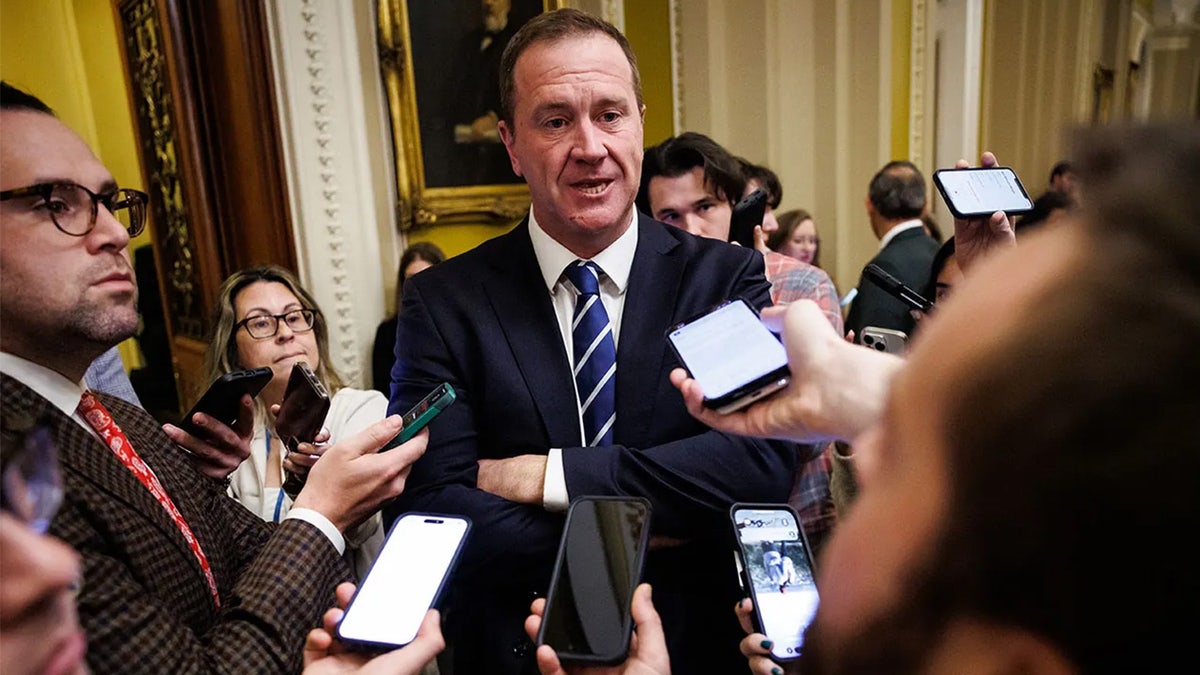
Sen. Eric Schmitt, R-Mo., talks to reporters as he leaves a Republican Caucus meeting at the U.S. Capitol Nov. 7, 2025, in Washington, D.C. (Samuel Corum/Getty Images)
Forcing the standing filibuster would come with its own ramifications in the Senate, given that the most valuable commodity in the upper chamber is floor time.
That's because of rules that guarantee any senator gets up to two speeches on a bill. That, coupled with the clock being reset by amendments to the bill, means that the Senate could effectively be paralyzed for months as Republicans chip away at Democratic opposition.
"There's always an opportunity cost," Thune said.
"At any time there's an amendment offered, and that amendment is tabled, it resets the clock," he continued. "The two-speech rule kicks in again. So let's say, you know, every Democrat senator talks for two hours. That's 940 hours on the floor."
CLICK HERE TO DOWNLOAD THE FOX NEWS APP
Still, some Republicans hope that the bill gets its moment in the Senate.
Sen. Eric Schmitt, R-Mo., who was an original co-sponsor of the bill, told Fox News Digital he hoped it got a chance on the floor and contended that it was a "very important thing to do."
"I don't know," Schmitt said. "I mean, we'll never know unless it happens."
