






After the Supreme Court ruling on tariffs, President Trump claims outside influence
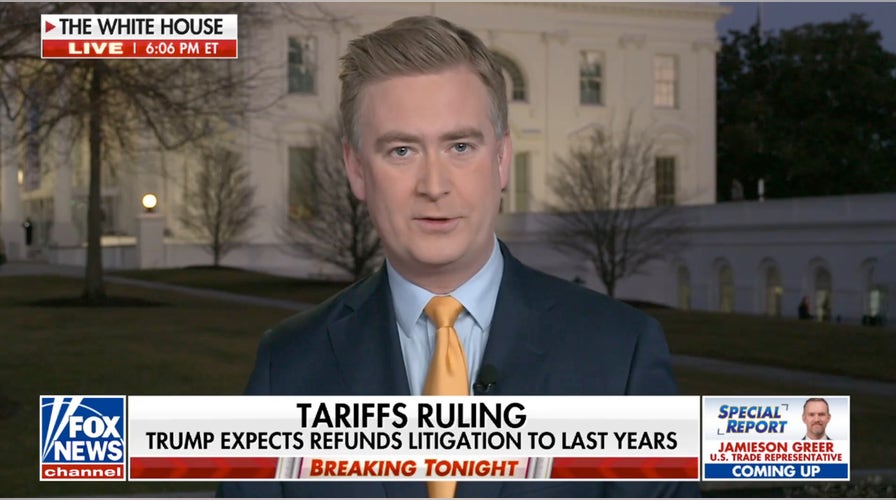
Fox News senior White House correspondent Peter Doocy reports on President Trump’s reaction to the Supreme Court’s tariff ruling and unveiling of new tariffs on ‘Special Report.’
The Court of International Trade on Friday appeared skeptical of President Donald Trump's use of a little-known emergency trade law to justify his sweeping, 10% global tariffs — teeing up a familiar, if technically new, legal fight focused on when and how a sitting president can act to unilaterally impose steep import fees on most U.S. trading partners.
During nearly two hours of arguments, a three-judge panel for the U.S. Court of International Trade grappled with Trump's use of Section 122 of the Trade Act of 1974 — an emergency provision designed to address "large and serious" balance-of-payments problems — and its applicability in today's economy.
Under Section 122, a president has the authority to unilaterally impose import fees of up to 15% on U.S. trading partners for a period of 150 days, to respond to large and serious "balance of payments deficits," or instances that risk immediately depreciating the power of the dollar.
Arguments before the court hinged on interpretation of the "balance of payments deficits" phrase, and whether the persistent U.S. trade deficits cited by Trump in invoking Section 122 aligned with the kind of crisis that Congress had envisioned when it passed the trade law in the mid-1970s.
TRUMP WARNS SUPREME COURT TARIFF SHOWDOWN IS ‘LIFE OR DEATH’ FOR AMERICA
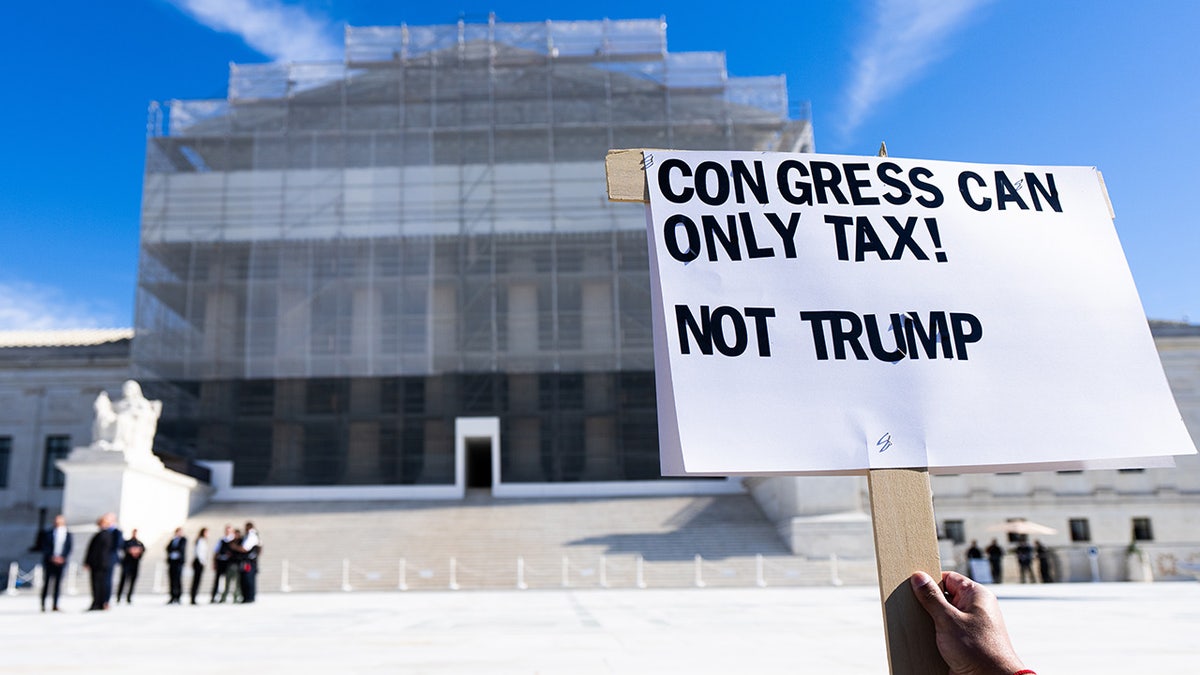
A protester holds a sign outside the U.S. Supreme Court. (Bill Clark/CQ-Roll Call, Inc via Getty Images)
Members of the three-judge panel appeared skeptical of the Trump administration's arguments, and questioned whether Congress intended the statute to apply to specific instances of international currency pressures, rather than long-running trade imbalances.
"Are you really saying that a large trade deficit alone is sufficient?" the judge asked Justice Department lawyer Brett Shumate, adding, "I don’t think it is, and I think Congress didn’t think it is."
Congress, Shumate argued, had provided presidents with broad discretion to assess economic conditions, and to identify what "balance of power" deficits warrant emergency intervention.
Shumate also ticked through a list of other economic indicators Trump cited in his proclamation — including the current account deficit, and the "net international investment" position, among other things.
"The important point," Shumate said, "is that Congress provided the president [with] discretion."
FEDERAL JUDGE BLOCKS 5 TRUMP TARIFF EXECUTIVE ORDERS
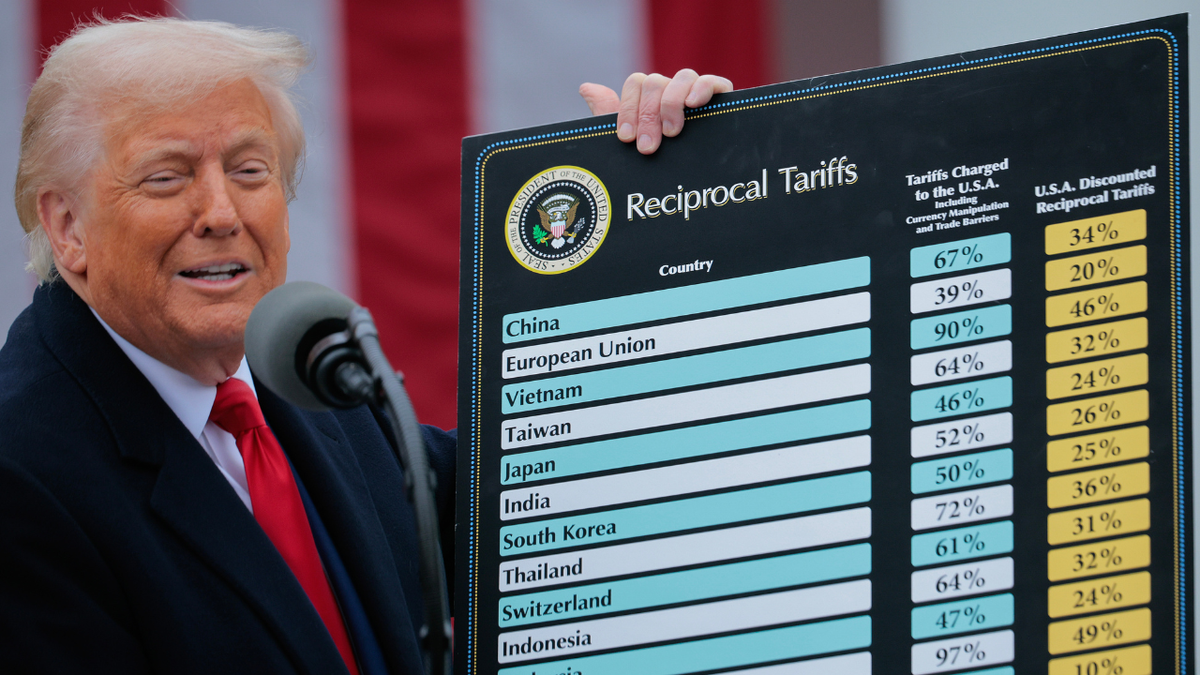
U.S. President Donald Trump speaks during a "Make America Wealthy Again" trade announcement event. (Chip Somodevilla/Getty Images)
The arguments come weeks after a group of 24 attorneys general sued the administration over Trump's use of Section 122, arguing that the move was an illegal attempt to "sidestep" the Supreme Court's ruling in February that blocked Trump's use of an emergency economic powers law to unilaterally impose his so-called "Liberation Day" tariffs.
Shumate said Friday that both authorities — IEEPA and Section 122 — were available to Trump, and told the court that Trump could have invoked Section 122 earlier.
Lawyers for the challenges told the court Friday that upholding the administration’s broader view of the law would effectively turn Section 122 into an all-purpose trade weapon.
TRUMP TARIFF PLAN FACES UNCERTAIN FUTURE AS COURT BATTLES INTENSIFY
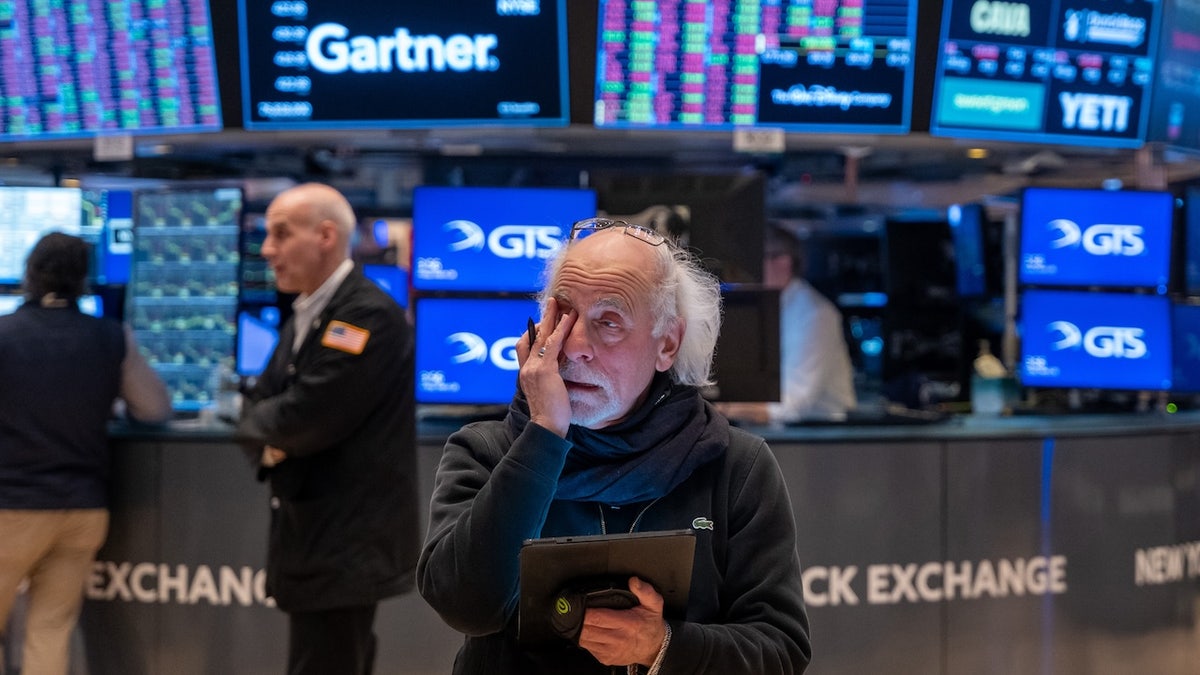
Traders work on the floor of the New York Stock Exchange (NYSE) on March 28, 2025, in New York City. (Spencer Platt/Getty Images)
Jeffrey Schwab, a lawyer representing one set of challengers in Friday's case, said the government’s theory was "very, very, very broad," adding that it could allow the president to act "at any point, at any moment that he wants, forever."
Trump is the first president to attempt to use both IEEPA and Section 122 to unilaterally impose tariffs.
CLICK HERE TO GET THE FOX NEWS APP
The case is seen broadly as one that could help define the outer bounds of presidential tariff authority.
If nothing else, the novelty of both cases, and the skepticism on display by the trade court Friday suggests the new Section 122 tariffs might follow a legal fight that is similar to his first.
