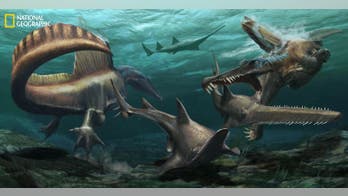
April 29, 2020 Terrifying Spinosaurus had powerful tail, becoming first known aquatic dinosaur Researchers have discovered that Spinosaurus aegyptiacus, the terrifying aquatic dinosaur that lived 100 million years ago, had a powerful tail that enabled it to live underwater, making it the first known dinosaur to do so.
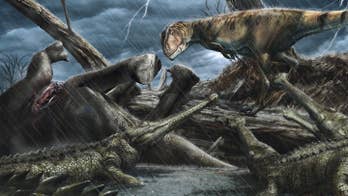
April 27, 2020 'The most dangerous place in the history of planet earth' revealed Scientists have revealed “the most dangerous place in the history of planet earth.”
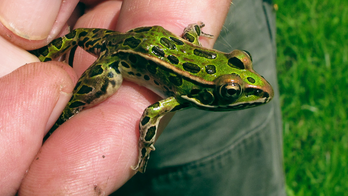
April 25, 2020 Fossil shows cold-blooded frogs lived on warm Antarctica A 40 million-year-old frog fossil has revealed that cold-blooded frogs once inhabited a warm Antarctica.
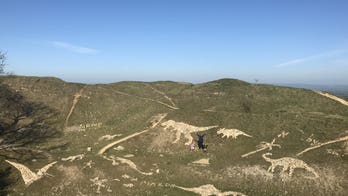
April 17, 2020 Family creates dinosaur sculptures during coronavirus social distancing It's an art show 65-million-years in the making.
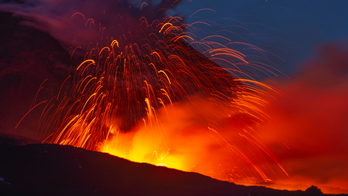
April 8, 2020 Volcanic activity likely changed the Earth's climate 200M years ago, study says A new study suggests that volcanic eruptions severely altered the climate of the planet at the end of the Triassic period more than 200 million years ago.
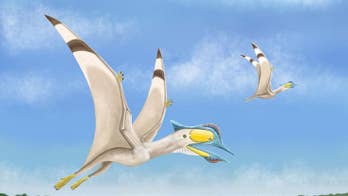
April 3, 2020 Remains of 100 million-year-old flying pterosaur with 6-inch beak unearthed by scientists A new species of pterosaur -- a flying reptile that lived 100 million years ago -- has been discovered by scientists in Africa.
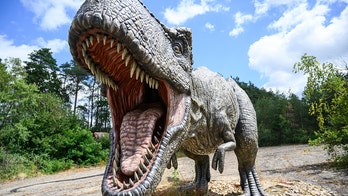
April 3, 2020 10 largest meat-eating dinosaurs There’s been an ongoing dispute over what was the world’s largest carnivorous dinosaur.
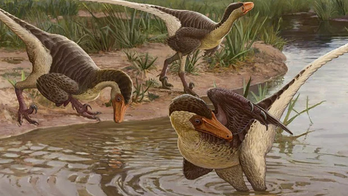
March 30, 2020 67M-year-old 'feathered dinosaur' found in New Mexico could be one of last-surviving raptors Experts have discovered dinosaur fossils of what they believe is one of the last remaining species of raptors, a 67-million-year-old known as Dineobellator notohesperus.
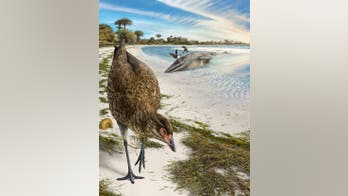
March 19, 2020 Meet 'Wonderchicken': Scientists find 67M year-old fossil of 'world's first modern bird' Researchers have discovered "wonderchicken," a 67-million-year-old fossilized bird they believe is the first "modern bird."
March 12, 2020 Dinosaurs had shorter days and longer years, according to new study Dinosaurs ruled the Earth 65 million years ago, but they did so when a day was shorter than it is now, according to newly published research.