








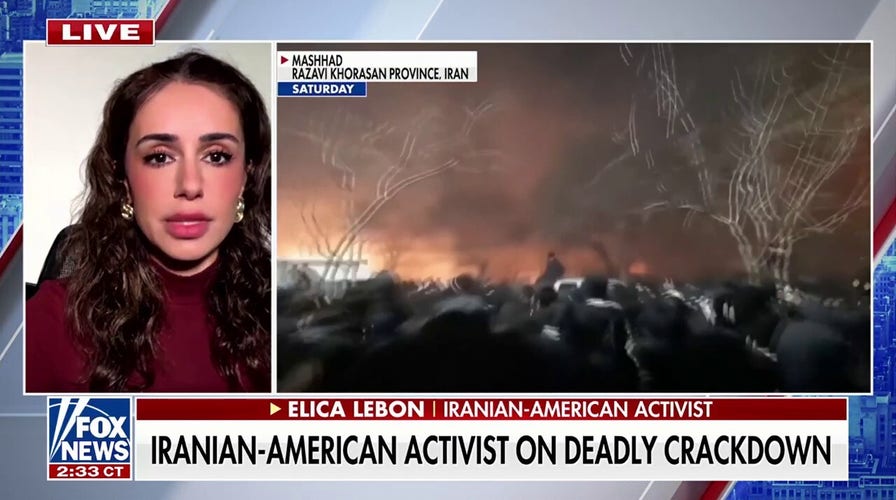
Iranian-American activist calls the treatment of Iranian protestors the 'greatest massacre' in Iran's history
Iranian-American activist Elica Lebon shares her perspective on the treatment of Iranian protesters and recounts stories she says describe what is happening amid civil unrest on ‘The Story.’
Even as the anti-regime protests seemed to slow down on Friday, experts say there is a major part of the country that could help decide the future of the country and that’s Iran’s complex ethnic minority population, which makes up just under 50% of the population.
Shukriya Bradost, a leading academic expert on Iran’s minorities who was born and raised in the Kurdistan region of Iran, told Fox News Digital that "Ethnic groups from the establishment of the Islamic constitution in 1979 did not support it and have been fighting for their rights for 47 years."
According to a new paper authored by Bradost, "Iran’s protests have spread across provinces, despite skepticism and concern among ethnic groups," she notes that 51% of the country is Persian, Azeris make up 24%, Kurds comprise roughly 8% to 17% of the nation, and Arabs and Baluch minorities number 3% and 2% of the population.
IRAN PROTESTS SPARK REGIME SURVIVAL QUESTION AS EXILED DISSIDENT SAYS IT FEELS LIKE A ‘REVOLUTION’
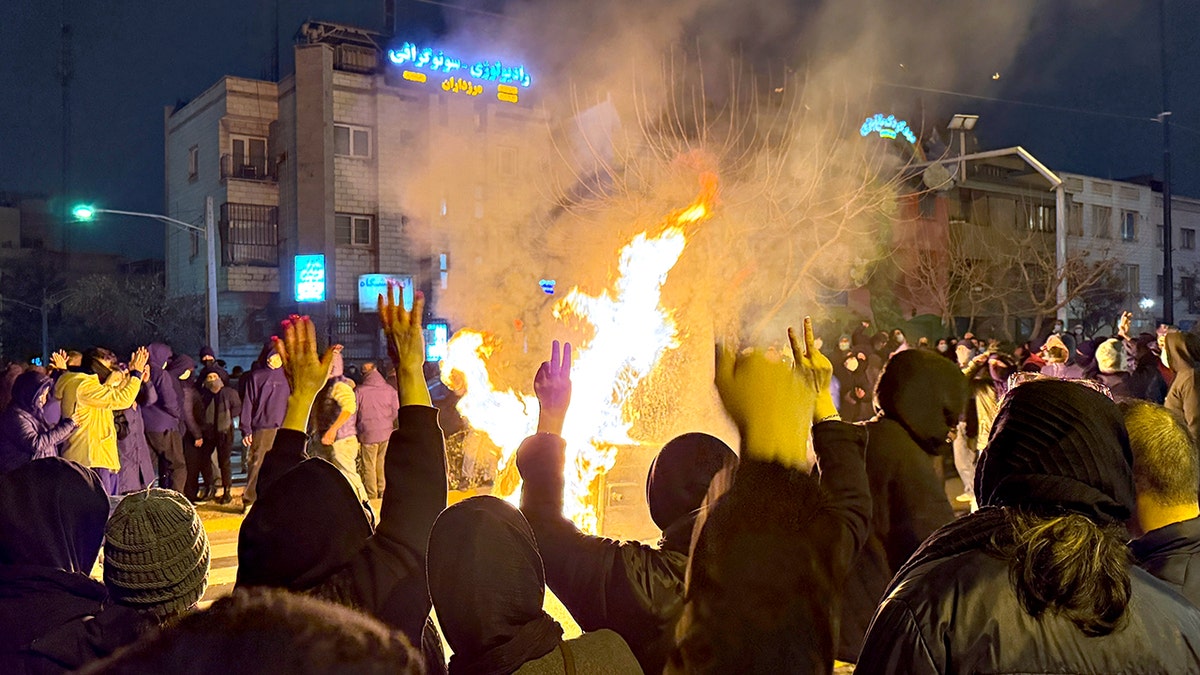
In this photo obtained by The Associated Press, Iranians attend an anti-government protest in Tehran, Iran, Friday, Jan. 9, 2026. (UGC via AP)
She wrote that "Iran is a country of about 93 million people whose modern state was built around a centralized national identity rather than ethnic pluralism."
"The regime cannot survive anymore. The regime will fight to the last bullet if Khamenei is still alive," she said.
Reports from various groups say the supreme leader of the Islamic Republic, Ali Khamenei, ordered the slaughter of thousands of protesters — the U.S.-based Human Rights Activists in Iran reported 2,571 deaths from the protests, while leading Iranian opposition figure Reza Pahlavi told Bret Baier on "Special Report" on Monday that a minimum of 12,000 people are dead.
Sardar Pashaei, the president of Hiwa, a nonprofit that organizes a new generation of Kurdish activists for human rights and democratic change, told Fox News Digital that, "Ethnic minorities make up nearly half of Iran’s population, and no meaningful political transition can succeed without them. Kurds, in particular, have decades of experience resisting authoritarian rule and have consistently paid the highest price through repression, imprisonment, and loss of life. Their role is not symbolic — it is structural to any real challenge to the Islamic Republic."
IRAN’S ‘DISTINCTIVE’ DRONE DEPLOYMENT SEES DEATH TOLL SOAR AMID VIOLENT PROTESTS
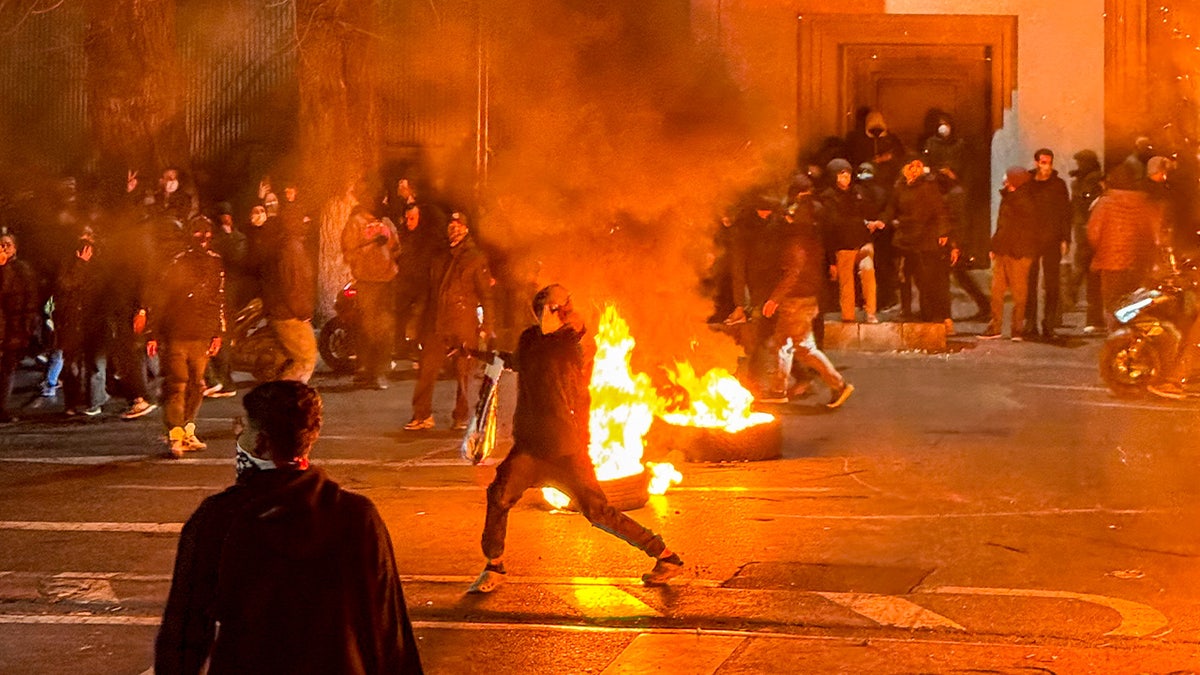
Iranians gather while blocking a street during a protest in Tehran, Iran, on Jan. 9, 2026. (MAHSA / Middle East Images / AFP via Getty Images)
Pashaei, who won a Greco-Roman wrestling world championship title for Iran and coached the country’s elite Greco-Roman team, added, "Beyond protest, ethnic minorities — especially Kurds — are crucial to ensuring that one form of tyranny is not replaced by another. Kurdish political culture strongly favors democratic values, pluralism and women’s participation, which is why there is almost no support among them for monarchy or lifetime rule."
He noted that "In Syria and Iraq, Kurdish-administered areas became among the most stable after the collapse of dictatorships, and Kurdish regions in Iran would likely be among the most stable after the fall of the Islamic regime. Despite this, Kurds continue to face discrimination both inside Iran and within opposition politics, even though a democratic future can only be built through a broad, inclusive coalition."
Khalil Kani Sanani, a spokesperson for the Kurdistan Freedom Party (PAK), told Fox News Digital that there are two provinces to keep an eye on. "Today, Kermanshah and Ilam are prepared to play that role. The organizations of the Kurdistan Freedom Party and the units of the National Army of Kurdistan in the cities of those two provinces are both managing the uprising process and carrying out resistance and legitimate defense."
TRUMP CANCELS ALL MEETINGS WITH IRAN, CALLS ON PROTESTERS TO 'TAKE OVER' THE COUNTRY
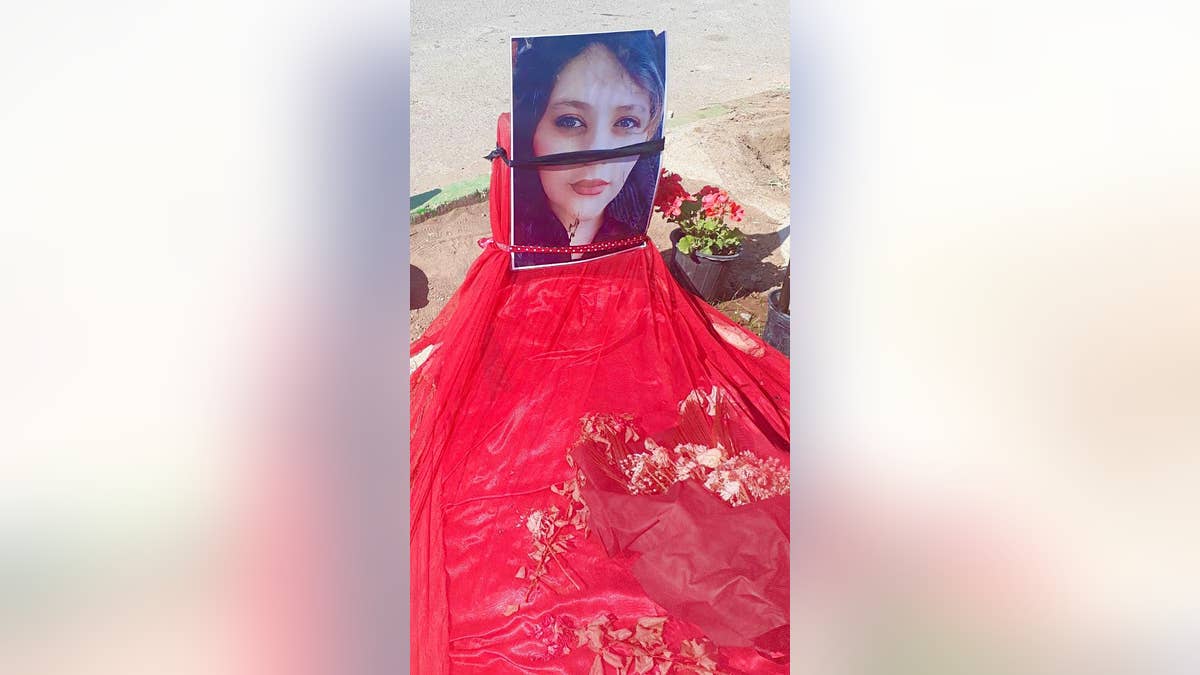
The grave of Mahsa Amini in her hometown of Saqqez, Iran. Photo obtained by Fox News Digital. (Fox News Digital)
He noted the last major uprising began in those regions. "This time as well, after Tehran’s suppression, the cities of Kurdistan became centers of uprising against the regime, and from Kurdistan the spirit of revolt has spread toward Tehran and across all of Iran."
The "Jina uprising" he referred to was known as "The Women, Life, Freedom" movement that unfolded across Iran after the Islamic Republic’s morality police murdered Mahsa (Jina) Amini, a young Iranian-Kurdish woman, in September 2022 for failing to properly wear her hijab.
Kani Sanani said "The operations of our units in Kermanshah, Ilam, Lorestan, and Bakhtiari against the IRGC [Islamic Revolutionary Guard Corps] forces have given great hope to the people and raised public morale. If the airspace of those regions were to be closed to the regime’s aircraft, our forces would rapidly take control of all the cities in those provinces, and from there we would move with a force of 100,000 people to assist the residents of Tehran."
Siamand Moeini, who is on the leadership council of The Kurdistan Free Life Party (PJAK), told Fox News Digital the "The current government has no capacity or program for internal democratic reforms. Therefore, the best alternative is a joint struggle to change it and establish a democratic system that includes participation from all peoples of Iran."
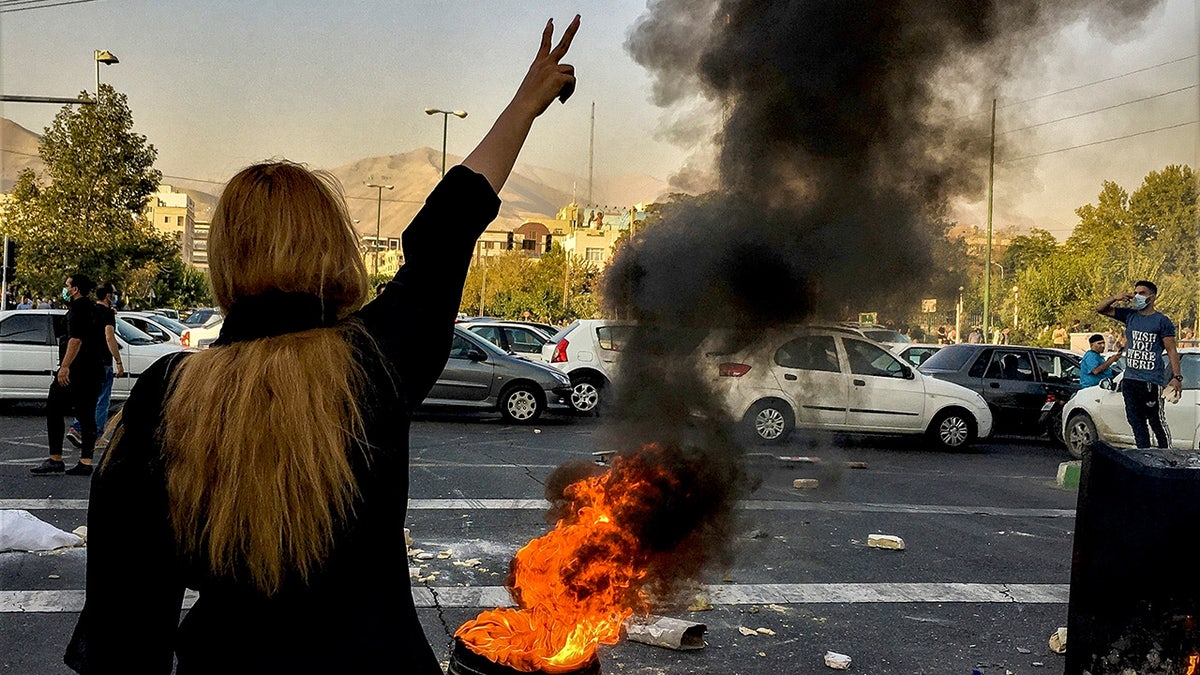
In this photo taken by an individual not employed by The Associated Press and obtained by the AP outside Iran, Iranians protest the death of 22-year-old Mahsa Amini after she was detained by the morality police, in Tehran, Oct. 1, 2022. (The Associated Press)
CLICK HERE TO DOWNLOAD THE FOX NEWS APP
He added that "Iran’s current centralized system fails to represent the will of its people. Over the past century, authoritarian governance and central state repression have resulted in the suffering and deaths of thousands — policies that the people of Iran have consistently rejected. In the current circumstances, we propose a democratic self-governance alternative for all regions of Iran, especially for Kurdistan, which can adequately address the needs of the Kurdish population."
According to Moeini, "Iran’s future system of governance must be grounded in the broad participation and cooperation of all its peoples, laying the foundation for a truly sustainable and inclusive democracy."
