

























Fox News Flash top headlines for February 23
Fox News Flash top headlines are here. Check out what's clicking on FoxNews.com.
If you have ever sat in traffic staring at brake lights and questioning your life choices, this story will hit home.
South Metro Atlanta is becoming the first place in the world to publicly test Glydways’ Automated Transit Network in live passenger service. The idea sounds simple. Put small electric vehicles on their own narrow guideways. Keep them out of mixed traffic. Use AI to coordinate everything. The promise? Rail level capacity at bus fare prices without decade-long construction headaches.
That is a bold claim. So let's unpack it.
Sign up for my FREE CyberGuy Report
Get my best tech tips, urgent security alerts and exclusive deals delivered straight to your inbox. Plus, you’ll get instant access to my Ultimate Scam Survival Guide – free when you join my CYBERGUY.COM newsletter.
WAYMO’S CHEAPER ROBOTAXI TECH COULD HELP EXPAND RIDES FAST
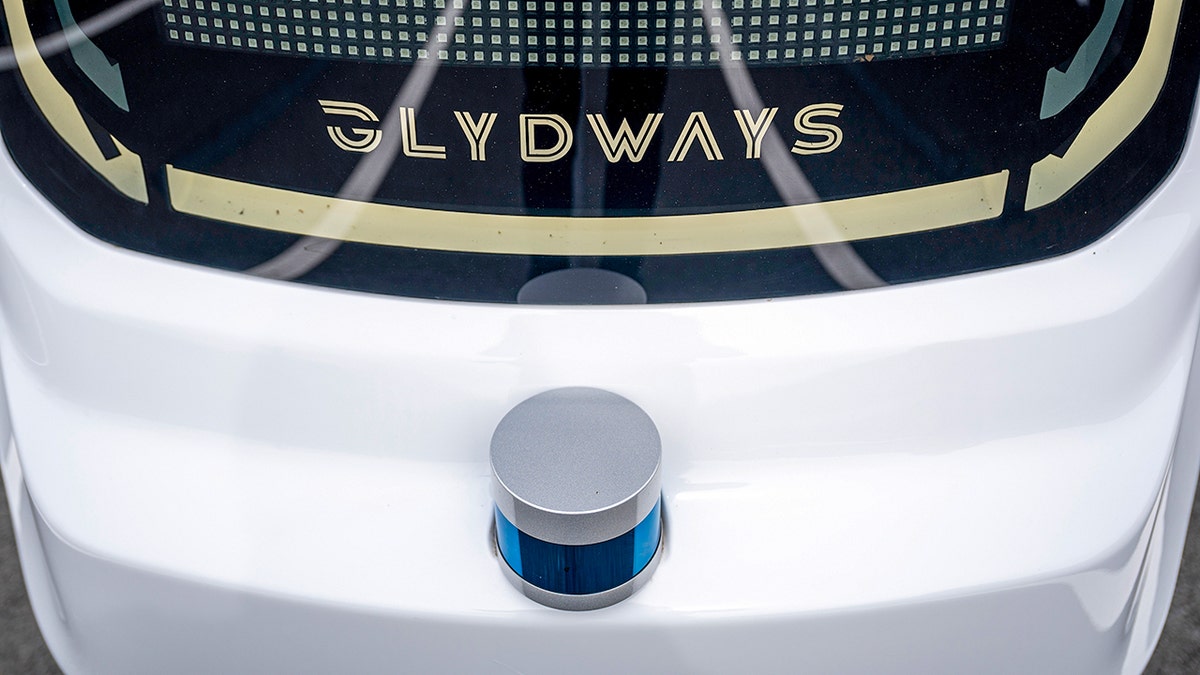
Glydways’ automated transit network will begin live passenger testing in South Metro Atlanta in December 2026, marking the first public deployment of the driverless pod system. (David Paul Morris/Bloomberg via Getty Images)
What is the Atlanta automated transit network pilot?
The pilot is a 0.5-mile dedicated guideway connecting the ATL SkyTrain at the Georgia International Convention Center to the Gateway Center Arena. It will launch as a free public test service in December 2026.
Instead of buses weaving through traffic or trains stopping at every platform, Glydways operates small electric passenger pods on a private lane. Riders request a trip through an app, and within minutes, a pod arrives. From there, passengers travel directly from point A to point B with no intermediate stops. That means no fighting SUVs, no getting stuck behind a delivery truck and no red lights.
Because the vehicles run on their own guideway, they maintain consistent speeds in tight formations. As a result, the company says the system can move up to 10,000 people per hour on a guideway just over six feet wide. If those numbers hold up in real-world testing, the system could carry as many people per hour as a light rail line.
Why South Metro Atlanta was chosen for the pilot
This location was not random. A 2019 feasibility study from the ATL Airport Community Improvement Districts identified the airport area as a 24-hour mobility district with serious first- and last-mile gaps. In plain terms, people can get close to where they need to go. They just cannot easily get that last leg of their trip. That affects workers, convention visitors and arena guests. It also affects underserved communities that struggle to connect to jobs and transit.
So the pilot serves as a controlled environment. Demand is predictable. Distances are short. Plus, stakeholders such as MARTA, Fulton County and Clayton County are already involved and on board. If it works here, expansion could follow.
How Atlanta's driverless pod system differs from robotaxis
You may be thinking, "We already have autonomous vehicles." True. Companies like Waymo run driverless cars on public roads. But Glydways argues that putting autonomous vehicles into existing traffic does not solve congestion. In some cases, it makes it worse. The key difference here is separation.
These pods do not mix with regular traffic. They run on purpose-built guideways with controlled access. That allows tighter spacing, predictable speeds and lower maintenance. In other words, it is more like a lightweight rail system without the heavy rail infrastructure.
Can the economics of the Atlanta transit pilot work?
Technology is not the hard part. Autonomous vehicles on dedicated lanes are fairly straightforward engineering. The real question is cost.
Traditional rail projects can run into the hundreds of millions or even billions of dollars. They often take years to build. Glydways claims its infrastructure deploys faster and cheaper, though specific Atlanta construction costs have not been disclosed.
Operational costs also stay lower because there are no drivers, vehicles are electric, and the guideway environment reduces wear and tear. The company says unsubsidized bus fare pricing is core to its model. While that sounds great on paper, the Atlanta pilot will show whether the math works in practice.
THE ROBOTAXI PRICE WAR HAS STARTED. HERE’S EVERYTHING YOU NEED TO KNOW
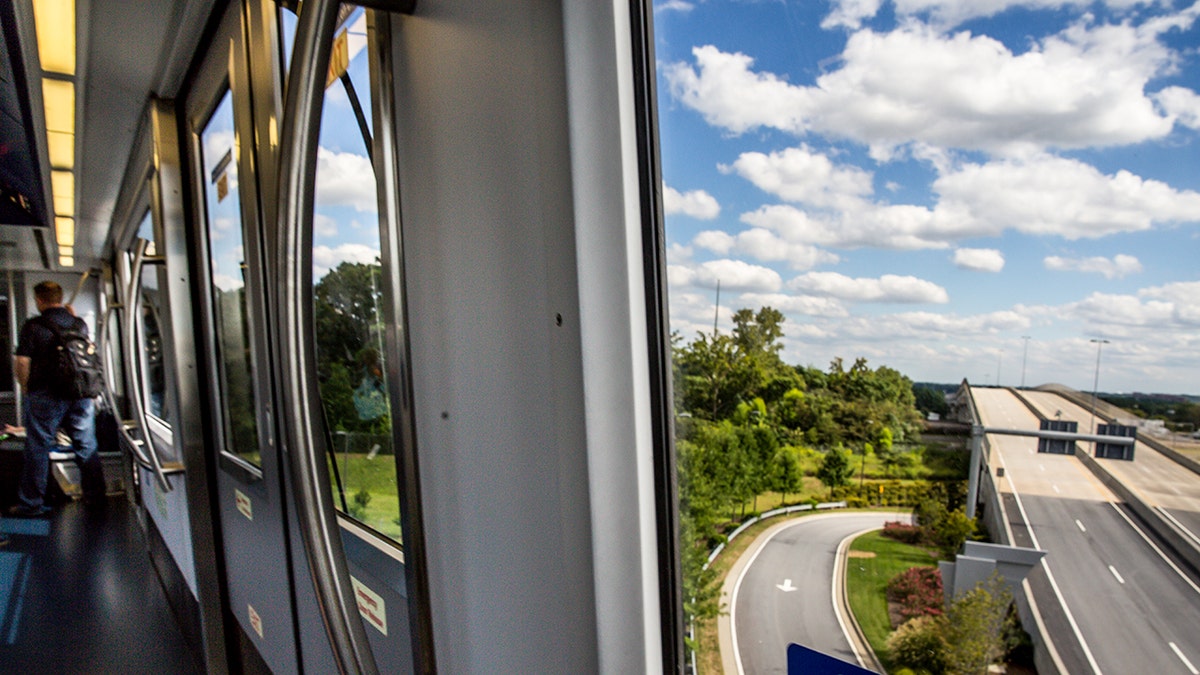
Officials say the half-mile pilot could move up to 10,000 passengers per hour if real-world testing meets projections. (Getty)
Atlanta Transit pilot timeline and what happens next
Construction began in early 2026. Guideway installation, vehicle testing and system commissioning are underway. Passenger service is scheduled for December 2026.
By 2027, the goal is a fully operational South Metro pilot delivering real-world data and rider feedback. A feasibility study led by MARTA will then evaluate whether expansion across the broader Atlanta region makes sense.
If successful, future routes could connect airports, suburban corridors and high-traffic districts where rail is too expensive.
Why the Atlanta automated transit network matters beyond Georgia
Traffic congestion is not just an Atlanta problem. It is a global one. Glydways has signed agreements in Dubai and Abu Dhabi and has held discussions in Tokyo, Florida, California and New York. South Metro Atlanta is the global proving ground.
If this pilot demonstrates reliable performance, strong rider adoption and sustainable economics, other cities will take notice. If it fails, critics will point to it as another ambitious transit experiment that looked better in a PowerPoint deck than on the street.
Take my quiz: How safe is your online security?
Think your devices and data are truly protected? Take this quick quiz to see where your digital habits stand. From passwords to Wi-Fi settings, you’ll get a personalized breakdown of what you’re doing right and what needs improvement. Take my Quiz here: Cyberguy.com.
TRANSIT FUNDING HITS RECORD HIGHS AS RIDERSHIP LANGUISHES, NEW REPORT QUESTIONS RETURN ON BILLIONS
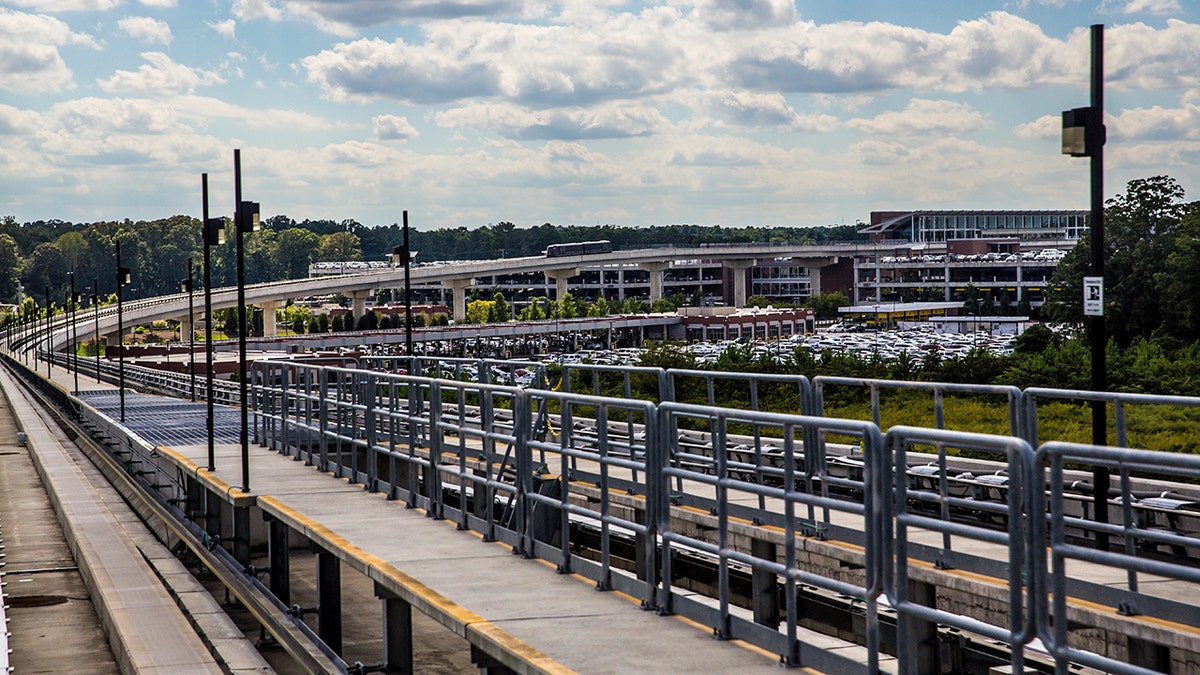
Small electric pods running on a dedicated guideway aim to bypass traffic and connect the ATL SkyTrain to Gateway Center Arena. (Getty)
Kurt's key takeaways
Atlanta drivers know congestion is not going away on its own. Adding lanes rarely solves the problem. Traditional rail is expensive and slow to deploy. So cities are searching for net new capacity. Something that expands mobility without competing with what already exists. This pilot represents a serious attempt to rethink public transit from the ground up. It blends private lanes, electric vehicles and AI coordination into something that sits between bus and rail. Now the spotlight is on South Metro Atlanta. Will this be the beginning of a scalable new transit model or another well-intentioned experiment that struggles once real-world economics kick in?
If a driverless pod could pick you up on demand and bypass traffic entirely, would you trust it with your daily commute? Let us know by writing to us at Cyberguy.com.
CLICK HERE TO DOWNLOAD THE FOX NEWS APP
Sign up for my FREE CyberGuy Report
Get my best tech tips, urgent security alerts and exclusive deals delivered straight to your inbox. Plus, you’ll get instant access to my Ultimate Scam Survival Guide – free when you join my CYBERGUY.COM newsletter.
Copyright 2026 CyberGuy.com. All rights reserved.
