



















Hegseth tells Iran to 'choose wisely' on peace talks
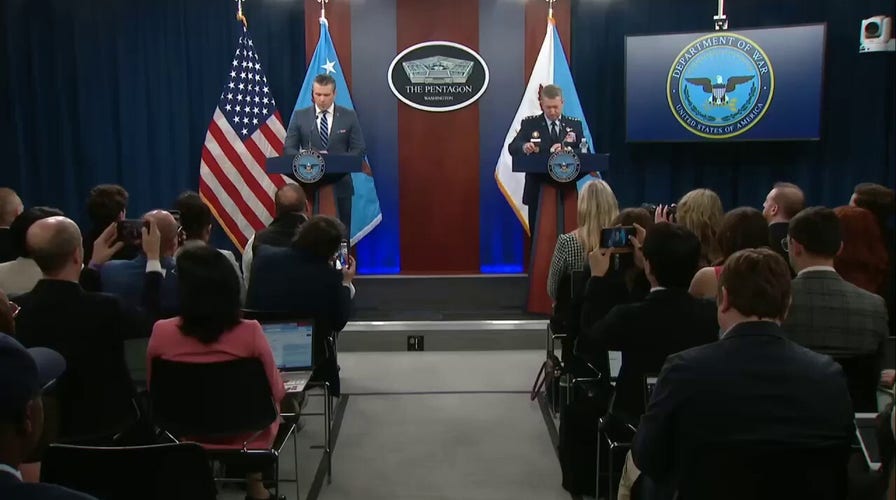
Secretary of War Pete Hegseth warned Iranian leaders to "choose wisely" on whether to accept a peace deal with the U.S. on Thursday.
The U.S. is preparing to take on Iran’s fast-attack boats using a playbook it already has tested in another theater — lethal strikes on small vessels tied to drug trafficking networks in the Caribbean and eastern Pacific.
Since September 2025, U.S. forces have conducted dozens of deadly strikes on suspected drug-trafficking vessels, part of a broader military campaign targeting cartel-linked networks. The U.S. campaign against drug-trafficking boats offers a glimpse of how American forces handle small, fast-moving targets at sea.
Officials now suggest similar tactics could be used against Iranian vessels in the Strait of Hormuz.
President Donald Trump made that link explicit in a Truth Social post Monday, warning that any Iranian boats approaching the blockade would be "immediately ELIMINATED, using the same system of kill that we use against the drug dealers on boats at Sea … It is quick and brutal."
EX-OBAMA ADVISOR SAYS IRAN COULD TARGET GULF OIL FACILITIES AS TRUMP BLOCKADE SQUEEZES REGIME
Since the campaign began, U.S. Southern Command has carried out dozens of strikes on vessels, killing more than 160 people and destroying dozens of boats. Those operations rely on surveillance, rapid targeting and precision strikes, capabilities that could also be used in the Gulf.
But in the Caribbean and eastern Pacific, U.S. forces are targeting nonstate actors with limited ability to respond. In the Strait of Hormuz, they would be confronting Iran’s military — armed, organized, and operating in one of the most strategically sensitive waterways in the world.
Applying that approach in the Persian Gulf, against a state-backed military force, carries far higher risks.
The Trump administration’s blockade of Iranian ports, which began Monday, has pushed U.S. forces into close proximity with the one part of Iran’s navy that has largely survived weeks of strikes: its fast-attack boat fleet.
U.S. and Israeli operations have effectively gutted Iran’s conventional navy, with more than 155 vessels sunk during the conflict, according to U.S. assessments.
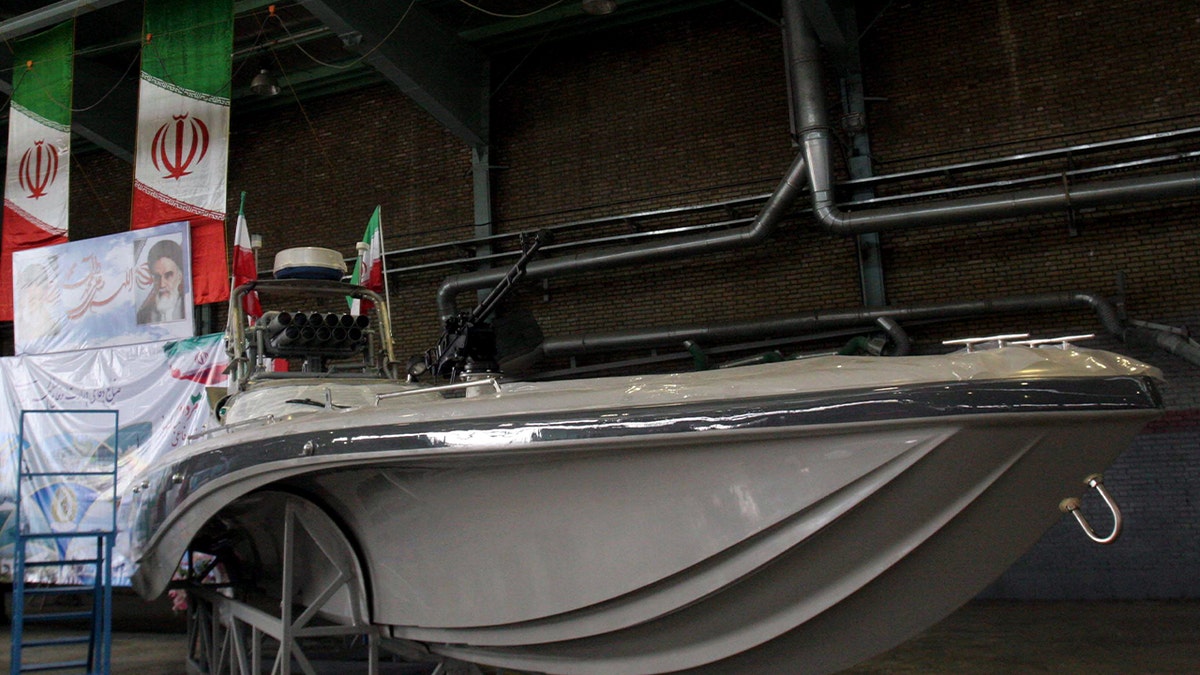
Applying that approach in the Persian Gulf, against a state-backed military force, carries far higher risks. (Yalda Moaiery/AFP via Getty Images)
Still, what’s left of Iran’s naval threat looks very different from what the U.S. has already destroyed.
Large surface ships — frigates, corvettes and other major vessels — have taken the brunt of the strikes. But those ships were never the centerpiece of Iran’s strategy in the Gulf.
The focus has long been on smaller, faster platforms.
"We should think in the thousands," said Farzin Nadimi, a senior fellow at the Washington Institute for Near East Policy. "If you include very small boats up to more capable fast-attack craft, the total could reach 3,000 to 4,000 vessels."
HEGSETH WARNS IRANIAN LEADERS TO 'CHOOSE WISELY' ON DEAL WITH US: 'WE ARE LOCKED AND LOADED'
Of those, he said, roughly 800 vessels to 900 vessels are capable of carrying anti-ship missiles, making them the most dangerous segment of the fleet.
"They are dispersed along the coastline and islands, and protected in hardened tunnel complexes," Nadimi said.
Some boats are stored in underground facilities and launched directly into the water. Others are kept on trailers in dry tunnels — or moved inland entirely.
"Some of these boats have been dispersed into civilian areas, in buildings that are large enough to hide them," he said.
Mobility, concealment and hardened infrastructure make the fleet far harder to eliminate than larger, fixed naval assets.
The environment only makes the problem harder.
Iran also has developed tactics to complicate targeting, including dispersal, deception and the potential use of drones and coordinated swarm attacks.
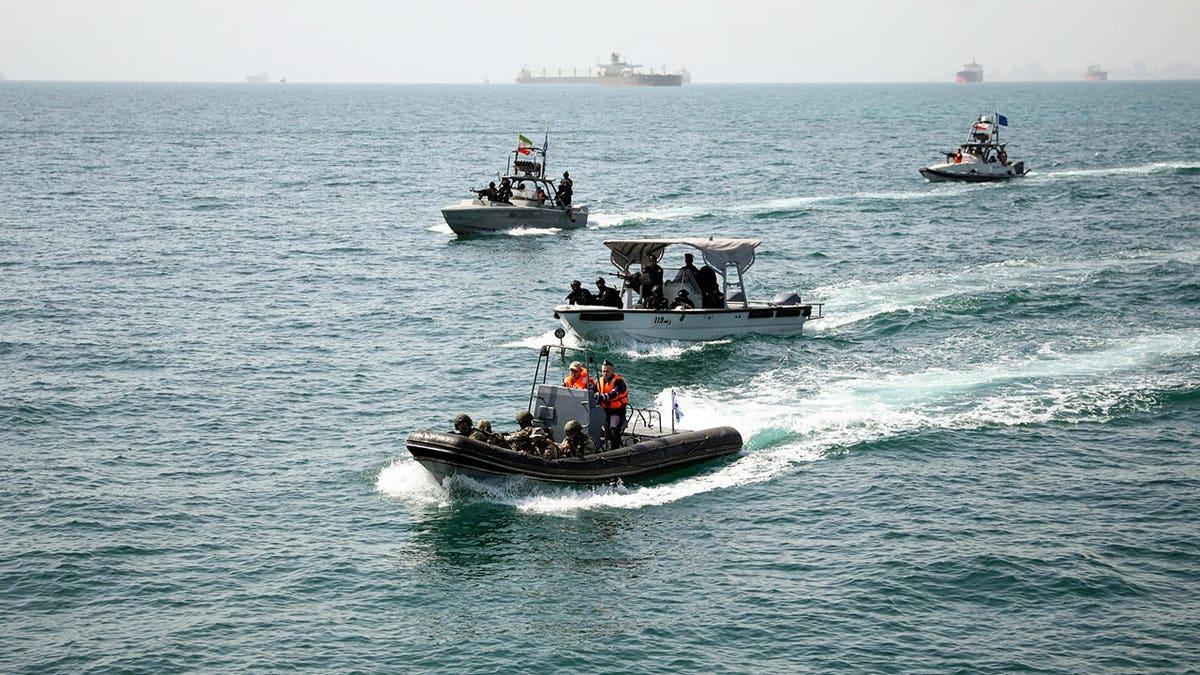
Naval units from Iran and Russia conduct a rescue simulation of a hijacked vessel during joint naval drills at the Port of Bandar Abbas near the Strait of Hormuz in Hormozgan, Iran, Feb. 19, 2026. (Iranian Army/Anadolu/Getty Images)
The Strait of Hormuz narrows to roughly 20 miles at its tightest point, forcing ships into predictable lanes. Tankers, cargo vessels, and military ships all move through the same space, often with little time to determine whether an approaching boat is a threat.
Iran’s fast boats are designed for exactly that kind of environment.
They can blend into civilian traffic, disperse along the coastline, and regroup quickly — turning what looks like routine maritime activity into a potential confrontation.
So far, Iran appears to be holding back.
"They are now in a very defensive mode … trying to preserve what they have and keep them away from U.S. surveillance," Nadimi said.
That includes dispersing vessels, limiting movements, and avoiding detection by U.S. drones and other intelligence assets. But as peace negotiations drag on, that posture may not last.
When Iranian fast boats move toward U.S. or commercial vessels, the encounter can unfold quickly.
U.S. forces rely heavily on surveillance — tracking movements from the coastline and identifying potential threats before they reach open water.
That’s where the comparison to drug-boat operations begins to make sense.
U.S. forces are likely monitoring Iran’s coastline closely, allowing them to detect and potentially strike fast boats as they mobilize.
In some cases, that could mean hitting boats before they ever reach the shipping lanes.
"These boats are vulnerable to air power, but they are also armed and can use tactics to limit that vulnerability," said Nadimi.
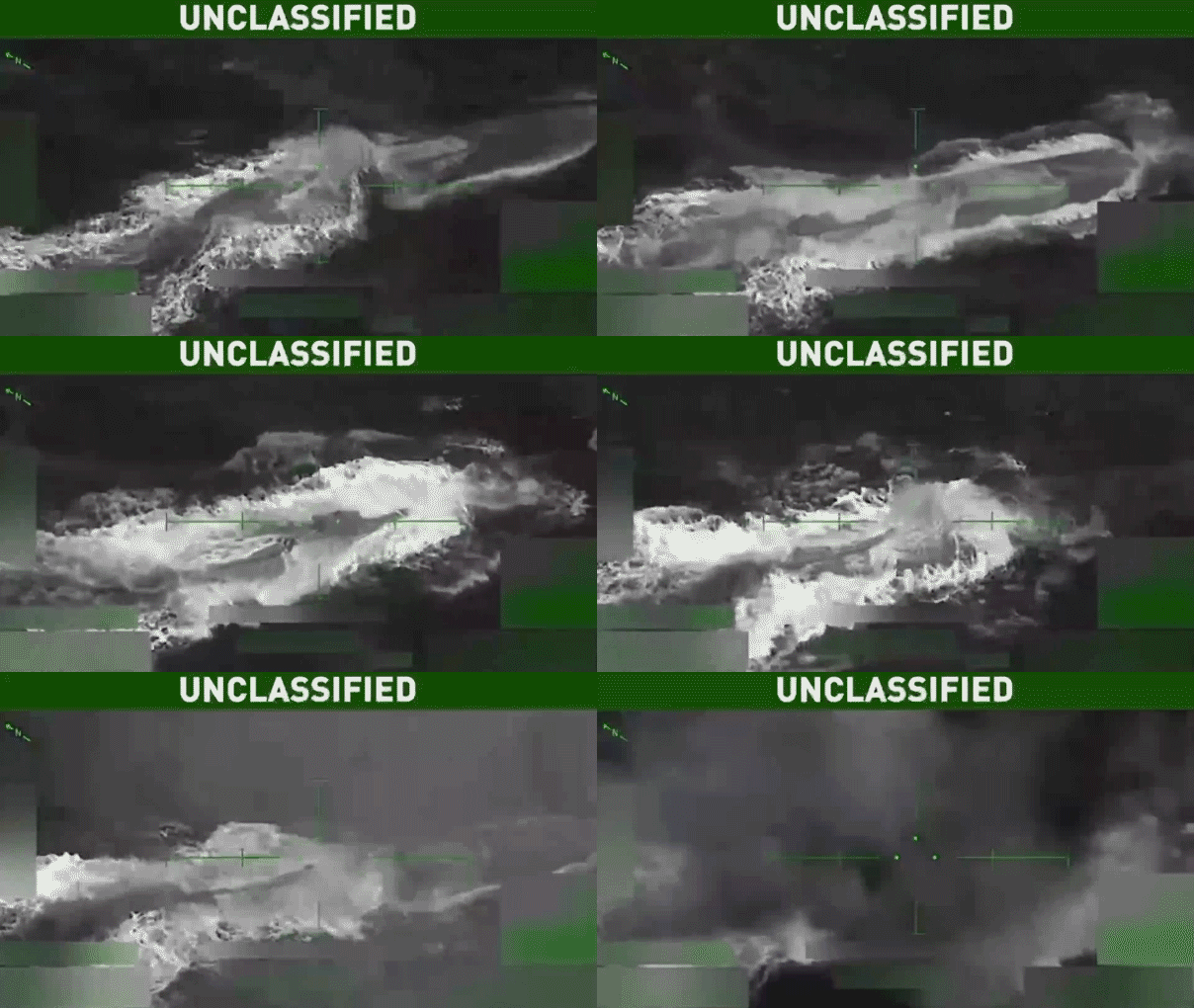
US military drone strike to drug-carrying submersible in the Caribbean on Thursday. (Credit: President Donald Trump via Truth Social)
Unlike drug-trafficking vessels, Iranian fast boats are part of a state-backed military force and may carry rockets, anti-ship missiles, or defensive systems such as shoulder-fired anti-aircraft weapons.
"We can assume many of these boats carry systems like MANPADS," Nadimi said. MANPADS — short for man-portable air defense systems — are shoulder-fired missiles capable of targeting aircraft.
CLICK HERE TO DOWNLOAD THE FOX NEWS APP
The Strait of Hormuz remains one of the world’s most critical shipping routes, and even limited disruption can ripple through global energy markets.
With Iran’s fast-boat fleet still largely intact and U.S. forces now enforcing a blockade, the next phase of the conflict may hinge on fast-moving encounters at sea.
Iran has not publicly responded to Trump’s comments about targeting fast boats using tactics used in counter-narcotics operations, and a ceasefire remains in effect while the U.S. and Iran attempt to negotiate a longer-term peace deal.
