






















Pope Leo XIV calls for AI to be ‘disarmed’ in critical warning about emerging tech
Forbes contributor Gene Marks assesses Pope Leo XIV’s concerns about the dangers of artificial intelligence on ‘Fox News Live.’
For years, America treated the internet like a free speech "Wild West," assuming the online world should operate with almost no guardrails. Because of this, our nation has operated under two dangerous assumptions about Big Tech: that platforms should be free to publish virtually anything without accountability, and that tech companies should be allowed to design their platforms however they want because "users can always leave."
Courts, parents and state legislatures are now rejecting both ideas in real time.
We are facing the consequences of applying a totally hands-off philosophy to the digital world. As Jonathan Haidt documents in his book, "The Anxious Generation," rates of anxiety, depression, self-harm, loneliness and suicide among teens, especially girls, skyrocketed after smartphones and social media became dominant around 2012.
Teen girls’ rates of major depressive episodes nearly doubled in the following decade, while emergency room visits for self-harm surged. Parents have been carefully monitoring their children’s physical world, but not their digital activity.

Mothers hold photographs of their sons who passed away at a press conference in the U.S. Capitol on Feb. 4, 2026, in Washington, D.C. They shared their stories and called for meaningful Section 230 reform as its 30th anniversary approaches. (Heather Diehl/Getty Images)
The result is what Haidt describes as children becoming "overprotected in the real world and underprotected online," with less independence offline but unlimited exposure to things like pornography, sexual predators, comparison and the like.
But America’s hands-off approach toward Big Tech did not stop with online content. We also embraced the idea that if consumers dislike how a product functions, they should simply find another one. Don’t like how a platform operates? Leave. Don’t like shadow-banning or manipulative algorithms? Use a different app. But courts and juries across the country are increasingly showing those assumptions are not absolute.
Earlier this year, a California jury ordered Meta and YouTube to pay $3 million to a family over the harm caused by their addictive platforms. A jury in New Mexico also ordered Meta to pay $375 million in civil penalties for misleading and endangering young users. Just days ago, Meta settled a major lawsuit with a Kentucky school district over addiction and mental health concerns. In my home state, Attorney General Marty Jackley has joined the fight against Big Tech, arguing Meta "needs to be held accountable for its actions."
META VOWS TO 'AGGRESSIVELY' FIGHT AFTER LANDMARK VERDICTS FIND TECH GIANT LIABLE FOR ADDICTING KIDS
These legal fights are showing a clear result: private companies do not have a free-market excuse to build and sell whatever they want. The internet is not a free-for-all where free speech is the only value and consent is the only requirement.

So, what can we actually do to rein in Big Tech and protect the next generation?
We as parents need to take a hard look at what we are giving our children access to. In "The Tech Exit," author Clare Morrell gives examples of the detrimental effects of screen time, and gives practical advice for how families can try a 30-day digital "fast."
WHY PARENTS MAY WANT TO DELAY SMARTPHONES FOR KIDS
Her advice comes as a helpful guide for parents who have read "The Anxious Generation," and are wanting to build a better childhood for their kids. Things like delaying smartphones until children are older, putting stronger safeguards in place and creating healthier boundaries around technology use can go a long way.
While the primary responsibility for stewarding childhood falls on families, state and federal governments also have a role to play. It’s not the responsibility of individual families to make sure that billion-dollar tech companies are following the law, that’s where the government steps in.
But America’s hands-off approach toward Big Tech did not stop with online content. We also embraced the idea that if consumers dislike how a product functions, they should simply find another one.
Lawmakers should advance protections like the App Store Accountability Act (ASAA). The idea is simple: tech companies should not be entering into legal agreements directly with children.
The legislation would require app stores to verify age, ensure companies contract with parents instead of minors, and require honest age ratings so families actually know what kids are downloading. It would also strengthen enforcement of COPPA, the federal law that prohibits companies from collecting personal data from children under 13 without parental consent and has already been backed by more than 170 pro-family organizations nationwide.
In addition, Congress should pass legislation like the Kids Online Safety Act (KOSA), championed by Tennessee Republican Sen. Marsha Blackburn and South Dakota’s Majority Leader John Thune. The legislation would take a major step forward in protecting young eyes online through a few key safeguards.
Mandatory default settings would automatically enable safety protections rather than requiring parents to find them and turn them on themselves. The legislation would also include addiction prevention measures, which allow parents to turn off manipulative design features and algorithms.
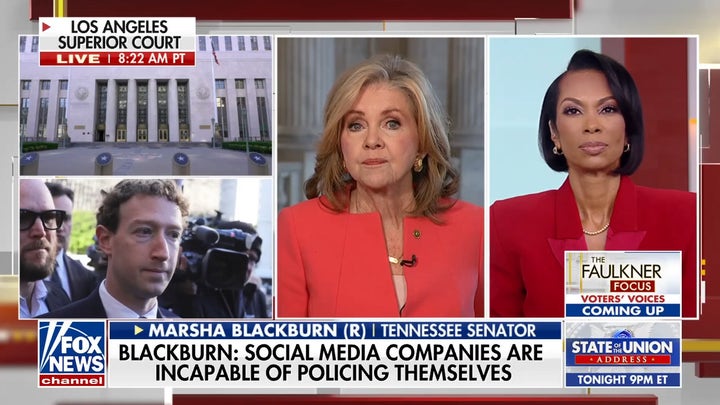
And, KOSA would provide a more streamlined process for identifying and reporting harmful content. Ultimately, the sexualized chatbots should be included in these important discussions as well.
CLICK HERE FOR MORE FOX NEWS OPINION
Protections like these should be considered in the new digital age, but we must not forget an aphorism from centuries past: "the government closest to the people serves the people best."
Congress was poised to get this concept wrong during the recent artificial intelligence fight, where a moratorium on state action was being considered. Thankfully, the moratorium was rejected and states are still able to act.
CLICK HERE TO DOWNLOAD THE FOX NEWS APP
As debates over legislative actions continue, Congress should avoid any attempts by Big Tech to include similar moratoriums. The federal government can take decisive action while allowing state legislatures to enact customized policies for their states.
Taking steps like these is the best way to protect our kids from the predatory actions of Big Tech and empower parents to build a childhood filled with the real-world connection that kids deserve.
