







Anthrax Suspect Commits Suicide
- Frederick News Post
- AP
- AP
- AP
- AP
- AP
- AP
- AP
- AP/The Frederick News-Post, Sam Yu
- AP
- AP
- AP
- AP
- AP
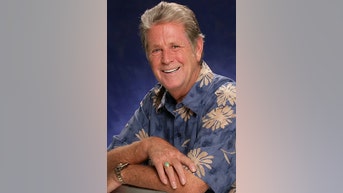
- Undated: Dr. Bruce E. Ivins died in an apparent suicide on July 31.
- August 1: Frederick Police talk with a woman who they identified as Diane Ivins, the widow of Bruce E. Ivins, 62, who died Tuesday of an apparent overdose of prescription Tylenol mixed with codeine, at their home, in Frederick, Md. Ivins, a top U.S. biodefense researcher who, according to his brother, was being aggressively pursued by the FBI in connection with a series of anthrax mailings after the Sept. 11, 2001 terrorist attacks apparently committed suicide.
- August 1: Frederick Police wait on the porch at the home of Bruce E. Ivins, 62, who died Tuesday of an apparent overdose of prescription Tylenol mixed with codeine, in Frederick, Md.
- August 1: Frederick Police talk outside the home of Bruce E. Ivins, 62, who died Tuesday of an apparent overdose of prescription Tylenol mixed with codeine, in Frederick, Md. Ivins, a top U.S. biodefense researcher who, according to his brother, was being aggressively pursued by the FBI in connection with a series of anthrax mailings after the Sept. 11, 2001 terrorist attacks apparently committed suicide.
- Nov. 30, 2001: A decontamination crew dressed in hazmat suits stands together as an investigator takes photographs outside Ottilie Lundgren's home in Oxford, Conn., after the house was declared a crime scene. Federal and state officials returned to the home to conduct a more thorough examination. Lundgren, 94, died of inhalation anthrax on Nov. 21. Federal prosecutors were planning to indict a government scientist in connection with the anthrax deaths, but the man, Bruce E. Ivins, 62, apparently committed suicide. He died July 29, 2008.
- This is a file photo of Ottilie Lundgren, the fifth person to die of anthrax in 2001. Federal prosecutors were planning to indict a government scientist in connection with the anthrax deaths, but the man, Bruce E. Ivins, 62, apparently committed suicide. He died July 29, 2008.
- March 9, 2005: The Hamilton, N.J. Post Office is shown, just before reopening March 11, 2005, for the first time since October 2001, when the sorting facility was found to be contaminated with anthrax spores. A top U.S. biodefense researcher, Bruce E. Ivins, 62, apparently committed suicide just as the Justice Department was about to file criminal charges against him in the anthrax mailings that traumatized the nation in the weeks following the Sept. 11, 2001, terrorist attacks.
- March 13, 2005: Hank Booth of Feasterville, Pa., overlooks the Automated Facer Cancelor System (AFCS) which sniffs potential Anthrax threats at the re-opening of the United States Postal Service's Trenton Processing and Distribution Center in Hamilton, N.J., that had been shutdown since October 2001, when the sort facility was found to be contaminated with anthrax spores. Bruce E. Ivins, 62, a top U.S. biodefense researcher who, according to his brother, was being aggressively pursued by the FBI in connection with a series of anthrax mailings after the Sept. 11, 2001 terrorist attacks apparently committed suicide on Tuesday, July 29, 2008.
- Bruce E. Ivins, right, performed a juggling demonstration at Baker Park during a St. Patrick's Day celebration in 1984, in Frederick, Md. Federal prosecutors investigating the 2001 anthrax attacks were planning to indict and may have sought the death penalty against a top Army microbiologist suspected of releasing the deadly toxin to test anthrax drugs he was developing. The scientist committed suicide this week.
- In this March 1, 1982, Bruce E. Ivins juggles rings, in Frederick, Md. Federal prosecutors investigating the 2001 anthrax attacks were planning to indict and may have sought the death penalty against a top Army microbiologist suspected of releasing the deadly toxin to test anthrax drugs he was developing. The scientist committed suicide this week.
- Oct. 23, 2001: A hazardous materials unit worker is hosed down on Capitol Hill after inspecting buildings and offices for anthrax contamination. A top U.S. biodefense researcher, Bruce E. Ivins, 62, apparently committed suicide just as the Justice Department was about to file criminal charges against him seeking the death penalty in connection with the anthrax mailings that traumatized the nation in the weeks following the Sept. 11, 2001, terrorist attacks.
- Nov. 27, 2006: Hazmat personnel walk down the steps of the Lincoln Memorial in Washington after finding suspicious bottles and a note reading "Do you know what anthrax is?" and "Do you know what a bomb is?" A top U.S. biodefense researcher, Bruce E. Ivins, 62, apparently committed suicide just as the Justice Department was about to file criminal charges against him seeking the death penalty in connection with the anthrax mailings that traumatized the nation in the weeks following the Sept. 11, 2001, terrorist attacks.
- Nov. 17, 2001: An enlarged copy of an envelope addressed to Sen. Patrick Leahy, D-Vt., that contained anthrax, is shown during a news conference on Capitol Hill in Washington. A top U.S. biodefense researcher, Bruce E. Ivins, 62, apparently committed suicide just as the Justice Department was about to file criminal charges against him seeking the death penalty in connection with the anthrax mailings that traumatized the nation in the weeks following the Sept. 11, 2001, terrorist attacks.
- August 1: The home of Bruce E. Ivins, 62, who died Tuesday of an apparent overdose of prescription Tylenol mixed with codeine, is shown in Frederick, Md. The government was reportedly seeking the death penalty against Ivins, a top U.S. biodefense researcher, in connection with a series of anthrax mailings after the Sept. 11, 2001 terrorist attacks.
- August 1: A member of the media stands outside the Frederick, Md., home of Bruce E. Ivins, 62, who died Tuesday of an apparent overdose of prescription Tylenol mixed with codeine. The government was reportedly seeking the death penalty against Ivins, a top U.S. biodefense researcher, in connection with a series of anthrax mailings after the Sept. 11, 2001 terrorist attacks.
FOX NEWS VIDEOS
TOP VIDEOS
US
ADVERTISEMENT
most active
Articles
-
1
Maclaren Recalls One Million Strollers After Kids Lose Fingertips in Hinges
»
-
2
Framed for Child Porn by a PC Virus
»
-
3
Cord Blood Reverses Cerebral Palsy in Colorado Girl
»
-
4
Legendary Lost Persian Army Found in Sahara
»
-
5
Tequila: 5 Things You Didn't Know
»
-
6
Fort Hood Suspect Warned of Muslim Threat Within Military
»
-
7
Muggers Return Wallet After Seeing Army ID
»
-
8
Massachusetts Man Says He Was Fired for Telling Colleague Her Gay Marriage Is Wrong
»
-
9
New York-Based Radical Muslim Hails Fort Hood Massacre
»
-
10
Vatican Seeks Signs of Alien Life
»
ADVERTISEMENT