









ABYEI, Sudan – This region of blond grasslands and conical straw huts is caught in the middle of Sudan, geographically and politically. As last weekend's deadly clashes here show, that can be a very dangerous place to be.
Southern Sudan ends a seven-day independence referendum Saturday in a vote likely to divide Africa's largest country in two. The referendum, held six years after a peace deal ended a 20-year civil war that killed more than 2 million people, has been largely peaceful.
The fate of this land — Abyei — is to be decided by north-south negotiations. But residents fear it is heading toward wider conflict.
"We are just waiting for war," said Dhieu Bol, an Abyei resident who works in the humanitarian wing of the south's ruling party, the Sudan Peoples' Liberation Movement. "I may find myself on the front line."
Some of the ingredients that ignited Sudan's western region of Darfur into conflict a decade ago are in play here. Although Abyei has oil, its reserves are declining, and this fight is mostly about land and the coexistence of Sudan's diverse groups.
The region is the traditional home of the Ngok Dinka, a black southern people who associate themselves with other southern Sudanese tribes. The Misseriya, a northern tribe affiliated with Africa's northern Muslim rim, graze herds of skinny cattle in Abyei's fertile pasturelands.
SPLM Secretary General Pagan Amom accused the north's ruling party of fueling the conflict.
"Actually, we hold the National Congress Party responsible for obstructing the referendum of Abyei and also, we condemn the attack by the NCP militia groups from Misseriya and others for attacking Abyei area ... We really fear that genocide is in the making," he said.
Stop-and-start internationally brokered negotiations over Abyei the past six months and a number of near-crises since the 2005 peace deal make one thing clear: neither the Khartoum-based NCP nor the south's SPLM are willing to give up Abyei.
Abyei had been promised a self-determination vote like the south's, but the ruling parties in the north and south could not agree on the definition of a resident, and therefore on who should be eligible to vote.
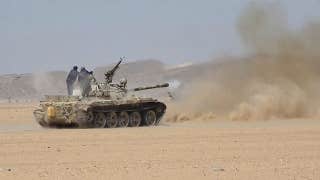
In 2008, when simmering tensions sparked a confrontation between Sudan's north and south armies and allied militias, more than 60,000 people fled and the central town of Abyei was largely burned down. Last weekend, attacks broke out 10 miles (15 kilometers) northwest of Abyei.
Accounts of the Jan. 7-9 attacks vary dramatically depending on which side is speaking, but according to the top official in the Abyei government, trouble began after goats went missing from the Ngok Dinka village of Maker Abyior.
Deng Arop Kuol said that Misseriya were suspected to be the culprits, and when youth hunted for the livestock and were ambushed, one young herder was killed.
On Jan. 8, a nearby Abyei police outpost in Maker Adhar was attacked by armed Misseriya herdsmen. The next morning — the first day of polling in the southern independence referendum — the Misseriya returned with reinforcements.
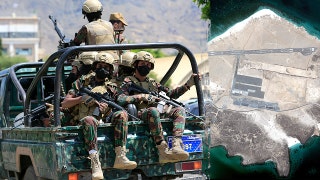
James Major Acuil, deputy police commissioner of the Abyei area police, said the Misseriya attacked "with full military forces, in different phases." He said uniformed oil police and northern Sudanese soldiers were part of the assault.
Death tolls in a region like this are rarely firm. But most officials say around two dozen police were killed during the two days.
Misseriya members say the clashes began on Jan.8 when a group of herders exploring for water for their herd were attacked by southern police, prompting a retaliation from the group, which travels with traditional weapons. It led to two days of fighting, which left 10 Misseriya dead, said Omar al-Ansari, a tribal chief.
Sudan's interior minister in the north, Ibrahim Hamid, accused Abyei's administrator of sending extra troops around Abyei, fueling the tribal tension.
Ismael Youssef, a member of the Misseriya, said southern politicians are inflaming the situation.
"When it was one country, we had free movement," he said. "Now the country is splitting and (southern officials) are mobilizing troops around Abyei."
The speaker of Abyei's legislative assembly suggested that the Misseriya attacked last weekend over fears that the Ngok Dinka would unilaterally declare their intention to annex Abyei to the south on Jan. 9, the first day of voting.
Medical staff in Abyei treated 15 wounded police for bullet and shrapnel wounds. Two critically wounded were treated at a Doctors Without Borders hospital in nearby Agok, while the U.N. evacuated 11 police to the southern capital of Juba, according to an Abyei doctor, the U.N., and Doctors Without Borders.
In the days after the Sunday attacks, Ngok Dinka police from Abyei's joint north-south police force strutted through Abyei as friends cheered. An 18-year old police officer who fought in the battles looked dazed as he sucked on a shisha pipe. It was his first battle, he said, and some of his friends were killed.
Kuol, the top Abyei official, said communities like those attacked last weekend are angry at the U.N. for not protecting them, and angry at his own government and at the south's leadership for the perception that they sacrificed the Ngok Dinka in favor of the south's referendum.
On Tuesday, senior southern leaders visited Abyei to tell the Ngok Dinka — who fought for the south during the war and who badly want the land they inhabit to become part of the south — to hold tight for now, Bol said.
"They don't want to listen to us on the ground. After the referendum, this may change," Bol said.
The U.S. has helped lead negotiations on Abyei, but Sudan expert and longtime Abyei scholar Douglas Johnson said U.S. efforts have made a resolution more difficult.
"The U.S. mediators have put on the table compromises that undermine the intent of the Abyei Protocol and whittle away at the minimum the Ngok Dinka have been forced to accept," he said, referring to parts of the 2005 peace deal that dealt with Abyei.
Former U.S. President Jimmy Carter, who has been in Sudan to observe the referendum, said he believes the northern and southern militaries have been careful not to become involved.
"My belief is that both the northern government and the southern government want to prevent any further violence in Abyei," Carter said.
That's not a common opinion on Abyei's streets, though. Monytok Agok, 50, blamed Khartoum for decades of breaking agreements over Abyei's land. "It is ours and I was born here," Agok says. "My grandfathers were born here."
On Thursday in neighboring Southern Kordofan state, leaders of the Misseriya and Ngok Dinka agreed on a deal to enable Misseriya herdsmen and cattle to graze in Abyei this year. Elders from both tribes told the Associated Press they felt the other side is being manipulated by top politicians.
"We as Dinkas think that this (the Misseriya attack) is a government act. It is a militia of the government," said Kuol Deng Kuol, a chief of the Ngok Dinka.
Misseriya elder Sadig Babo Nimir pinned blame on the south.
"My fear is that the Dinka are actually a puppet of the (south's ruling party)," he said.
Trade and transport between Abyei and the north have virtually ceased. In Khartoum, thousands of people from Abyei are waiting to return to their home areas, but government-assisted returns have stopped due to insecurity.
If violence resumes on a larger scale, which could take the form of Misseriya and allied militias pushing through police stations, it is not clear how the violence could be contained. The U.N. did not stop the violence in 2008. But Acuil, the police commander, said the Ngok Dinka will fight back.
"If anything happens to my people, we will not stop," says Acuil. "We will fight until the end."
__
Associated Press reporter Sarah El Deeb in Khartoum, Sudan contributed to this report.
