









Day 1 of NFL free agency started hot and heavy, with many of the biggest names available coming off the board in the first couple of hours after the noon ET start time.
The Dolphins' plans to cut Tua Tagovailoa started the day, and then they had their new quarterback pretty quickly. A legendary receiver left the Buccaneers, and the two teams in New York made some big strides to establish new identities.
Here are our takeaways:
1. Malik Willis is exactly the type of QB who is worth the risk in free agency
Henry McKenna: Over the past two years, Willis took a legitimate 28 dropbacks when you cut out the screen passes, quick-game throws and tuck-and-run scrambles.
Twenty eight. That’s nothing.
So, if there was any team that was going to invest in him, it was going to be one with insider knowledge. There appeared to be two teams in that category:
1) The Miami Dolphins. Both of Miami's key hires this offseason came from the Green Bay Packers: head coach Jeff Hafley and general manager Jon-Eric Sullivan. When Willis wasn’t filling in for Packers starter Jordan Love, he was the scout-team QB who faced off against Hafley’s defense almost every day.
2) The Arizona Cardinals. Packers coach Matt LaFleur developed Willis. His brother, Mike LaFleur, is the Cardinals' new head coach. If anyone was going to have a sense of Willis' potential, it’s probably Matt’s brother.
As it turns out, Willis will be a Dolphin.
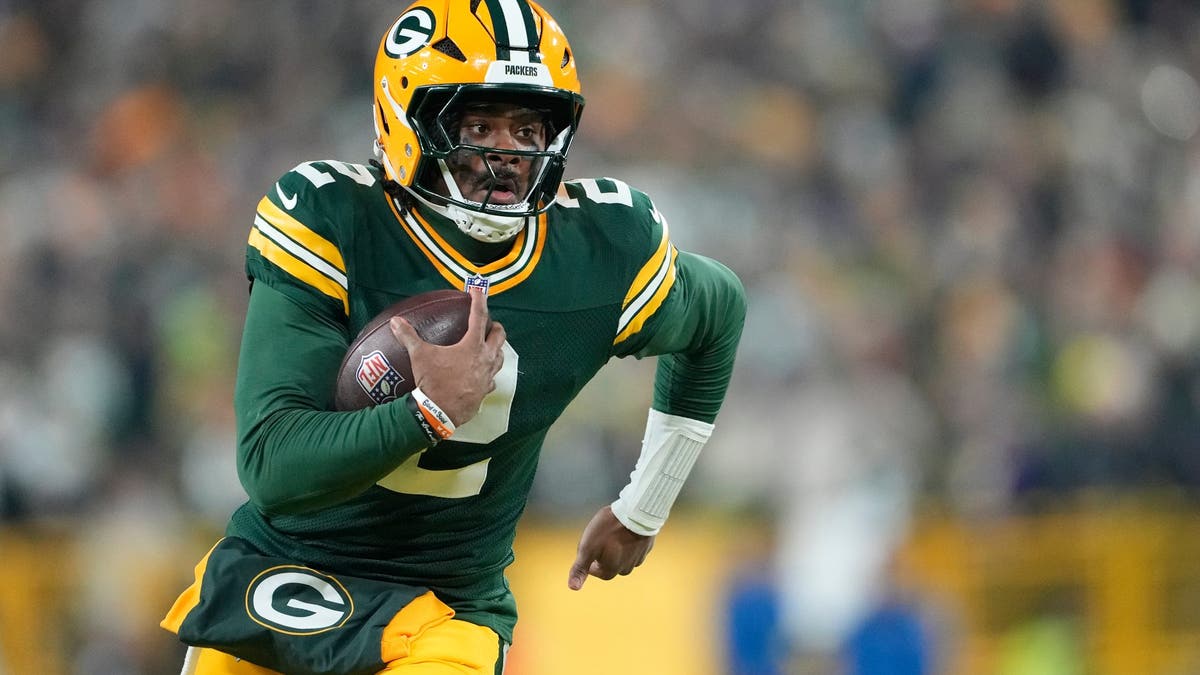
Malik Willis earned a chance to start after strong showings with the Packers over the past two seasons. (Patrick McDermott/Getty Images)
Even after the Dolphins decided to take on $99 million in dead cap money to cut Tua Tagovailoa, they added Willis for three years, $67.5 million ($45 million guaranteed). At $22.5 million per year, that’s not crazy. Not when the Jets gave $20 million per year to Justin Fields. Not when the Colts gave $37.8 million to Daniel Jones (coming off an Achilles injury) for 2026.
When looking at the draft for context, the deal makes even more sense. There is no QB who projects as a year-one starter past Fernando Mendoza, the presumed No. 1 pick.
One Dolphins source expressed surprise at Willis’ "reasonable contract." That same source thought Willis had as much upside as any young quarterback this offseason — including Mendoza.
When Willis was drafted in the third round in 2022, he had raw tools, with an impressive arm and the speed to make him a dual threat. In his two seasons with the Packers, he demonstrated the ability to serve as a game manager. That actually answered a number of pre-draft questions about his pro-readiness, in regard to his consistency and decision-making.
Willis is basically the same age as Saints QB Tyler Shough, also 26 years old, who was a second-round pick last year.
The arrow is pointing up for Willis. The Dolphins will have the exciting job of keeping it that way.
2. Colts betting on ascending talent in signing Alec Pierce to big-money deal
Eric D. Williams: The top receiver in free agency, Pierce has just one 1,000-yard season in his first four NFL seasons. That was last year, when Pierce posted 47 receptions for 1,003 yards and six touchdowns and averaged a league-high 21.3 yards per reception.
And for the Colts, the expectation is that Pierce will elevate his production after receiving a four-year, $116 million deal that includes $80 in guaranteed money with an average annual salary of $29 million. Indianapolis is projecting that Pierce, who turns 26 in May, is just entering the prime of his NFL career.
"I haven’t seen it all, but I would say it’s a good deal and where he wanted to be," a league source told me about Pierce’s deal.
Added a longtime NFL personnel executive: "History has shown paying top-10 WR money for a No. 2 WR is a risk."
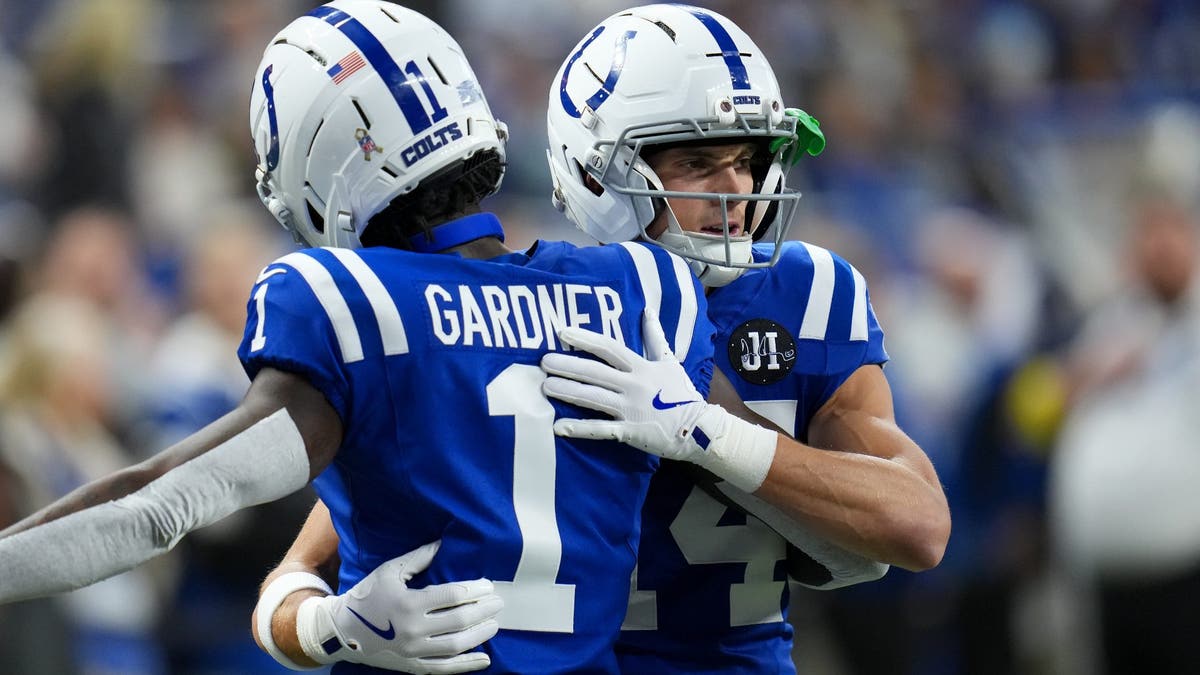
The Colts have invested heavily in cornerback Sauce Gardner (left) and wide receiver Alec Pierce. (Dylan Buell/Getty Images)
One reason for the Colts re-signing Pierce to a big payday is his relationship with quarterback Daniel Jones, who is recovering from a season-ending Achilles tendon tear. The Colts placed the transition tag on Jones at $37.8 million earlier this offseason. Jones and Pierce are close, and Pierce had his best season as a pro in Jones' first season in Indianapolis.
The Colts also traded the team’s leading receiver from last season, Michael Pittman Jr., to the Pittsburgh Steelers in a late-round pick swap. Pittman promptly signed a three-year, $59 million contract as Pittsburgh's No. 2 receiver alongside WR1 DK Metcalf. Pittman led the Colts last season in receptions (80) and receiving touchdowns (seven), totaling 784 receiving yards during the regular season.
Now, Indianapolis general manager Chris Ballard and head coach Shane Steichen are counting on Pierce to take over Pittman’s role as the top target on the perimeter for the Colts.
"We’ll see if it’s truly $29 million per year or if that’s an inflated number inclusive of incentives," a league source told me. "Assuming it truly is $29 million per year, that’s high-end No. 2, low-end No. 1 money. Tee Higgins is at $28.5 million, and I would call him a 1B to Ja'Marr Chase.
"So, to me, this Pierce deal says they view him as a high-end No. 2 who could ascend to a No. 1. But for a guy who has primarily been a deep-ball guy, to me it’s a bit of a stretch projection."
3. Mike Evans leaves Tampa Bay after 12 seasons
Greg Auman: For so long, Evans looked to be the rare future Hall of Fame receiver who spent his entire career with one franchise. After 12 seasons and 108 touchdowns, though, he’s moving on from Tampa. What might be hardest for Bucs fans is that it wasn’t about money.
The initial reports were that San Francisco got him for three years and $60.5 million — less per year than his last Bucs deal — but it’s actually much lower. The base contract is just over $14 million a year. Evans can improve that by hitting incentives, but if he’s hurt the way he was in 2025, that’s all he’s getting. That’s a team-friendly deal that the Bucs could have easily matched, which makes you think Evans just wanted a change and Tampa Bay had no chance to keep him at any price.
And it’s all the more sobering for Bucs fans if Evans, wanting a ring at the end of his career, thinks his odds are better with the 49ers — in the same division as the defending Super Bowl-champion Seahawks and perhaps the title favorite for next season in the Rams.
It’s a bitter departure for the Buccaneers, but they may have foreshadowed it last year when they drafted Emeka Egbuka in the first round instead of addressing more obvious positional needs. Much like 49ers GM John Lynch, the Hall of Fame safety who played 11 years in Tampa before concluding his career in Denver, Evans will finish his legendary career wearing a different uniform.
Evans had offers from lesser teams at $27 million a year or more, according to a league source, but this wasn’t about money. The lasting image of him as a Buc is walking off the field in frustration after the defense let the Falcons score after facing a third-and-28 on their final drive in a comeback victory that ultimately kept Tampa out of the playoffs. Evans had six years without making the playoffs to begin his career, and five straight years in the postseason weren’t enough to keep him in Tampa for his NFL finish.
Can Evans’ hamstring hold up at age 33? San Francisco has fumbled a few chances at a No. 1 receiver — Deebo Samuel was traded, while Brandon Aiyuk is all but gone and Jauan Jennings’ contract situation is unknown. The biggest question for Evans in Year 13 is what he’ll do for a jersey number since QB Brock Purdy wears No. 13 with the 49ers.
4. New Jets, Giants coaches rebuilding in their own image
Ralph Vacchiano: Fixing what’s wrong with New York football is going to take a lot of work. But one thing was clear on the first day of free agency: The Giants and Jets coaches are determined to do things their way.
That’s actually been clear with the Jets for a while, ever since head coach Aaron Glenn announced his intention to take over his team’s disastrous defense (because, he said, "playcalling is my superpower"). On Monday, the Jets added a string of veterans on defense, including two leaders — linebacker Demario Davis (two years, $22 million) and safety Minkah Fitzpatrick (three years, $40 million after acquiring him for a seventh-round pick) — who can steady their sinking ship and make sure Glenn’s message gets through.
"All those guys (including defensive ends Joseph Ossai and Kingsley Enagbare and defensive tackle David Onyemata) are just like their coach," an AFC scout told me. "They’re tough, disciplined, smart. That’s what the Jets needed. They are the foundation. Glenn knew he didn’t have any foundational pieces.
"They needed guys who know how to play, play smart and play hard."
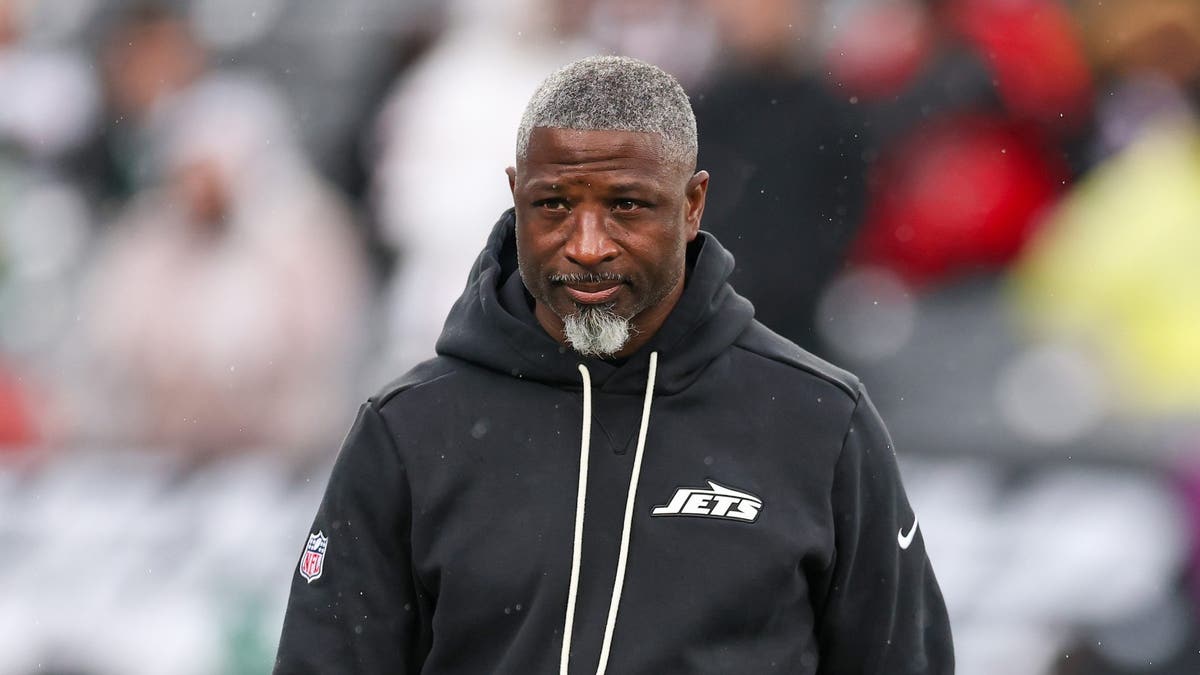
Aaron Glenn is going to put his mark on the Jets' defense next season. (Ishika Samant/Getty Images)
The "tough" part is essential for a team that ranked 29th against the run last season. And the "smart" part is big for a secondary that had zero interceptions all season long. And it certainly helps that Glenn has coached Davis and Onyemata, too.
There are more foundational pieces on the other side of town, but new Giants coach John Harbaugh knows he has work to do to build a team his way. So it was no surprise that his first signing — and it was his signing, since he now has final say over player personnel — was former Ravens tight end Isaiah Likely. Harbaugh has a promising young quarterback in Jaxson Dart, but not a lot of healthy and trusted weapons.
Likely, who was often buried in Baltimore behind Mark Andrews, is a player Harbaugh trusts.
"He’s a big weapon," an NFC scout told me. "He’s got good hands. He can stretch the field. Don’t worry about the position — tight end, slot receiver, whatever. He’s their No. 2 weapon now."
The Giants also added middle linebacker Tremaine Edmunds, an eight-year vet who replaces the recently cut Bobby Okereke. Edmunds gives Harbaugh someone to build around in the middle of the defense, to be, as one scout told me, "like another coach on the field."
The Giants have more to do, of course. After re-signing right tackle Jermaine Eluemunor (three years, $39 million), they will turn their attention to the interior of the line, according to multiple sources. They were also nosing around the running back market, too, though it’s unclear how high they're willing to go at that position.
Harbaugh envisions a power running game much like what he had in Baltimore with Derrick Henry. He likely needs to strengthen the guards and upgrade the running back room to really make that look the way he wants.
But in the end, it will look the way he wants, just like the Jets’ defense will be Glenn’s, too.
5. Reigning Super Bowl MVP Kenneth Walker III joins Chiefs
Ben Arthur: The Chiefs drew a line in the sand at the start of free agency with this message: We can no longer neglect the running back position.
Kansas City agreed to terms with former Seahawks tailback Kenneth Walker III on a reported three-year deal worth $43.05 million that includes $28.7 fully guaranteed. The Super Bowl LX MVP, Walker gives Kansas City a dynamic RB1 in the backfield alongside quarterback Patrick Mahomes.
For years, the Chiefs have been content with lower-tier options at running back. Mahomes’ scrambling ability has helped whatever lack of production (and efficiency) the team has gotten at the position, with the passing game being the ultimate focus.
That could no longer slide after last season, during which Kansas City ranked 25th in rushing offense (108.9 rushing yards per game). Running backs Isiah Pacheco and Kareem Hunt, both of whom are unrestricted free agents, combined for just 1,073 rushing yards and nine rushing touchdowns. The Chiefs ranked in the top 12 in rushing yards before contact (1.51) but sat 28th in rushing yards after contact, according to Next Gen Stats, which spoke to the lack of playmaking in the backfield in 2025.
That’s where Walker comes in.
The former second-round pick forced 77 missed tackles last season, including playoffs, which ranked second among running backs, per Pro Football Focus. Walker also had 739 rushing yards after contact in 2025, which ranked in the top 20 of 48 qualified RBs, according to NGS. Mahomes is coming off a torn ACL, which could impact the two-time MVP’s scrambling ability, emphasizing the importance of Walker’s addition. The reigning Super Bowl MVP could open up the entire offense, which returns Eric Bieniemy as offensive coordinator.
The Chiefs need more reliable, dynamic weapons on offense to get back to AFC dominance. Walker marks a big step in the right direction.
