Trump warns Iran he may strike 'every power plant' as deadline to reopen Hormuz nears
President Donald Trump threatened to destroy "every power plant" in Iran if the regime does not agree to a deal to reopen the Strait of Hormuz on Monday. Vice President JD Vance has been in talks with Iran through Pakistan throughout the weekend.
Coverage for this event has ended.
UN head warns Trump admin not to attack Iran’s civilian infrastructure
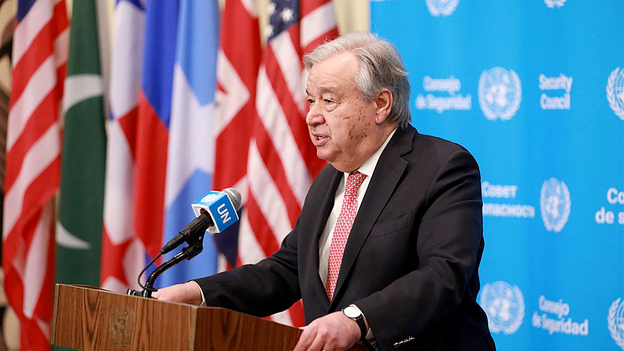
U.N. Secretary-General Antonio Guterres warned the Trump administration that attacking civilian infrastructure in Iran is prohibited under international law, according to his spokesman.
"Even if specific civilian infrastructure were to qualify as a military objective," spokesman Stephane Dujarric said.
Dujarric said an attack on these civilian targets would still be banned if it risks "excessive incidental civilian harm."
If U.S. President Donald Trump moves forward with his threats to strike power plants and bridges, Dujarric said a court would determine whether the attacks amount to war crimes.
The Associated Press contributed to this report.
Asian airlines cut schedules, carry extra fuel over supply shortages triggered by war in Iran
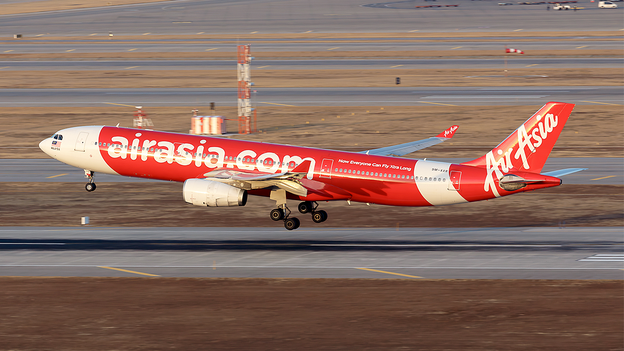
Airlines in Asia are cutting flights, carrying extra fuel from home airports and increasing refueling stops as the ongoing war on Iran has shortened jet fuel supply in some countries and led to soaring prices.
European carriers are preparing for similar disruptions after Iran's blockade of the Strait of Hormuz cut off about 21% of global seaborne jet fuel supply, according to global data and analytics firm Kpler.
Previous oil shocks drove up prices, but this one is also impacting physical supply, forcing governments, airlines and airports to consider fuel rationing.
"In my conversation with airlines, they are very concerned about what the future looks like, because we do not know when the war will end and we don't know when the supply chain, the feedstock, will come from the Gulf area," Shukor Yusof, founder of aviation consultancy Endau Analytics, told Reuters.
Reuters contributed to this report.
2 people killed in Iraq after home hit by Iranian drone strike, authorities say
An Iranian drone strike hit a home in Iraq’s Kurdish region, killing two people, according to authorities.
The drone struck the house in the village of Zargazawi in Irbil province early Tuesday, the Counter Terrorism Directorate of the northern Kurdish region said in a statement.
Officials in Iraq denounced the attack, calling it a violation of international law.
This comes as Iranian forces and allied militias targeted areas across northern Kurdistan with a series of drones, rockets, and missiles.
The Associated Press contributed to this report.
King Fahd Causeway linking Saudi Arabia to Bahrain closed over Iran's threats
The King Fahd Causeway, a key bridge linking Saudi Arabia to Bahrain, has been closed over threats from Iran, according to the King Fahd Causeway Authority.
The authority said on X that vehicle movements had been suspended “as a precautionary measure” due to Iranian attacks targeting Saudi Arabia’s Eastern Province.
The bridge is the only road link connecting Bahrain — home to the U.S. Navy’s 5th Fleet — to the Arabian Peninsula.
This comes after U.S. President Donald Trump threatened to attack Iranian civilian infrastructure if it fails to reopen the Strait of Hormuz.
The Associated Press contributed to this report.
Iran allows Malaysian commercial ship to pass through Strait of Hormuz
Malaysia’s Foreign Ministry said on Tuesday that one of seven Malaysian commercial vessels stranded in the Strait of Hormuz was allowed by Iran to pass and is now headed to its destination.
This comes after diplomatic talks with Iranian officials led by Malaysian Prime Minister Anwar Ibrahim, the ministry said.
The ministry said Malaysia’s government reaffirmed its support for safe and open sea routes under international law.
The statement also called for continued dialogue to maintain peace and stability in the region.
The Associated Press contributed to this report.
New Zealand PM says Trump's threats against Iranian infrastructure ‘unhelpful’
New Zealand Prime Minister Christopher Luxon called U.S. President Donald Trump’s threats against Iranian civilian infrastructure "unhelpful" and "not necessary."
"Unhelpful because more military action’s not necessary," Luxon told Radio New Zealand on Tuesday.
"I think the bottom line is that the focus needs to be on not seeing this conflict expand any further,” he continued.
Luxon added, "We got threats from the president over the weekend. Any of those actions including bombing bridges and reservoirs and civilian infrastructure would be unacceptable as well."
The prime minister said New Zealand Foreign Minister Winston Peters’ message to U.S. Secretary of State Marco Rubio during a meeting in Washington scheduled for this week would be to de-escalate the conflict.
Peters would "certainly be encouraging the U.S. and Iran to de-escalate quickly," Luxon said.
The Associated Press contributed to this report.
Iran official urges youths to create human chains around power plants over Trump's strike threats
An Iranian official on Tuesday called on youths in the country to form human chains around power plants ahead of potential strikes threatened by U.S. President Donald Trump.
Alireza Rahimi, identified by Iranian state television as the secretary of the Supreme Council of Youth and Adolescents, made the comments in a video message broadcasted early Tuesday.
"I invite all young people, athletes, artists, students and university students and their professors," he said.
He urged people to gather Tuesday at 2 p.m. "around the power plants that are our national assets and capital, regardless of any taste or political viewpoint, belong to the future of Iran and to the Iranian youth."
Iran has previously formed human-chain demonstrations, also known as human shields, around its nuclear sites during times of escalated tensions with Western nations.
The Associated Press contributed to this report.
Iranians abroad say their family members back home are being persecuted, arrested
The Iranian regime is increasingly using persecution and arrest of family members and property seizures as tools to silence dissenting voices, as the war with the United States and Israel rages on, sources tell The Associated Press.
Amid a pervasive internet shutdown, those overseas play a critical role in monitoring events taking place during the government crackdown on any domestic protest or dissent.
Authorities have warned the Iranian public against speaking to the media, and now are engaging in a concerted strategy of harassing and imprisoning family members in Iran as well.
A new anti-espionage law approved last year allows for the seizure of property of those who are deemed to support Iran's enemies. More than 200 such cases have been brought before courts under this legal regimen.
Critics of the regime are frequently branded "traitors", "agents of Israel", or "mercenaries."
Meanwhile, the fractured Iranian opposition is attempting to organize in an effort to bring about a political transition in Iran.
15 US service members injured in Iranian drone strike on Kuwait Air Base: report
At least 15 U.S. military service members were injured during an Iranian missile attack in Kuwait, according to reports.
The Americans were injured during an Iranian drone strike on Ali Al Salem Air Base overnight, two U.S. officials told CBS News.
Most have returned to duty, one official told the news outlet.
Teens accused of London Jewish ambulance arson likely radicalized beyond Islam, expert says
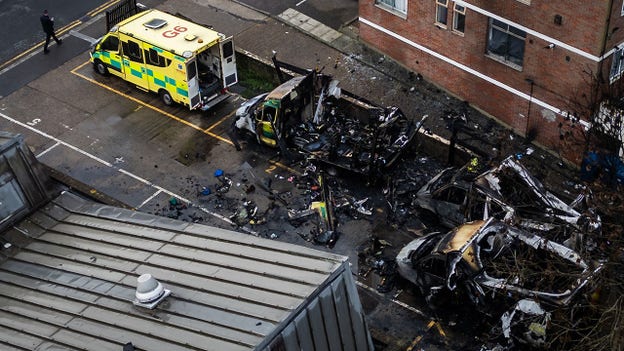
A group is teens accused of setting fire to a Jewish charity ambulance in the United Kingdom was likely radicalized beyond Islam, an expect said.
Four teens are charged with destroying four ambulances belonging to the the Jewish volunteer organization Hatzola outside a synagogue in London, last month.
Shortly after the arson, Ashab al-Yamin (the Islamic Movement of the People of the Right) took to its Telegram channel to claim responsibility for the attack.
Haras Rafiq, vice president of policy at the Institute for the Study of Global Antisemitism and Policy (ISGAP), told The Jerusalem Post that the suspects may not subscribe to Islam but that "they are operating within a climate shaped by it, and advancing outcomes that Islamist ideology seeks to normalize.”
“We’re now facing youngsters who have ascribed to this groupthink of the West, America, Israel the UK establishment, is at war with Islam and Muslims,” he said. "They have a hatred of Israel, they have a hatred of the U.S., they dislike and probably have a hatred of the UK establishment and the West in general because they’ve been indoctrinated to this political ideological worldview. And they’re probably not even Islamist by the true sense of wanting to set up a utopian Islamist state and enforce a version of Sharia as state law and to spread that around the world.”
Trump to host White House Passover reception with freed hostage Edan Alexander: report
President Donald Trump will reportedly host a Passover holiday reception for Jewish community leaders at the White House, with a former Israeli soldier who was held by Hamas in attendance.
Reportedly attending the event will be Edan Alexander, an American-Israeli soldier who was released after 584 days of captivity in Gaza, The Times of Israel reported.
At the time of his release, Alexander was the last living American citizen held hostage in Gaza.
Netanyahu approves plan to return 2.5 million children to classrooms after five-week hiatus
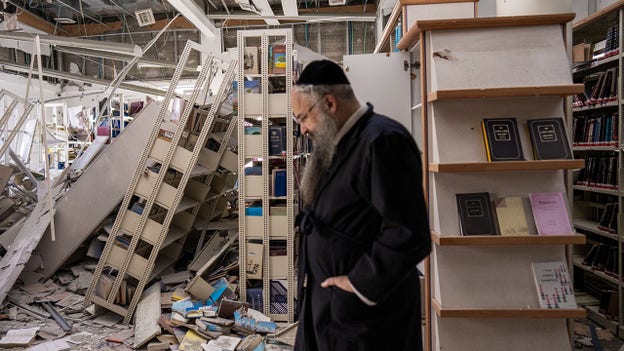
Israel will partially reopen school on Sunday pursuant to military assessment, according to reports.
Israeli Prime Minister Benjamin Netanyahu has approved an Education Ministry plan to open the schools, The Times of Israel reported.
The move comes amid the war with Iran that has left the country’s 2.5 million children stuck at home for five weeks since the outbreak of hostilities, the newspaper reported.
In most of the country, which is still at risk of rocket and missile attacks, studies will be held in bomb shelters.
Netanyahu also rejected a proposal to designate the wartime period as vacation time for teachers and to have them work instead during the summer break.
Mahshahr petrochemical zone evacuated as Trump’s deadline for strikes on Iran looms
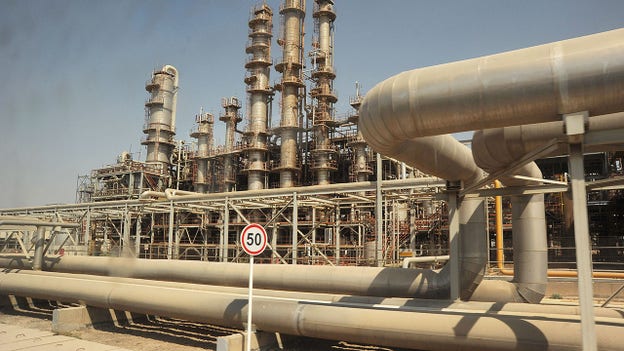
The Mahshahr Petrochemical Special Economic Zone in southwest Iran has been evacuated amid threats by President Donald Trump to bomb Iranian energy infrastructure, including power plants and bridges.
The zone’s public relations office said all personnel was ordered to evacuate by the region’s emergency command committee, Iran International reported.
Trump's threats came amid Tehran's reluctance to reopen the Strait of Hormuz. He set a Tuesday night deadline before warning of dire consequences.
Israel hunts Iranian ballistic missile teams following assassination of Khamenei: report
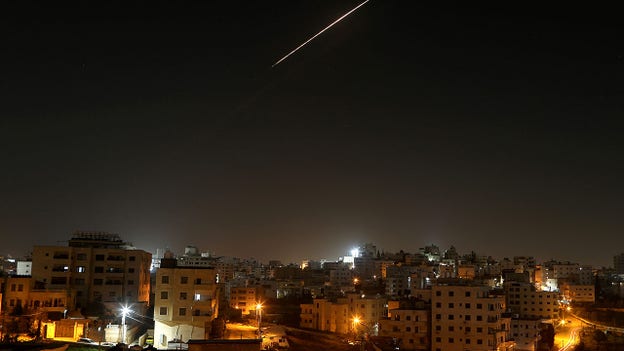
After killing Iran's Ayatollah Ali Khamenei, Israel is now hunting Tehran's ballistic missile teams.
For almost every day of the war with Iran, Israeli warplanes have been hunting and striking ballistic missile teams and targets, the Jerusalem Post reported.
"The air force is hovering above Iran all the time," IDF Hatzerim Air Force Base Chief Brig. Gen. 'R' told the Post.
At times, Iran has managed to fire off a small number of missiles, but other times either the Israeli air force destroys a missile team or it prevents the team from getting off its missiles while the team is distracted by trying to avoid being struck, the newspaper reported.
"When even one ballistic missile hits, we have seen what it does," the military chief said. "The harm to the home front needs to be kept within proportions. We also have incredible air defense systems."
US stocks rise as Trump’s Tuesday deadline for Iran to reopen Strait of Hormuz looms

U.S. stocks saw an uptick Monday, ahead of a deadline that President Donald Trump has set to bomb Iranian power plants.
The S&P 500 rose 0.4%, coming off its first winning week in the last six. The Dow Jones Industrial Average added 165 points, or 0.4%, and the Nasdaq composite climbed 0.5%.
Oil prices also rose amid uncertainty about what will happen in the U.S. war.
On Monday, Tehran rejected a ceasefire proposal and instead said it wants a permanent end to the war.
President Trump has given Iran a deadline of Tuesday 8 p.m. Eastern time to reopen to Strait of Hormuz.
“The entire country can be taken out in one night, and that night might be tomorrow night,” Trump said.
The Associated Press contributed to this report.
Russia provided Iran with list of Israeli energy targets: report
Russia has provided Iran with a list of 55 critical energy infrastructure targets within Israel, The Jerusalem Post reported.
The list, which the newspaper obtained from a source close to Ukrainian intelligence, targeted sites based on three categories according to their strategic importance: Critical production facilities, urban and industrial energy hubs and local infrastructure.
Russia reportedly told Tehran that damaging even a few central components could trigger prolonged energy collapse, which could result in mass blackouts and technical failures, the report said.
Huckabee meets with Netanyahu to praise IDF and Mossad assistance in ‘historic’ rescue mission
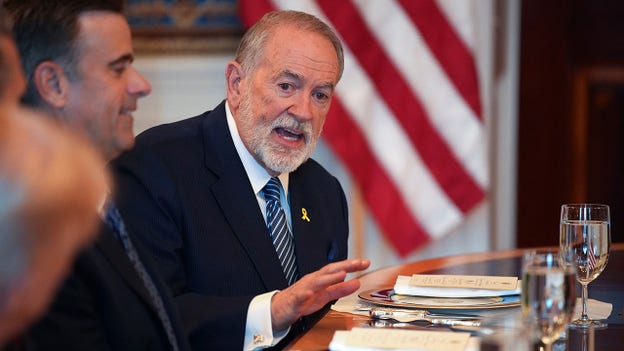
Mike Huckabee, the U.S. ambassador to Israel said he met with Israel Prime Minister Benjamin Netanyahu.
Huckabee thanked Israel and its intelligence agencies for their assistance in helping U.S. forces rescue two airmen who were shot down over Iran.
"Just met w/ @IsraeliPM to thank @Israel on behalf of American ppl for unprecedented assistance to US Military & Intel agencies who conducted a historic rescue mission of our air crew in Iran," Huckabee wrote on X. "US SF carried out brilliant op. @IDF & Mossad were helpful partners in the mission."
Iran says 4 army officers killed by US forces during pilot rescue mission
Iran said it lost four army officers who were killed while engaging U.S. forces who were trying to rescue a downed American Air Force pilot.
"In the early hours of Sunday, these army officers engaged in direct combat with enemy fighter jets, helicopters, armed drones, and support aircraft in the Mahyar area of Isfahan, opening fire at the aerial targets. After a shoulder-fired missile struck one of the attacking aircraft, they were targeted by other enemy aircraft and killed," its army said in a statement.
The officers were identified as Brigadier General Masoud Zare, Colonel Moein Heidari, Colonel Seyyed Saeid Mousavi, and Lieutenant Milad Salarvand, London-based Iran International reported.
Soleimani’s niece and her daughter held by ICE following revocation of US residency
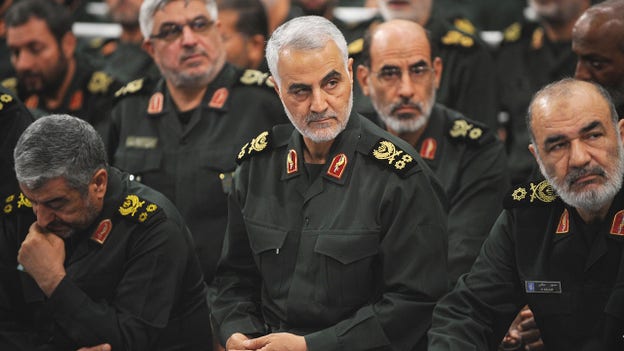
Two relatives of slain Iranian Revolutionary Guard Corps Maj. Gen. Qasem Soleimani are being held in a federal facility in Texas following their arrest.
Hamideh Soleimani Afshar, identified as Soleimani’s niece, and her daughter were arrested in Los Angeles and are now being held by U.S. Immigration and Customs Enforcement (ICE) at a facility in Pearsall, Texas.
Both were taken into custody after Secretary of State Marco Rubio revoked their green cards.
While living in the U.S., Afshar "promoted Iranian regime propaganda, celebrated attacks against American soldiers and military facilities in the Middle East, praised the new Iranian Supreme Leader, denounced America as the 'Great Satan,' and voiced her unflinching support for the Islamic Revolutionary Guard Corps, a designated terrorist organization," the State Department said.
"[Afshar] pushed this propaganda for Iran’s terrorist regime while enjoying a lavish lifestyle in Los Angeles, as attested to by her frequent posting on her recently deleted Instagram account," the department said.
CENTCOM debunks Iranian reports of attack on Navy amphibious assault ship
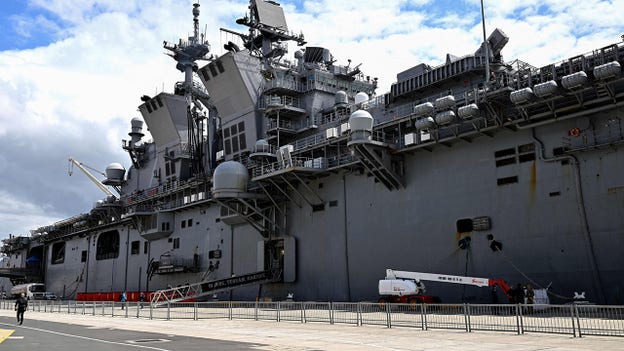
Claims from Iran that it attacked and struck a U.S. Navy amphibious assault ship with missiles are false, authorities said.
The Iran's Islamic Revolutionary Guard Corps said it struck the USS Tripoli, forcing it to withdraw from the region to the southern Indian Ocean, U.S. Central Command (CENTCOM) said.
"FACT: USS Tripoli has not been attacked and continues to sail in the Arabian Sea in support of Operation Epic Fury," a CENTCOM post on X states.
"The America-class amphibious assault ship serves as the flagship for the Tripoli Amphibious Ready Group / 31st Marine Expeditionary Unit composed of about 3,500 Sailors and Marines in addition to transport and strike fighter aircraft, as well as amphibious assault and tactical assets."
Trump slams NATO as a ‘paper tiger’ and rebukes Pacific allies for lack of support against Iran

President Donald Trump called out NATO, and several countries for not assisting U.S. forces in the war with Iran.
In a sharp rebuke of NATO, Trump called the intergovernmental military alliance of 32 member states, a "paper tiger."
He further criticized, Australia, Japan and South Korea.
"We've got 50,000 soldiers in Japan to protect them from North Korea," Trump said. "We have 45,000 soldiers in South Korea to protect us from Kim Jong Un."
"Japan didn't help us or Australia didn't help us," he added. "South Korea didn't help us. And then you get to NATO. NATO didn't help us. There were some countries that did."
He cited help from Bahrain, Saudi Arabia, Qatar and the United Arab Emirates.
God is supporting the United States in its war with Iran, President Donald Trump said.
"God is good," Trump said. "Because God is good, and God wants to see people taking care of, God doesn't like what's happening."
""I don't like what's happening," he added. "Everyone says I enjoy it," Trump said. "I don't enjoy this...I don't like seeing people killed."
Trump details high-risk US mission to save a wounded airman shot down in Iran
Nearly a dozens U.S. military aircraft flew into Iran under enemy fire to rescue two downed military personnel after their fighter jet was shot down.
"This first wave of search and rescue forces successfully located the pilot of the F-15, and he was extracted from enemy territory by an HH 60 Jolly Green II helicopter, fabulous machine, as our warriors faced gunfire at very close range," Trump said. "It's amazing that when you look at the machinery, what happened that nobody was even injured. Meanwhile, the second crew member, weapon system officer, a highly respected colonel, had landed a significant distance away from the pilot."
In total, the U.S. sent in more than 150 aircraft, Trump said, which took on "very, very heavy enemy fire" during the rescue operation. Several different teams: Navy SEALs, Air Force Special Operations, Army Special Operations Aviation, search and rescue and combat medics, also took part.
"This was an incredibly dangerous mission, an incredibly dangerous undertaking," Gen. Dan Caine, chairman of the joint chiefs of staff, said Monday at the White House press briefing.
"When you're going at those speeds, even if you go out 2 or 3 seconds later, it's miles," said Trump. "It's miles and miles away because you're going fast. He was injured quite badly and stranded in an area teeming with terrorists from the Islamic Revolutionary Guard Corps rough group, as well as beseiged military militia and local authorities."
"Many, on top of everything else they told the communities actually within sight of Iran, the people of Iran, they were given a tremendous incentive to find this pilot," he added. "Despite the peril, the officer followed his training and climbed into the treacherous mountain terrain and started climbing toward a higher altitude, something they were trained to do in order to evade capture."
One of the two crew members was flown to Landstuhl regional medical center in Germany, typically the first stop for U.S. soldiers wounded in combat zones, and the other is being flown there Monday, a senior U.S. defense official told Fox News.
As the rescue unfolded Easter Sunday, the pilot radioed a brief message to help U.S. forces identify him: "God is good," officials said.
This post contains an excerpt from an article by Morgan Phillips and Jennifer Griffin.
Trump suggest charging tolls for passage through Strait of Hormuz
President Donald Trump on Monday suggested the United States could charge tolls for passage through the Strait of Hormuz.
Speaking with reporters, Trump was asked about Iran possibly charging tolls for ships to pass through the waterway.
"What about us charging tolls? he asked in response.
"I'd rather do that then let them have them, right?" he added. "Why shouldn't we? We're the winner. We won, okay. They are militarily defeated. The only thing they have is the psychology of, oh, 'we're going to drop a couple of mines in the water.'"
Trump claims Soleimani planned to attack five military bases before 2020 strike
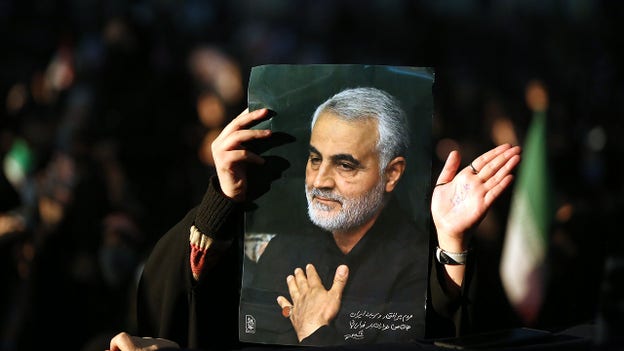
Slain Islamic Revolutionary Guard Corps Major General Qasem Soleimani was planning to target at least five military bases before he was killed in a 2020 airstrike, President Donald Trump said Monday.
"I heard he was going to knock out five of our military bases," Trump told reporters. "And had he lived, I believe we would we would be fighting a different Iran right now."
Soleimani was killed in a U.S. airstrike in Baghdad, which escalated tensions between the U.S. and Iran, as well as in the Middle East.
'Please keep bombing': Trump says Iranians wanting freedom from regime urge continued strikes
President Donald Trump claimed Iranians seeking freedom from the nation's regime are urging him to "please keep bombing" on Monday.
Trump made the comment during a press conference at the White House where he touted the successful rescue of two U.S. airmen who were shot down over Iran this weekend.
Trump said earlier on Monday that Iran's regime would be overthrown in "two days" if the Iranian people were armed. Officials in Tehran have threatened to kill anyone who demonstrates against he regime, Trump said.
Monday marks highest volume of strikes against Iran since war began, Hegseth says
War Secretary Pete Hegseth says the U.S. is continuing to ramp up attacks on Iran at President Donald Trump's order on Monday.
Hegseth said the U.S. has already carried out over 10,000 strike missions against Iran since the war began. He says Monday will be the largest volume of attacks yet, however.
"By the way, per the president's direction, today will be the largest volume of strikes since day one of this operation. Tomorrow, even more than today. And then Iran has a choice. Choose wisely, because this president does not play around. You can ask Soleimani, you can ask Maduro. You can ask Khamenei," Hegseth said.
Trump touts airman rescue mission, boasts Iran could be 'taken out in 1 night'
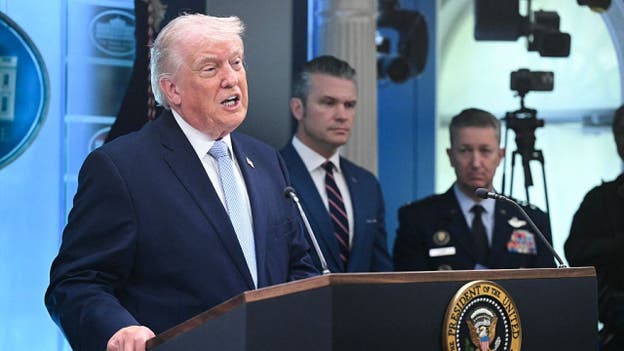
President Donald Trump says the U.S. outmaneuvered and misdirected a "vast military operation" by Iran aiming to capture a missing U.S. airman this weekend.
Trump said more than 150 U.S. aircraft were involved in the rescue operation, with many of those serving merely as distractions to divert Iran's attention.
The president made the comments during a press conference at the White House on Monday afternoon, adding that he is confident Iran could be "taken out in one night."
"The entire country can be taken out in one night, and that night might be tomorrow night," Trump said.
The U.S. is currently engaged in talks with Iran through Pakistani mediators as the final hours of Trump's 48-hour window to make a deal tick down.
Trump vowed on Sunday that the U.S. would begin targeting Iran's power plants and bridges if the Strait of Hormuz is not opened before Tuesday.
Rescued airman broadcasted 'God is good' on encrypted radio after ejecting from aircraft
The missing crew member who was rescued from Iran on Sunday broadcasted "God is good" on encrypted radio after ejecting from his aircraft, a senior U.S. defense official told Fox News Digital.
The weapons systems officer hiked and climbed more than 7,000 feet in the hours before he was rescued, despite sustaining minor injuries to his legs during the ejection. The officer made his way to a ridgeline and hid in a crevice where he was eventually rescued.
The officer, who has yet to be identified, remains in good condition and is scheduled to be transported to an American base in Landstuhl, Germany on Monday.
Fox News' Jennifer Griffin contributed to this report.
Jamie Dimon warns Iran war could drive inflation, interest rates higher
JPMorgan Chase CEO Jamie Dimon warned in his annual letter to shareholders that the war in Iran could lead to more stubborn inflation as well as higher interest rates than what the market is currently anticipating.
Dimon's letter was released Monday in conjunction with JPMorgan's annual report for 2025 and said that the Iran war may cause energy shocks along with disruptions to global supply chains that could cause inflation to remain higher than expected.
Inflation that persists above the Federal Reserve's 2% and rises further from its already elevated level could also prompt the central bank to raise interest rates to slow the pace of price growth.
"Now, because of the war in Iran, we additionally face the potential for significant ongoing oil and commodity price shocks, along with the reshaping of global supply chains, which may lead to stickier inflation and ultimately higher interest rates than markets currently expect," Dimon wrote.
Dimon said that the foremost risks facing financial markets and the economy are geopolitical in nature, including the Iran war and Russia's war in Ukraine, as both conflicts have an "impact on countries and economies across the globe that are not directly involved in war."
"Nations that are heavily dependent upon imported energy are already seeing the effects. And it's not just energy, it's commodity products that are byproducts of oil and gas, like fertilizer and helium. And given our complex global supply chains, countries are experiencing disruptions in shipbuilding, food and farming, among others," Dimon wrote.
"The outcome of current geopolitical events may very well be the defining factor in how the future global economic order unfolds – then again, it may not," he added.
Fox News' Eric Revell contributed to this report.
Trump reveals Iran made 'significant proposal' after ultimatum, but 'not good enough'
President Donald Trump said Iran negotiators made "a significant proposal, a significant step," following the ultimatum he issued on Easter Sunday, but it is not "good enough."
"They made a proposal, and it's a significant proposal, a significant step," Trump told reporters at the Easter Egg Roll on Monday, a White House tradition that comes amid the backdrop of war.
"It's not good enough, but it's a very significant step," Trump continued. "They are negotiating now. And they have made a very significant step. We'll see what happens."
This is an excerpt from an article by Fox News' Eric Mack.
US 'obliterated' an IRGC headquarters with bunker buster bombs during airman rescue: sources
CENTCOM Commander Admiral Brad Cooper directed a strike on an IRGC headquarters in an underground facility near Tehran on Sunday, top level sources told Fox News.
U.S. forces carried out the strike with B2 bombers, using the same bunker buster weapons used in Operation Midnight Hammer.
The sources say the headquarters was "obliterated."
The strike came at the same time the U.S. was conducting extensive and ultimately successful rescue operations to recover a missing crewmember from a downed F-15E over Iran.
Fox News' Trey Yingst contributed to this report.
Trump says Iranian people would overthrow regime in 'two days' if they had weapons
President Donald Trump claimed Monday that the Iranian people would overthrow their government in "two days" if they had weapons.
Trump made the statement while speaking to the press at the White House, adding that the U.S. sent weapons to Iran earlier in the conflict.
Trump said his administration sent weapons to the Kurds and asked them to arm the Iranian people, but he said the Kurds kept the weapons.
As it stands, Trump said Iranians critical of the country's regime are too afraid to protest.
"They've been told, point blank, if you come out you'll be killed," Trump said.
Trump calls rescue of downed Air Force pilot an 'Easter Miracle'
President Donald Trump hailed the rescue of a missing U.S. airman from a downed F-15E in Iran as an "Easter Miracle," after U.S. forces recovered the second crew member following a high-risk mission behind enemy lines.
"The rescue was an Easter Miracle. The enemy was large and violent. The rescuers were brilliant, strong, decisive, and as cool as anyone can be," Trump told NBC host Kristen Welker. "Such a rescue has never happened before in so violent an enemy territory. It is usually not done because it is considered not doable."
The rescue followed the downing of the F-15, which triggered a multi-day search operation inside Iran. U.S. forces had already recovered the first crew member before locating the second, who had been missing in mountainous terrain as large numbers of Iranian forces searched the area.
The rescue followed the downing of the F-15, which triggered a multi-day search operation inside Iran. U.S. forces had already recovered the first crew member before locating the second, who had been missing in mountainous terrain as large numbers of Iranian forces searched the area.
This is an excerpt from an article by Fox News' CJ Womack.
Where gas prices are rising fastest as Trump issues fresh warning to Iran
Gas prices are continuing to climb as the ongoing conflict with Iran drives up crude oil costs, pushing prices higher at the pump nationwide.
The national average now stands at $4.11 per gallon, up about 86 cents from a month ago, according to AAA. Costs are climbing across nearly every region, with some states already well above the U.S. average.
On the West Coast, drivers are seeing the highest costs, with prices reaching $5.92 per gallon in California and $5.37 in Washington. Meanwhile, on the East Coast, gas prices have surpassed $4 in several areas, including $4.27 in Washington, D.C., and $4.06 in New York.
In the Midwest, Illinois stands out at $4.29 per gallon, while much of the region remains in the mid-$3 range. Southern states remain comparatively cheaper, though prices are rising there as well. Texas and South Carolina are both averaging about $3.82, while Florida is higher at $4.20.
Diesel has climbed to $5.61, up about $1.45 over the past month. As a key fuel for freight, shipping, and public transportation, it is particularly sensitive to refining capacity constraints and global supply disruptions.
In San Francisco, prices have surged even higher. For the first time on record, average diesel costs have surpassed $8 per gallon, according to new data from GasBuddy — marking an unprecedented milestone for any U.S. city.
The climbing fuel costs come as President Donald Trump issued a profanity-laced warning to Iran, giving the regime until Tuesday to allow vessels through the key waterway — or face strikes on its critical infrastructure.
This is an excerpt from an article by Fox Business' Amanda Macias.
Ex-CIA station chief reveals how agency exploited Iranian com channels during airman rescue
Former CIA station chief Dan Hoffman said on "The Sunday Briefing" that a reported agency deception campaign may have helped draw Iranian forces away from a missing U.S. airman, offering new insight into the mission that culminated in a daring rescue behind enemy lines.
It was reported that the CIA attempted to deceive the Iranians into believing the U.S. was gearing up for a maritime rescue, Hoffman said, when in reality, the airman was exfiltrated from the mountains.
The CIA also assisted in tracking both the missing airman and enemy forces, he said.
"The CIA was there to track [the airman's] location... And then at the same time, the CIA is tracking Iranian security forces, their movements, their efforts to find and fix the location of our airman. And then, at the same time, running this deception operation, an extraordinary operation."
"I've heard it referred to as looking for a needle in a haystack. I think it's more like a needle in a stack of needles. Extraordinarily difficult," said Hoffman.
His comments follow the rescue early Sunday morning of a U.S. Air Force Weapons System Officer (WSO) who had ejected from his F-15E fighter jet over Iran. The WSO spent roughly 36 hours in hiding. Hoffman said he would need to rely on the skills he learned at the military's Survival, Evasion, Resistance and Escape (SERE) school.
IDF confirms IRGC intel chief killed; Quds Force commander also eliminated in strike
Israel announced that Iran’s Islamic Revolutionary Guard Corps' intelligence chief Brig. Gen. Majid Khademi was killed in a precision strike, with an Israeli official noting that Quds Force’s special operations commander Asghar Bagheri was eliminated at the same time.
In a statement posted on X, the Israel Defense Forces (IDF) confirmed Khademi's killing, accusing him of helping advance terrorist attacks abroad and overseeing surveillance of Iranian civilians as part of the regime’s crackdown on domestic protests.
"Khademi wasn’t just any figure, he was effectively No. 2 within the IRGC, one of the few senior commanders who managed to survive multiple waves of Israeli and American targeting over the past year — until now," a senior Israeli official told Fox News. "He kept moving, relocating, but ultimately he was hunted down and eliminated.
"He oversaw an intelligence apparatus that repeatedly failed to detect or prevent major Israeli and U.S. operations, including a series of strategic surprises that exposed deep vulnerabilities inside Iran’s security system."
Notably, Khademi was "deeply involved in attempts to penetrate U.S. systems, including efforts to breach the Pentagon," and "coordinated extensively with Russia," according to the official.
"His removal marks a significant blow to Iran’s intelligence leadership at a time when the regime is already under sustained pressure," the official added.
Bagheri was also killed at the same time as the strike that took out Khademi, the official noted, but the IDF has yet to officially confirm his killing.
"Bagheri was directly involved in recruiting agents across the Middle East and orchestrating attacks against American targets in Iraq and Syria — including operations that led to U.S. casualties," the senior official told Fox News.
Khademi spent decades in intelligence and counter-espionage roles while rising through Iran’s security apparatus.
Before his appointment, Khademi headed the Guard's Intelligence Protection Organization, charged with internal surveillance and counter-intelligence, and held senior roles in Iran’s defense ministry.
This is an excerpt from an article by Fox News' Eric Mack.
Inside Iran’s ruling ideology: How a ‘holy mission’ and messianic doctrine fuel regime extremism
For Mehdi Ghadimi, the ideology behind Iran’s ruling system is not theoretical. It was something he was taught from childhood.
"You were told you are a part a small group chosen by God… to revive God’s religion and fight to defend it," the Iranian journalist told Fox News Digital, describing the message repeated in schools, mosques and state media.
That early indoctrination, he said, framed the world in stark terms: a divine struggle between good and evil, with Iran’s leadership positioned at the center of a religious mission.
Iran’s ruling system is often described in political terms, but critics and former insiders say its core is far more radical — a belief structure rooted in religious absolutism, messianic expectation and a worldview that leaves little room for compromise.
As a new generation of commanders rises within the Islamic Revolutionary Guard Corps following recent military blows under Operation Epic Fury, analysts warn that this ideology may become even more entrenched.
Figures such as Mohammad Bagher Ghalibaf and Ahmad Vahidi are often cited as part of a cohort shaped by years of conflict in Iraq and across the region — one that sees religion, security and survival as inseparable.
This is an excerpt from an article by Fox News' Efrat Lachter.
Dem Senator claims attacks on Iranian infrastructure would be 'war crimes,' urges military to refuse
Sen. Jeff Merkley, D-Ore., argued that President Donald Trump's threats to attack Iranian's energy infrastructure would constitute a "war crime" this weekend.
Trump on Sunday vowed to strike Iran's transportation infrastructure and power plants if the regime does not reopen the Strait of Hormuz. Merkley argued in a post on X that such attacks would be war crimes, and he went on to say military leaders should "refuse" such orders.
"President Trump's profanity-laden Easter threat to attack Iran's civilian infrastructure—power plants and bridges—are the words of a frustrated and immoral madman. Many experts agree that such attacks would be war crimes under international law," Merkley wrote.
"To our military leaders, remember this: You are legally required to refuse orders to commit war crimes," he added.
Trump to deliver update on the Iran war from the White House
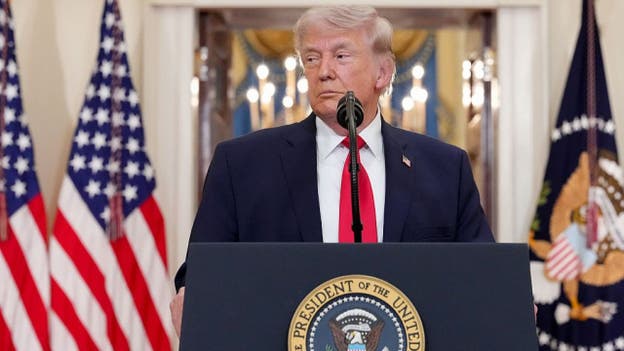
President Donald Trump is scheduled to deliver an update on the war against Iran from the White House on Monday.
Trump says he will hold a press conference along with members of the military at 1 p.m. ET.
The conference lands around the time Trump's 48-hour window for Iran to reopen the Strait of Hormuz is set to close. He has vowed to target Iran's power plants and transportation infrastructure on Tuesday if Iran does not strike a deal.
Nevertheless, Vice President JD Vance and other Trump administration officials have spent the weekend in talks with the Iranian regime, with Pakistan acting as mediator. It is unclear whether a deal can be made before the deadline arrives.
Iran war nears ‘completion’ as Trump eyes deadline — what the endgame could look like
President Donald Trump says the war with Iran is "nearing completion," but a looming deadline could determine whether the conflict is actually ending — or about to escalate.
"We are going to finish the job, and we’re going to finish it very fast. We’re getting very close," Trump said Wednesday night, adding that U.S. forces will "hit them extremely hard over the next two to three weeks" and "bring them back to the Stone Ages, where they belong."
As the war enters what analysts describe as its final phase, the administration is signaling a shift from broad military gains to a narrower endgame — raising questions about what "finishing the job" actually means militarily and politically.
Trump gave Iran until Tuesday to reopen the Strait of Hormuz, warning that failure to comply could trigger sweeping strikes on the country’s energy infrastructure.
"If no deal is made … we are going to hit each and every one of their electric-generating plants, very hard and probably simultaneously," he said.
"With a little more time, we can easily OPEN THE HORMUZ STRAIT, TAKE THE OIL, & MAKE A FORTUNE. IT WOULD BE A ‘GUSHER’ FOR THE WORLD???" he said on Truth Social Friday.
The U.S. has already begun expanding its target set to include major infrastructure. This week, American strikes hit one of Iran’s largest bridges — a critical transportation artery — signaling that mixed-use infrastructure supporting military logistics is now firmly on the table.
"The biggest bridge in Iran comes tumbling down, never to be used again — Much more to follow!" Trump wrote on Truth Social. "IT IS TIME FOR IRAN TO MAKE A DEAL BEFORE IT IS TOO LATE."
That raises a central question heading into the final weeks: what, exactly, would "finishing the job" look like?
Military analysts say it is unlikely to be a single decisive strike. Instead, the endgame may unfold as a series of escalating options — from intensified attacks on Iran’s remaining missile and drone network, to broader strikes on infrastructure designed to force the regime into a deal, or a longer-term strategy of containing Iran’s capabilities from above.
"We will continue to see very aggressive attrition of offensive and defensive targets, as well as infrastructure targets," said RP Newman, a retired Marine ground combat veteran and counterterrorism consultant.
This is an excerpt from an article by Fox News' Morgan Phillips.
Israeli rescuers pull 4 bodies from rubble after Iranian airstrike hits Haifa, IDF says
Israeli Defense Forces released images of an Iranian airstrike in Haifa that killed four people on Monday.
The IDF says rescue workers recovered the bodies of four people trapped in the rubble after an Iranian missile struck a residential building on Sunday.
"After many hours of intensive efforts and operations by the National Rescue Unit (NRU), alongside forces from the Haifa District and the Home Front Command’s Search and Rescue Brigade, and in cooperation with emergency organizations and firefighters, four individuals who had been trapped under the rubble were recovered from the scene deceased," the IDF said in a statement.
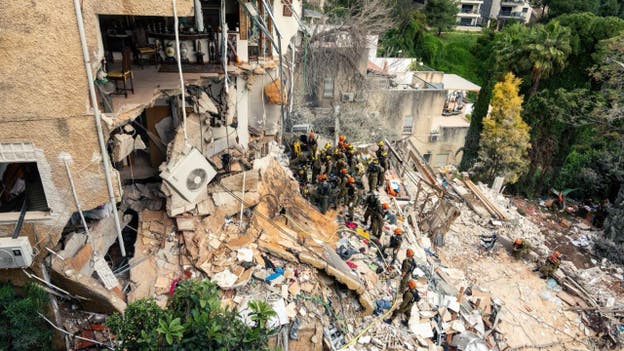
"Rescue forces, including rescuers, population officers, rescue physicians, and rescue intelligence officers - employed advanced rescue equipment and various technological means at the scene in order to locate the trapped individuals as quickly as possible," the statement continued.
Ceasefire proposal could reopen key oil route amid U.S.-Iran tensions
A Pakistan-brokered plan to halt hostilities between the U.S. and Iran could take effect as soon as Monday, according to a source familiar with the talks.
Pakistan’s army chief, Field Marshal Asim Munir, has been in contact “all night long” with Vice President JD Vance, envoy Steve Witkoff and Iranian Foreign Minister Abbas Araqchi, the source told Reuters.
The proposal calls for an immediate ceasefire—reopening the Strait of Hormuz—followed by 15 to 20 days of negotiations on a broader agreement. The framework, dubbed the “Islamabad Accord,” would include final talks in Islamabad.
Iran has not yet agreed to the deal. The push comes as rising tensions threaten global energy markets, with President Donald Trump urging a swift resolution.
Reuters contributed to this report.
Live Coverage begins here