














Walz rips Trump and Vance in Europe, says 'trigger-happy' president has no escape route for Iran war
Minnesota Gov. Tim Walz slams President Donald Trump and Vice President JD Vance in speech at Global Progressive Mobilization conference in Barcelona, Spain. (Credit: Global Progressive Mobilization)
MEXICO CITY: The recent high-profile gathering of leftist leaders in Barcelona, convened by Spain’s socialist Prime Minister Pedro Sánchez, is drawing increasing attention for what analysts describe as a broader geopolitical positioning that could challenge U.S. influence across Latin America and beyond.
The summit brought together Brazil President Lula da Silva, Colombia’s Gustavo Petro and Mexico’s Claudia Sheinbaum. Framed as a platform for addressing inequality, climate change and the rise of right-wing political movements, yet the rhetoric coming from it has raised questions in Washington and across the region about whether a more coordinated political counterweight to the United States is taking shape.
Without naming the Trump administration, Sánchez warned of the "normalization of the use of force" and "attempts to undermine international law", as criticism of U.S. foreign policy. He also pushed for reforms to global institutions, arguing that the current system no longer reflects today’s geopolitical realities, a position that implicitly challenges long-standing U.S. leadership in those bodies.
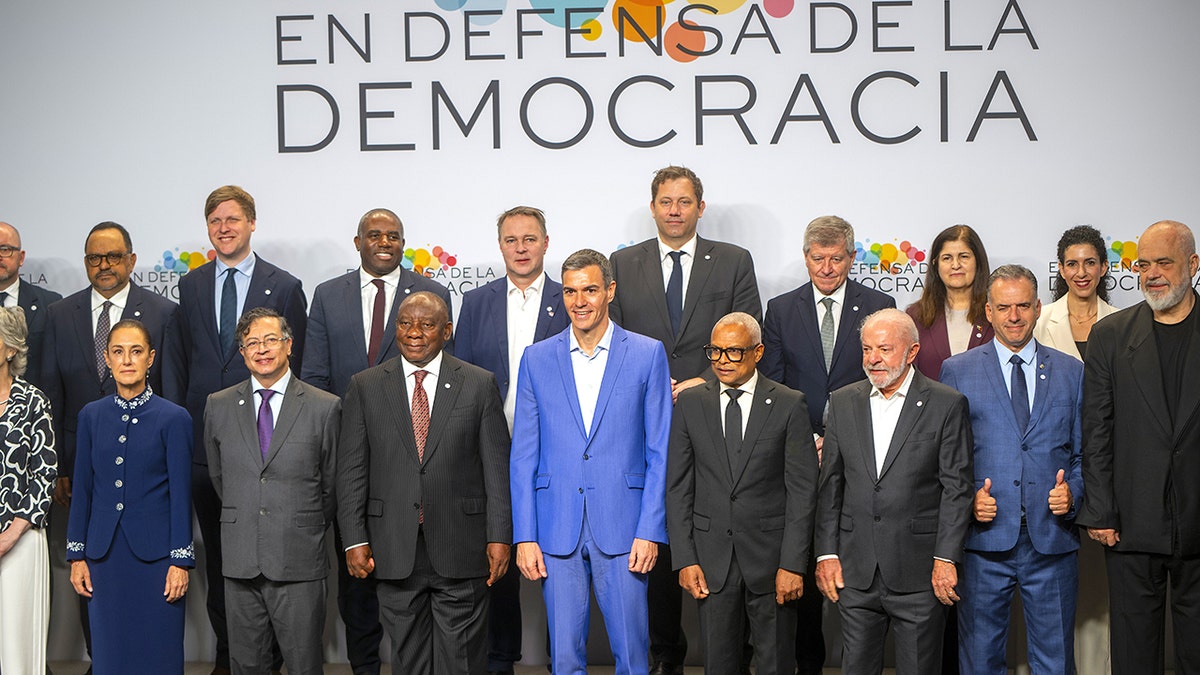
Spanish Prime Minister Pedro Sanchez take part in the 4th Meeting in Defense of Democracy, held at Fira Barcelona Gran Via in LâHospitalet de Llobregat, where he welcomed the attending delegations and underscored the need to strengthen international cooperation in defense of democratic values in Barcelona, Spain on April 18, 2026. The event included the greeting of heads of delegation and the traditional family photo, ahead of the start of the leadersâ meeting. Among those attending were South African President Cyril Ramaphosa; Mexican President Claudia Sheinbaum; Brazilian President Luiz Inacio Lula da Silva; former Chilean President Michelle Bachelet; and Colombian President Gustavo Petro. (Lorena Sopena Lopez/Anadolu via Getty Images)
"The Barcelona summit reflects a deliberate effort by Pedro Sánchez to position himself as a leading figure within an emerging progressive bloc that is increasingly critical of U.S. foreign policy under President Trump," Juan Angel Soto, founder and CEO of Fortius Consulting told Fox News Digital.
"This positioning is particularly complex given Spain’s structural anchoring in both the European Union and NATO, which traditionally align it closely with Washington. However, Sánchez has simultaneously deepened ties with the Global South, evident in his growing proximity to China, as well as to leaders such as Lula, Sheinbaum and Petro, suggesting a dual-track foreign policy that seeks greater autonomy from U.S. influence," Soto said.
The Colombian leader tied global tensions directly to economic and energy systems, arguing that fossil fuel dependence has fueled conflict and inequality, an argument that aligns with broader criticism of Western-led economic models.
Roberto Salinas León, director of International Affairs at Universidad de la Libertad in Mexico City, told Fox News Digital, "The ill-named summit ‘In Defense of Democracy’ held in Barcelona brought together notable ‘progressives’ with an aim to bring together a global contingent opposed to, well, Trump 2.0. How convenient."
TRUMP CRITICIZES SPAIN AMID IRAN, NATO RIFT AS PM SANCHEZ FACES QUESTIONS OVER POLITICAL MOTIVES
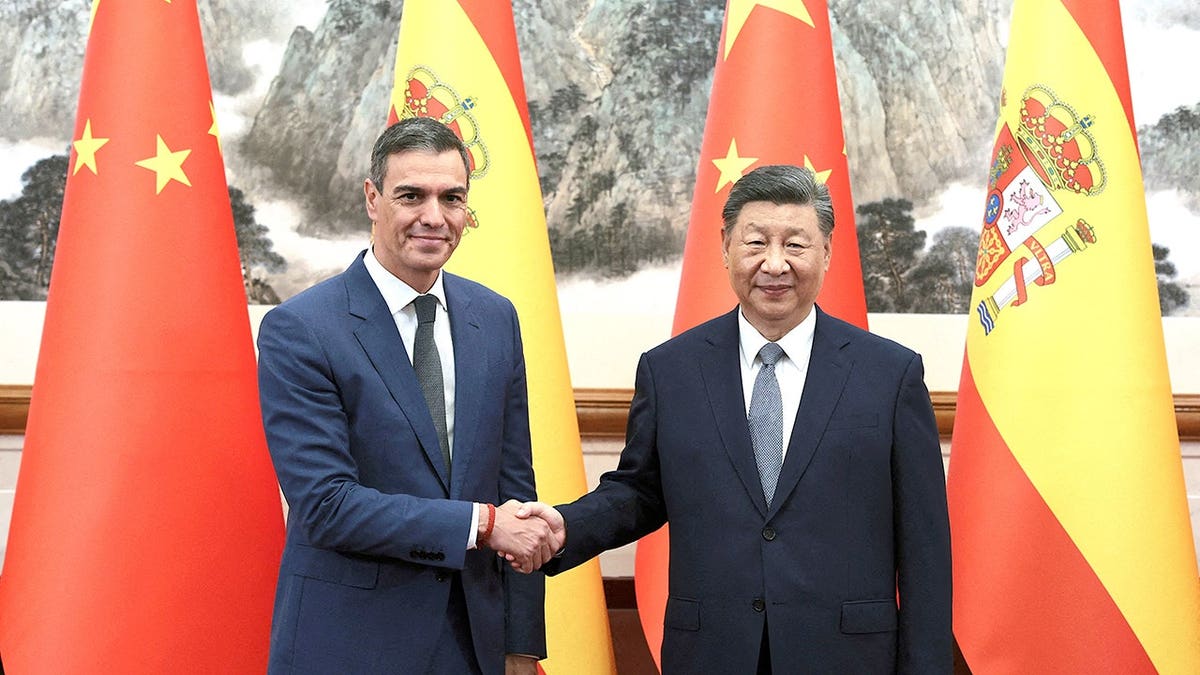
Chinese President Xi Jinping and Spanish Prime Minister Pedro Sanchez shake hands before their meeting in Beijing, China September 9, 2024. (China Daily via Reuters)
"Petro stated that ‘Latin American progressivism is a ray of hope for a humanity in crisis.’ Yet these would-be spokespersons for democracy have supported such inhumane brutal dictatorships like Cuba, Nicaragua, Maduro’s Venezuela, Iran, and others. This gathering is more aptly characterized as a political mascara of electoral autocracies, each leader undermining the institutional checks and balances of open liberal democracies," he said.
Brazil’s Lula criticized what he described as interventionist policies by major powers and called for a rebalancing of global governance, including changes to the U.N. Security Council. At one point, he characterized recent U.S. leadership as contributing to global instability, reinforcing a central theme of the summit: that the current international order needs to be redefined.
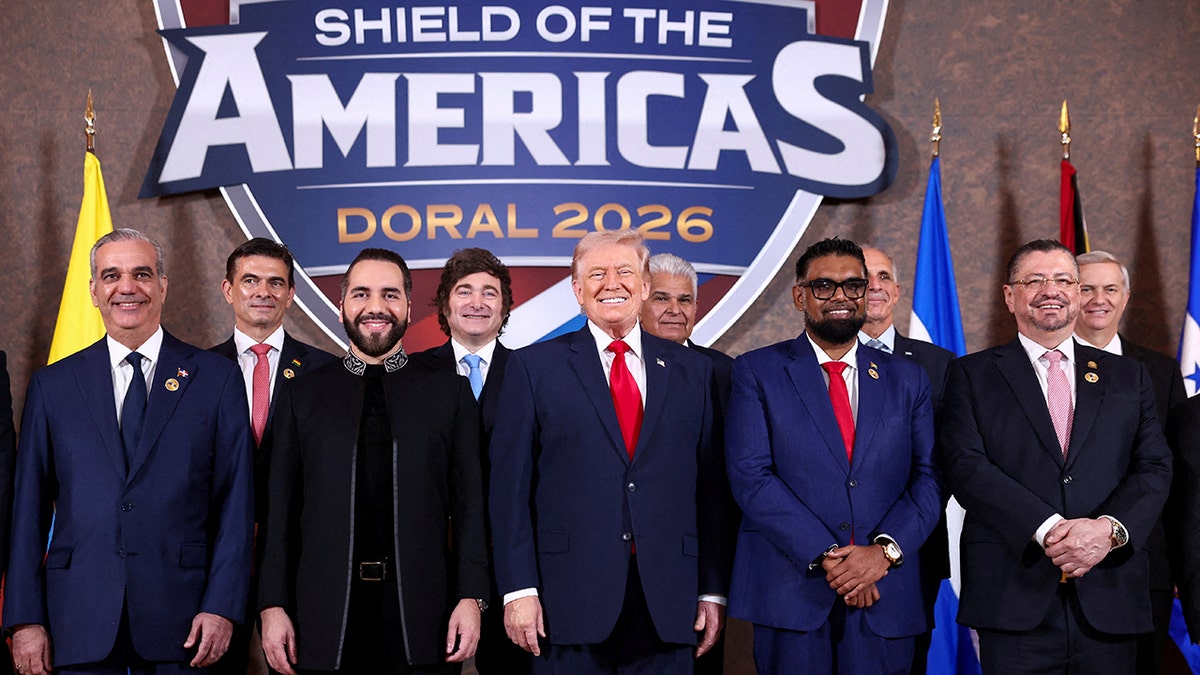
President Donald Trump, center, Dominican Republic President Luis Abinader, second from left, Argentina's President Javier Milei, El Salvador's President Nayib Bukele, Guyana's President Mohamed Irfaan Ali, Costa Rica's President Rodrigo Chaves Robles, Bolivia's President Rodrigo Paz and Chile's President-elect Jose Antonio Kast pose for a family photo during the Shield of the Americas Summit in Doral, Fla., on Saturday, March 7, 2026. (Kevin Lamarque/Reuters)
"The new Cold War is being waged between China and the United States; it is this very rivalry that is at stake in every country participating in the summit. Lula’s concern regarding the resurgence of the right has become patently obvious, particularly when observing Argentina and Chile, where the victories of Milei and Kast have ushered in ‘winds of change.’ We are, quite literally, living through times reminiscent of the fall of the Berlin Wall, specifically, the collapse of ‘21st-century socialism’ across Hispanic America, and this is precisely what has them so worried," Brazilian political analyst Sandra Bronzina told Fox News Digital
"When the global progressive left rails against the United States, talking about sovereignty and peace, or speaking out against war, they are not doing so out of mere altruism or good intentions. Rather, they are driven by a shadowy self-interest: ensuring that China continues to colonize our nations, a process that is, evidently, already well underway."
Mexico’s Sheinbaum underscored the principle of national sovereignty, reiterating Latin America’s longstanding emphasis on non-intervention. She joined other leaders in opposing sanctions on countries such as Cuba, signaling a willingness to coordinate positions that diverge sharply from U.S. policy in the region.
Taken together, analysts say the messaging out of Barcelona suggests the early stages of a loosely aligned bloc, one that is increasingly willing to challenge U.S. positions on global governance, regional policy and economic strategy.
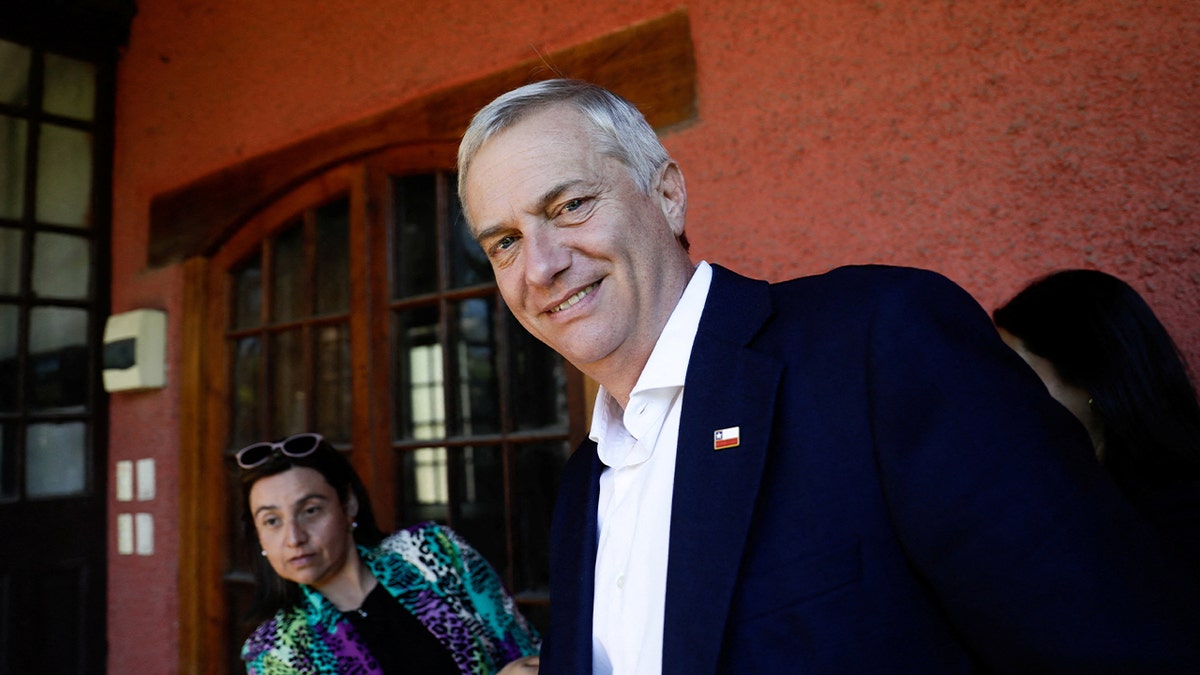
Chile elected right wing leader Jose Kast as president. (Juan Gonzalez/Reuters)
Yet even as leaders in Barcelona warn of a rising right-wing threat, political realities across the Americas tell a different story, one that may resonate more directly with U.S. audiences.
In Argentina, sweeping economic reforms focused on deregulation and fiscal discipline have captured global attention as an alternative to state-led models. In El Salvador, aggressive security policies have dramatically reduced violence. And in Ecuador, a renewed focus on law-and-order and institutional control is emerging as a response to escalating cartel violence.
CLICK HERE TO DOWNLOAD THE FOX NEWS APP
Analysts say these examples highlight a counter to the Barcelona narrative in that a significant portion of the region is moving toward policies centered on security, market reforms and stronger state authority — priorities that often align more closely with U.S. strategic interests.
Experts say the contrast is striking. On one side, a group of leaders in Barcelona is calling for a rethinking of global systems long associated with U.S. leadership. On the other, governments across the hemisphere are experimenting with approaches that emphasize economic liberalization and strong security measures.
