




Laying down the law on birthright citizenship
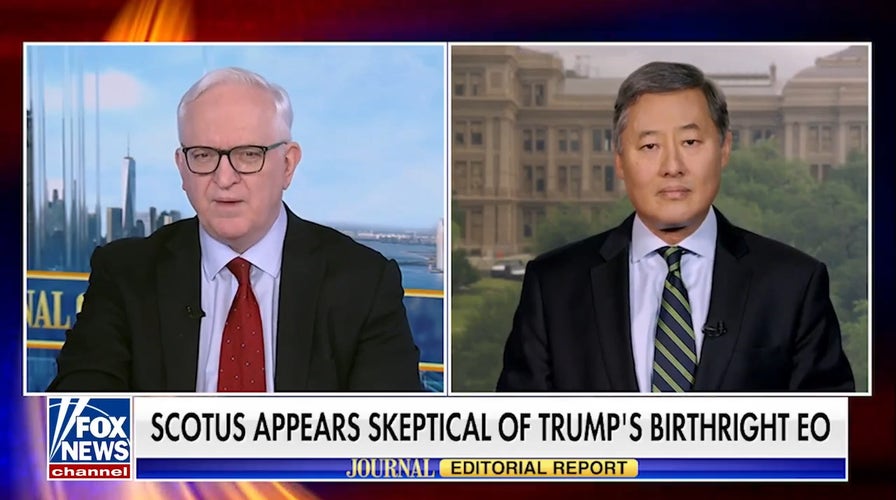
UC Berkeley Law Professor John Yoo weighs in on the Supreme Court's oral arguments regarding Donald Trump's executive order on birthright citizenship. Justices, including Chief Justice Roberts and Justice Barrett, appeared skeptical of the order's constitutionality, referencing an 1898 precedent. Yoo suggests Trump's in-person attendance might not influence the court, potentially leading to another defeat for his administration.
A group of at least seven law professors have mounted a campaign to challenge the longstanding interpretation of birthright citizenship, arguing in favor of President Donald Trump’s effort to narrow the constitutional provision, even as Supreme Court justices signal skepticism.
The legal scholars' arguments aim to persuade the Supreme Court and opponents of Trump's efforts that there are serious originalist and historical arguments for narrowing birthright citizenship under the 14th Amendment that deserve consideration rather than dismissal as a fringe political theory.
Ilan Wurman, a law professor at the University of Minnesota, told Fox News Digital the recent wave of support is intended to reinforce the point that birthright citizenship is not a settled matter despite the institutional consensus on it.
"That several prominent law professors have come out over the past year, including a few in the past month, in varying degrees of support for the Trump Administration's birthright citizenship executive order, shows that their position is serious," Wurman said. "The Supreme Court cannot simply rely on the conventional wisdom. It will have to show its work."
TRUMP ELEVATES IMMIGRATION FIGHT AT SUPREME COURT, TURNING UP HEAT ON DEMOCRATS AHEAD OF MIDTERMS
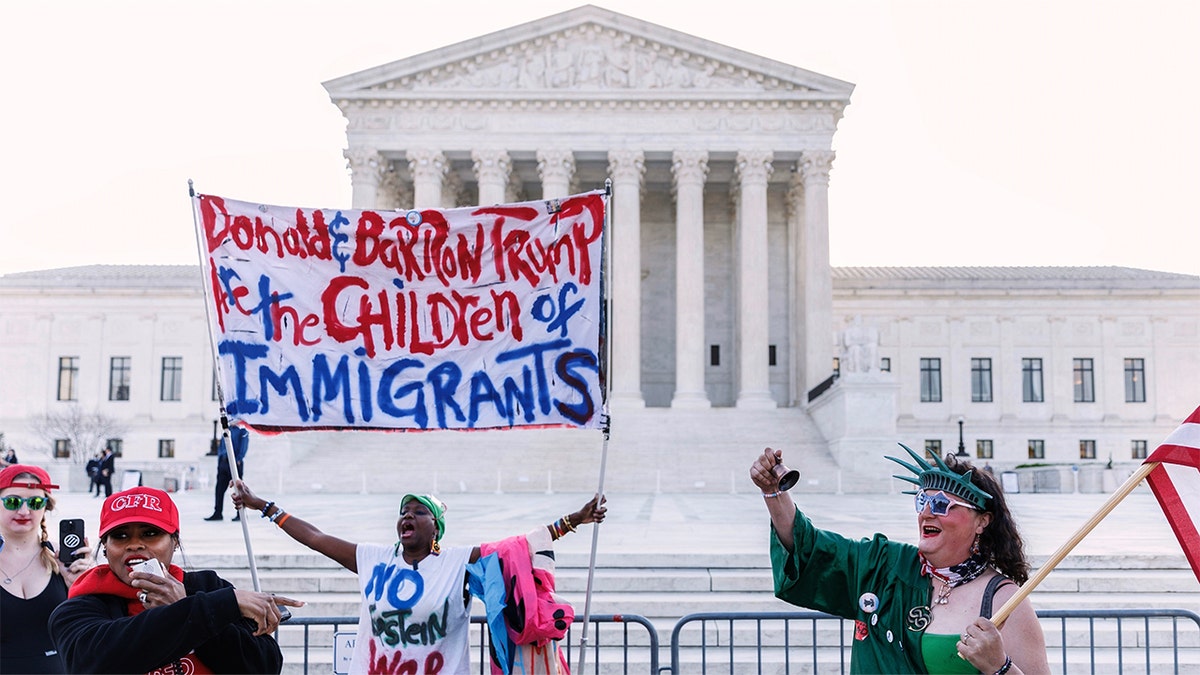
Demonstrators holding opposing views verbally engage ahead of President Donald Trump's arrival at the U.S. Supreme Court, Wednesday, April 1, 2026, in Washington. (Tom Brenner/AP Photo)
Wurman, who specializes in constitutional law, was one of dozens who also weighed in on the case by submitting amicus briefs to the high court ahead of April 1 oral arguments on birthright citizenship, which grants automatic citizenship to most babies born on U.S. soil under the 14th Amendment.
He argued, in part, that the amendment never intended to grant illegal immigrants’ babies citizenship, saying that in the 19th century, parents who were residents of a country owed allegiance to the country in exchange for protections from its government.
"This exchange of allegiance and protection was often described as a ‘mutual compact,’" Wurman wrote. "Lawful aliens generally fell within the scope of the rule, while foreign soldiers and ambassadors did not. … Illegally present aliens would likely have fallen outside the scope of the rule."
The other law professors include Randy Barnett of Georgetown University, Kurt Lash of University of Richmond, Richard Epstein of New York University, Tom Lee of Fordham University, Adrian Vermeule of Harvard University and, most recently, Philip Hamburger of Columbia University, each of whom has argued in varying degrees that Trump’s birthright citizenship order is constitutionally defensible.
SCOTUS SLATED TO WEIGH FUTURE BIRTHRIGHT CITIZENSHIP PROTECTIONS FOR MILLIONS — HERE’S WHAT AT STAKE
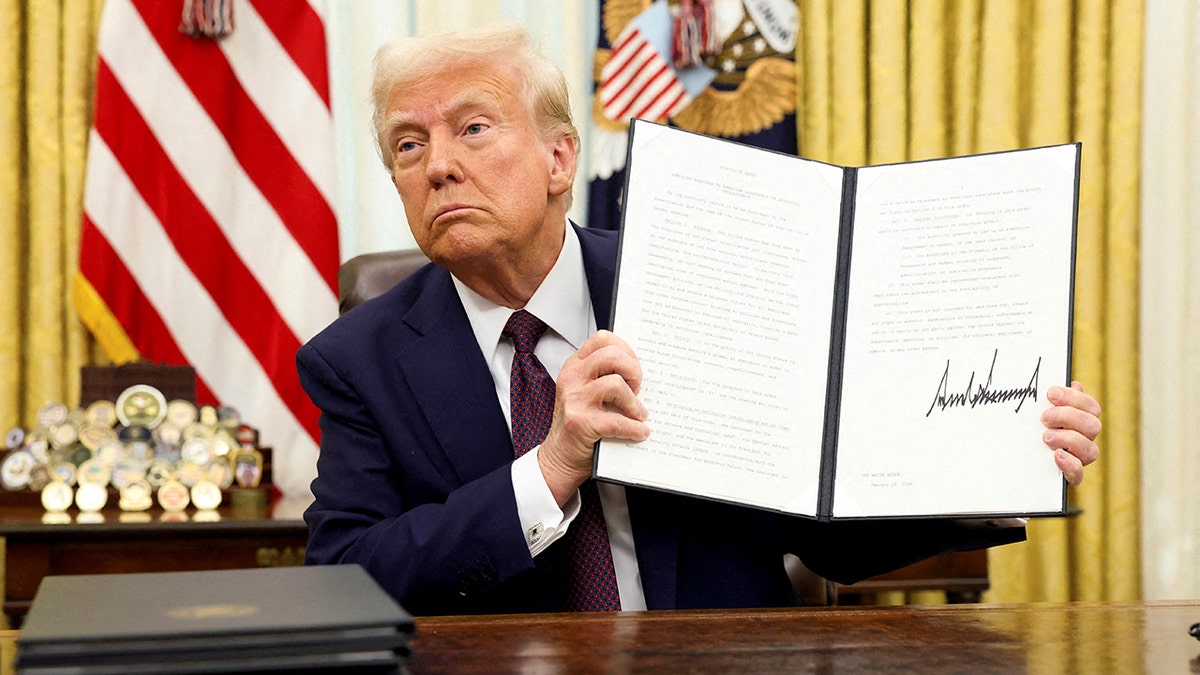
President Donald Trump holds a signed executive order on AI, in the Oval Office of the White House, in Washington, Jan. 23, 2025. Trump said he will attend Wednesday's arguments before the U.S. Supreme Court on a case centered around birthright citizenship. (REUTERS/Kevin Lamarque)
Trump’s order, signed soon after he took office, would prevent children born to mothers who are illegal immigrants or legal temporary visitors from gaining automatic citizenship. While all the justices, aside from Justices Clarence Thomas and Samuel Alito, appear poised to toss out Trump’s order, the case has nevertheless invited polarizing debate. If approved by the high court, it could strip citizenship from those ineligible for it under Trump’s new interpretation and broadly shift immigration policy.
The Trump administration has contended that temporary visitors and illegal immigrants are not "subject to the jurisdiction" of the United States and that that phrasing in the amendment was intended to apply to freed slaves in the Civil War-era. The administration has argued that birth tourism companies have illegally exploited the generous citizenship policy and that it also incentivizes illegal immigration.
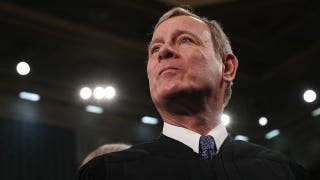
Chief Justice John Roberts challenged Solicitor General John Sauer during oral arguments on the small exceptions built into the 14th Amendment, such as children born to foreign diplomats, saying they were not comparable to a wide category of illegal immigrants.
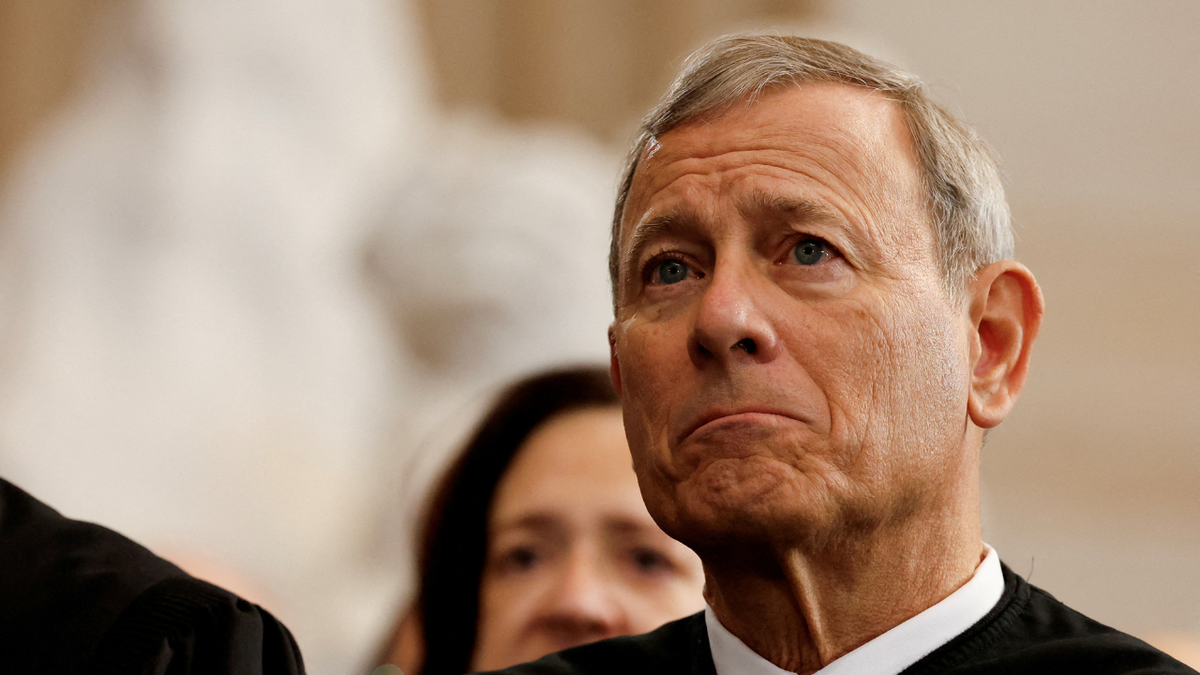
U.S. Supreme Court Chief Justice John Roberts attends inauguration ceremonies in the Rotunda of the U.S. Capitol on January 20, 2025, in Washington, DC. Chip ( Somodevilla/Pool via REUTERS/File Photo)
"The examples you give to support that strike me as very quirky," Roberts said. "You know, children of ambassadors, children of enemies during a hostile invasion, children on warships, and then you expand it to a whole class of illegal aliens. … I’m not quite sure how you can get to that big group from such tiny and sort of idiosyncratic examples."
The American Civil Liberties Union lawyer who argued against the executive order told the Supreme Court the policy was enshrined in the 14th Amendment to "put it out of reach of any government official" and that its exceptions were intentionally narrow.
"It excludes only those cloaked with a fiction of extraterritoriality because they are subject to another sovereign's jurisdiction even when they're in the United States, a closed set of exceptions to an otherwise universal rule," ACLU lawyer Cecillia Wang said.
CLICK HERE TO GET THE FOX NEWS APP
Wurman noted that the professors siding with Trump's executive order have been met with "swift and vicious" reactions. David Bier, immigration expert at the libertarian CATO Institute, said the bloc of dissenters was unserious.
"Oh SEVEN!? That’s remarkable given that to qualify as a judge or appointee you need to align yourself with the president," Bier wrote on X. "The case is a joke. It’s sad that these people are debasing themselves in a losing effort for an ignoble cause."
