















Trump removes Federal Reserve Governor Lisa Cook from office, citing fraud allegations
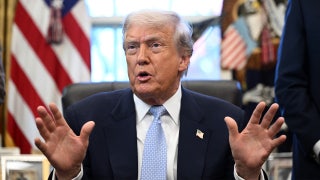
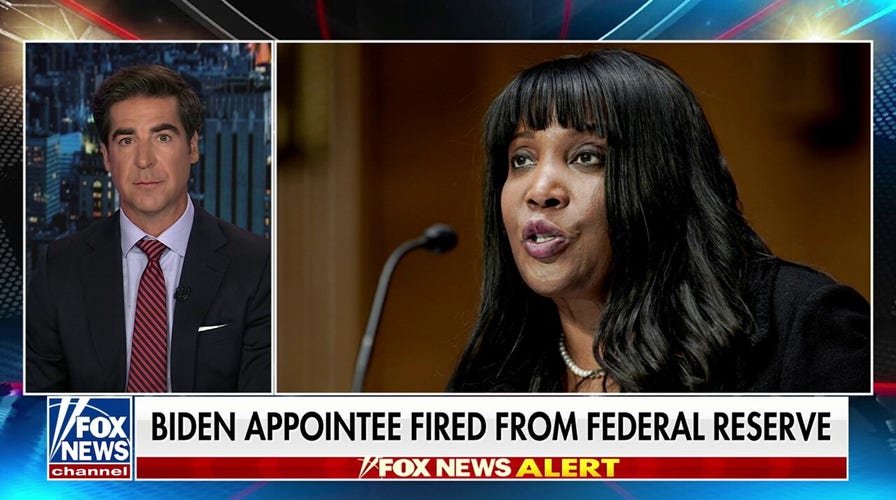
'Jesse Watters Primetime' host Jesse Watters reports that President Donald Trump has fired Federal Reserve Board Governor Lisa Cook.
The Supreme Court pressed lawyers for the Trump administration Wednesday over the president's effort to fire Federal Reserve Governor Lisa Cook, a consequential case that could profoundly impact the nation's central bank, and the degree of influence wielded by the commander-in-chief.
Justices signaled some degree of wariness towards the arguments made by U.S. Solicitor General D. John Sauer on Wednesday. Sauer spent his time asserting that President Donald Trump has broad discretion to fire Cook from the Fed's board of governors — without notice and largely without the ability for courts to challenge the "for cause" provision underpinning her removal.
Americans "should not have their interest rates" determined by a Federal Reserve governor whom he said has been "grossly negligent" in her own life, Sauer said, in a nod to the mortgage fraud allegations made against Cook last summer, and which Trump cited as the basis for firing Cook.
No charges have been brought against her to date, and Cook's attorneys have blasted the allegations as "manufactured charges" designed to create a pretext for her removal.
The Trump administration's broad assertions of executive privilege in the case appeared to find little sympathy with justices on the high court, including Trump's own conservative appointees, who seemed to share in the thinking that members of the Fed should be entitled to some higher reviewability standard to challenge their dismissal.
Justice Brett Kavanuagh underscored concerns about a broader lack of due process. He noted to Sauer that the administration's position is, essentially, "that there's no judicial review, no process required, no remedy available."
"There's a very low bar for cause, and one that the president alone determines," he told Sauer. "And that would weaken, if not shatter, the independence of the Federal Reserve that we just discussed."
FEDERAL RESERVE GOVERNOR LISA COOK SUES TRUMP
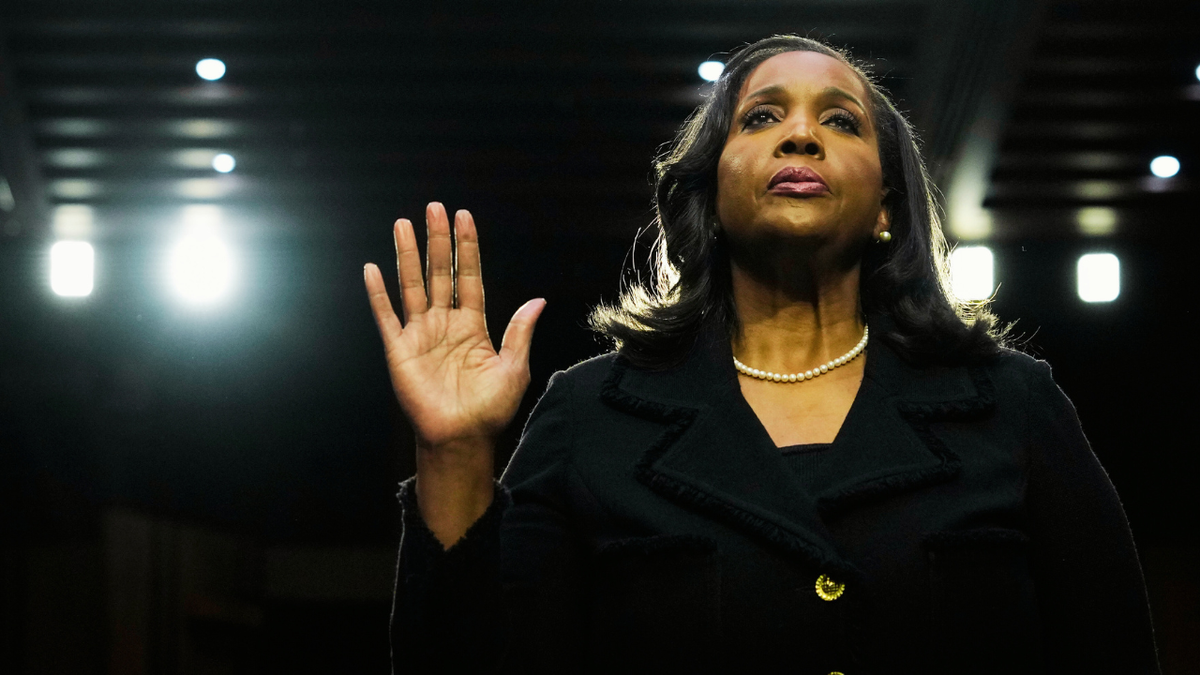
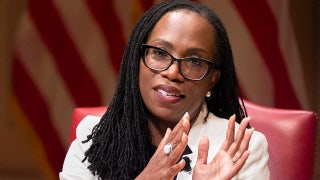
Lisa DeNell Cook is sworn in during a Senate Banking nominations hearing on June 21, 2023, in Washington, D.C. (Drew Angerer/Getty Images)
Meanwhile, Justice Amy Coney Barrett cited issues with "public confidence," should Trump be cleared to fire a sitting Fed governor without fully explaining or justifying the reasons.
"We have amicus briefs from economists who tell us that if Governor Cook is" fired, that "it can trigger a recession," Barrett said. "How should we think about the public interest in a case like this?"
The justices seemed inclined to allow Cook the ability to challenge her removal and the "for cause" determination, likely by a lower court.
The specifics of how the high court might codify that, and on what timeline, remains to be seen, though the justices seemed inclined to let Cook remain in her post as the merits of that challenge played out.
Lawyers for the Trump administration asked the high court in October to stay a lower judge's ruling that blocked Trump from immediately firing Cook from her post on the Federal Reserve's Board of Governors until the court could consider the merits of her case.
The Supreme Court agreed to hear the case, and it took the rare step of ordering oral arguments before determining how to proceed. Still, the nature of the case and its emergency appeal prompted concern about an undercooked procedural history.
Supreme Court Chief Justice John Roberts and others on the court seemed inclined to narrowly deal with the case by punting it down to the district court for review.
"I think that would be a very simple way to decide this case," Lisa Cook's lawyer, Paul Clement, told the justices.
Clement also stressed the independence and uniqueness of the Fed, describing it as a "uniquely structured" and "quasi-private entity" that affords it certain additional protections.
This has been the primary distinguishing factor separating Cook's case from other lawsuits filed by the Federal Trade Commissioner Rebecca Slaughter, and members of the National Labor Relations Board (NLRB) and Merit Systems Protection Board (MSPB), who were fired last year.
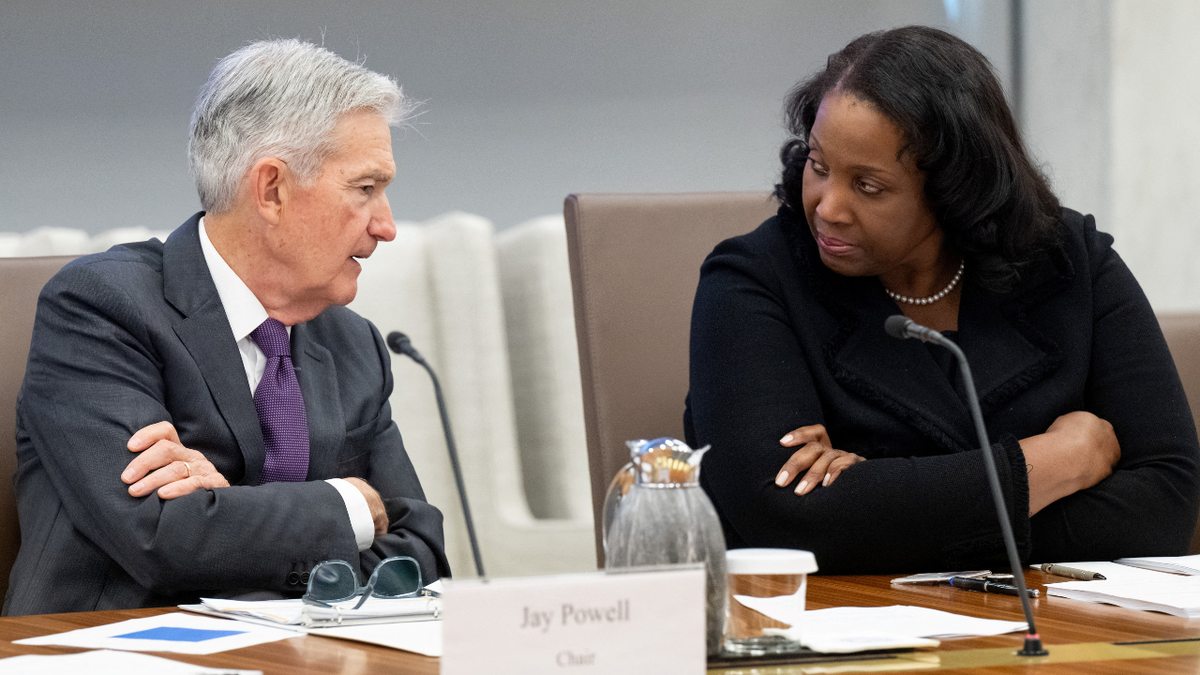
Chairman of the U.S. Federal Reserve Jerome Powell speaks with Lisa Cook, member of the Board of Governors of the Federal Reserve, at the Federal Reserve Board building in Washington, D.C., on June 25, 2025. (Saul Loeb/AFP/GettyImages)
Clement argued that Trump should be required to provide Cook with three things to satisfy the minimum level of due process: Prior notification of the allegations made against her; the opportunity to present evidence rebutting or responding to the allegations; and the involvement of a decision-maker who hasn’t "pre-judged" the case.
Clement reiterated on Wednesday his view that Trump pre-judged the issue, which he said was indicated by Trump's social media post in August demanding that Cook "resign" or "be fired."
There is "no rational reason to go through all the trouble of creating a unique, quasi-private entity" such as the Fed, Clement said, if its purpose is only to give it a "removal restriction that is as toothless" as Trump imagines.
"There is simply no reason to abandon 100 years of central-bank independence on an emergency application," he added.
SCOTUS POISED TO SIDE WITH TRUMP ON FTC FIRING — A SHOWDOWN THAT COULD TOPPLE 90-YEAR PRECEDENT
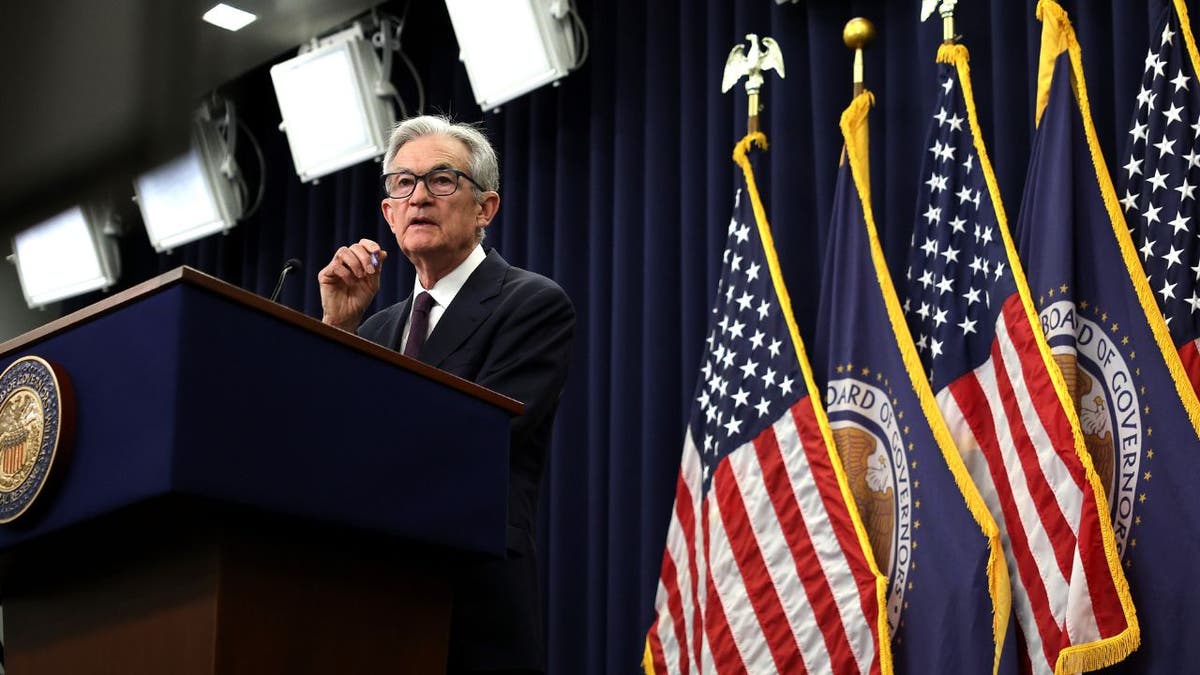
Federal Reserve Board Chairman Jerome Powell in Washington, D.C. (Win McNamee/Getty Images)
Justices spent most of the time pressing Sauer on the specifics of Cook's alleged conduct, and the notion of "for cause" removal. Justices Samuel Alito and Sonia Sotomayor seemed especially concerned about the reviewability.
They noted that, but for the high court's emergency intervention, Cook would have been removed from the Fed already, and before notice or concerns were reviewed in court.
Justices Barrett and Neil Gorsuch posited that Trump could call Cook to the White House and "sit down across the table in the Roosevelt Room" to allow for the most informal conversation that would still allow Cook to defend herself.
"The president could provide Ms. Cook with the evidence, and wait to see what the evidence is, and give her a chance to defend herself," Barrett said. "It just would not be that big of a deal, it seems, if that’s enough."
Sauer, in response, said that the Trump administration would consider that an "intrusion on the executive branch, which he said has the power to dictate what procedures" are relevant.
"Adequate process was already provided," Sauer told Barrett.
TRUMP TARIFF PLAN FACES UNCERTAIN FUTURE AS COURT BATTLES INTENSIFY
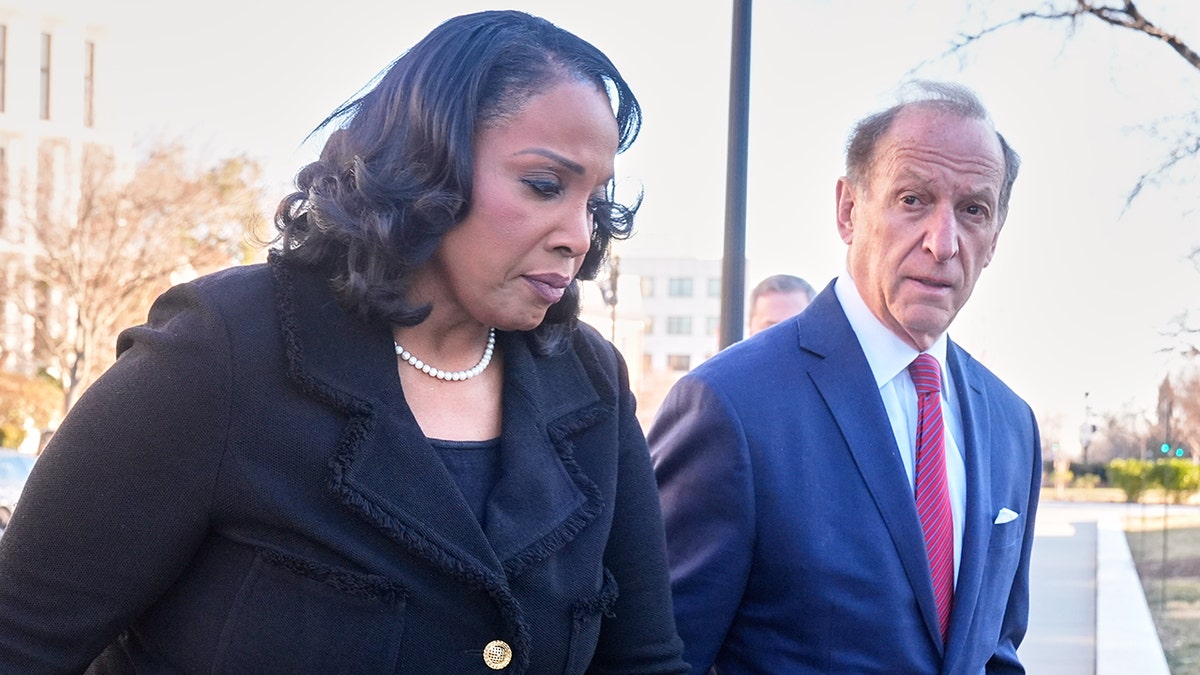
Federal Reserve governor Lisa Cook and attorney Abbe Lowell, arrive at the Supreme Court in Washington, Wednesday, Jan. 21, 2026. (Mark Schiefelbein/AP Photo)
Justice Brett Kavanaugh, meanwhile, stressed the importance of balancing Cook's conduct and the independence of the Fed. "It’s less important that the president have full faith in every single governor, and it’s more important that the markets and the public have faith in the independence of the Fed from the president and from Congress," he said.
"Let's talk about the real-world downstream effects of this," Kavanaugh said. "Because if this were set as a precedent, it seems — just thinking big picture, and ‘what goes around, comes around' — is all the president's appointees would likely be removed for cause on January 20th, 2029, if there's a Democratic president, or January 20th, 2033."
"And then, we'll really be at at-will removal," he said.
Lawyers for the Trump administration argued that Trump's removal protection powers are discretionary, and argued that Trump should have broad reviewability powers, including in Cook's case.
There's "judicial review kind of at the outer perimeters of cause," Sauer told Chief Justice John Roberts, but otherwise "there would be deference to the president."
The case itself is notable for several reasons, including its novelty.
If successful, Trump's removal of Cook would mark the first time that a president has ever fired a sitting Fed governor in the bank's 112-year history.
LAWYERS FOR COOK, DOJ TRADE BLOWS AT HIGH-STAKES CLASH OVER FED FIRING
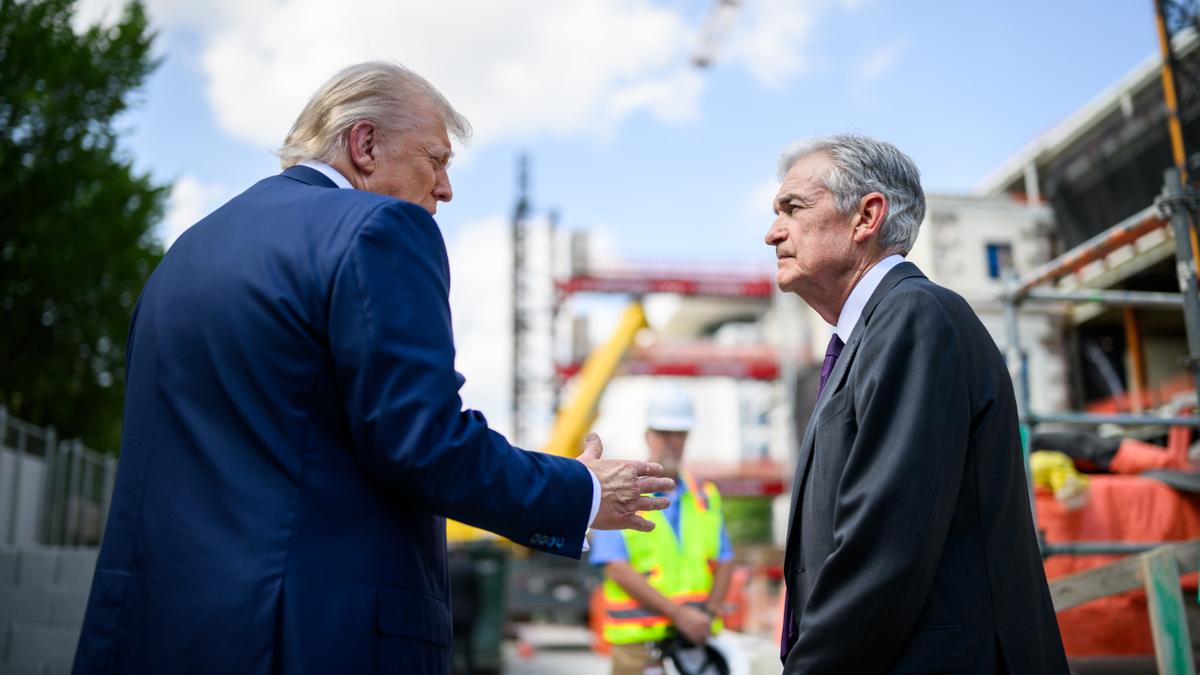
President Donald Trump speaks to Fed Chair Jerome Powell during a tour of the Federal Reserve in Washington, D.C., Thursday, July 24, 2025. (Official White House Photo by Daniel Torok)
It also comes as tensions between Trump and the Fed have soared to a fever pitch.
Her lawyers argued in court Wednesday that Trump's attempt to fire her is "unprecedented and illegal," and a thinly veiled effort by Trump to wrest control over the Fed.
Justices will now have the option to either review the case narrowly — ruling only on whether it should leave the lower court’s ruling in place — or to bring into the fold the larger constitutional questions that the case has brought to the fore, including the legality of Trump’s effort to fire Cook under the Federal Reserve Act and other similar laws designed to insulate the bank from political pressures.
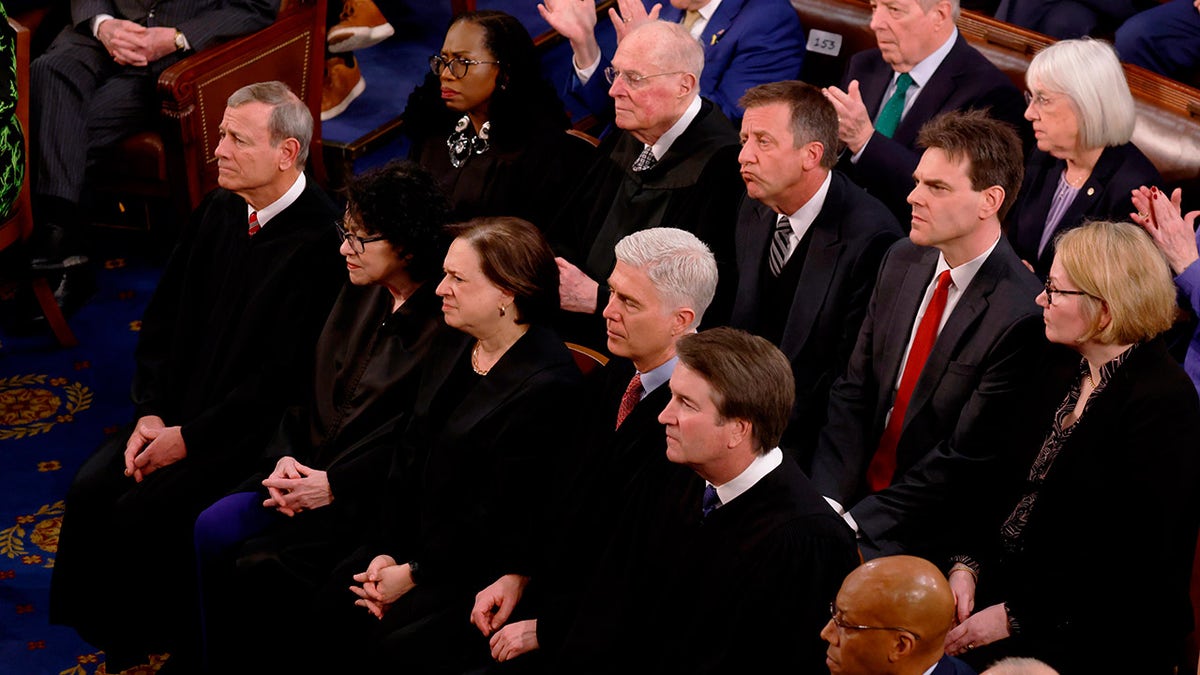
Justices of the U.S. Supreme Court in the House Chamber for a State of the Union address at the Capitol in Washington, D.C., on March 7, 2024. (Julia Nikhinson/Bloomberg via Getty Images)
Though Trump administration officials have insisted that the case is narrowly focused on Cook’s removal, the oral arguments as a whole will be scrutinized by major players in financial markets, including investors, bankers, and business owners for signs as to how the high court might rule.
The short-term ripple effects could be felt sooner than later, with the next Federal Open Market Committee meeting slated for later this month.
It also comes as Trump has repeatedly blasted Fed Chair Jerome Powell and other members of the central bank over its reluctance to lower benchmark interest rates as aggressively as he would like, deepening the fast-growing fault lines that have routinely pitted Trump against Fed leaders.
CLICK HERE TO GET THE FOX NEWS APP
Powell said that the agency was subpoenaed by the Justice Department last week over allegations that he lied to Congress about the costs of a massive renovation of its headquarters.
"Put simply, the president may reasonably determine that interest rates paid by the American people should not be set by a governor who appears to have lied about facts material to the interest rates she secured for herself — and refuses to explain the apparent misrepresentations," Sauer told the Supreme Court in appealing the case.
More from Politics


Fox News Politics
Get the latest updates from the 2024 campaign trail, exclusive interviews and more Fox News politics content.
By entering your email and clicking the Subscribe button, you agree to the Fox News Privacy Policy and Terms of Use, and agree to receive content and promotional communications from Fox News. You understand that you can opt-out at any time.
