
Hegseth urges US troops to 'stay focused' as Operation Epic Fury devastates Iran
President Donald Trump says US attacks on Iran will continue Monday as Israel expanded the conflict by attacking Hezbollah targets in Lebanon. "Operation Epic Fury" has taken a heavy toll on Tehran already, eliminating Supreme Leader Ali Khamenei and other top officials, leading to a succession crisis.
Coverage for this event has ended.
UAE added to State Department evacuation list amid widening Iran conflict
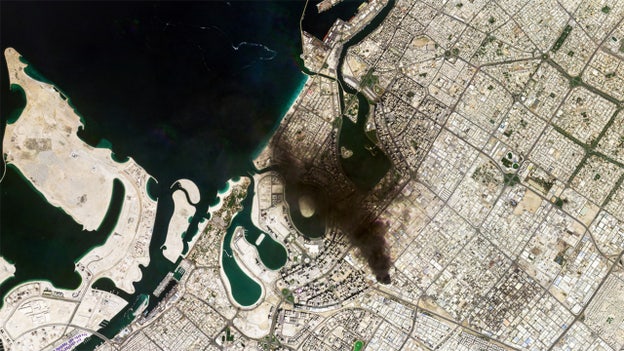
The U.S. State Department on Tuesday added the United Arab Emirates to its growing list of countries where non-emergency government personnel and family members have been ordered to depart.
The UAE — home to major commercial hubs Dubai and Abu Dhabi — joins Bahrain, Iraq, Jordan, Kuwait and Qatar on the evacuation list as regional tensions escalate from the conflict with Iran.
The U.S. Embassy in Abu Dhabi also warned of potential militant attacks that could target tourist sites, transportation hubs and locations associated with Jewish and Israeli communities.
The move signals expanding security concerns across the Gulf as Iran’s retaliatory attacks continue.
US ambassador urges Americans in Israel to exit via Egypt’s Sinai Peninsula
U.S. Ambassador to Israel Mike Huckabee advised Americans seeking to leave Israel to consider traveling through Egypt’s Sinai Peninsula as regional air travel remains disrupted.
In a social media post early Tuesday, Huckabee said the embassy is receiving a high volume of evacuation requests while staff remain sheltering in place.
“There are VERY LIMITED options,” Huckabee wrote, adding that it is unclear when Ben Gurion Airport in Tel Aviv will reopen.
He advised Americans attempting to depart to travel by bus to Egypt’s resort areas of Sharm el-Sheikh or Taba in southern Sinai, describing that route as the “best” available option at this time.
The guidance comes as missile and drone attacks continue across the region, complicating commercial air travel and prompting broader U.S. evacuation efforts.
Amazon says drone strikes caused structural damage at UAE, Bahrain data centers

Amazon said drone strikes caused structural damage at two of its data center facilities in the United Arab Emirates and impacted infrastructure near a facility in Bahrain, disrupting services across the region.
According to updates posted on Amazon Web Services’ public status dashboard, two facilities in the UAE were directly struck, damaging power systems and, in some cases, triggering fire suppression efforts that led to additional water damage inside affected buildings. In Bahrain, a nearby drone strike caused physical impacts to infrastructure at one facility.
Two of the three major data center zones in the UAE region remain significantly impaired. Key cloud services — including storage, databases and computing capacity — are experiencing disruptions or degraded performance as teams work to restore power and connectivity.
Amazon said recovery is expected to take at least a day and could take longer given the extent of the physical damage.
The company is advising customers with workloads in the Middle East to back up data and consider migrating applications to alternate regions in the United States, Europe or Asia Pacific, warning that the broader operating environment in the region remains unpredictable amid the ongoing conflict.
Amazon did not specify who was responsible for the strikes.
IDF authorized to take additional strategic positions along Lebanon border, defense minister says
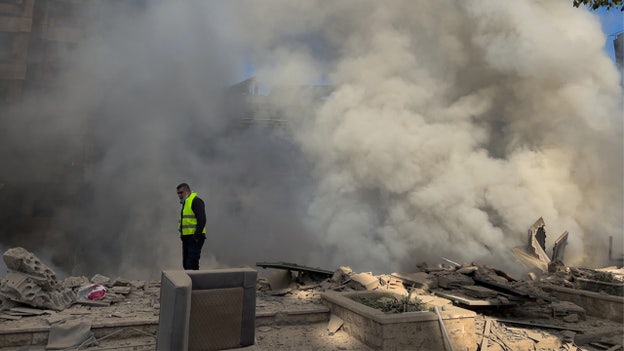
Israeli Prime Minister Benjamin Netanyahu and Defense Minister Israel Katz have authorized the Israel Defense Forces (IDF) to take control of positions in southern Lebanon to prevent attacks on Israel's border communities, the defense minister said Tuesday.
“To prevent the possibility of direct fire targeting Israeli communities, Prime Minister Benjamin Netanyahu and I have authorized the IDF to advance and secure additional strategic areas in Lebanon, and from there to defend the border communities,” Katz said. “We promised security for the communities of the Galilee, and that is what we will deliver.”
He added that the IDF “continues to operate forcefully against Hezbollah targets in Lebanon. The terrorist organization is paying, and will continue to pay, a heavy price for firing at Israel."
The IDF said its soldiers are operating along the border in a defensive manner and have deployed to additional strategic points along the line established under the November 2024 ceasefire agreement.
The authorization comes amid the broader regional escalation involving Iran and its allied groups.
US Embassy in Kuwait closes indefinitely amid ongoing regional conflict
The U.S. Embassy in Kuwait announced on Tuesday that it is shutting its doors until further notice as the conflict in the Middle East continues.
"Due to ongoing regional tensions, the U.S. Embassy in Kuwait will be closed until further notice," the embassy wrote on X.
"We have canceled all regular and emergency consular appointments," the post continued. "We will communicate when the embassy returns to normal operations."
State Department orders evacuation of non-emergency government personnel from multiple countries
The U.S. State Department on Tuesday ordered non-emergency U.S. government personnel and family members of government personnel in five countries to evacuate amid ongoing security risks during the conflict with Iran.
The U.S. government ordered the departure of these individuals from Jordan, Bahrain, Iraq, Kuwait, and Qatar.
"The State Department updated the Travel Advisory for [each country] to reflect the ordered departure of non-emergency U.S. government personnel and family members of government personnel, the department wrote on X.
The respective embassies also posted travel advisories on their websites, cautioning against travel due to risks such as terrorism, landmines, and armed conflict.
Iran nuclear talks 'didn't pass the smell test' before Trump launched strikes, says Vance
Vice President JD Vance confirmed Monday that negotiations with Iran over its nuclear program collapsed after U.S. officials concluded Tehran’s claims "did not pass the smell test," prompting President Donald Trump to authorize Operation Epic Fury.
Speaking on "Jesse Watters Primetime," Vance said U.S. envoys — including Steve Witkoff, Secretary of State Marco Rubio and Jared Kushner — had conducted rounds of "deliberate" talks in Geneva with the Iranian delegation.
The discussions were aimed at curbing Tehran’s nuclear program in exchange for sanctions relief and averting a broader conflict, he said, but ultimately broke down.
"But the Iranians would come back to us and they'd say, 'Well, you know, having enrichment for civilian purposes, for energy purposes, is a matter of national pride,'" Vance said.
"And so we would say, 'OK, that's interesting, but why are you building your enrichment facilities 70 feet underground? And why are you enriching to a level that's way beyond civilian enrichment and is only useful if your goal is to build a nuclear bomb?'" he said.
Vance added that "nobody objects to the Iranians being able to build medical isotopes; the objection is these enrichment facilities that are only useful for building a nuclear weapon."
"It just doesn't pass the smell test for you to say that you want enrichment for medical isotopes, while at the same time trying to build a facility 70 to 80 feet underground," he explained.
This comes after the Trump administration said in June that precision strikes at the time "obliterated" Iran's nuclear enrichment facilities.
"Based on everything we have seen — and I've seen it all — our bombing campaign obliterated Iran's ability to create nuclear weapons," Pentagon chief Pete Hegseth said at the time. "Our massive bombs hit exactly the right spot at each target and worked perfectly. The impact of those bombs is buried under a mountain of rubble in Iran; so anyone who says the bombs were not devastating is just trying to undermine the president and the successful mission."
Fox News' Emma Bussey contributed to this report.
US destroyed Iranian military facilities, launch sites and air defense capabilities, CENTCOM says
U.S. forces destroyed Islamic Revolutionary Guard Corps command and control facilities, Iranian air defense capabilities, and missile and drone launch sites as part of the ongoing conflict in the Middle East between the two sides, U.S. Central Command announced on Monday.
In a post on X, CENTCOM wrote: "U.S. forces have destroyed Islamic Revolutionary Guard Corps command and control facilities, Iranian air defense capabilities, missile and drone launch sites, and military airfields during sustained operations."
"We will continue to take decisive action against imminent threats posed by the Iranian regime," the post continued.
Sen Warner says there was 'no imminent threat' to US by Iran: 'There was a threat to Israel'
Sen. Mark Warner, D-Va., on Monday said Iran posed "no imminent threat" to the U.S. and that it would be "uncharted territory" to view a threat to Israel as the equivalent of an imminent threat to America.
"There was no imminent threat to the United States of America by the Iranians," Warner told reporters.
"There was a threat to Israel," he continued. "If we equate a threat to Israel as the equivalent of an imminent threat to the United States, then we are in uncharted territory."
"We have seen the goals for this operation change now I believe four or five times," the senator added.
US embassy struck by drones in Saudi Arabia as ‘Operation Epic Fury’ continues
An Iranian drone strike targeted the U.S. Embassy in Saudi Arabia, with smoke and fire seen rising from the compound, according to Fox News correspondent Jennifer Griffin.
No injuries were reported in the attack. The embassy was largely empty when the two strikes hit, Griffin reported.
Americans in cities across Saudi Arabia are being instructed to shelter in place.
Iran starts ‘indiscriminate’ strikes across Gulf of Oman, hits shadow tanker tied to regime
Iran is conducting "indiscriminate" targeting of vessels across the Gulf of Oman and the wider Persian Gulf following the launch of U.S.-Israeli strikes under Operation Epic Fury, according to a maritime intelligence firm.
Windward AI noted the sanctioned Palau-flagged tanker Skylight was hit as the conflict across the Middle East entered its second day, with the tanker also holding Iranian nationals among the crew and ties to the regime.
"Analysis of vessel affiliations, targeting patterns, and cargo data points to a strategy of indiscriminate area denial — not precision targeting — aimed at demonstrating Iran's capability to disrupt the Strait and deter commercial shipping," the firm said Monday.
Iran has been retaliating with missiles and drones targeting U.S. and allied positions across the region, including in Qatar, Kuwait and the United Arab Emirates.
Learn more about the threat to maritime vessels across the Gulf of Oman.
This is an excerpt from a story by Fox News Digital’s Emma Bussey.
Longtime Trump critic credits him for restoring 'credibility of US deterrence' as Iran strikes unfol

One of President Donald Trump's most outspoken critics in the legacy media is praising his administration's strike on Iran.
Washington Post columnist George Will penned a piece on Sunday titled, "At last, the credibility of U.S. deterrence is being restored."
"The perhaps 30,000 protesters who perished in Iran’s streets in early January did not die in vain," Will wrote.
Will, a former Republican who voted for Joe Biden and Kamala Harris in the most recent presidential elections, marveled at how "Precision munitions, directed by spectacular intelligence, enabled a decapitation strategy" as the U.S. and Israel carried out Operation Epic Fury on Saturday, which resulted in the elimination of the Iranian regime's top leaders including Supreme Leader Ayatollah Ali Khamenei.
See what else Will said about Trump’s actions against Iran.
This is an excerpt from a story by Fox News Digital’s Joseph A. Wulfsohn.
US hitting Iran ‘surgically and unapologetically,’ CENTCOM says
U.S. Central Command (CENTCOM) said Monday that American forces are striking Iran “surgically, overwhelmingly, and unapologetically” as part of Operation Epic Fury, releasing video that it said shows Iranian offensive missile equipment being destroyed.
“As the Secretary of War stated this morning, U.S. forces are hitting Iran surgically, overwhelmingly, and unapologetically,” CENTCOM said in a post on X. “Operation Epic Fury is laser-focused on destroying Iranian offensive missiles.”
Along with the post, CENTCOM shared video showing what appeared to be a truck carrying missiles being destroyed, along with additional clips of offensive missile equipment targeted from above.
Trump formally notifies Congress of Iran military strikes
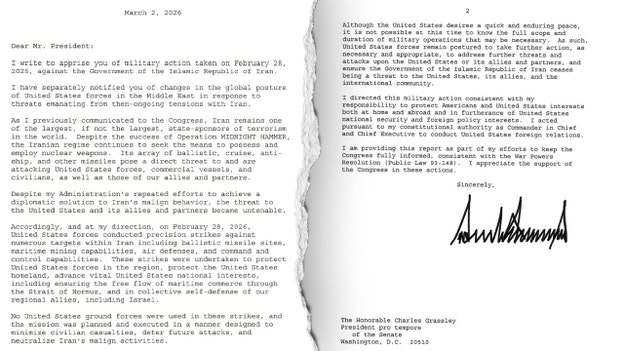
The White House on Monday formally notified Congress that President Donald Trump ordered precision military strikes against Iran on February 28, citing threats to U.S. forces, regional allies and international shipping as justification under his constitutional authority as commander in chief.
“I write to apprise you of military action taken on February 28, 2026, against the Government of the Islamic Republic of Iran,” the president wrote in the letter to Senate President pro tempore Charles Grassley, invoking the War Powers Resolution.
Trump said the strikes targeted “numerous targets within Iran including ballistic missile sites, maritime mining capabilities, air defenses, and command and control capabilities,” adding that the action was taken to “protect United States forces in the region, protect the United States homeland” and ensure “the free flow of maritime commerce through the Strait of Hormuz” in collective self-defense of regional allies, including Israel.
The president argued that diplomacy had failed to curb Iran’s actions, writing, “Despite my Administration's repeated efforts to achieve a diplomatic solution to Iran's malign behavior, the threat to the United States and its allies and partners became untenable.”
He added that no U.S. ground forces were used and that the mission was designed “to minimize civilian casualties, deter future attacks, and neutralize Iran's malign activities.”
While expressing hope for peace, Trump warned that operations could continue if necessary.
“Although the United States desires a quick and enduring peace, it is not possible at this time to know the full scope and duration of military operations that may be necessary,” he wrote. “As such, United States forces remain postured to take further action, as necessary and appropriate, to address further threats and attacks upon the United States or its allies and partners, and ensure the Government of the Islamic Republic of Iran ceases being a threat to the United States, its allies, and the international community.”
Waltz says Iran was weeks away from nuclear weapon
U.S. Ambassador to the United Nations Mike Waltz said Iran was hiding highly enriched uranium and could have converted it into a nuclear weapon within “weeks, a month at the most,” arguing that Iran was dangerously close to weapons capability before U.S. strikes.
Waltz made the remarks during an appearance on “The Ingraham Angle,” where he discussed what he described as the imminent threat posed by Tehran.
“They kept their highly enriched uranium and were hiding it,” Waltz said. “And it is within weeks, a month at the most, that you can take 60% to 90% to have a bomb.”
He added that Iran was also expanding its missile capabilities. “We also know that they are developing a long range ICBM essentially, in addition to quadrupling the amount of missiles shorter range and medium range missiles that they can build per month to overwhelm our air defenses.”
When pressed on whether he believed Iran was weeks away from nuclear weapons capability, Waltz pointed to the administration’s recent military action.
“What I'm saying is Operation Midnight Hammer… obliterated their enrichment capability,” he said. “But we also knew they hid a lot of their highly enriched uranium.”
Radical US mosques honor Iran's Supreme Leader's 'martyrdom' with memorial services, eulogy: 'Our le
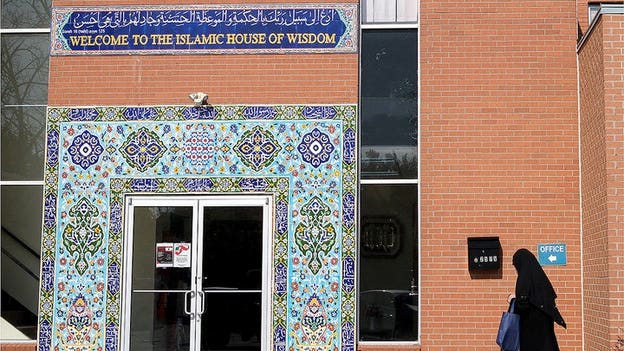
Two United States-based mosques that have faced scrutiny for their ties to Iran held formal events to "honor" Ayatollah Khamenei after U.S. military forces took out the Islamic leader of Iran this weekend, including one mosque in Northern Virginia that referred to Khamenei as "our leader."
Located in Manassas, Virginia, and Dearborn Heights, Michigan, the mosques both publicly advertised events eulogizing the slain leader. In a flyer for the "Potluck Iftar" honoring Khamenei, which is a ceremony where Muslims break their Ramadan fast, the Manassass Mosque, which has faced questions over alleged ties to Iran, referred to Khamenei as "our leader." Meanwhile, at the Islamic House of Wisdom (IHW) in Dearborn Heights, which has also faced scrutiny over its ties to Iran, the center's Imam Mohammad Ali Elahi called the U.S. military offensive "evil" and argued that it was based on false-pretenses.
"You promised that America First, and now we ended up to have Netanyahu first," the Michigan-based Imam told his congregants after the attacks this weekend. "Now we realize that all their talk about nuclear [unintelligible] was a joke, it didn't even exist. From the beginning talking about regime change, we want to change, because we don't like it. So, starting an illegal – illegal war – and then go and bomb the house of the leader of the country. Where is justification for this? Where is their reason for this, at all?"
The Michigan-based Islamic worship center and its Imam also touted talking points from Iranian state media and officials that have not yet been confirmed, claiming hundreds of young girls were killed by a missile strike on a school in Iran.
Find out more about why the two mosques are being scrutinized.
This is an excerpt from a story by Fox News Digital’s Alec Schemmel.
Netanyahu defends strike, warns Iran nearing point of ‘immunity’
Israeli Prime Minister Benjamin Netanyahu said military action had to be taken now, arguing Iran was rebuilding underground nuclear and missile sites that would soon become immune to attack and able to threaten the U.S. and its allies.
Speaking about the escalating conflict with Iran, Netanyahu said Israeli and U.S. strikes were intended to prevent Iran from reaching what he described as a “point of immunity,” where its weapons programs could no longer be effectively targeted.
“The reason that we have to act now is because they were, after we hit their nuclear sites and their ballistic missiles program, you'd think they learned a lesson, but they didn't because they're unreformable,” the prime minister said. “They're totally fanatic about this, about the goal of destroying America. So they started building new sites, new places, underground bunkers that would make their ballistic missile program and their atomic bomb program immune within months.
“If no action was taken now, no action could be taken in the future, and then they could target America, they could blackmail America,” Netanyahu continued. “They could threaten us and threaten everyone in between. So action had to be taken. And you needed a resolute president like Donald J. Trump to take that action.”
CENTCOM: Operation Epic Fury marks largest US firepower in generation
U.S. Central Command (CENTCOM) highlighted what it called the largest regional concentration of American military firepower in a generation, releasing images of aircraft and missile launches tied to Operation Epic Fury against the Iranian regime.
The post comes as U.S. forces continue sustained operations across the region, targeting Iran’s missile infrastructure and naval capabilities amid escalating combat operations.
“Operation Epic Fury involves the largest regional concentration of American military firepower in a generation,” CENTCOM posted on X.
The images show fighter jets on aircraft carriers, missiles being launched and helicopters deployed on active missions.
Trump presses NATO partners on support as Hegseth blasts hesitation
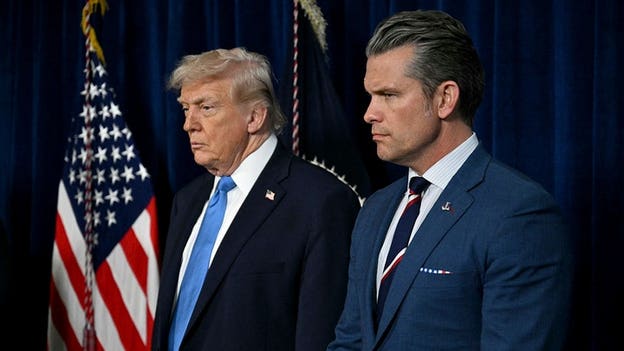
Secretary of War Pete Hegseth warned that some traditional U.S. allies are "hemming and hawing about the use of force" as Washington presses forward with its campaign against Iran, raising fresh questions about NATO cohesion at a moment of escalation.
Spain has refused U.S. permission to use certain bases for strikes on Iran, calling for de-escalation and adherence to international law. Turkey has criticized the operation and warned of broader regional destabilization, while President Recep Tayyip Erdoğan said he was "saddened" by Ayatollah Ali Khamenei’s death and denied that Turkish territory was used in the campaign.
In a statement released on Saturday, French President Emmanuel Macron said that, "The outbreak of war between the United States, Israel and Iran carries grave consequences for international peace and security." He added, "The ongoing escalation is dangerous for all. It must stop."
During Monday's media briefing, Hegseth drew a sharp contrast between Israel and what he described as hesitant allies. "Israel has clear missions as well, for which we are grateful. Capable partners, as we've said since the beginning. Capable partners are good partners, unlike so many of our traditional allies, who wring their hands and clutch their pearls, hemming and hawing about the use of force."
Find out more about Trump’s push to get NATO support.
This is an excerpt from a story by Fox News Digital’s Efrat Lachter.
Iranian-American says strike could mark ‘beginning of the very end’ for regime
Iranian-American Dr. Sheila Nazarian said recent U.S. and Israeli strikes against Iran mark what she called the “beginning of the very end” for the country’s ruling regime, describing widespread jubilation among Iranians opposed to the government.
“It’s a game changer we’ve been waiting for all this time,” Nazarian said. “We are so elated of the fact that now we have the beginning of the very end of the regime because at least we are going to see more and more decimation of this regime which can only equal the playing field so that the Iranian people could come back to the streets and bring the country back from this hated regime.”
Nazarian, who said she left Iran as a first-generation immigrant with vivid memories of the regime’s “brutality” and “iron fist,” argued that the majority of Iranians want change but acknowledged that a significant minority continues to support the government.
“So about 90% of the people want regime change, but there's about 10%, at a minimum, that support this regime, and that amounts to nine million people,” she said. “So it's the equivalent of having nine million extremists in your country, and it is a big problem.”
She also pointed to what she described as severe repression of women under the regime, saying, “Women cannot be comfortable in their own skin. They're constantly watching their back — who's going to attack them…so this is true oppression.”