























AI data center demand drives innovation across energy, tech companies
‘Special Report’ anchor Bret Baier reports on how energy and technology companies are addressing energy concerns amid a demand for artificial intelligence.
Energy experts acknowledge the need for additional power sources, and they’re turning to new technology and infrastructure to address the demand.
"As an industry, we are investing approximately $1.1 trillion in our infrastructure over the next five years to ensure that we're meeting that need and that demand," Exelon CEO Calvin Butler said.
In 2024, data centers consumed about 1.5% of global electricity use and the demand has continued to surge. This year, consumption estimates show data centers are expected to become the world’s fifth-largest energy consumer, with usage falling between the amount Japan and Russia consume.
Exelon is one of the largest electric utility holding companies in the U.S. It owns and operates electric grid infrastructure that delivers electricity to power homes and businesses.
"We're a pure transmission and distribution company. So, my responsibility every day is to operate a safe, reliable, and resilient grid. So, I'm your pipes and wires. I do not control the generation," Butler said. "What we've seen across the PJM footprint is that supply costs have increased 645% since 2024."
RELATED: GOP URGES SCOTUS TO REJECT 'WAR ON AMERICAN ENERGY' THEY SAY WOULD HIT FAMILIES' WALLETS
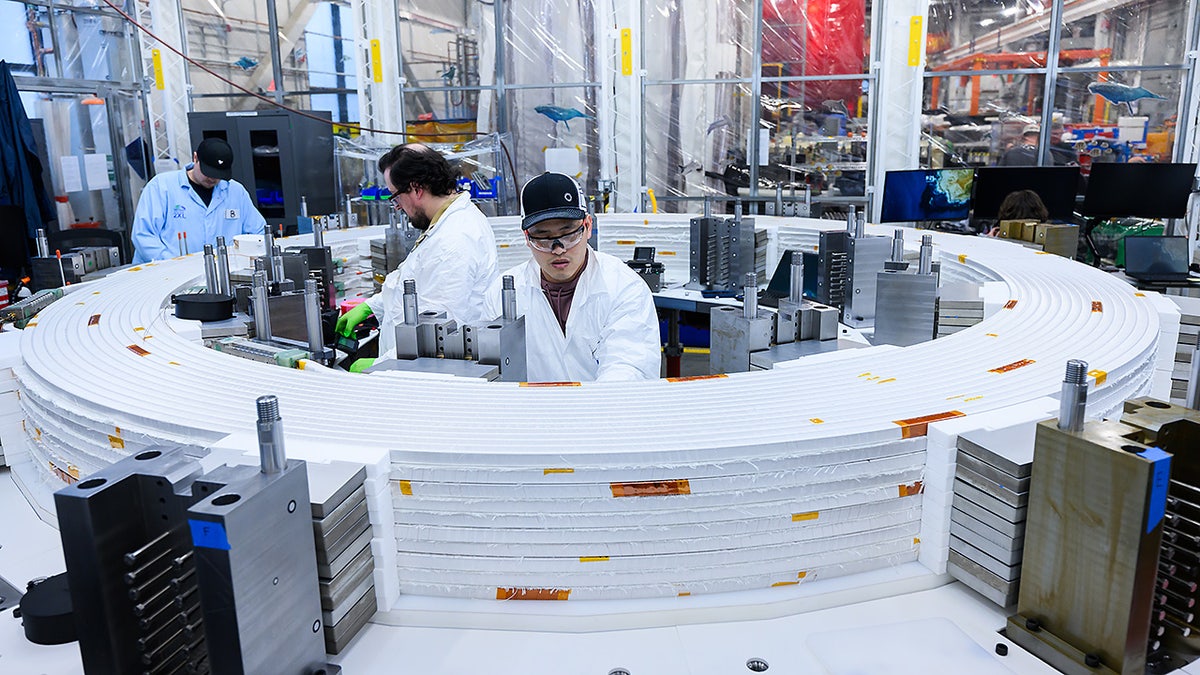
Engineers work inside a Commonwealth Fusion Systems facility as the company develops fusion technology that could provide a new source of carbon-free electricity for the power grid.
To keep up with the artificial intelligence (AI) demand, companies are getting creative.
Commonwealth Fusion Systems based in Devens, Massachusetts, is working to add 24/7 reliable power to the grid through fusion energy, the power source of the sun and stars.
"When you take light nuclei like hydrogen, and you combine them together, and you release energy in that process. That energy is released in the form of heat, which then you can convert to electricity," said Brandon Sorbom, Commonwealth Fusion Systems co-founder and chief science officer.
New studies by the company show some in the science community are optimistic about fusion for commercial use.
Commonwealth Fusion Systems estimates its ARC fusion power plant could produce 50 times more power than it consumes and that each location could make enough electricity to power a small city for a full year, using only as much fuel as a pickup truck could carry. The papers were co-authored by 58 scientists from major tech universities with support from public-private partnerships and programs.
"One of these power plants we think could power about 280,000 American homes," Sorbom said. "It releases about 10 million times more energy per weight by reaction than chemical energy."
Fusion still has a lot of uncertainties. MIT researchers estimate fusion could provide anywhere from 10% to 50% of electricity, but the institution's estimate finds it won’t come to fruition until 2100. Other scientists say if any power plants make it to the grid, it’s expected to be an expensive process.
RELATED: THE REAL REASON YOUR ELECTRIC BILL IS SOARING THIS SUMMER WILL SURPRISE YOU
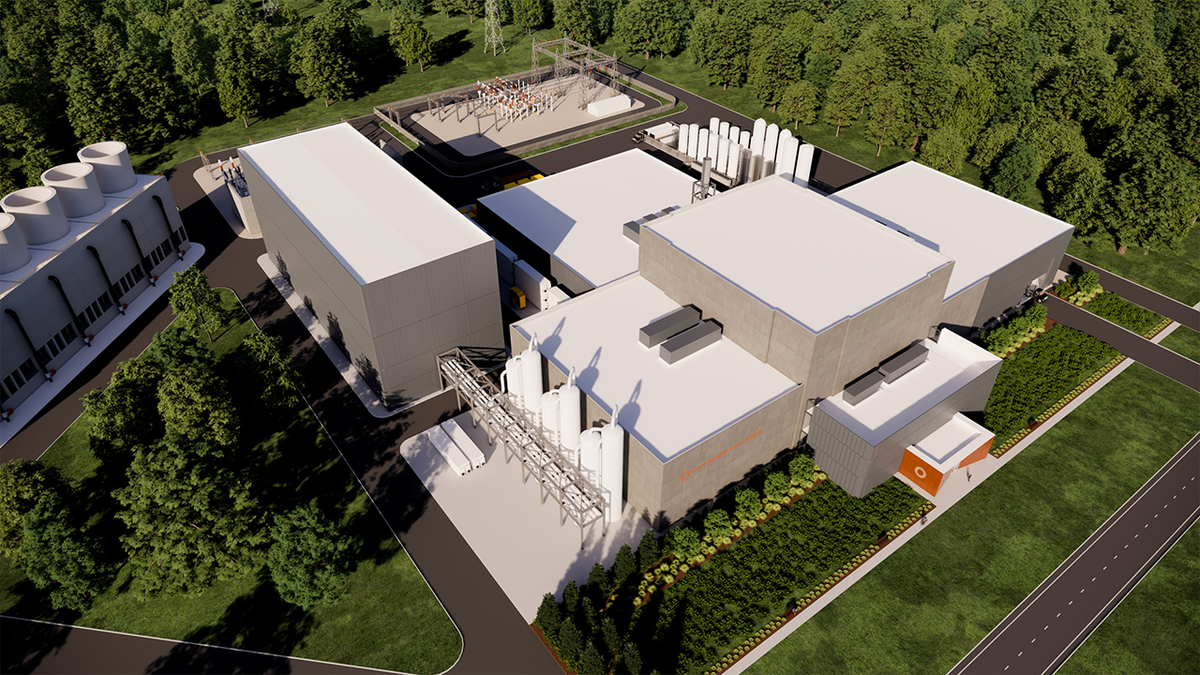
Commonwealth Fusion Systems' planned ARC fusion power plant, a commercial-scale facility designed to generate carbon-free electricity to help meet growing energy demand from AI and data centers. (Commonwealth Fusion Systems)
"The biggest challenge that we have right now is actually the integration piece of the system. So we're building this complex commercial system for the very first time," Sorbom said. "It's sort of like, there's this big dance that we're doing right now of getting all the pieces in and in the right order at the right time and putting them together in the way so that when we turn the machine on, we know that it'll perform exactly like it's modeled."
Instead of adding new energy, some companies are moving data centers to locations where less power is required.
"The Nordics are wealthy, stable, well-educated populations, business-friendly, great regulations, great fiber connectivity. Plus, there's abundant power — it's green, it's cheap," said Philippe Sachs of AI infrastructure builder Nscale. "There's not a lot of competing industrial demand. So probably the best markets on earth to have data centers."
Nscale builds, owns and operates infrastructure for data centers in Nordic countries. The company buys Nvidia chips to rent to clients and provides cloud services and other AI services. Sachs is the company's Europe, Middle East and Africa and global affairs president.
"I think we started with a thesis around power and the scarcity of power, and in the age of AI, we understood that it was important that you were in the most attractive power markets, and there's probably no more attractive place for that than the Arctic Circle," Sachs said.
RELATED: HOW THE WAR IN IRAN REALIGNED EUROPE'S ENERGY FUTURE AROUND AMERICA
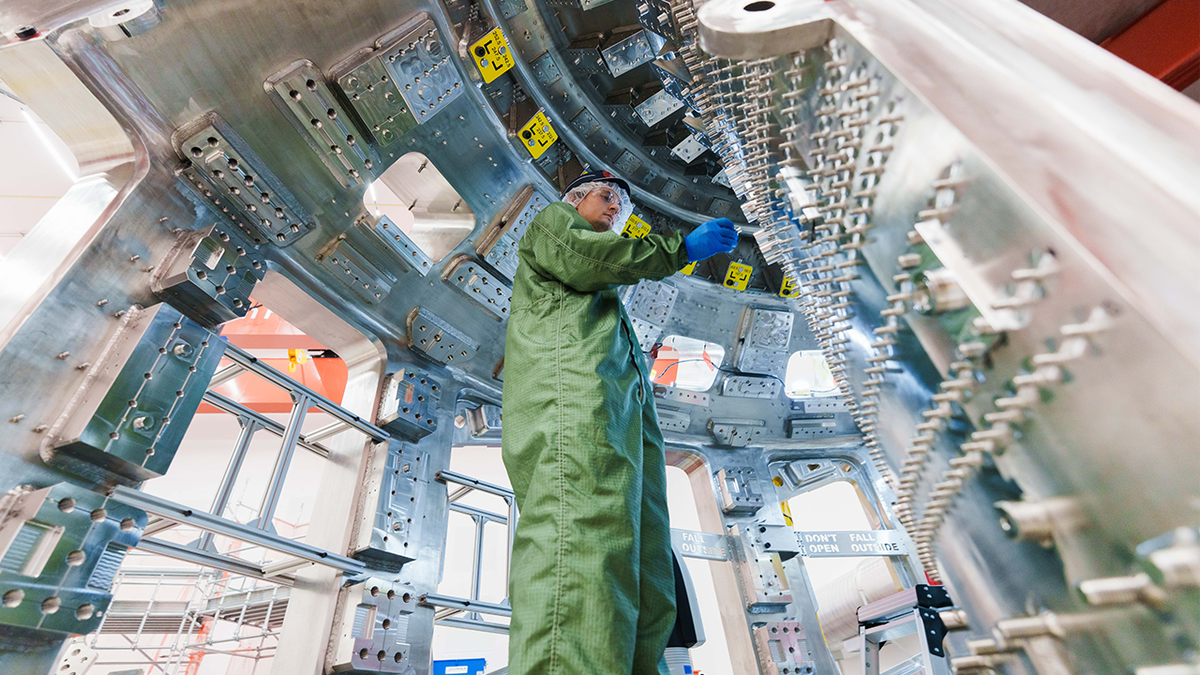
A technician works on fusion-energy equipment at Commonwealth Fusion Systems, one of several companies developing technologies aimed at meeting growing global electricity demand. (Commonwealth Fusion Systems)
Nordic countries have plenty of land and green energy available. The cool climate also reduces the amount of energy required to cool hardware.
"Given that it's cold for many months of the year, we can utilize the heat generated by the servers to heat homes. So, we can create a local ecosystem that is extremely efficient in comparison to other markets," said John Wernvik of Sweden-based EcoDataCenter.
EcoDataCenter designs, builds and operates data center buildings, then brings in a client’s hardware and makes sure it runs efficiently.
"We work with among the largest tech companies in the world and materialize their computer needs and building the runway in terms of data center capacity here in Sweden," said Wernvik, the company's chief external relations and sustainability officer.
The market in Norway is especially heating up — 50% of the country’s land is located above the Arctic Circle. It also has some of the lowest energy prices in Europe.
"You don't have a very large competing industrial demand for that power, certainly less so than the US, which is in the favor of the Arctic Circle," Sachs said. "In some places, like in northern Norway where we have some of our data centers, the grid isn't even connected to the population center in the South where the capital Oslo is. So, there is no reason why what you do up there would impact electricity prices in the major cities."
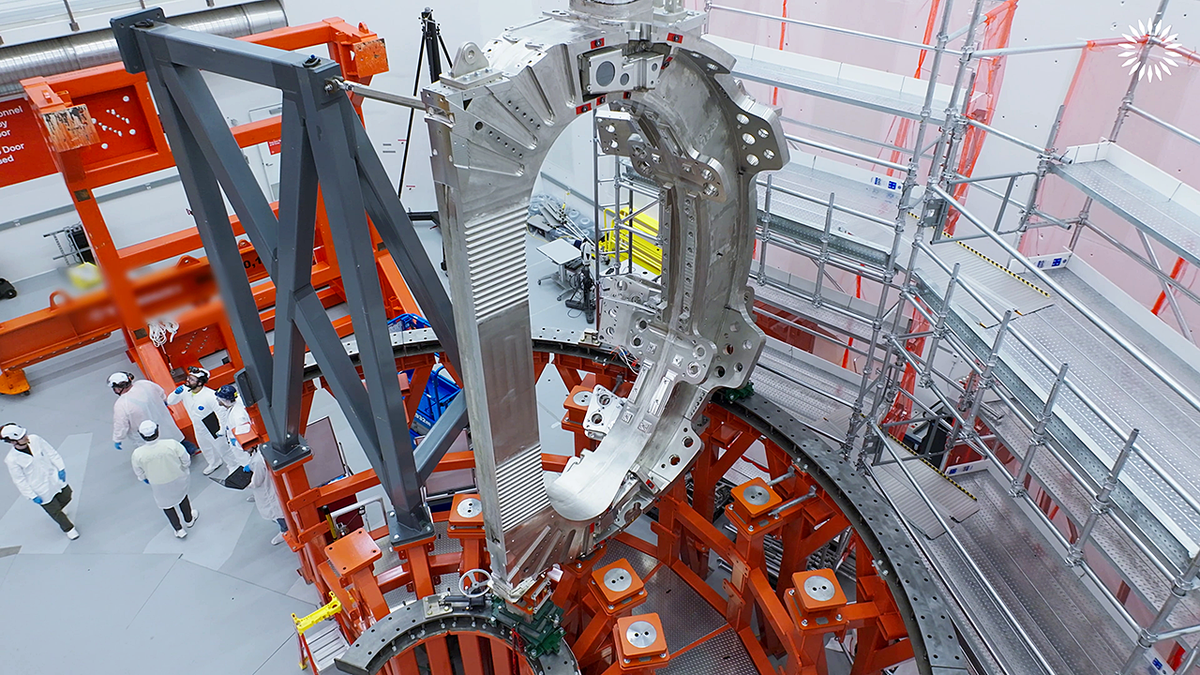
Commonwealth Fusion Systems is hoping to have a viable nuclear fusion reactor by the early 2030s. (Commonwealth Fusion Systems)
Nordic countries host around 134 existing data centers with 71 expected to come online in the near future.
"AI compute requires a lot of energy and energy is a large part of the cost for running these large-scale systems and to do that efficiently in a sustainable way is, of course, hugely beneficial for our clients," Wernvik said. "During the last 24 months, we've seen an exponential amount of data center builds being announced across Nordics that want to tap into those fundamentals as well."
Construction costs for Arctic data centers are plentiful. According to data center consulting firm Turner & Townsend, Nordic capitals Oslo, Stockholm, Helsinki and Copenhagen have among the 11 highest construction costs.
CLICK HERE TO DOWNLOAD THE FOX NEWS APP
"A lot of companies that are building data centers that haven't built data centers in the Nordics before, often are delayed," Wernvik said. "It is a complex thing to handle the weather we have during the next 12 months and given the seasonal changes. So that's definitely one challenge if you come from the outside looking to build."
Despite the difficulties adapting to the rising power demand, companies around the world are working to find a solution.
"There's a really strong correlation between energy usage and quality of life," Sorbom said. "In general, you want to find ways to make more energy and make it in a clean and a safe way."
