






















Venezuelan heavy crude poised to benefit US Gulf Coast refineries and ease fuel prices
Jaime Brito, executive director of refining and oil products at OPIS, says additional volume of extra heavy crude from Venezuela is an "extraordinarily positive development" from a U.S. oil market perspective.
Nobody handles oil quite like Texas and a fresh supply of Venezuelan crude could soon be headed to the Lone Star State’s coast.
The first barrels of thick, tar-like crude could arrive as soon as next week at ports across Texas, Louisiana and Mississippi, where dense clusters of refineries are built and bred to process heavy oil.
The development follows President Donald Trump’s Tuesday evening announcement that Caracas will transfer up to 50 million barrels of oil to the U.S., worth about $2.8 billion at current market prices.
WE’RE GOING TO LET THE OIL FLOW: ENERGY SECRETARY SAYS US WILL OVERSEE VENEZUELAN OIL SALES

Venezuelan children swimming near an oil tanker docked at a pier near the refinery of the state oil company PDVSA. (Jesus Vargas/picture alliance/Getty Images)
"The Gulf Coast concentrates most of our refining capacity, and those refineries were built or revamped over the years to process extra-heavy crude similar to what is produced in Venezuela," explained Jaime Brito, executive director of refining and oil products at OPIS.
"From a market perspective, additional volumes of extra-heavy crude entering the U.S. refining system would be an extraordinarily positive development," Brito said. "It would allow refiners to operate more efficiently, something they haven’t been able to do for years and could help keep gasoline and diesel prices at better levels because refiners would have access to cheaper crude and more optimal operations."
‘WE BUILT VENEZUELA’S OIL INDUSTRY:’ TRUMP VOWS US ENERGY RETURN AFTER MADURO CAPTURE
He added that tankers could arrive within five to six days if they leave Venezuelan waters on Thursday.
Because Gulf Coast refineries supply a large share of the nation’s fuel, shifts in how efficiently they operate can ultimately ripple through to prices paid by U.S. consumers.
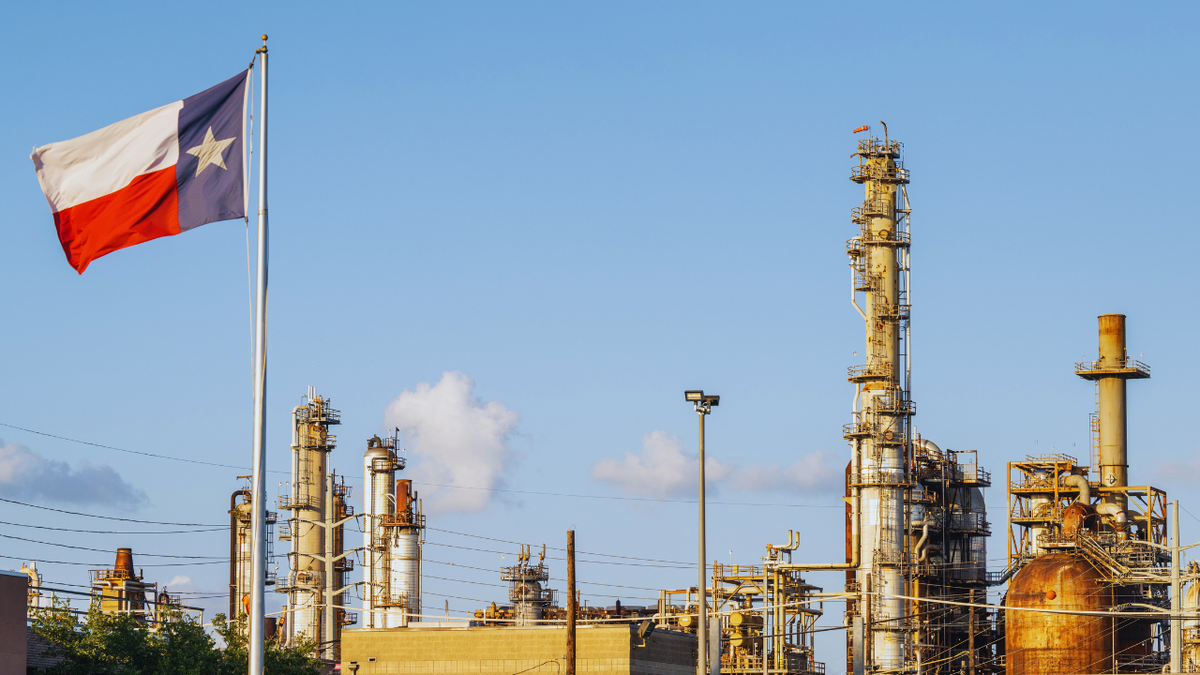
Texas oil refineries are poised to benefit from additional crude oil supplies. (Brandon Bell/Getty Images)
The arrival of 15 to 25 oil tankers carrying up to 50 million barrels of crude is only a fraction of what Venezuela could ultimately supply.
With more than 300 billion barrels of proven reserves, it holds the world’s largest oil endowment — eclipsing long-standing energy heavyweights like Saudi Arabia, Iraq and Kuwait.
Despite its vast reserves, U.S. sanctions have effectively blocked most Venezuelan crude from reaching the U.S. Gulf Coast, leaving Chevron — operating under a special authorization — as the sole exporter of limited volumes.
US NOW IN CONTROL OF VENEZUELA’S OIL RESERVES, THE LARGEST IN THE WORLD
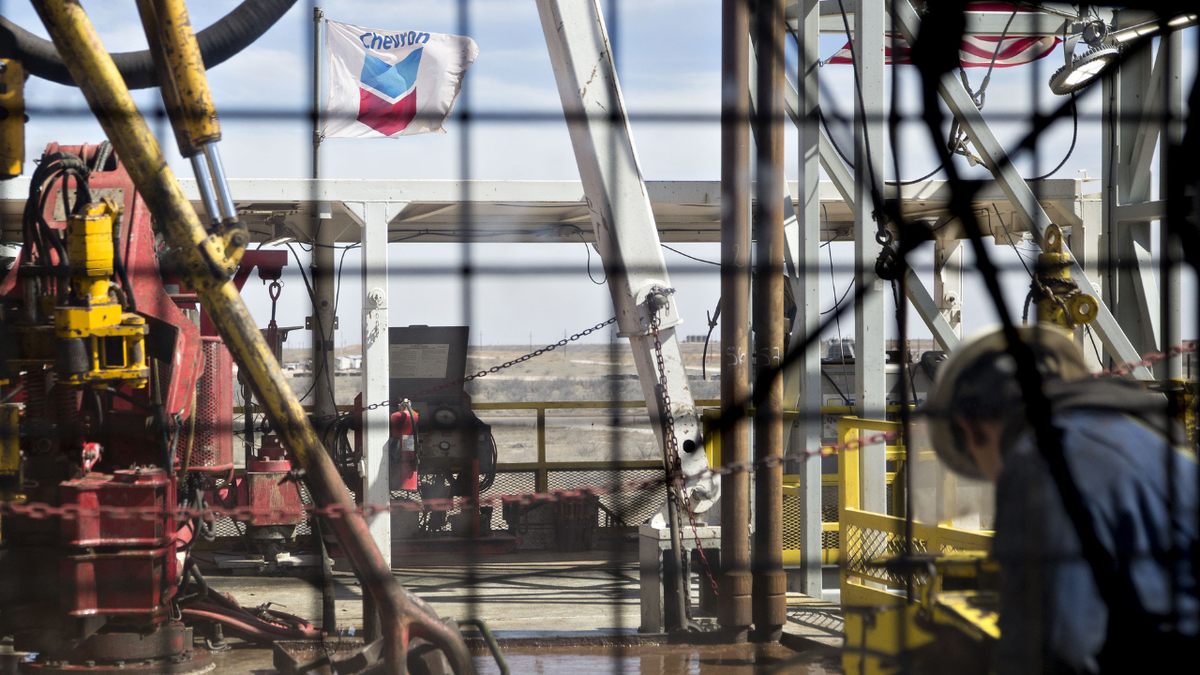
A Chevron Corp. flag flies on the drilling floor of a Nabors Industries Ltd. drill rig in the Permian Basin near Midland, Texas, on March 1, 2018. (Daniel Acker/Bloomberg/Getty Images)
That disruption has been felt most acutely in Texas, which anchors the nation’s refining hub and hosts several of the country’s largest heavy-crude refineries.
CLICK HERE TO DOWNLOAD THE FOX NEWS APP
A renewed flow of Venezuelan barrels could also intensify competition in the heavy-crude market, particularly between Venezuela and Canada, Brito said.
"You’re going to have fierce competition between Canada and Venezuela, which benefits American refiners and gives them more flexibility to potentially lower fuel prices," he said, adding that he was speaking strictly from an oil-market perspective.
