






Sotomayor steps in as Barrett presses Trump tariff authority
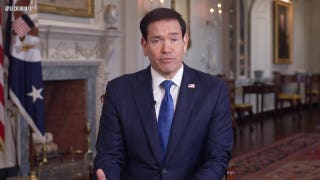
Justice Amy Coney Barrett pressed Solicitor General John Sauer on President Donald Trump’s tariff authority, citing precedent, while Justice Sonia Sotomayor urged him to answer Barrett's questions directly during Supreme Court oral arguments.
The U.S. Supreme Court left unresolved Tuesday a high-stakes challenge to President Donald Trump's use of an emergency law to impose sweeping tariffs, prolonging uncertainty over a case closely watched by the White House and global markets.
The high court released three lower-profile opinions: Berk v. Choy, Ellingburg v. United States and Coney Island Auto Parts Unlimited, Inc. v. Burton.
All three rulings were unanimous, with separate concurring opinions filed in two of the cases.
SUPREME COURT PREPARES TO CONFRONT MONUMENTAL CASE OVER TRUMP EXECUTIVE POWER AND TARIFF AUTHORITY
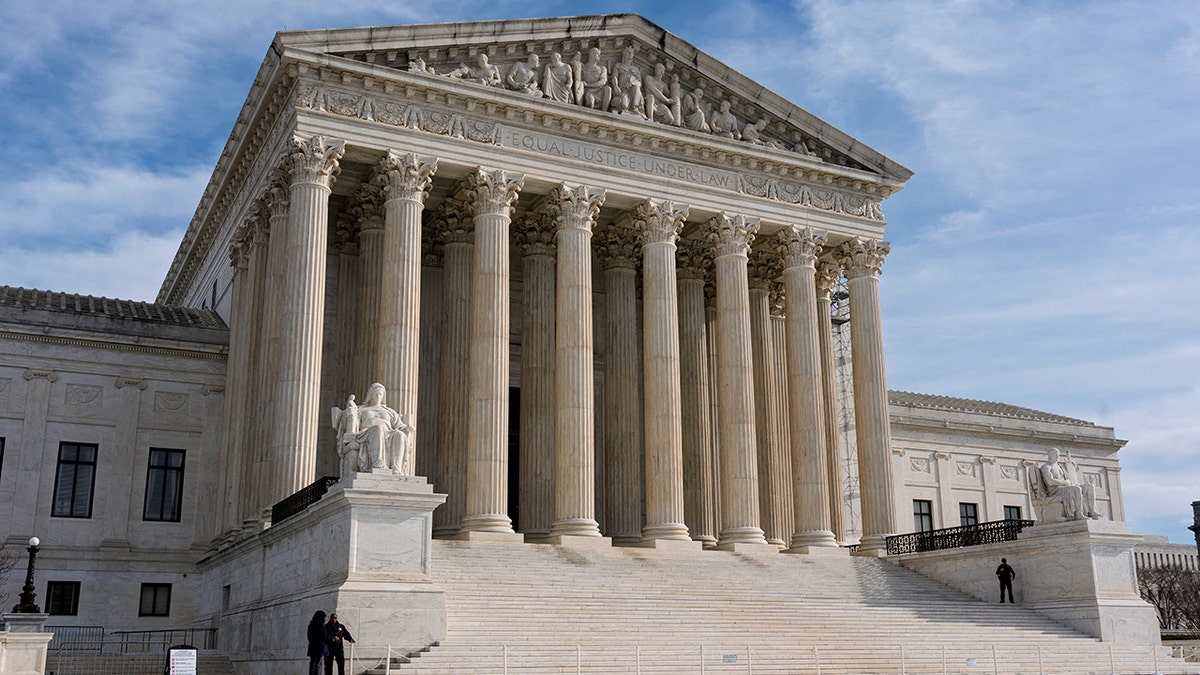
The Supreme Court is seen on Capitol Hill in Washington, Dec. 17, 2024. (AP Photo/J. Scott Applewhite, File)
In Berk v. Choy, the justices looked at whether a Delaware law requiring medical malpractice plaintiffs to file an "affidavit of merit" applies in federal court. The Court unanimously said it does not, ruling that the Federal Rules of Civil Procedure control instead and override the state requirement.
Justice Ketanji Brown Jackson filed a concurring opinion.
In Coney Island Auto Parts v. Burton, the case centered on whether a company could challenge a judgment as void years later, or whether it waited too long to do so. The Court unanimously ruled that even claims arguing a judgment is void must be filed within a "reasonable time" under federal rules.
Justice Sonia Sotomayor filed an opinion concurring in the judgment.
TRUMP'S TARIFF POWER GRAB BARRELS TOWARD SUPREME COURT
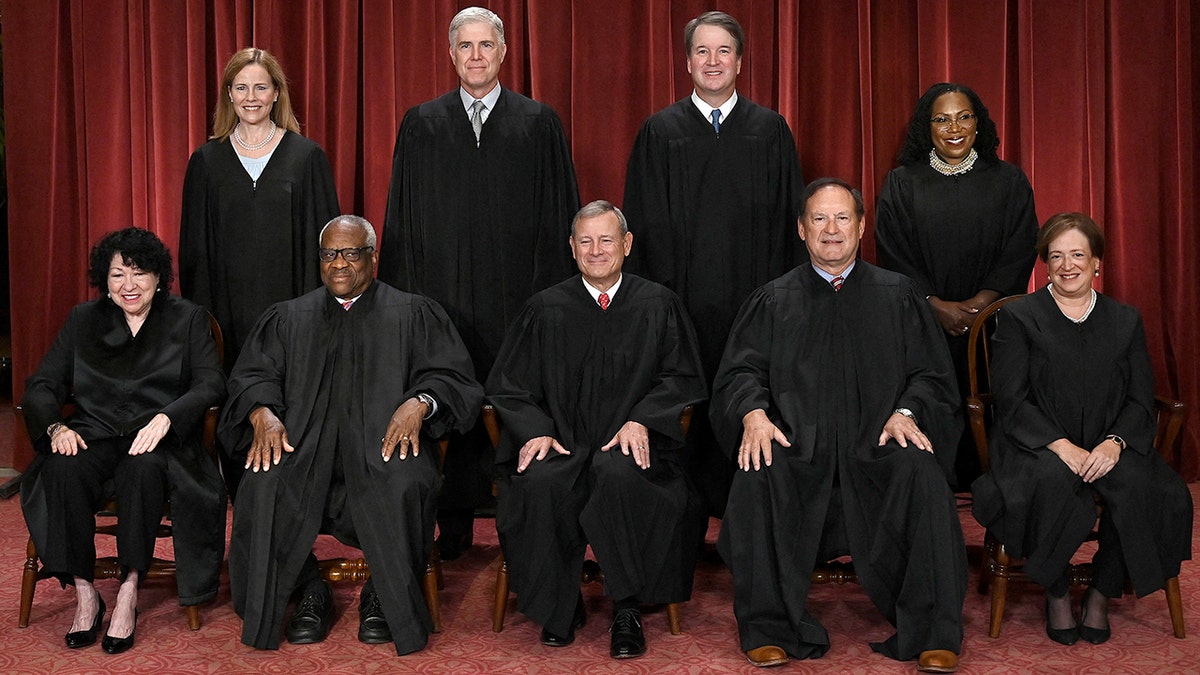
United States Supreme Court (front row L-R) Associate Justice Sonia Sotomayor, Associate Justice Clarence Thomas, Chief Justice of the United States John Roberts, Associate Justice Samuel Alito, and Associate Justice Elena Kagan, (back row L-R) Associate Justice Amy Coney Barrett, Associate Justice Neil Gorsuch, Associate Justice Brett Kavanaugh and Associate Justice Ketanji Brown Jackson pose for their official portrait at the East Conference Room of the Supreme Court building on Oct. 7, 2022, in Washington, D.C. (OLIVIER DOULIERY/AFP via Getty Images)
And in Ellingburg v. United States, the justices considered whether court-ordered monetary restitution under a federal law counts as criminal punishment for purposes of the Constitution’s Ex Post Facto Clause. The justices unanimously agreed that it does, meaning restitution is subject to the Constitution’s limits on retroactive criminal punishment.
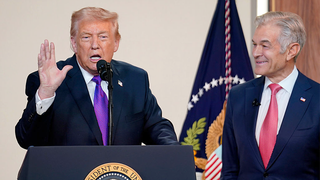
Anticipation for the Supreme Court tariff ruling is building after Trump threatened on his Truth Social platform to impose a 10% tariff on eight European countries unless a deal is reached for what he called the "complete and total purchase of Greenland."
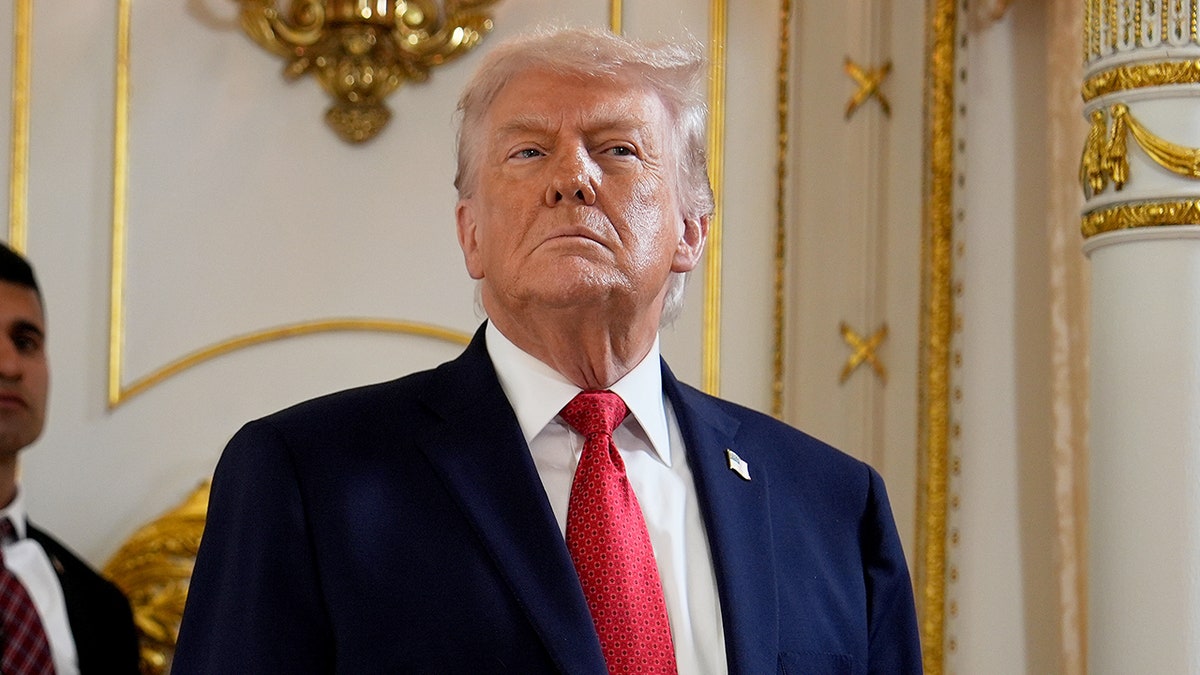
President Donald Trump arrives at a dedication ceremony for a portion of Southern Boulevard that the Town of Palm Beach Council recently voted to rename President Donald J. Trump Boulevard at his Mar-a-Lago Club in Palm Beach, Florida, Jan. 16, 2026. (Julia Demaree Nikhinson/AP Photo)
CLICK HERE TO DOWNLOAD THE FOX NEWS APP
Trump has defended the tariffs as a necessary use of emergency authority, while challengers argue the move exceeds presidential power and bypasses Congress.
The Court has not yet announced when it will next release opinions.
