











UPDATE: House Minority Leader John Boehner responded to Obama's speech in Pittsburgh:
“It’s clear from his harsh partisan rhetoric today that President Obama has run out of excuses for his broken promises on the economy. Instead of creating the jobs and prosperity he promised, President Obama’s ‘new foundation’ consists of more spending, more debt, more job-killing policies, and more permanent bailouts, which is really no foundation at all.
The President promised his ‘stimulus’ plan would keep unemployment below eight percent and create jobs ‘immediately,’ yet the unemployment rate remains unacceptably high at 9.9 percent, millions Americans have lost their jobs since the ‘stimulus’ was enacted, and one out of 10 remain out of work.
The President diminishes the Office of the President when he resorts to straw man arguments that willfully mischaracterize the views of others. All of the President’s talk of post-partisanship, reaching out, and finding common ground reminds us that the country deserves better than his hyper-partisan speech today.”
Boehner also attached this quote from Carnegie Mellon economist Allan Meltzer, whom the GOP House leader described as a member of his “kitchen cabinet.”
“When President Obama spoke at Carnegie Mellon University today, his rhetoric was divorced from current reality. His administration and the Congress continue to increase government spending. President Obama talks about reducing spending, but he hasn't vetoed a spending bill. Cities and states are about to go bankrupt or default on their debt, while the president mandates increased state spending for Medicaid. The reality is that the huge stimulus spending has done little to reduce unemployment. Long-term unemployment has never been higher in the past 60 years. Mr. President, it's past time to rein in the government and put the country on a path to future prosperity so we don't end [up] like Greece.”
End of update
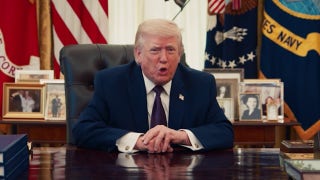
President Obama just landed in Pittsburgh for a speech he will soon deliver on economic policy. Obama bounded off Air Force One with Sen. Arlen Specter, the White House-backed candidate who lost to Democratic Rep. Joe Sestak in Pennsylvania's Senate primary.
Sestak will not attend Obama's speech at Carnegie Mellon University. White House Deputy Press Secretary Bill Burton said Sestak was invited to a political event at Carnegie before and to stay for the speech, but he turned both down -- citing a scheduling conflict.
The White House released excerpts of Obama's speech, highlighting an aggressive line of attack against Republicans, summarizing their economic policies a combination of tax cuts for the rich and a light regulatory touch for big corporations.
The speech appeared to be a prelude to Democratic arguments nationwide as the mid-term election approaches and Republicans foster hopes of big gains in the House and Senate.
Obama also leverages the massive oil spill in the Gulf as a means of winning Senate approval for a clean energy bill that, in his words, finally puts "a price on carbon pollution."
Conceding Senate opposition has killed the idea of carbon-based taxes -- under the rubric of cap-and-trade or any other mechanism - Obama vowed to devote the remaining months of this legislative session to find the votes.
"I will work with anyone from either party to get this done," Obama's prepared text reads. "But we will get this done. The next generation will not be held hostage to energy sources from the last century."
Here are the excerpts released by the White House:
"America does not stand still. We move forward. That is why I’ve said that as we emerge from this recession, we cannot return to the pre-crisis status quo. We cannot go back to an economy that was too dependent on bubbles and debt and financial speculation. We cannot accept economic growth that leaves the middle-class owing more and making less. We must build a new, stronger foundation for growth and prosperity – and that’s exactly what we’ve been doing for the last sixteen months.
It’s a foundation based on investments in our people and their future. Investments in the skills and education we need to compete. Investments in a 21st century infrastructure for America – from high-speed railroads to high-speed internet. Investments in research and technology, like clean energy, that can lead to new jobs and new exports and new industries.
This new foundation is also based on reforms that will make our economy stronger and our businesses more competitive – reforms that will make health care cheaper, our financial system more secure, and our government less burdened with debt.…
Now, some of you may have noticed that we have been building this foundation without much help from our friends in the other party. From our efforts to rescue the economy to health insurance reform to financial reform, most have sat on the sidelines and shouted from the bleachers. They said no to tax cuts for small businesses; no to tax credits for college tuition; no to investments in clean energy. They said no to protecting patients from insurance companies and consumers from big banks.
But to be fair, a good deal of the other party’s opposition to our agenda has also been rooted in their sincere and fundamental belief about government. It’s a belief that government has little or no role to play in helping this nation meet our collective challenges. It’s an agenda that basically offers two answers to every problem we face: more tax breaks for the wealthy and fewer rules for corporations.
As November approaches, leaders in the other party will campaign furiously on the same economic argument they’ve been making for decades. Fortunately, we don’t have to look back too many years to see how it turns out. For much of the last ten years, we tried it their way. They gave tax cuts that weren’t paid for to millionaires who didn’t need them. They gutted regulations, and put industry insiders in charge of industry oversight. They shortchanged investments in clean energy and education; in research and technology. And despite all their current moralizing about the need to curb spending, this is the same crowd who took the record $237 billion surplus that President Clinton left them and turned it into a record $1.3 trillion deficit.
So we already know where their ideas led us. And now we have a choice as a nation. We can return to the failed economic policies of the past, or we can keep building a stronger future. We can go backward, or we can keep moving forward.
I don’t know about you, but I want to move forward.
The catastrophe unfolding in the Gulf right now may prove to be a result of human error – or corporations taking dangerous short-cuts that compromised safety. But we have to acknowledge that there are inherent risks to drilling four miles beneath the surface of the Earth – risks that are bound to increase the harder oil extraction becomes. Just like we have to acknowledge that an America run solely on fossil fuels should not be the vision we have for our children and grandchildren.
The time has come, once and for all, for this nation to fully embrace a clean energy future. That means continuing our unprecedented effort to make everything from our homes and businesses to our cars and trucks more energy efficient. It means tapping into our natural gas reserves, and moving ahead with our plan to expand our nation’s fleet of nuclear power plants. And it means rolling back billions of dollars in tax breaks to oil companies so we can prioritize investments in clean energy research and development.
But the only way the transition to clean energy will succeed is if the private sector is fully invested in this future – if capital comes off the sidelines and the ingenuity of our entrepreneurs is unleashed. And the only way to do that is by finally putting a price on carbon pollution.
The House of Representatives has already passed a comprehensive energy and climate bill, and there is currently a plan in the Senate – a plan that was developed with ideas from Democrats and Republicans – that would achieve the same goals. The votes may not be there right now, but I intend to find them in the coming months. I will make the case for a clean energy future wherever I can, and I will work with anyone from either party to get this done. But we will get this done. The next generation will not be held hostage to energy sources from the last century. We will not move back. America will move forward."
End of Obama excerpts.
More from Politics



Fox News Politics
Get the latest updates from the 2024 campaign trail, exclusive interviews and more Fox News politics content.
By entering your email and clicking the Subscribe button, you agree to the Fox News Privacy Policy and Terms of Use, and agree to receive content and promotional communications from Fox News. You understand that you can opt-out at any time.
