















President Obama summoned House and Senate Democratic leaders to the White House late Thursday to discuss an apparent break-through on the make-or-break issue of excise taxes on health benefit plans and other as-yet-unresolved health reform issues.
After enduring months of criticism -- mostly expressed in Democratic cloakrooms on Capitol Hill -- that he was too detached from negotiations, Obama has jumped in with both-feet. He has now personalized a marathon push to land a health care deal this week or early next, telling lawmakers and key party "stakeholders" he will not tolerate failure and compromises - even hard ones - must be achieved on a tight time schedule.
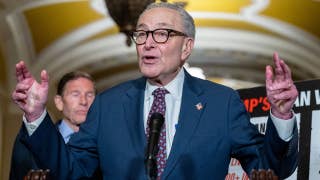
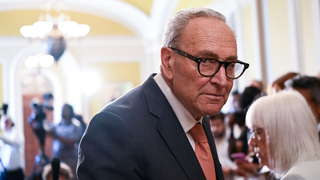
Obama and his top advisers met with twelve top Democrats -- the bicameral leadership plus all relevant committee chairmen and New York Sen. Charles Schumer. The meeting began at 9 p.m. EST and had no scheduled end time. Most of these same lawmakers spent more than eight hours at the White House Wednesday trying to hammer out a deal.
A bi-product of those talks emerged today in the form of a deal the White House and top union leaders heralded a policy and political breakthrough. In general, the agreement shields all union workers for five years from significant taxes on health benefit packages that non-union workers will face starting in 2013.
Obama told union leaders who came to the White House Tuesday to express their opposition to the excise taxes that they would not deter him and they must accept the tax in some form.
Once informed Obama wouldn't budge, union leaders fell back sought various exemptions, even though some in their membership adamantly opposed any tax on health benefits. Democrats says this stands as an example of Obama's new-found tenacity on the details and politics of health reform.
Republican critics called the union deal another back-room favor handed out in secret talks that violated Obama's promise of health care transparency.
Even so, House Democratic leaders appeared oddly unaware of the compromise or unwilling to publicly commit to it.
House Speaker Nancy Pelosi told reporters on before President Obama came to the Capitol to rally rank-and-file Democrats that "she had not seen the agreement." House Majority Leader Steny Hoyer said "nothing has officially been added or subtracted at this time," adding "everything is on the table."
In truth, House leaders were intimately involved in two-days of wrangling with top blue-collar and public employee union leaders and the White House over restructuring a Senate-passed 40 percent excise tax on health benefit plans. Union leaders complained the taxes would force their members to lose existing benefits or pay higher premiums.
But just because House Democratic leaders are aware of the contours of the deal doesn't mean they are sure rank-and-file members will support it. Union backing improves the chances that most if not all of the full 256-member Democratic caucus will accept the arrangement. But a formal nose count has not been taken.
Other variables complicate even the task of corralling enough votes for a full health care reform bill. They leadership anxiety over still-unresolved issues that continue to complicate negotiations with the White House and Senate. They include: abortion funding, the anti-trust exemption for insurers and the precise formation of a health care exchange that will serve as a clearinghouse for consumers to purchase health coverage.
To buck up House Democrats, Obama offered a stirring defense of the party's head-long push for health reform.
"I know how big a lift this has been, I see the polls," Obama told House Democrats assembled for their annual issues conference. "I know that the virtues of this legislation for Americans with insurance and Americans without it have been entirely obscured by fear and distraction. I also know what happens once we get this done, once we sign this bill into law. The American people will suddenly learn that this bill does things they like and doesn't do things that people have been trying to say it does. Their worst fears will prove groundless and the American people's hope for a fair shake from their insurance companies for quality, affordable health care they need will finally be realized."
With victory ever-more in sight, the typically tight-lipped White House declared the union-backed deal on health benefit taxes. Communications Director Dan Pfeiffer said "everyone agrees we have taken a big step toward bringing this to a conclusion."
After declaring Obama was "pleased with" the union deal, Pfeiffer said the White House after "very intense and long discussions" was on the verge of sealing what it considers a historic agreement on expanding coverage to 31 million uninsured.
"We are much closer to 100 percent (agreement) than we were this morning," said Pfeiffer.
Top union officials said newly drafted exemptions from their members will cost the White House $60 billion in projected revenue over 10 years. The White House said no official figure was available, but did not suggest the union figure was misleading.
The Senate's original tax was to raise $149 billion over 10 years. Cutting $60 billion from that figure would require negotiators to find revenue elsewhere. Neither union leaders nor the White House offered any specifics on replacement taxes under consideration.
Lawmakers have been eyeing applying Medicare payroll taxes to capital gains and other dividend income for annual incomes above $200,000 for individuals and $250,000 for families. The Senate bill already seeks to increase Medicare payroll taxes from 1.45 percent to 2.35 percent of individuals and joint-filers in those wealth categories.
The union deal exempts all workers covered by collective bargaining agreements from any excise tax on health benefits until 2018, five years later than non-union workers.
"Our people were very very pleased by it," said Gerald McEntee, president of the American Federation of State, County and Municipal Employees. "They're ready to go out and fight for it and even improve it down line. We're for this health care reform and ready to fight for it."
Richard Trumka, president of the AFL-CIO called the excise the biggest hurdle for union support. Absent any last minute changes neither he nor other union leaders anticipate, Trumka said the AFL-CIO's on board. He further predicted strong rank-and-file backing for Democrats seeking re-election in the upcoming mid-term elections.
"We will endorse it and do it proudly," Trumka said of the emerging health care bill. "
The deal also exempts vision and dental benefits from the value of union health packages subject to taxation. This exemption also applies to non-union workers. Adjustments would be made for union and non-union workers on the basis of age, gender and high-risk professions (law enforcement and fire fighting). The White House said the idea of this change is to shift the tax focus from where per-employee costs are high to ones where per-employee benefits are high regardless of age, gender or job risk.
Pfeiffer said the White House, after endorsing the original Senate excise structure for health benefits relented because "we cannot do health care on the backs of the middle class," adding the changes "alleviate a lot of burden on the middle class" the Senate taxes imposed.
Meanwhile, Sen. Russell Feingold, D-Wisc., wrote Pelosi and Senate Majority Leader Harry Reid and called on them to remove what he called "sweetners" from the health care legislation. Aides said Feingold seeks removal of deals that doled out millions in Medicaid benefits for Louisiana and Nebraska, Medicare breaks in Florida, and millions for construction of a hospital in Connecticut.
"I strongly urge you to strike unwarranted provisions that were apparently inserted to win the support of certain members or interests," Feingold wrote. "These 'sweeteners' are unjustifiable and only detract from our collective goal of putting America's health care system on a better and more sustainable path."
