













Jonathan Turley calls out Walz, Frey for 'conspicuous' silence on church protest
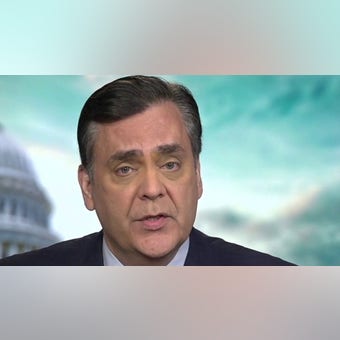
George Washington University law professor Jonathan Turley weighs in on the the legal ramifications of the Justice Department’s investigation into agitators who targeted a Minnesota church believed to be home to an ICE official.
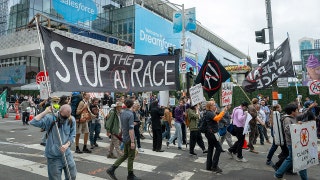
Minnesota Attorney General Keith Ellison declared Sunday that there are no federal grounds for prosecuting the mob that disrupted St. Paul’s Cities Church and characterized the conduct as "First Amendment activity." Ellison not only supported the protesters as exercising their First Amendment rights in an interview with CNN, but also signaled an unwillingness to enforce state laws allegedly violated by the protesters, including trespass and disorderly conduct.
Ellison is infamous for his prior support for violent groups and has long-faced criticism for statements and associations involving extremist movements and figures linked to political unrest. Ellison previously drew backlash for saying that Antifa would "strike fear in the heart" of Trump while holding up the "Antifa Handbook." His own son, Minneapolis City Council member Jeremiah Ellison, publicly expressed support for Antifa in the heat of the protests this past summer.
A past defender of extremist Louis Farrakhan, Ellison has also criticized the U.S. Constitution, arguing that "their constitution is the bedrock of American law; it’s the best evidence of a white racist conspiracy to subjugate other peoples."
BONDI VOWS ACCOUNTABILITY AFTER CHURCH ATTACK, SAYS MINNESOTA ‘A MESS RIGHT NOW’
One would think that a mob action against a church would be something that would transcend political divisions as a grotesque and chilling act. If you thought that, you do not know Keith Ellison.
Protesting outside a church is a First Amendment activity. Disrupting worship services, trespassing, and verbally abusing congregants inside a church constitutes conduct, not protected speech.
Notably, in the CNN interview, host Erin Burnett raised the incident largely in terms of its "bad optics" rather than focusing on the underlying attack on a house of worship. Yet Ellison was not even willing to take that narrower cue, refusing to object even on appearances, let alone on the denial of religious exercise. He insisted that this was "a First Amendment activity" and not a crime.
He is wrong. Protesting outside a church is a First Amendment activity. Disrupting worship services, trespassing and verbally abusing congregants inside a church constitutes conduct, not protected speech.

Ellison is supposed to enforce state law without favoritism. Instead, he pivoted to attacking the Trump administration, stating, "If Trump likes you, you can do no wrong." There may be good-faith concerns over criticisms of being unfairly targeted by federal authorities. But Ellison’s selective enforcement posture substantially weakens his credibility in raising such objections.
There is not even a suggestion of self-awareness as Ellison dismisses enforcement of his own state laws against protesters who trespassed and engaged in disorderly conduct — setting aside entirely the targeting and disruption of religious services.

Putting aside his refusal to investigate or prosecute under state law, Ellison has also declared that there are no grounds for federal charges. He is wrong. Several federal statutes could plausibly apply to the conduct described.
Ellison went on Don Lemon’s podcast, a former CNN host who has been denounced for his filming the targeting of Cities Church and his subsequent handling of the incident, where Lemon appeared intent on reframing the controversy by attacking the faith of the congregants. Lemon stated, "I think people who are, you know, in the religious groups like that, it’s not the type of Christianity that I practice, but I think that they’re entitled, and that entitlement comes from a supremacy, a White supremacy."
That statement mirrored remarks from organizer Nekima Levy Armstrong of the local Racial Justice Network, who declared that churchgoers "need to check their theology and they need to check their hearts."

Ellison nonetheless insisted on Lemon’s show that no federal crime occurred. He specifically argued that the FACE Act could not apply because it was designed solely to protect abortion rights, stating: "the FACE Act, by the way, is designed to protect the rights of people seeking reproductive rights… so that people for a religious reason cannot just use religion to break into women’s reproductive health centers."
While it is true that the FACE Act is best known for protecting abortion clinics, the statute expressly extends to places of religious worship, making it a federal crime to prohibit by force or physical obstruction the exercise of religious freedom. The law bars conduct that "injures, intimidates, or interferes with a person seeking to… exercise the First Amendment right of religious freedom at a place of religious worship." Other federal statutes likewise protect against the denial of civil rights.
GABBARD SLAMS DEMOCRATS' 'HOSTILITY TOWARDS GOD,' CONDEMNS ANTI-ICE AGITATORS WHO STORMED CHURCH
Ellison nevertheless told the public that no such federal laws exist and that the FACE Act cannot apply in this case. That representation is, at minimum, incomplete and misleading.
Unfortunately, this episode reflects a broader pattern for Ellison, who has long been accused of tailoring criminal enforcement to political priorities.
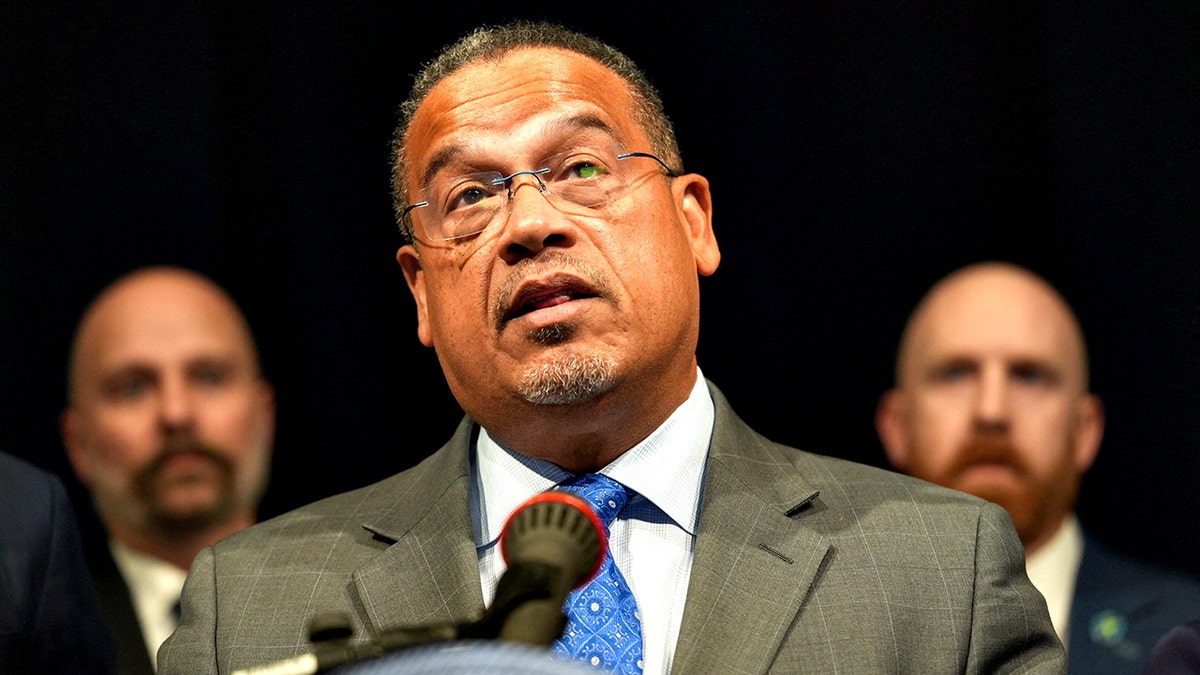
Minnesota Attorney General Keith Ellison speaks during a press conference after an ICE agent fatally shot Renee Nicole Good, in Minneapolis, Minnesota, U.S., January 12, 2026. (Reuters/Tim Evans)
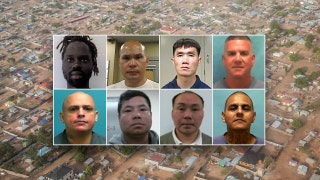
Ellison has been criticized for failing to aggressively pursue what federal investigators later described as one of the largest pandemic-related fraud schemes in the nation. More recently, recordings surfaced showing Ellison meeting with community figures who were later convicted in that fraud case.
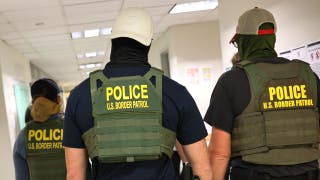
At the same time, Ellison has shown a disregard for legal boundaries by filing what critics describe as a frivolous lawsuit seeking to block federal authorities from deploying additional personnel to investigate fraud or enforce immigration laws within the state.
CLICK HERE FOR MORE FOX NEWS OPINION
Ellison presents a curious model of attorney general — one who resists enforcing his own laws while suing to prevent the federal government from enforcing its own. It is akin to a doctor who opposes the actual administration of medicine.

In that sense, Ellison has come to embody a politicized model of law enforcement, excusing mob conduct while expressing hostility toward traditional policing.
CLICK HERE TO DOWNLOAD THE FOX NEWS APP
Ironically, Ellison has made the case for increased federal involvement in Minnesota. By declining to enforce laws against political allies, he has created the very vacuum that invites federal intervention.
At the end of the day, it may be appropriate that Ellison is in court opposing expanded federal enforcement. After all, his conduct offers some of the strongest evidence for why such oversight may be necessary.
