Trump says Iran deal near after second day of US strikes and attacks
Both the U.S. and Iran say peace talks are still on Thursday even as both sides launch a fresh wave of attacks. President Donald Trump was warned that he will re-escalate U.S. aggression if Iran doesn't come to an agreement.
Coverage for this event has ended.
Trump says Kharg Island proposal would be abandoned if Iran agreement is signed
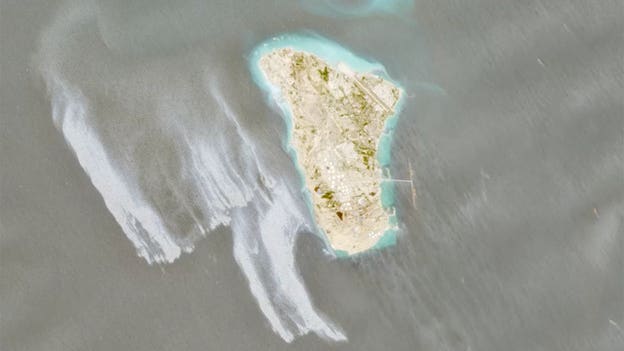
A proposal to seize Iran's strategically important Kharg Island would be abandoned if Tehran signs a pending agreement with the U.S., according to comments made by President Donald Trump Thursday in the Oval Office.
Less than a day after emerging as one of the most aggressive ideas floated during the conflict, the plan now appears unlikely to move forward as negotiations advance toward a potential deal.
"It would be. If we sign this agreement," Trump said when asked whether the Kharg Island plan was now off the table.
Earlier Thursday, Trump described taking the island as a preferred outcome and argued the U.S. could assume control of Iranian oil and gas markets through such a move.
Kharg Island serves as Iran's primary oil export terminal and has become a central focus of the administration's pressure campaign against Tehran.
Follow the latest updates in the conflict with Iran
Click here to follow the latest updates in the conflict with Iran.
US shoots down Iranian drones after apparent attempt to target ships in Strait of Hormuz
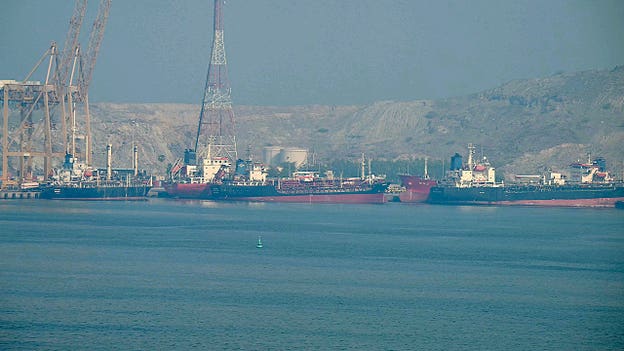
Commercial shipping traffic in the Strait of Hormuz came under apparent threat Thursday night after Iran launched drones toward vessels transiting the strategic waterway, according to a senior U.S. defense official.
The incident occurred as President Donald Trump continued to express optimism about a pending agreement with Tehran and repeatedly declared that the conflict had effectively come to an end.
"It appears Iran has attempted to strike commercial ships transiting the Strait of Hormuz tonight," the official said. "U.S. forces shot down two Iranian one-way attack drones."
The official said maritime traffic through the Strait continues despite the attempted attacks.
The development comes hours after Trump said a deal with Iran could be signed within days and that the Strait of Hormuz would reopen as part of the agreement.
Fox News’ Jennifer Griffin contributed to this report.
Trump touts end of Iran conflict during Georgia tele-rally as talks near agreement
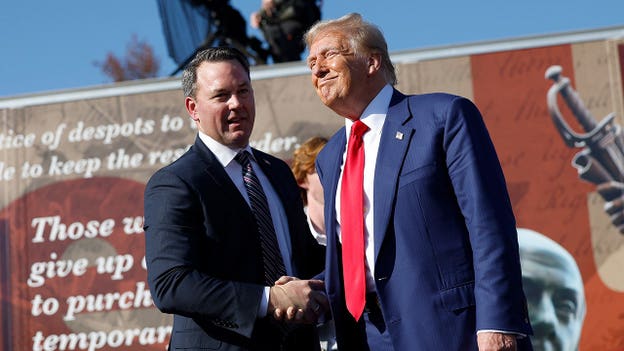
President Donald Trump declared Thursday that the conflict with Iran has ended, telling supporters during a tele-rally for Georgia Lt. Gov. Burt Jones, a Republican candidate for governor, that Tehran has agreed to forgo nuclear weapons.
Addressing voters ahead of Tuesday's Georgia runoff election, Trump pointed to the Iran negotiations as one of the administration's latest foreign policy achievements.
"I don't know if you heard, but we ended the war with Iran today, and they have agreed never to have a nuclear weapon, something that we insisted on," Trump said. "That was the whole purpose."
The president added that preventing Iran from obtaining a nuclear weapon was "95%" of the reason behind the administration's pressure campaign against Tehran.
Jones echoed Trump's optimism about the negotiations, thanking the president for his handling of the situation.
"Thank you, Mr. President, and thank you for all your hard work on the Iran situation," Jones said. "I know you're glad to get that settled, and we appreciate all that you do for this country."
Iran rejects Trump's claim that negotiators have approved a deal and says key issues remain
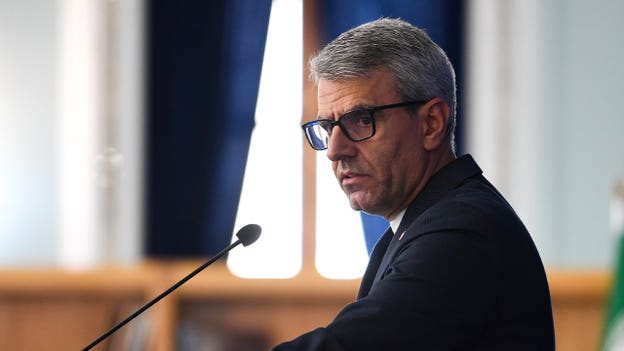
Iran publicly pushed back Thursday on President Donald Trump's claims that a deal is nearing completion, saying key issues remain unresolved and no final agreement has been reached.
According to Reuters, citing Iran's state-run IRNA news agency, Foreign Ministry spokesperson Esmaeil Baghaei said Tehran has not made a final decision on any potential agreement with the U.S. and will not compromise on the country's "red lines" during negotiations.
Baghaei also dismissed reports about a signing ceremony, saying speculation about a time and place for an agreement was premature because nothing has been finalized.
The comments come hours after Trump said negotiators were in the final stages of an agreement that could be signed in Europe within days and suggested all sides had approved its framework.
Separately, The Hormuz Letter reported that Iran's Foreign Ministry rejected Trump's assertion that Iran's leadership had approved the deal, citing remarks carried by the Fars News Agency that "no agreement has been reached" and that any eventual accord would require the United States to accept Iran's demands.
Despite the public disagreement, Baghaei acknowledged that a substantial portion of the negotiating text had been completed, while accusing Washington of repeatedly changing its positions during the talks.
US denies new airstrikes after social media reports of explosions in Iran
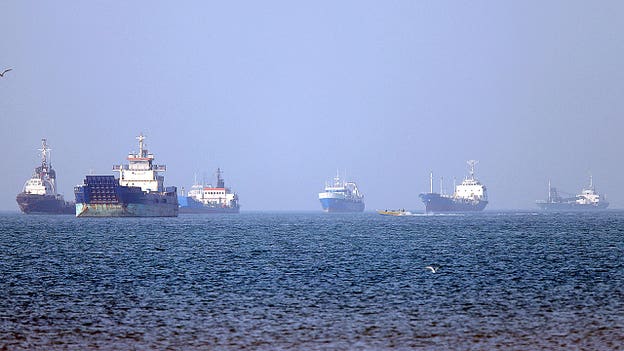
Reports circulating on social media of explosions in Iran do not appear to be tied to new U.S. military action, according to a U.S. official familiar with ongoing operations.
The clarification came after reports on X claimed explosions had been heard in Bandar Abbas and other locations across Iran, prompting speculation that the U.S. may have resumed airstrikes.
A U.S. official told Fox News chief national security correspondent Jennifer Griffin that U.S. Central Command is not conducting airstrikes and continues to maintain the current ceasefire posture.
The update comes as the Trump administration pushes toward a potential agreement with Tehran after days of military escalation and renewed diplomatic engagement.
Fox News’ Jennifer Griffin contributed to this report.
Markets surge as Trump signals Iran deal may be just days away
Wall Street rallied and oil prices fell Thursday after President Donald Trump said a deal with Iran could be signed within days, raising hopes that tensions in the Middle East may soon ease.
During remarks in the Oval Office, Trump said negotiators are nearing an agreement and suggested a signing ceremony could take place in Europe as soon as this weekend.
"We have a signing soon," Trump said, adding that the Strait of Hormuz would reopen once the agreement is finalized.
The comments appeared to boost investor confidence, with major stock indexes climbing while oil prices moved sharply lower. Fox Business' Liz Claman noted that both West Texas Intermediate and Brent crude extended their losses following Trump's remarks.
The market reaction came despite renewed military hostilities earlier this week, including U.S. strikes against Iranian targets and threats of additional action before Trump later announced he had canceled planned attacks after claiming progress in negotiations.
Neither Iran nor Israel had immediately confirmed Trump's latest characterization of the talks, though the president said he had spoken with Israeli Prime Minister Benjamin Netanyahu and remained confident a deal would be completed soon.
Five American weapons that could bring Iran’s oil fortress to its knees
Kharg Island is the crown jewel of Iran’s oil industry. This tiny coral island handles 90% of Iran’s oil exports. The island has terminals for loading ships with up to 6 million barrels per day and can store 30 million barrels of crude oil and. Of course, it’s under the control of the loathsome Iranian Revolutionary Guard Corps, who mix money and terror.
"Maybe we take Kharg Island, maybe we don’t. We have a lot of options," President Donald Trump told the Financial Times back on March 29. Then on Thursday, Trump bandied about a U.S. military seizure of Kharg Island. Clearly, it remains at the top of the list for strike options.
Can you imagine Iran’s oil spigot in Trump’s hands?
Just the credible threat of seizing the oil export terminals on Kharg Island might be enough to make even Iran’s hardliners sign Trump’s deal.
Find out more about the weapons that could have the biggest impact on Kharg Island.
This is an excerpt from an opinion piece by Dr. Rebecca Grant, Vice President of the Lexington Institute.
Netanyahu applauds Trump commitment on Iran while talks continue
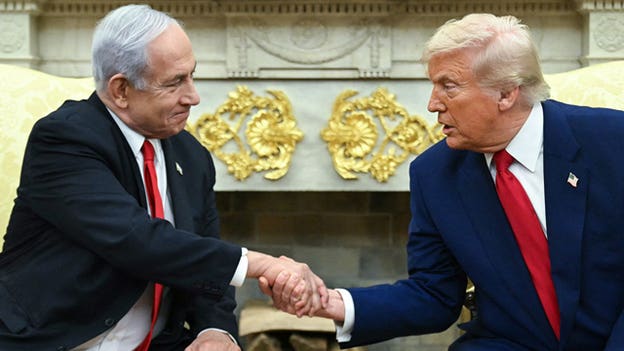
Israeli Prime Minister Benjamin Netanyahu offered his strongest public endorsement yet of the emerging U.S.-Iran diplomatic framework on Thursday, signaling confidence that President Donald Trump is pursuing terms that address Israel's core security concerns.
Following a call between the two leaders, Netanyahu's office said Israel is not a party to the memorandum of understanding currently being developed with Iran.
However, the prime minister welcomed Trump's assurances that any final agreement would require Tehran to eliminate key components of its nuclear program, limit missile development and end support for terrorist proxy groups throughout the Middle East.
“President Trump spoke this evening with Prime Minister Netanyahu about the memorandum of understanding being formulated with Iran as a framework for entering negotiations,” a translated statement from Netanyahu’s office read.
“Although Israel is not a party to the memorandum of understanding, the Prime Minister expressed his appreciation for President Trump’s commitment that any final agreement reached at the conclusion of the negotiations will include the removal of enriched nuclear material, the dismantling of enrichment infrastructure, limits on missile production, and an end to Iran’s support for its terrorist proxies in the region.”
Fox News' Yonat Friling contributed to this report.
Trump details Iran nuclear pledge as negotiators work to finalize agreement
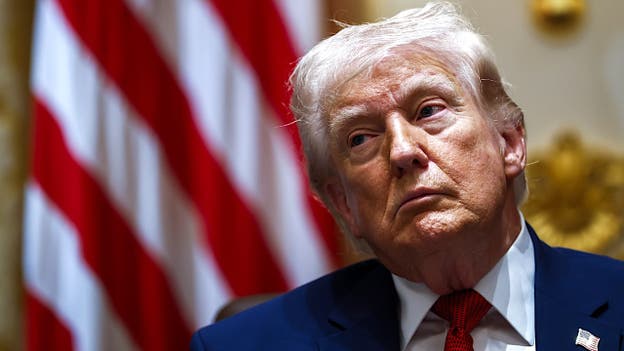
President Donald Trump said Thursday that Iran has agreed not to develop or acquire nuclear weapons under a pending agreement that currently exists as a memorandum of understanding, offering new details about negotiations he says could conclude within days.
Trump offered the clearest description yet of the proposed agreement's nuclear provisions, arguing that Tehran has committed to permanently abandoning any effort to obtain a nuclear weapon.
"They will not purchase, develop in any way, shape or form a nuclear weapon," Trump said while speaking with reporters in the Oval Office. "They will not have a nuclear weapon."
The president acknowledged the agreement has not yet been formally signed, describing it instead as a detailed memorandum of understanding between the parties.
"There's a very strong memorandum of understanding that is a little conceptual, but it's something that's going to get done," Trump said. "It's a very detailed memorandum of understanding."
Trump says blockade removal is explicitly part of the agreement
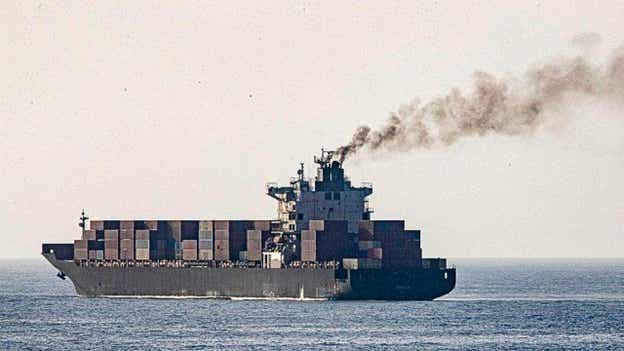
President Donald Trump said Thursday that lifting the U.S. blockade against Iran is a formal component of a pending agreement with Tehran, offering the clearest indication yet of what the administration expects to provide in exchange for concessions.
Speaking to reporters in the Oval Office, Trump was asked whether the United States would immediately lift the blockade once an agreement is signed.
"Yes. That's true. It's part of the deal," Trump responded.
The comment expands on Trump's earlier statement that the Strait of Hormuz would reopen after an agreement is finalized, suggesting the administration has already negotiated terms governing the future of the blockade.
Trump has repeatedly argued that the blockade helped pressure Iran into negotiations, while administration officials and Republican allies have stressed that maintaining leverage over Tehran would be critical to enforcing any future agreement.
Trump says Iran deal is nearly complete and could be signed in Europe within days
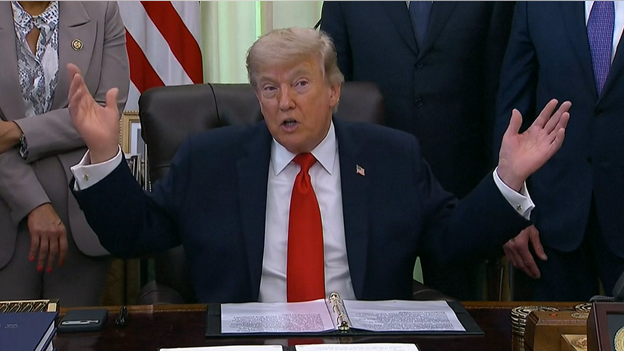
President Donald Trump said Thursday that a deal to end the conflict with Iran is nearly complete, adding that negotiators are finalizing documents and could sign an agreement in Europe within days.
Speaking to reporters in the Oval Office, Trump declared that negotiators had reached a breakthrough and suggested the agreement was largely finished pending completion of final paperwork.
"We just made a great settlement of the war with Iran," Trump said. "The documents are in pretty final shape, so we'll see. It should be done pretty quickly."
Trump said the agreement would ensure Iran never obtains a nuclear weapon, which he described as the central objective of the administration's pressure campaign against Tehran.
The president also said the Strait of Hormuz would reopen once the agreement is signed, potentially easing pressure on global energy markets after weeks of military tensions and maritime disruptions in the region.
Trump added that Vice President JD Vance is expected to attend the signing ceremony, which he said could take place in Europe as soon as this weekend.
Inside Tehran: Iranians describe IRGC's brutal rule, poverty — ask Trump to 'stay the course'
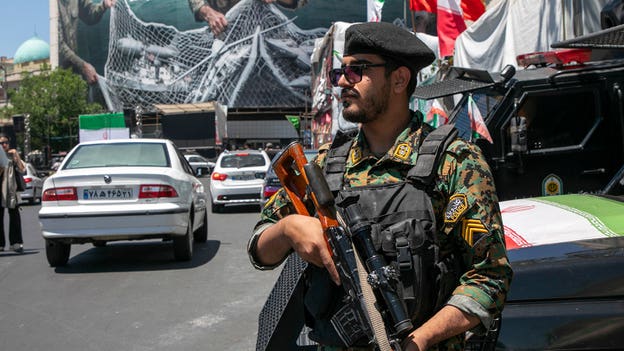
A fragile ceasefire that many Iranians say does not feel like one has given some people inside Iran the courage to speak out, despite what they describe as enormous personal risk.
The accounts come as President Donald Trump threatened to hit Iran "very hard" if Iran does not accept a U.S.-backed deal, after renewed military escalation threatened to derail already fragile negotiations. The latest round of U.S. strikes followed the downing of a U.S. Apache helicopter near the Strait of Hormuz, which Trump blamed on the Iranian regime. Iran later reportedly retaliated with attacks in the region.
Inside Iran, three young voices described a country where repression is becoming even more visible, the Islamic Revolutionary Guard Corps is expanding its presence on the streets, and ordinary people are struggling to afford basic necessities.
All three spoke to Fox News Digital through written messages because of security concerns and internet restrictions inside Iran. Their names have been changed to protect their identities.
Find out more about what Iranians said about the situation in their country.
This is an excerpt from a story by Fox News Digital’s Efrat Lachter.
Trump pivots on strikes while dangling Iran deal, testing whether Tehran blinks
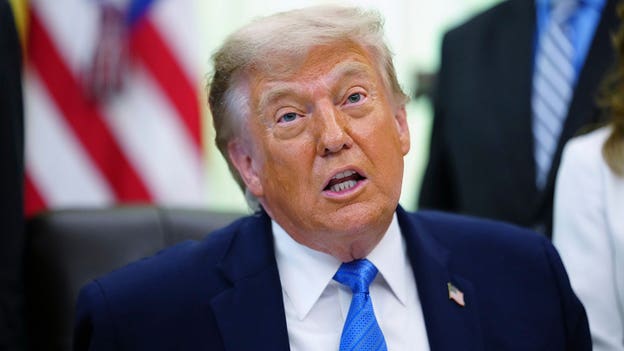
After months of predicting a nuclear deal with Iran was just around the corner, President Donald Trump appears to be testing whether military pressure can accomplish what diplomacy alone has not.
The strategy was on full display over the past 24 hours. Trump followed through on his threat to strike Iran again overnight, launching a barrage of Tomahawk missiles and fighter jet attacks against Iranian targets while warning that additional bombing would follow unless Iran agreed to a deal. Hours later, however, he announced he had canceled planned strikes for Thursday evening, saying negotiations had been elevated to the highest levels of Iran's leadership and that the parties had approved the final contours of an agreement.
The rapid sequence of threats, strikes and renewed diplomacy highlights an increasingly familiar pattern in Trump's approach to Iran: using military pressure to push negotiations forward while keeping a diplomatic off-ramp open. The question is whether the strategy is increasing Washington's leverage — or reinforcing Iran's belief that the United States ultimately wants a deal more than continued confrontation.
"He has made so many threats that he has not carried through on and telegraphed on many occasions his strong desire to end this war as soon as possible, that I think Iran does not take these threats seriously," Michael Eisenstadt, director of the Military and Security Studies Program at the Washington Institute for Near East Policy, told Fox News Digital.
Find out what else Eisenstadt said about the situation with Iran.
This is an excerpt from a story by Fox News Digital’s Morgan Phillips.
GOP senator backs Trump pressure on Iran but warns one hurdle remains
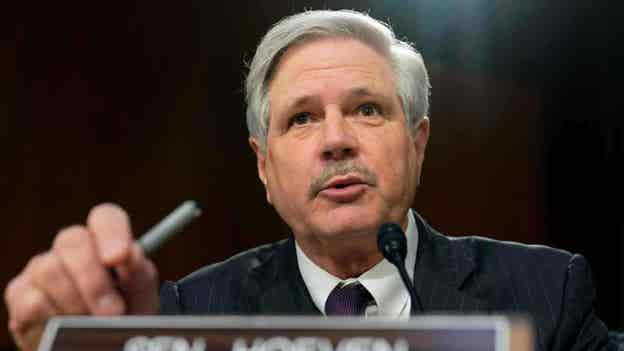
Sen. John Hoeven, R-N.D., defended President Donald Trump's approach to Iran on Thursday, arguing the administration must keep pressure on Tehran while pursuing a potential agreement aimed at preventing the regime from obtaining a nuclear weapon.
The North Dakota Republican told reporters that the administration's blockade and military pressure campaign have been effective in pushing Iran toward negotiations, while stressing that any deal must be enforceable.
"Think about who we're dealing with. We're dealing with Iran. They never, ever keep their word," Hoeven said. "You've got the Revolutionary Guard, you've got the ayatollahs, and then you've got their parliament. Who even speaks for the country? So it's a very difficult situation."
Hoeven's comments came after Trump announced he had canceled planned strikes against Iran on Thursday evening, claiming negotiations had advanced to the highest levels of Iran's leadership and that the sides were nearing an agreement.
"But remember, no matter what we do or whatever kind of agreement they sign, you've got to be able to enforce it," Hoeven said. "And so the blockade and these other measures are about making sure that we can enforce whatever agreement we get."
Trump cancels scheduled strikes against Iran, claiming progress in talks
President Donald Trump says he has canceled plans to carry out further attacks against Iran on Thursday, claiming to have made progress in talks with leaders in Tehran.
"Based on the fact that discussions with the Islamic Republic of Iran have been brought to the highest level of Iranian leadership and approved, I have, as President of the United States of America, cancelled the scheduled strikes and bombings against Iran this evening. Discussions and final points have been, in both concept and great detail, approved by all parties involved, including the United States, Israel, Saudi Arabia, UAE, Qatar, Turkey, Pakistan, Bahrain, Kuwait, Jordan, Egypt, and others. The Naval Blockade will remain in full force and effect until this Transaction is finalized — Time and place of the signing to be announced shortly," Trump wrote in a post on Truth Social.
Trump had previously announced a heavy wave of strikes against Iran earlier Thursday. It would have been the third consecutive day of U.S. attacks.
OPINION: Three choices now define Trump's Iran war and all of them have a cost
This is an excerpt from an opinion article by Robert Maginnis senior fellow for National Security at the Family Research Council.
In the months leading up to the 2003 invasion of Iraq, I served as a strategist at the Pentagon, where I had unusual access to military thinking, intelligence assessments, and senior-level discussions. I regularly attended meetings hosted by Secretary of Defense Donald Rumsfeld and Chairman of the Joint Chiefs General Richard Myers.
From the outside, it looked like Washington spoke with one confident voice. The Bush administration telegraphed certainty, and much of the media echoed it.
That was not my view.
The more information I received, the more questions I asked. What would victory look like? How many troops would be required? What would follow after Baghdad fell? Were we prepared for a prolonged occupation? Did we fully understand the political, tribal, religious, and regional forces we were about to unleash?
Those questions were swept aside by confidence in America's military superiority.
The regime fell quickly. The war did not.
What followed cost America more than 4,400 military deaths, over 32,000 wounded, and more than two trillion dollars. The conflict created the conditions that gave rise to ISIS, a threat that still plagues the region.
One hundred days into the Iran war, I find myself asking many of those same questions again.
Top Dem suggests Trump could start a world war in Iran: 'Spiral out of control'
Sen. Richard Blumenthal, D-Ct., suggested President Donald Trump could start another world war with his actions in Iran on Thursday.
Blumenthal made the statement while discussing issues with reporters on at the capitol, arguing Trump is "no longer in control" of the conflict.
"We are no longer in any kind of cease fire, even in name, there is no cease fire. There is a war. The danger now more than ever is that this war will spiral out of control. What we're seeing in real time is the kind of miscalculation that caused World War One. What we are, what we're seeing now in real time is the potential for miscalculations spiraling out of control, just as World War One began, just as other conflagrations have started, and the President is no longer in control, he is no longer a guiding force here, he is reactive and indecisive and impulsive, and that is a recipe for disaster," Blumenthal said.
"We are watching disaster unfold in real time with the gravest of costs and consequences to the American people, and most immediately to brave service men and women right now in harm's way," he added.
Gen Jack Keane on US Iran strategy and path to major combat operations
Fox News senior strategic analyst Gen. Jack Keane (Ret.) joined Fox News on Thursday to speak on President Donald Trump's warning to Iran of "hitting very hard" amid stalled negotiations to open the Strait of Hormuz and disarm their nuclear program.
Trump is threatening full re-escalation after weeks of a ceasefire with Tehran.
Schumer blasts Trump's 'disastrous' plan to take over Iran's Kharg Island
Senate Minority Leader Chuck Schumer blasted President Donald Trump's statement calling for the U.S. to take over Iran's Kharg Island on Thursday.
Schumer made the statement while speaking on the Senate floor, calling the war in Iran a "fiasco."
"On Iran for weeks, Donald Trump, Pete Hegseth and Marco Rubio have insisted their disastrous war in Iran is over. How stupid do they think the American people are? This morning, Trump said he plans to take Kharg Island, which could even mean putting American boots on the ground," Schumer said.
"It doesn't take a military genius to see that Trump's fiasco of a war with Iran never ended. Not when American, not with American helicopters being shot down. Not when American when American bases are being attacked and American troops are coming under fire," he added.
Donald Trump: My preference is always 'take Kharg Island' from Iran
President Donald Trump says it has been his long-standing preference for the U.S. to "take Kharg Island" from Iran to assume total control of their oil and gas markets.
Trump compared the potential action to the U.S. operation in Venezuela.
Expert advises to 'strike the heart of the regime' in Iran amid stalled negotiations
Retired Brigadier General John Teichert joined "Fox & Friends" on Thursday and urged President Donald Trump to "strike the heart" of Iran's regime.
Trump himself announced that the U.S. will conduct a wave of strikes against Iran for the third day in a row on Thursday.
He also says the U.S. is planning to seize Iran's Kharg Island in the future.
Trump says US tried to deliver arms to Iranian people, but regional ally 'let us down'
President Donald Trump confirmed that the U.S. attempted to deliver arms to the Iranian people in an effort to overthrow the regime in Tehran, but regional allies "let us down."
Trump made the statement during an on-air interview with "Fox & Friends," saying the the U.S. delivered weapons to the Kurds, regional adversaries of Iran, but he believes they kept the weapons for themselves rather than distributing them.
"The Kurds let us down," Trump said. "But I'll remember that, Kurds."
He went on to say that he was initially opposed to the plan, saying he suspected the Kurds would "keep the weapons."
Trump rages against media coverage of Iran war, claims even Iran is surprised
President Donald Trump raged against the ongoing media coverage of the war in Iran on Thursday, claiming that even Iranian officials have said they are surprised at how well they are doing "in the papers."
Trump made the statement during an interview on "Fox & Friends" minutes after he announced more airstrikes against Iran planned for Thursday night.
The president went on to praise the reporting of Fox News foreign correspondent Trey Yingst.
Trump announces more strikes against Iran, plans to take over key Iranian stronghold
President Donald Trump says the U.S. will be continuing strikes against Iran on Thursday as peace talks appear to have come to a standstill.
"The United States will be hitting Iran (Whose Navy, Air Force, Radar, Anti Aircraft, and all other forms of Defense, together with most of its offensive capability, are GONE!), VERY HARD TONIGHT," Trump warned.
Trump also revealed plans for the U.S. to take over Kharg Island, a key military and oil production hub for the Iranian regime.
"At some point in the not too distant future, we will be taking Kharg Island, and other oil infrastructure points, and assume total control of their Oil and Gas Markets, much like we have with Venezuela, which is working out brilliantly for both Venezuela and the United States of America," he wrote.
The U.S. has previously carried out airstrikes on Kharg Island, but no action has been taking to seize it.
Watters: Iran's broke and still trying to slip through the embargo
Fox News host Jesse Watters detailed the latest U.S. strikes against Iran on "Jesse Watters Primetime," highlighting the U.S. blockade on Iranian ports.
President Donald Trump revealed on Wednesday that the U.S. has snuck hundreds of millions of dollars worth of oil through the Strait of Hormuz without Iran's knowledge.
Meanwhile, U.S. forces have disabled more than a dozen vessels seeking to flout the U.S. blockade.
US forces disable third vessel violating Iran blockade: CENTCOM
U.S. Central Command says its forces disabled a third oil tanker attempting to violate the U.S. blockade in the Strait of Hormuz late Wednesday night.
CENTCOM wrote in an update on X that the vessel was attempting to transport Iranian oil. It is the third vessel U.S. forces have disabled this week.
"U.S. Central Command acted against Guinea-Bissau flagged M/T Jalveer as it attempted to transport oil from Iran through the Gulf of Oman. A U.S. aircraft fired two Hellfire missiles into the ship’s engine room after the crew repeatedly failed to comply with directions from U.S. forces," CENTCOM wrote in a statement.
In total, CENTCOM says its forces have disabled nine non-compliant vessels, redirected 135 ships that complied, and allowed 42 vessels supporting humanitarian aid to pass since initiating the blockade on April 13.
OPINION: Iran is not a normal nation you can make deals with. It’s a national security threat
This is an excerpt from an opinion article by counterterrorism analyst Erfan Fard.
For nearly half a century, American policymakers have debated how to negotiate with the Islamic Republic of Iran. The real question is whether Washington is still misdiagnosing the problem. Iran is not simply a diplomatic adversary but a regime whose strategy is built on terrorism, proxy warfare and hostility toward the United States.
Why does Washington continue to treat the regime as a negotiating partner when decades of evidence suggest it is a national security threat? The answer lies in a misunderstanding of its nature. Successive administrations have often analyzed Tehran as a conventional state pursuing national interests. It is not. The regime was born as an ideological project built on hostility toward America, Israel and the Western order.
The conflict did not begin with the nuclear issue, sanctions or regional expansion. It began in 1979, when Iran was transformed from a key American ally into a revolutionary headquarters. The seizure of the U.S. Embassy in Tehran was more than a diplomatic crisis; it signaled that the new regime would derive legitimacy through permanent confrontation.
Washington's misperception of the regime dates back to the revolution itself. Many American policymakers viewed the upheaval through the lens of anti-monarchical politics rather than Khomeinist ideology. The result was the greatest strategic loss of the Cold War: America lost a key ally and gained a radical state aligned with anti-Western forces across the Middle East.
The rebellious coalition surrounding Iran’s then-leader Ayatollah Ruhollah Khomeini extended beyond traditional clerics and included Islamic terrorist actors aligned with broader anti-Western movements. What emerged was not merely a new government but a transnational ideological project. Washington underestimated that transformation then and has often underestimated it since.
Khomeinism became the ideological engine of the regime, combining religious absolutism, anti-Westernism and political violence. This is why Washington has repeatedly misunderstood Tehran. The Islamic Republic is not merely a regime with whom America has policy disagreements. It views survival and confrontation as inseparable, while anti-Americanism, hostility toward Israel and the export of revolution remain central to its identity.
Trump reveals where he wants to sign Iran peace deal--if he gets one
President Donald Trump says he wants to sign an a peace agreement with Iran in Switzerland if he is successful in securing a deal.
Trump revealed the detail in an interview with Fox News foreign correspondent Trey Yingst on Thursday, even as hostilities between the U.S. and Iran are at their hottest point in weeks.
Vice President JD Vance says negotiations are taking place with both Iran's political leadership and the Iranian Revolutionary Guard Corps. Analysts say the IRGC has proven to be the more radical of the two and has repeatedly stalled talks.
The U.S. has carried out strikes against Iran for two straight days this week in response to the shoot-down of an Apache helicopter by Iran.
Trump reveals top Iranian officials called him directly, asking US to stop bombing
President Donald Trump on Wednesday revealed that top Iranian officials had called him directly to request a halt to U.S. bombing attacks, according to Fox News chief foreign correspondent Trey Yingst.
The exchange, which marks a rare and critical moment of direct engagement between Trump and Tehran leadership, came as the president said Washington had delivered “vicious” and “violent” strikes earlier in the day.
The president also told Fox News the U.S. operation involved the deployment of 49 Tomahawk missiles alongside fighter jets targeting radar and air defense systems. The strikes reportedly hammered positions about 40 miles outside Tehran and along Iran’s southwestern coast on the Persian Gulf.
Trump warned that the United States is prepared to rapidly escalate military action if Tehran does not soon sign an agreement to end the ongoing crisis.
“We'll bomb the S— out of them tomorrow,” Trump warned, going on to admit that the ceasefire with Iran is "the most violated ceasefire in the history of the world."
Vice President JD Vance told Yingst that negotiations were taking place with a variety of figures within Iran's regime.
"We're certainly dealing with both the very highest levels of the political leadership, but also the IRGC," Vance said.
Fox News' Trey Yingst contributed to this report.
Live Coverage begins here