
Trump team halts Vance’s Switzerland trip as Iran issues stark warning over deal
Vice President JD Vance has cancelled a planned trip to Switzerland for the next round of U.S.-Iran negotiations as Tehran’s lead negotiator warns America will face an “even harder slap” if it violates the emerging agreement.
Coverage for this event has ended.
Switzerland says planned talks between US, Iran, Qatar, Pakistan postponed
Switzerland's Foreign Ministry announced that scheduled talks between the U.S., Iran, Qatar and Pakistan have been postponed, adding that the Swiss remain ready to facilitate negotiations.
"The planned talks between the US, Iran, Qatar and Pakistan have been postponed. Switzerland remains ready to facilitate these talks. The relevant preparatory work at Bürgenstock is continuing," the foreign ministry said in a statement.
The foreign ministry said no additional information was available at this time.
Follow the latest updates in the conflict with Iran
Click here to follow the latest updates in the conflict with Iran.
Trump says Iran deal amounts to the ‘unconditional surrender’ he always demanded
President Donald Trump defended his handling of the war with Iran on Thursday, arguing that the outcome underscored the effectiveness of his leadership.
Speaking with Axios' Marc Caputo in the wake of signing a memorandum of understanding (MOU) with Tehran, Trump also suggested the deal amounted to the "unconditional surrender" he had sought from the Iranian regime.
Asked whether the war had taught him anything about the limits of presidential power or leadership, Trump pointed instead to what he viewed as the conflict's successful outcome.
“There are no limits,” Trump responded, before repeating, “No. None. I haven't learned that lesson yet. I know there are, but you know, there are no limits. We defeated them totally militarily,” he said of Operation Epic Fury.
“We have the most powerful military in the world, by far. Who else could have done a blockade like that?” he asked Caputo in a preview clip of the interview to be released on "The Axios Show."
“I did a naval blockade where not one ship was able to get through. Some tried, they didn't, you know, it didn't last very long,” he added.
Caputo reminded the president that he had spoken early in the campaign about seeking only unconditional surrender from Iran.
In March at the start of Operation Epic Fury, Trump maintained that he would only consider an agreement with Iran if it accepted unconditional surrender.
“Well, it really probably is unconditional surrender,” he said in the interview about the new MOU.
Trump's remarks also came as he faced criticism over the preliminary agreement with Iran announced Wednesday.
Iran talks take uncertain turn, Vance's Swiss departure on hold
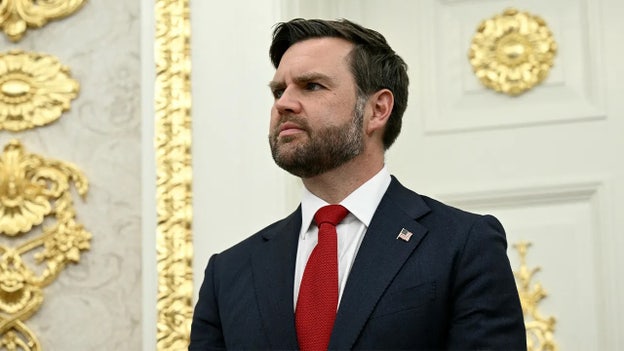
Vice President JD Vance scrapped plans to travel to Switzerland on Friday for the next round of U.S.-Iran talks, the White House confirmed Thursday night, highlighting ongoing uncertainty over the timing and logistics of the negotiations with Tehran.
“As the vice president said at his press conference, the plans for the upcoming technical talks have not been finalized, and the U.S. delegation has been prepared to depart at the first available opportunity,” the spokesperson said.
“But the logistics of these negotiations have never been simple or predictable. As of now, the vice president is not departing tonight,” they added.
“We will let you know as soon as we have a concrete update about next steps. We look forward to beginning technical talks as soon as possible.”
'It's a deal': Juan Williams says opponents need to stop fighting Trump's Iran agreement
President Donald Trump on Thursday brushed aside opposition to the U.S.-Iran deal Thursday, touting record stock market highs and falling oil prices.
"These fools, who think I haven't been tough enough on Iran, when the Stock Market Just Hit A RECORD HIGH, and Oil prices are 'tumbling' down, are either jealous, bad people, or stupid," Trump wrote on Truth Social.
Political analyst Juan Williams also told told Fox News anchor Bret Baier that the rising debate over the new agreement was pointless.
“So I guess everybody is arguing over this deal, you know,” Williams said on “Special Report.”
“I take a different position, but I just think, look, we've got to stop arguing over the deal,” he added.
“It's a deal, and we have to figure out how to make the best of the deal, and that includes Democrats, that includes Israel, a lot of people who have strong reservations about the terms of the deal, but the president has approved it.
Our president, the United States, has approved the deal,” he added before stating that Trump “doesn't want to go back to war.”
“I think he feels politically burned. It's never been popular with the public. I think there are questions about underestimating the Iranian resolve here, and so we're in a position as the United States to look for how we can possibly do our best to prevent Iran in the future from getting any nuclear weaponry and protect the Strait of Hormuz," Williams added.
Gas prices fall below $4 a gallon, set to keep dropping as Hormuz reopens for business
The average price for a gallon of gas fell to its lowest level since the end of March on Thursday and is down more than 50 cents from a month ago, FOX Business correspondent Lauren Simonetti explained on "Special Report."
“GasBuddy says it is possible gas prices hit $2.99 for Christmas if the Strait of Hormuz stays open and there are no major disruptions. As you noted, gas is averaging $3.99 nationally, the first time it's under $4 since March 30, giving drivers some relief this summer,” Simonetti told Bret Baier.
Oil prices are also at $76 now as activity in the Strait of Hormuz picks up, Vice President JD Vance had said earlier Thursday.
The change came as U.S. Central Command (CENTCOM) announced U.S. forces had lifted the blockade on all maritime traffic entering and exiting Iranian ports, which helped give tanker owners some confidence that they can transit the strait more easily, Simonetti said.
"Marine traffic data also showed that eight vessels crossed the strait today, including three Saudi tankers carrying 6 million barrels of oil," Simonetti added,
Meanwhile, data tracker Kpler showed that 165 million barrels could start to hit the market in as little as 10 days.
“While we are just starting to see more movement in the Middle East Gulf, there is also movement to the U.S. Gulf,” Simonetti said.
“MSI Horizon says 75 empty ships are headed here to fill up with our cargo.”
Reuters also reported that oil hit pre-Iran-war lows as the Strait of Hormuz reopened.
Three Saudi-flagged supertankers sailed through hours after a U.S.-Iran peace deal was signed, the outlet said.
Before Vance warned Israel against further attacks on Hezbollah in Lebanon, Brent had also touched its lowest level since March 2
Trump Iran framework gambles on diplomacy despite warning Tehran will 'lie and cheat'
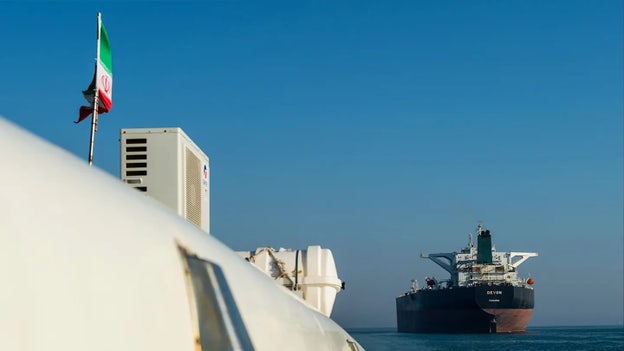
The Trump administration's new framework with Iran grants Tehran immediate oil sanctions waivers while postponing the most consequential nuclear questions for future negotiations, a gamble officials acknowledge carries risks because they expect Iran may not comply.
"We come in with the full expectation that they will lie and they will cheat," one senior U.S. official said on a call with reporters Wednesday, arguing that any final agreement would require a verification and enforcement mechanism capable of detecting violations.
The agreement, which establishes a 60-day negotiating period, rests on a bet that Iran can be deterred from violating its commitments through monitoring and enforcement.
Administration officials say any sanctions waivers can be clawed back if Iran fails to comply, while critics argue the U.S. is giving up leverage before the toughest nuclear issues have been resolved.
The memorandum of understanding, unveiled by administration officials on a call with reporters Wednesday, says the Treasury Department will immediately issue waivers allowing Iran to export crude oil, petroleum products and derivatives, as well as access associated banking, insurance and transportation services.
But the agreement does not immediately require Iran to dismantle its nuclear program, surrender its enriched uranium stockpile or end enrichment.
Instead, the deal says the U.S. and Iran will negotiate the "disposition" of Iran’s enriched uranium stockpile, with down-blending on site under International Atomic Energy Agency supervision identified as the minimum methodology.
This is an excerpt from a report by Fox News' Morgan Phillips.
Tehran's lead negotiator warns US will receive 'even harder slap' if breaches Iran deal
Iranian Parliament Speaker and lead negotiator said Thursday that Tehran would closely follow Supreme Leader Mojtaba Khamenei’s guidance in implementing the new U.S.-Iran agreement.
Mohammad Bagher Ghalibaf also warned of a strong response to any violations of the memorandum of understanding (MOU).
“We are at your command; the task assigned to us by the Supreme Leader is to pursue the realization of the conditions and clauses of the agreement,” Ghalibaf said in a post shared on X.
“In the event of bad faith, breach of contract, and excessive demands by the opposing side, we have no hesitation in delivering a crushing response to the enemy,” he added, saying that the United States was “once slapped during the war.”
“If they wish to tread that path again, they will receive an even harder slap,” Ghalibaf added.
Israel says Lebanon ceasefire will hold only if Hezbollah follows the rules
Israel's ambassador to the United States said Thursday that Israel stands by its ceasefire agreement with Lebanon after President Donald Trump urged both sides to uphold the truce.
“Israel remains committed to the ceasefire agreement reached between Israel, Lebanon and the US,” Yechiel Leiter said in a post shared on X.
“If Hezbollah does not violate the agreement, it will be kept,” he added before highlighting that under all circumstances, “Israel retains its right to respond to attacks against it and to thwart threats to its territory, citizens and soldiers.”
Earlier Thursday, Hezbollah rockets targeted Israeli troops in southern Lebanon, according to the Israel Defense Forces (IDF).
The IDF said several rockets were intercepted, while the others fell near the soldiers. No casualties were reported.
In a further X post, Leiter also listed a number of rocket and "Explosive UAV" strike attempts by Hezbollah and said: Here’s your reminder of how Hezbollah is “upholding the ceasefire” in the last couple of days.
EU says lifting Iran sanctions is premature, will only follow nuclear deal: report
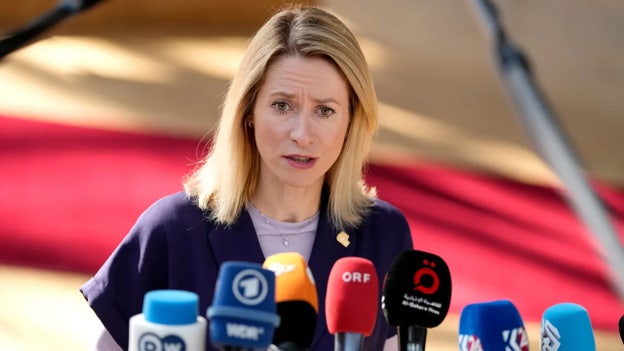
European Commission Vice-President Kaja Kallas said Thursday that talks on lifting sanctions on Iran are too early and will only be considered if a nuclear agreement is reached.
“Once the conditions allow, of course, member states will discuss whether lifting sanctions is appropriate, but we are not there yet,” Kallas said ahead of an EU leaders summit, Al Jazeera reported.
The EU has imposed sanctions on more than 700 Iranian individuals and entities and in February added the IRGC to its terrorist list.
Iran to clear Hormuz mines, orders ships to designated routes amid security concerns: report
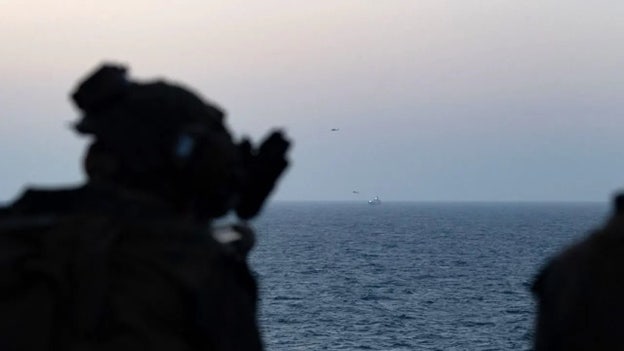
Iran's Supreme National Security Council said Thursday that traffic through the Strait of Hormuz will increase gradually, according to reports.
In a statement, the council said vessels must transit the waterway at designated times and along assigned routes due to ongoing security concerns.
Mine-clearing operations will be carried out under the new Islamabad MOU, according to the council.
It also said it will not charge fees for ships seeking passage through the strait, The Associated Press reported.
Technical details governing passage through the Strait of Hormuz will be announced by the Persian Gulf Strait Authority, the statement said.
Iran to invite UN watchdog to inspect nuclear sites, Witkoff tells Congress: report
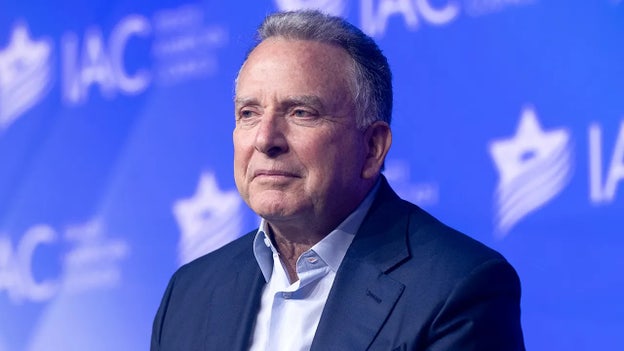
Iran is set to invite the International Atomic Energy Agency (IAEA) to inspect its nuclear sites and help identify and uncover Tehran’s enriched material, White House Special Envoy Steve Witkoff told lawmakers Thursday, according to reports.
Citing a source, The Associated Press reported that Witkoff told congressional leaders and members of national security-related committees that a side letter to the memorandum of understanding had been drafted between Tehran and the IAEA extending the invitation.
Witkoff disclosed the existence of the letter and invitation during the briefing, the outlet reported.
Witkoff said the letter to IAEA Director General Rafael Mariano Grossi would allow him to bring U.S. nuclear inspectors to Tehran.
Iran hardliner behind US deal warns Tehran won’t honor agreement if Trump fails to deliver
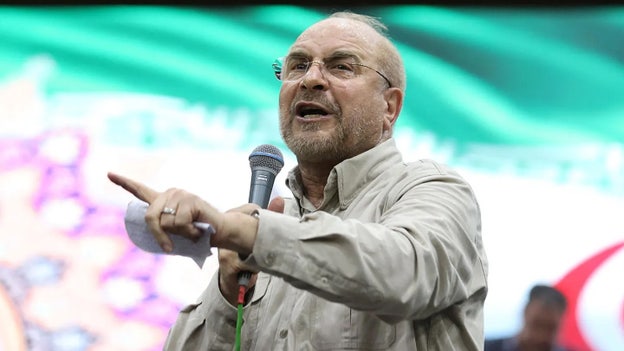
Iran’s hardline parliament speaker and key negotiator Mohammad Bagher Ghalibaf warned that Tehran would not honor its commitments under a newly signed memorandum with the U.S. if Washington fails to uphold its side of the deal, according to the media arm of Iran’s Islamic Revolutionary Guard Corps.
"If the United States does not honor its commitments, there is no way Iran will honor its own commitments," Ghalibaf said, according to the outlet.
Ghalibaf’s warning was echoed Thursday by Islamic Revolutionary Guard Corps Quds Force commander Esmail Qaani, who threatened the U.S. in remarks translated by MEMRI TV, saying, "Americans should know their place and avoid confronting the Muslims."
Qaani added that "Trump is trembling" and warned that the U.S. "should fear not only Hormuz and Bab al-Mandeb, but many other locations as well."
The warnings came after President Donald Trump and Iranian President Masoud Pezeshkian Wednesday digitally signed a copy of the memorandum aimed at ending the war and resuming the flow of traffic through the Strait of Hormuz.
This is an excerpt from a report by Fox News' Efrat Lachter.
Maritime security threat level in Strait of Hormuz lowered to 'moderate' after US-Iran agreement
The Joint Maritime Information Center (JMIC) reduced the maritime security threat level in the Strait of Hormuz, Arabian Gulf and Gulf of Oman to “moderate” Thursday.
This followed the announced United States-Iran memorandum of understanding (MOU) and the end of the U.S. port blockade.
In an update, JMIC said the change follows the agreement between Washington and Tehran and reflects the security assessment outlined in its June 16 advisory covering the region.
JMIC advised vessels transiting the area to contact U.S. Naval Forces Central Command's Naval Cooperation and Guidance for Shipping (NCAGS) for information on safe transit routes.
“JMIC is sharing information on the following page for the awareness of owners, operators and mariners,” the statement said.
The center said vessels should communicate with U.S. Naval Forces Central Command for information on safe transit routes.
US imposes new sanctions on Hezbollah-linked networks
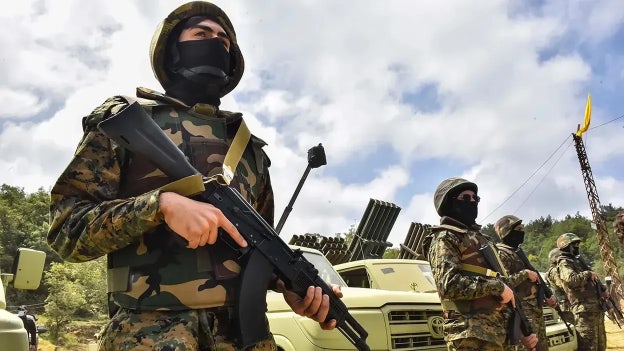
The United States imposed new sanctions on individuals and entities linked to Hezbollah, the Treasury Department announced Thursday.
Those sanctioned are accused of using their influence to obstruct Lebanon's peace process and delay Hezbollah's disarmament, the Treasury said.
The sanctions build on measures announced in March 2026, targeting individuals and entities in Lebanon, Syria, Iraq and Oman that help raise funds, manage contracts and operate front companies for Hezbollah.
"Hezbollah must disarm for Lebanon to achieve a secure and prosperous future," Treasury Secretary Scott Bessent said in a statement.
"Treasury will continue to target Hezbollah's financial networks and hold accountable those who enable the group to undermine the Lebanese state and threaten prospects for lasting peace," he added.
Mojtaba Khamenei frames Trump deal as 'tactical pause' in 'forever war' with US: expert
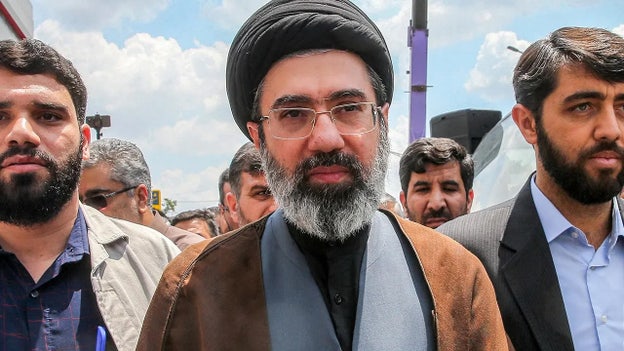
Iran's Supreme Leader Mojtaba Khamenei's statement following the signing of a memorandum of understanding (MOU) underscored how Tehran is not endorsing peace with the United States, analysts warned Thursday.
Khamenei, they said, was all but "authorizing a tactical pause" amid "another stage in a forever war" with the United States.
They suggested it was also possible that the security apparatus is speaking through his name only to project an image of continuity.
In the statement shared on X, Khamenei said Iranian officials had made extensive efforts "out of compassion and goodwill" to reach the agreement Wednesday, while describing Trump as acting "out of desperation" and using "all kinds of leverage" to secure it.
Khamenei also said he approved the agreement after President Masoud Pezeshkian pledged on behalf of himself and other council members to safeguard Iran's national rights and the interests of the Resistance Front.
"Khamenei is not endorsing peace with America. He is authorizing a tactical pause while protecting the Resistance Front, shifting responsibility to the elected administration, and preserving the ideological framework of permanent confrontation," counterterrorism expert Dr. Omar Mohammed told Fox News Digital.
"The phrase ‘Resistance Front’ is the tell. Tehran is saying that any deal with Washington must preserve the armed network Iran uses from Lebanon to Yemen," he added.
"This is not the language of reconciliation. It is the language of regime insurance."
Mohammed, director of the Antisemitism Research Initiative Program on Extremism at George Washington University, also said Khamenei's assertion that future negotiations do not mean acceptance of the enemy's position was key in the statement.
"It tells the IRGC, Iran’s proxies, and the domestic hardline base that this is “not normalization. It is a pause.”
"I would read this text with caution," Mohammed warned.
"It does not feel like a personal note from a leader; it feels like a curated regime document designed for the IRGC, Iran’s proxies, the Iranian public, the current administration, and Washington all at once."
"If Mojtaba personally directed this message, it suggests he has access to the full state file and is managing the presidency, the security council, the IRGC, and the proxy network. If he did not, then the security apparatus may be speaking through his name to project continuity."
Mohammed also said the religious ending of the statement matters.
"This is not ordinary diplomatic language. It is a revolutionary language designed to present a diplomatic pause as another stage in a forever war" Mohammed added.
US, Iran set for Swiss talks on Friday after signing Islamabad MOU
Switzerland confirmed Thursday that initial negotiations to implement the signed U.S.-Iran memorandum of understanding (MOU) aimed at ending the war will take place at a Swiss resort complex on Friday.
“The signing is an important step toward de-escalation in the region,” the foreign ministry said in a post shared on X.
“Currently, the plan remains for the United States and Iran, along with mediators Pakistan and Qatar and other involved countries, to meet tomorrow at the Bürgenstock Resort for initial negotiations on the implementation of the agreement,” the ministry added.
On Wednesday, the signing was moved forward as President Donald Trump signed the document personally before a dinner with President Emmanuel Macron at Versailles.
Iranian President Masoud Pezeshkian also signed remotely.
Vice President JD Vance and Iran's chief negotiator, Mohammad Bagher Ghalibaf had been expected to attend the start of negotiations, during which the parties will have 60 days to formulate a final agreement
Trump commits to peace after signing breakthrough Iran deal, urges region-wide ceasefire
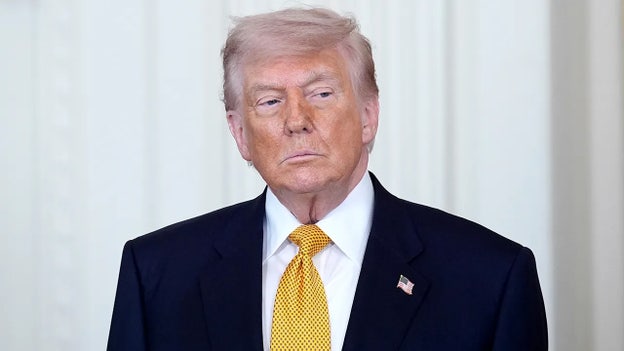
President Donald Trump on Thursday said the United States remains committed to peace in the Middle East and expressed optimism that a ceasefire could soon take hold across the region.
“The United States is committed to PEACE, and we encourage everyone in the Middle East Region to maintain their commitment to allowing our negotiations to beautifully unfold,” Trump said in a post shared on Truth Social.
“The Markets are loving what is happening with Oil Prices way down, and Stocks way up,” he added.
“We expect a complete Ceasefire on all fronts, including Lebanon, Hezbollah, and Israel,"Trump said.
His remarks came after he signed a breakthrough memorandum of understanding at the Palace of Versailles on Wednesday.
Iran leader opposed MOU, but approved it only after Iranian president took responsibility
Ayatollah Mojtaba Khamenei said Wednesday he held a “different view” on the memorandum of understanding (MOU) signed by the presidents of Iran and the United States, but granted permission after Iran’s president accepted responsibility for protecting Iranian interests.
In a statement posted in parts to X, Khamenei addressed the “passionate and loyal nation of Iran” and said Iranian officials had worked toward the agreement with “sincere concern and goodwill.”
He also claimed President Donald Trump pushed for the MOU “out of desperation” and used “all kinds of leverage” to bring it about.
“I, as a matter of principle, held a different view,” Khamenei said, but added that he approved the move after Iran’s president, as head of the Supreme National Security Council, pledged to safeguard “the rights of the Iranian nation and the Resistance Front.”
Khamenei said the president also explicitly promised that Iran would not submit if the U.S. makes “excessive demands.”
“From this moment on,” he said, Iranians will wait to see whether those conditions are met.
In the course of reaching this stage, the officials in charge, out of sincere concern and goodwill, made extensive efforts—and of course, it was the American president who, out of desperation, used all kinds of leverage to bring this about. I, as a matter of principle, held a different view; however, out of the commitment that the esteemed president — as the head of the Supreme National Security Council — gave to me on his own behalf and on behalf of the other members regarding the safeguarding of the rights of the Iranian nation and the Resistance Front, and his explicit acceptance of that responsibility, I granted my permission.
Khamenei message on U.S.-Iran MOU expected within hour
A message from Ayatollah Seyyed Mojtaba Khamenei on the U.S.-Iran memorandum of understanding (MOU) is expected to be published within the hour, according to a post on his X account.
The translated X post says the message will be directed “to the Iranian nation” and will address the MOU between the presidents of Iran and the United States.
It is not yet clear what form the message will take.
Based on the wording of the post, it does not appear certain that Khamenei will deliver the remarks personally on video.
In the past, similar messages have sometimes been read by a presenter on Iranian state television or issued through social media channels.
The expected statement could offer a major signal on how Iran’s leadership is framing the MOU domestically after the U.S. and Iran moved toward implementation of the agreement.
Netanyahu vows Israel will not withdraw from southern Lebanon security zone
Prime Minister Benjamin Netanyahu said Israel will maintain its security zone in southern Lebanon for as long as the country’s security needs require it, arguing the buffer is necessary to protect Israeli communities from Hezbollah.
“This requires maintaining the security zone in southern Lebanon,” Netanyahu said at a ceremony Thursday, according to translated remarks. “It requires that we do not withdraw from there as long as Israel’s security needs demand it.”
Netanyahu said the zone “stands between Hezbollah terrorists and our citizens and communities,” linking the Lebanon front to Israel’s broader war against Iran and its proxies.
Israel has “shattered Hezbollah’s missile capabilities” and removed the threat of a ground invasion from northern communities, according to Netanyahu, acknowledging “there is still work to be done.”
Netanyahu also stressed the importance of preserving Israel’s relationship with the U.S., saying the two countries have fought “shoulder to shoulder.”
Netanyahu repeated his central red line in line with President Donald Trump's memorandum of understanding (MOU).
“Iran will not have nuclear weapons," he said, "and as long as I am the Prime Minister of Israel — it will not happen.”
That came as Vice President JD Vance issued a firm rebuke of criticism coming from members of the Israeli Cabinet.
“Donald J. Trump is the only head of state in the entire world who is sympathetic to the nation of Israel at this moment in time,” Vance said at the White House press briefing Thursday. “And he happens to be the head of state of the world’s superpower.”
Netanyahu “has not gone down this path,” Vance admitted, but some members of Israel’s cabinet should reconsider their criticism of Trump.
“If I was in the Cabinet of the Israeli government, I might not be attacking the only powerful ally that I have anywhere left in the entire world,” Vance said.
Vance noted “two thirds of the defensive weapons” protecting the country over the last three months “have been built by American hands and paid for by American tax dollars.”
“The problem for Israel is not Donald J. Trump,” Vance said. “Anybody in Israel who thinks their biggest problem is the president of the United States needs to wake up and smell the reality of the situation that country is in.”
CENTCOM lifts Strait of Hormuz blockade: 'US military blockade enforcement efforts have ceased'
U.S. Central Command announced Thursday that American forces have lifted the maritime blockade on traffic entering and exiting Iranian ports and coastal areas, in line with President Donald Trump’s direction.
“American forces are not impeding the transit of vessels to or from Iranian ports on the Arabian Gulf and Gulf of Oman,” CENTCOM said in a post on X. “All U.S. military blockade enforcement efforts have ceased.”
Today, U.S. forces lifted the blockade on all maritime traffic entering and exiting Iranian ports and coastal areas, in accordance with the President's direction. American forces are not impeding the transit of vessels to or from Iranian ports on the Arabian Gulf and Gulf of Oman. All U.S. military blockade enforcement efforts have ceased. Our great Naval Ships will remain in the general area to make sure that all aspects of the agreement are adhered to, obeyed and in full force and effect.
The move marks a major early step in the U.S.-Iran memorandum of understanding (MOU), which called for easing maritime restrictions as part of the agreement’s initial implementation.
CENTCOM said U.S. naval forces will remain in the general area to ensure the agreement is followed.
“Our great Naval Ships will remain in the general area to make sure that all aspects of the agreement are adhered to, obeyed and in full force and effect,” the command said.
Trump: '300 Billion Dollar payment to Iran' is 'Fake News!'
President Donald Trump forcefully rejected reports that the U.S. would pay Iran $300 billion under the new memorandum of understanding (MOU), calling the claim “Fake News” and saying the deal represents “Success, Lower Oil Prices, and Victory.”
“There is no 300 Billion Dollar payment to Iran by the U.S.,” Trump wrote on Truth Social. “That’s Fake News!”
There is no 300 Billion Dollar payment to Iran by the U.S. That’s Fake News! All there is for the U.S. is Success, Lower Oil Prices, and Victory. Check out the Stock Market. Dumocrat propaganda at play!!! President DJT
Falling oil prices and the stock market are evidence the agreement is already benefiting from the MOU.
Vice President JD Vance made the same argument at the White House press briefing, saying Iran would not receive U.S. funds under the agreement.
“The simple fact is that the only way the Iranians get any of those resources, not a single penny, by the way, from the United States of America under any circumstances,” Vance said, adding that Iran would only receive benefits “if they comply fully and change their behavior.”
Vance also said the U.S. is “not giving up a cent of money to Iran” and that sanctions relief or other economic benefits would come only if Tehran “performs.”
VP Vance starts 60-day clock on final Iran deal
The 60-day negotiating window for a final Iran deal officially starts now, according to Vice President JD Vance after the memorandum of understanding (MOU) was signed Wednesday night by President Donald Trump, the president of Iran, and the Pakistan prime minister as moderator.
“I would say the 60-day period officially started today,” Vance told reporters at Thursday's White House press briefing. “So yes, the deal started yesterday. We’re going to start the clock today.”
Vance framed the timeline as the next major test for Tehran, stressing that Iran will not receive economic benefits unless it follows through.
“The United States isn’t giving up a cent of money to Iran,” Vance said, adding that sanctions relief and other economic benefits happen “only if the Iranians perform.”
He also said Tehran understands the pressure it is under.
“They certainly recognize that the United States has great leverage,” Vance said. “Will that ultimately lead to a change in behavior? I don’t know.”
Vance says 12.5M barrels flowed through Hormuz as oil prices fall
The memorandum of understanding (MOU) is already producing results in the Strait of Hormuz, pointing to a surge in oil traffic and a pause in Iranian attacks on ships, Vice President JD Vance said Thursday at the White House press briefing.
“Last night, 12.5 million barrels of oil went through the Strait of Hormuz,” Vance said, calling it the highest level since the conflict began.
Oil prices are nearly back to pre-war levels and gas prices dropped below $4 a gallon for the first time since the conflict, Vance hailed.
On the security front, Vance said Iran “for the second night in a row” did not shoot at any ships in the Strait of Hormuz.
“So far they are honoring their end of the commitment,” Vance said.
He added that CENTCOM has allowed “north of a dozen ships” to pass through the U.S. naval blockade, saying Washington is also honoring “the early part of the agreement.”
Vance to lead US Iran talks, still eyes Switzerland trip after Trump signs MOU at Versailles
President Donald Trump joked he might let Vice President JD Vance lead the Iran peace talks if they were going to go poorly, but Vance is still leading the peace talks even if the Friday trip to Switzerland to sign the memorandum of understanding (MOU) was Trumped by Wednesday night's signing at the Palace of Versailles.
"The president was joking" about leaving Vance for the bad news, "as he often does," Vance said at Thursday morning's White House press briefing.
Vance is “certainly planning to lead” the U.S. negotiating team in the next phase of Iran talks, with technical nuclear discussions still expected to begin in Switzerland as soon as this weekend.
The trip had originally been tied to a Friday signing ceremony, but the timeline shifted after Trump signed the MOU himself at Versailles on Wednesday night.
“Our plan is to go to Switzerland; I don’t know exactly when,” Vance told reporters, saying the next stage will focus on “technical talks” and “nuclear talks.”
Negotiators will dig into the core enforcement questions, including “how do you destroy this highly enriched uranium” and other details that require getting into “the nitty gritty,” according to Vance.
“I suspect this weekend, but I’m not sure,” he said of the Switzerland timing.
Asked about his role going forward, Vance was direct: “I’m certainly planning to lead the U.S. negotiating team.”
Vance to MOU critics in Israel Cabinet: ‘Wake up, smell reality’; Trump your 'only powerful ally’
Vice President JD Vance delivered a sharp warning Thursday to Israeli officials criticizing President Donald Trump for the memorandum of understanding (MOU), saying they are attacking the most powerful ally Israel has.
“Donald J. Trump is the only head of state in the entire world who is sympathetic to the nation of Israel at this moment in time,” Vance said at the White House press briefing Thursday. “And he happens to be the head of state of the world’s superpower.”
Vance said Israeli Prime Minister Benjamin Netanyahu “has not gone down this path,” but said some members of Israel’s cabinet should reconsider their criticism of Trump.
“If I was in the Cabinet of the Israeli government, I might not be attacking the only powerful ally that I have anywhere left in the entire world,” Vance said.
He also pointed to U.S. military support for Israel, saying “two thirds of the defensive weapons” protecting the country over the last three months “have been built by American hands and paid for by American tax dollars.”
“The problem for Israel is not Donald J. Trump,” Vance said. “Anybody in Israel who thinks their biggest problem is the president of the United States needs to wake up and smell the reality of the situation that country is in.”
Vance says MOU is already working: Iran did not shoot at any ships overnight in Strait of Hormuz
Vice President JD Vance said Thursday the memorandum of understanding (MOU) is already producing results, telling reporters Tehran did not fire at ships in the Strait of Hormuz overnight for the second night in a row.
“So far they are honoring their end of the commitment,” Vance said at the White House press briefing Thursday.
Vance also said the U.S. is following through on its side of the early agreement, including the naval blockade provisions.
“CENTCOM has allowed north of a dozen ships to go through our naval blockade,” Vance said. “And so we’re also honoring our end of the early part of the agreement.”
Vance promises Iran ‘not going to be able’ to build missiles that threaten the world
Vice President JD Vance said Thursday that missile limits are expected to be part of a final Iran deal, arguing Tehran will not be allowed to develop weapons capable of threatening the world.
“We do expect that it’s part of the final deal,” Vance said at the White House press briefing Thursday, breaking an item that was not in the memorandum of understanding (MOU).
“They are not going to be able to build the kind of missiles that can broadly threaten the entire world.”
Vance said the Trump administration is not seeking to deny Iran the ability to defend itself, but wants to block Tehran from fueling regional instability, supporting terrorism or rebuilding its nuclear weapons program.
“You can’t tell a country, whether Israel or Iran, they’re not allowed to have any self-defense,” Vance said. “That’s not what the president has asked.”
He claimed Iran’s nuclear weapons program has been destroyed and said the administration’s goal is to prevent Tehran from restoring that capability “not just a year from now, two years from now, but many, many years from now.”
“So that our children never have to worry about a state sponsor of terrorism having a nuclear weapon,” Vance said.
Vance vows White House will brief Congress 'very soon' on MOU, Iran peace
Vice President JD Vance said Thursday the White House plans to brief Congress “very soon” on the signed memorandum of understanding (MOU), telling reporters that lawmakers are expected to receive the formal document imminently if they have not already.
“We do plan to brief Congress very soon,” Vance said at the White House press briefing Thursday.
“I believe that they got the formal copy of the signed document this morning. And if not, they're going to get at some point later today.”
Vance said the administration is preparing a formal briefing for lawmakers and will make sure officials answer questions about the deal.
“We're going to ensure that the team briefs Congress and of course, answers their questions,” he said.
He declined to give an exact timing for the briefing, saying it depends partly on the congressional session schedule.
Vance contrasts MOU v. JCPOA: 1. Middle East likes ours, 'hated' Obama's; 2. Comes from 'strength'
Vice President JD Vance drew a sharp contrast Thursday between President Donald Trump’s memorandum of understanding (MOU) and former President Barack Obama’s 2015 nuclear deal, arguing the new agreement has regional backing and was negotiated from “a position of strength.”
“The Gulf Coast Coalition loves this deal because they think that it makes Iran weaker,” Vance said at Thursday's White House press briefing. “They hated the Obama deal because they thought that it made Iran stronger.”
The second key difference is leverage, arguing Trump’s approach followed pressure on Iran rather than concessions at the outset.
“Our perspective and where we’re coming at it is we already destroyed your nuclear program,” Vance said. “And so if you promise and show verifiable pathways to not rebuild it, then we’re willing to give you some sanctions relief.”
Also, the new MOU is tougher on enrichment and stockpiled enriched material, saying the Obama deal “allowed enrichment” while Trump’s deal would not, Vance stressed.
“There are many differences,” Vance said. “The Obama deal gave them over $1 billion of American money. This deal gives them $0 of American money.”
The bottom line is that the MOU starts from U.S. leverage and regional buy-in, Vance concluded.
“I think the most important differences are where we’re coming at it from a position of strength and the fact that our Gulf Coast partners love this deal,” he said.
Vance rejects 'misrepresentation' of Iran wins in MOU; 'they don't get anything unless they change'
Vice President JD Vance pushed back Thursday on criticism that Iran would receive major benefits upfront under the memorandum of understanding (MOU), calling that argument a “misrepresentation” of the agreement.
“They don't get anything unless they change their behavior,” Vance said at the White House daily press briefing Thursday morning. “If they change their behavior, that is a thing to celebrate. That's going to transform the Middle East for a generation.”
Vance said critics are wrong to suggest Tehran would receive concessions before a final deal is completed or before it changes course.
“If they don't change their behavior, they don't get the benefit of the bargain,” he said.
He argued that the claim Iran receives benefits too early is being pushed by those who want the conflict to continue.
“This idea that the Iranians get all these benefits before the deal is actually consummated ... is fundamentally a talking point that is issued by people who want the conflict to continue indefinitely,” Vance said, adding that continued conflict is “not good for the American people” or “the region.”
Vance responds to MOU critics: 'Isn't it worth trying?'
Vice President JD Vance defended the memorandum of understanding (MOU) against skeptics Thursday, arguing the Trump administration has put Tehran in a weakened position and should test whether that pressure can force a change in behavior.
“I’ve seen skeptics of the deal: People say the Iranians will never change their behavior,” Vance said at the daily White House briefing Thursday morning, hours after President Donald Trump signed the deal at the Palace of Versailles in Paris, France.
“Well, maybe that’s true, and if so, they don’t get any of the benefits of the bargain. But isn’t it worth trying?”
Vance said Iran “certainly recognizes the leverage that the United States has over them,” pointing to recent conversations and Iran's behavior over the last several days.
He framed the agreement as a test: if Iran changes course, it can receive the benefits of the bargain; if not, the U.S. loses nothing.
Vance also contrasted the MOU with the 2015 JCPOA, saying Gulf Arab states opposed the Obama-era nuclear deal because they believed it empowered Iran across the region.
“What are the Gulf Arab states saying about this deal?” Vance said. “They’re saying this is an amazingly transformative thing for the region.”
He argued the U.S. is in a winning position either way, saying Iran is weakened, its nuclear program has been damaged and its economy is under pressure.
“If they change their behavior, big things are going to happen,” Vance said. “If they don’t, no skin off our backs. Either way, we win.”
Trump touts oil flow, Iran nuclear pledge and booming markets: 'You're welcome'
With critics hyperbolizing on the negatives of making peace with Iran – with those same critics rebuking war with Iran, seeming refusing to have it either way – President Donald Trump boldly sent the "you're welcome" message.
Trump declared victory on energy, national security and the economy in a Truth Social post Thursday, saying oil is flowing, Iran “can never have a nuclear weapon,” and U.S. markets are surging.
OIL IS FLOWING, IRAN CAN NEVER HAVE A NUCLEAR WEAPON (THE WORLD WILL BE SAFE!), THE STOCK MARKETS ARE ROARING, JOBS ARE AT RECORDS, AND PRICES ARE DROPPING (AFFORDABILITY!). OUR COUNTRY IS STRONG, SAFE, AND RESPECTED LIKE NEVER BEFORE. “YOU’RE WELCOME!” President DJT
The post comes as Trump and his allies frame the U.S.-Iran memorandum of understanding (MOU) as a major de-escalation breakthrough involving military operations, oil exports and nuclear commitments.
Critics of the MOU are rejecting peace as making a deal with the enemy, but Trump is reminding he is a peacemaker.
Detailing the 14-point Trump-Iran MOU with a line-by-line takeaway
President Donald Trump's memorandum of understanding (MOU) has been signed and delivered, bringing out fears from critics that making a deal with Iran was as bad as striking the world's leading state sponsor of terror to force it to give up its nuclear weapons program.
Here is a line-by-line recap if the 14-point peace plan that ostensibly is merely a 60-day ceasefire to pursue a lasting peace deal to secure Middle East stability and a responsible Iran.
– 1. The deal starts with the core demand: both sides “declare the immediate and permanent termination of military operations.”
– 2. Washington and Iran pledge a basic noninterference pact, agreeing to “respect each other’s sovereignty and territorial integrity.”
– 3. The clock starts immediately, with both sides committing to reach a final deal in “maximum 60 days.”
– 4. The U.S. would begin rolling back pressure in the Strait of Hormuz, pledging to “fully end the naval blockade within 30 days.”
– 5. Iran would reopen key shipping lanes, promising “safe passage of commercial vessels” from the Persian Gulf to the Sea of Oman.
– 6. The economic centerpiece is massive, with the U.S. and partners backing “at least USD 300 billion” for Iran’s reconstruction and development.
– 7. Sanctions relief is put squarely on the table, with Washington agreeing to “terminate all types of sanctions.”
– 8. The nuclear red line is explicit: Iran “shall not procure or develop nuclear weapons.”
– 9. Until a final deal is reached, both sides freeze escalation and agree to “maintain the status quo.”
– 10. Iranian oil gets immediate breathing room, with Treasury set to issue “waivers for the export of Iranian crude oil.”
– 11. Frozen money becomes part of the deal, with the U.S. agreeing to make Iranian assets “fully available for use.”
– 12. Compliance would be tracked through a new enforcement channel, with an “executive mechanism” established to monitor implementation.
– 13. Final-deal talks only begin after early concessions are underway, “subject to the beginning of the implementation” of key paragraphs.
– 14. The agreement’s endgame is international lock-in, with the final deal to be endorsed by a “binding" United Nation Security Council resolution.
With rampant criticism flowing from the same people who rebuked Trump's peace through strength strikes on Iran, the president recapped the bottom line result with a Truth Social post Thursday morning.
OIL IS FLOWING, IRAN CAN NEVER HAVE A NUCLEAR WEAPON (THE WORLD WILL BE SAFE!), THE STOCK MARKETS ARE ROARING, JOBS ARE AT RECORDS, AND PRICES ARE DROPPING (AFFORDABILITY!). OUR COUNTRY IS STRONG, SAFE, AND RESPECTED LIKE NEVER BEFORE. “YOU’RE WELCOME!” President DJT
Sen. Graham: Sum of MOU is peace in Middle East, greater than its parts
Sen. Lindsey Graham, R-S.C., said Thursday that while some criticism of the memorandum of understanding (MOU) is “valid,” he believes the agreement creates a needed opening for diplomacy — and potentially a broader path to peace in the Middle East.
“Without the MOU being signed, there is no pathway to diplomacy to end the nuclear ambitions of Iran,” Graham told reporters Thursday morning. “What does that leave you with? War, continuation of the status quo.”
Graham said the “upside” of signing the MOU was greater than the downside, but stressed that the final agreement will be what matters most.
“The deal itself is the big prize," Graham continued. "If it’s a bad deal, I’ll say so."
Graham hopes it will be “much better than JCPOA.”
"The real prize is can you expand Abraham Accords after you deal with Iran the way we have," Graham added. "Oct. 7 was designed to stop normalization between Saudi and Israel, because in the eyes of Iran that was a nightmare.
"So, what I'm looking for, does this create a pathway to peace throughout the region, or is it sort of a tactical setback for Iran? Time will tell, but I'm glad we're on the course on the path to diplomacy."
U.S. Middle East peace envoy Steve Witkoff has Graham's confidence.
“We'll know in the coming weeks what kind of deal we will get,” he concluded. “And I talked to Witkoff, and Steve's been a good friend for a long time. I said pursue a good deal, but be ready to walk away.”
Senators react to Trump’s Iran peace deal: ‘What an embarrassment’
Republican and Democrat senators react to President Donald Trump’s memorandum of understanding (MOU), with lawmakers from both parties criticizing the agreement and raising concerns about its potential impact.
Sen. Richard Blumenthal, D-Conn.
My initial reaction is that this blunder means that there may be changes in the administration. The MOU has so many holes and gaps, it puts Iran in a much stronger position than before this war, and what strikes me is not only the hundreds of billions of dollars that are going to go to Iran that it can use to fund its proxies or its rebuilding of its military, but also the complete lack of any verification or inspection. They're going to rely on the United Nations to do oversight and verification that's worse than no verification at all, and I voted for the JCPOA after struggling with questions involving unfreezing assets, verification resources going to Iran, and Trump seems to just blow right through these issues. I think there has to be a lot of soul searching in this administration. Hegseth should go. This military operation has had some tactical success, but he has over promised and under delivered, and Hegseth ought to go.
Sen. Lindsey Graham, R-S.C.:
"Some of the criticism of the MOU is valid, I think, but here's the way I look at it: Without the MOU being signed, there is no pathway to diplomacy to end the nuclear ambitions of Iran. What does that leave you with? War, continuation of the status quo. So the upside of signing the MOU was greater, I think, than the downside. The deal itself is the big prize. If it's a bad deal, I'll say so in my view. I'm hoping it will be much better than JCPOA, but the real prize is, can you expand Abraham Accords after you deal with Iran the way we have. Oct. 7 was designed to stop normalization between Saudi and Israel, because in the eyes of Iran that was a nightmare."
Sen. Thom Tillis, R-N.C.:
"Now we've got 60 days to see what the details look like, and I'm cautiously optimistic. I'm glad the markets are responding well, but the markets are ultimately going to be responding to the details that we all need to see."
Sen. John Kennedy, R-La.:
"Let's give peace a chance. I think that's all the president is saying. I read the document last night, and I've heard all of the speculation, and what about this, and what about that, and what if this happens, one, if that doesn't happen, we'll know in 60 days.
"Let's give us 60 days to give peace a chance, and that's all he's saying."
Fox News' Nicholas Ballasy and Hannah Brennan contributed to this report.
Qatar statement hails US, Iran 'resolving their differences through negotiation and peaceful means'
Qatar welcomed the signing of a memorandum of understanding (MOU) between the U.S. and Iran aimed at addressing outstanding issues between the two countries, including the cessation of military operations and freedom of navigation in the Strait of Hormuz.
Qatar considers this a renewed affirmation of the two sides' commitment to resolving their differences through negotiation and peaceful means as well as to enhancing prospects for sustainable peace and economic growth at both the regional and international levels. The Ministry of Foreign Affairs reiterates Qatar's full appreciation of the partnership and efforts undertaken by the Islamic Republic of Pakistan and all regional and international parties to de-escalate tensions and bridge the gaps in viewpoints, culminating in the signing of this memorandum. The Ministry emphasizes that the MoU represents a solid foundation for moving forward with the next phase of talks between the American and Iranian sides, calling upon all parties to maintain a positive spirit, good offices, and joint coordination to ensure comprehensive and sustainable outcomes.
The full statement issued from Doha on June 18 was posted to X.
"The Ministry emphasizes that the MoU represents a solid foundation for moving forward with the next phase of talks between the American and Iranian sides, calling upon all parties to maintain a positive spirit, good offices, and joint coordination to ensure comprehensive and sustainable outcomes," the statement concluded.
"The Ministry affirms Qatar's continued full support for all good offices and endeavors aimed at enhancing regional security and stability, and reaching sustainable solutions to outstanding issues through dialogue and peaceful means, in accordance with the principles of international law and good neighborliness, and contributing to opening new horizons for cooperation, development and prosperity, and achieving the common interests of the peoples of the region and the world."
Full text of alleged MOU signed by Trump, Iranian president, Pakistan PM
ISLAMABAD MEMORANDUM OF UNDERSTANDING BETWEEN THE ISLAMIC REPUBLIC OF IRAN AND THE UNITED STATES OF AMERICA
The Islamic Republic of Iran and the United States of America have jointly agreed, in good faith, on ………. 2026, at……………… , on the following:
1. The Islamic Republic of Iran and the United States of America, and their allies in the current war, by signing this MoU, declare the immediate and permanent termination of military operations on all fronts, including in Lebanon, and undertake from now on not to initiate any war or any military operation against each other, and to refrain from the threat or use of force against each other, and ensuring the territorial integrity and sovereignty of Lebanon. The final Deal will confirm the permanent termination of the war on all fronts, including in Lebanon, and other provisions of this paragraph.
2. The Islamic Republic of Iran and the United States of America undertake to respect each other’s sovereignty and territorial integrity and to refrain from interfering in each other’s internal affairs.
3. The Islamic Republic of Iran and the United States of America commit to negotiating and achieving the final Deal, in maximum 60 days extendable with mutual consent.
4. Immediately upon the signing of this MoU, the United States of America will begin the removal of its naval blockade and any disturbances or impediments against the Islamic Republic of Iran, and will fully end the naval blockade within 30 days. During this period, the traffic of vessels will be in proportion to the numbers of pre-war traffic being restored by the Islamic Republic of Iran. The United States of America further undertakes to remove its forces from the proximity of the Islamic Republic of Iran within 30 days after the final Deal.
5. Upon the signing of this MoU, the Islamic Republic of Iran will make arrangements using its best efforts for the safe passage of commercial vessels, with no charge for 60 days only, from the Persian Gulf to the Sea of Oman, and vice versa. The traffic of commercial vessels will immediately start, and considering the need for removing the technical and military obstacles, and de-mining by the Islamic Republic of Iran, will be instated within 30 days. The Islamic Republic of Iran will conduct dialogue with the Sultanate of Oman, to define the future administration and maritime services in the Strait of Hormuz, in discussions with other Persian Gulf Littoral States, in line with applicable international law and the sovereign rights of coastal states of the Strait of Hormuz.
6. The United States of America undertakes, with regional partners, to develop a definitive mutually agreed plan with at least USD 300 Billion, for the reconstruction and economic development of the Islamic Republic of Iran. The mechanism for the implementation of this plan will be finalized as part of final Deal within 60 days. All required licenses, waivers and permissions needed for the relevant financial transactions will be granted by the United States of America.
7. The United States of America undertakes to terminate all types of sanctions against the Islamic Republic of Iran, including the United Nations Security Council resolutions, IAEA Board of Governors resolutions and all unilateral U.S. sanctions, primary and secondary, in an agreed upon schedule as part of the final Deal. The Islamic Republic of Iran and the United States of America acknowledge the critical importance of the sanctions termination issues above mentioned and express their intentions to immediately address these issues in the negotiations in order to achieve mutual agreement on them.
8. The Islamic Republic of Iran reaffirms that it shall not procure or develop nuclear weapons. The Islamic Republic of Iran and the United States of America have agreed to resolve the disposition of stockpiled enriched material pursuant to a mechanism that will be mutually agreed upon, in accordance with the schedule mentioned in paragraph 7, with the minimum methodology to be down blending on-site, under the supervision of the IAEA. The two Parties also agree to discuss the issue of enrichment, and other mutually agreed matters related to the Islamic Republic of Iran’s nuclear needs, based on a satisfactory framework being agreed upon in the final Deal. The final Deal will confirm the provisions of this paragraph. The Islamic Republic of Iran and the United States of America acknowledge the critical importance of the nuclear issues above mentioned and express their intentions to immediately address these issues in the negotiations in order to achieve mutual agreement on them.
9. Pending the final Deal, the Islamic Republic of Iran and the United States of America agree to maintain the status quo; the Islamic Republic of Iran will maintain the current status quo of its nuclear program, and the United States of America will not impose any new sanctions, and will not deploy additional forces in the region.
10. The United States of America undertakes that immediately upon the signing of this MoU, and until the termination of sanctions, the U.S. Department of Treasury will issue waivers for the export of Iranian crude oil, petroleum products and derivatives, and all associated services including banking transactions, insurances, transportation, etc.
11. The United States of America undertakes to make fully available for use, the frozen or restricted funds and assets of the Islamic Republic of Iran upon the implementation of this MoU. The United States of America and the Islamic Republic of Iran will mutually agree on the procedures related to the release of these funds during the negotiations. Such funds, whether retained in the original account or transferred, shall be made fully useable for payment to any ultimate beneficiary designated by the Central Bank of the Islamic Republic of Iran. The United States of America undertakes to issue all necessary licenses and authorizations accordingly.
12. The Islamic Republic of Iran and the United States of America agree that an executive mechanism will be established to monitor the successful implementation of this MoU and the future compliance of the final Deal,
13. After signing this MoU, and subject to the beginning of the implementation of paragraphs 1, 4, 5, 10 and 11 of this MoU and the continuing implementation of these measures, the Islamic Republic of Iran and the United States of America will start negotiations regarding the final Deal exclusively on the other paragraphs.
14. The final Deal will be endorsed by a binding UNSC resolution.
On behalf of the Government of the Islamic Republic of Iran
Date:
On Behalf of the Government of the United States of America
Date:
In witness thereof, The Mediator, On behalf of the Government Of the Islamic Republic of Pakistan
Date:
Dem Rep. Ro Khanna: 'I actually support the agreement,' but 'not as good as what the JCPOA was'
Rep. Ro Khanna, D-Calif., said Thursday he supports the new memorandum of understanding (MOU) ending the Iran conflict, but argued the agreement is weaker than the Obama-era nuclear deal.
“No, I actually support the agreement and bringing the war to an end,” Khanna told host Maria Bartiromo on “Mornings With Maria.”
“I have always supported bringing the war to an end.”
Khanna, who serves on the Oversight and Armed Services committees, said his support comes with serious reservations.
“This agreement is not as good as what the JCPOA was,” Khanna said.
He pointed to three concerns: that the JCPOA removed 97% of Iran’s enriched uranium while the new agreement “simply dilutes it”; that the prior deal had the force of a U.N. Security Council resolution and intrusive inspections; and that the U.S. is now expected to help raise $300 billion for Iran’s economic development and reconstruction.
Pakistan PM signs US-Iran MOU as mediator
Pakistani Prime Minister Shehbaz Sharif signed the Islamabad Memorandum of Understanding (MOU) as mediator Thursday, according to video released by his office.
Sharif congratulated President Donald Trump and Iranian President Masoud Pezeshkian after the agreement was signed electronically, saying the MOU would “enter into force with immediate effect.”
The mediator signing adds another layer of international backing to the interim agreement, which is intended to pause hostilities and begin a 60-day negotiation period toward a broader settlement.
Notably, the No. 1 goal of Trump's peace deal is "Iran will never have a nuclear weapon," something neighboring Pakistan has.
Pakistan is one of nine states that possess nuclear weapons. Not party to the Nuclear Non-Proliferation Treaty, Pakistan's arsenal is estimated at 170 nuclear weapons.
Pakistan’s role gives the deal a regional diplomatic anchor as the U.S. and Iran move from battlefield pressure to negotiations. The agreement’s success now depends on compliance, verification and whether both sides can convert the temporary framework into a durable final deal.
Hegseth: War Dept ready to reimpose Strait of Hormuz blockade if Iran fails to comply
War Secretary Pete Hegseth said the U.S. will adjust its military posture around Iran only if Tehran meets the terms of the interim agreement.
Once the blockade is fully lifted and commerce resumes, the U.S. will “step back and allow commerce to flow,” Hegseth told reporters in a NATO press gaggle.
But he warned the blockade could return quickly if Iran fails to comply.
“If Iran doesn’t comply, then we’re more than able to re-impose an iron-clad blockade,” he added.
U.S. basing in the region will largely remain in place, while troop levels and capabilities will be reviewed based on Iran’s performance during the negotiation period, according to Hegseth.
IDF says troops remain in southern Lebanon security zone despite ceasefire provision
The Israel Defense Forces said Thursday its troops remain deployed in a security zone about 10 kilometers inside Lebanon, even as an interim U.S.-Iran agreement calls for an immediate halt to military operations in the country.
The IDF said the deployment is needed for “operational requirements” and to protect Israel’s northern communities. Israeli soldiers will continue working to “remove threats” in southern Lebanon, the military said, warning that approaching the area remains dangerous.
Against that backdrop, Israel is negotiating with the U.S. as it seeks to continue its troop presence in southern Lebanon, two Israeli officials — including a senior official close to Prime Minister Benjamin Netanyahu — told Reuters.
A security official said further steps are still being discussed through direct negotiations between Israel and Lebanon, with representatives expected to reconvene next week.
The IDF also said a naval security zone extends from the land-based zone into the sea, based on operational needs. The military urged the Lebanese Armed Forces to coordinate with Israeli forces and warned Lebanese civilians to stay out of the area.
Fox News' Yael Rotem-Kuriel and Reuters contributed to this report.
Gas prices fall below $4 nationally as oil steadies near last year’s level
Gas prices have slipped below $4 a gallon nationally, offering drivers some relief as more oil moves through the Strait of Hormuz and U.S. crude appears to gain market share.
AAA listed the national average at $3.999 per gallon Thursday morning, down sharply from $4.515 a month ago. Prices remain well above last year’s level of $3.188, but several states are running about 20 cents cheaper than the national average, including Georgia, Missouri, Minnesota, Kentucky and Virginia.
Oil was trading around $74 a barrel, roughly in line with the $75 price from one year ago, though still above the roughly $60 level seen before the conflict.
President Donald Trump's signing of the memorandum of understanding (MOU) has met with sinking oil prices.
There are also signs of movement in the Strait of Hormuz. Four vessels crossed the waterway Thursday morning, three of them carrying Saudi crude, while six vessels crossed Wednesday.
Kpler says 42 vessels have crossed since Sunday, when the framework of the peace deal was announced.
The traffic remains modest, but it suggests some crude is continuing to move through one of the world’s most important energy chokepoints.
MSI Horizon also says 75 empty ships are headed to the U.S. Gulf Coast to load cargoes, a sign that American oil could benefit as buyers look for secure supply.
Fox News' Mark Meredith and FOX Business' Lauren Simonetti contributed to this report.
Tankers moving in Strait of Hormuz, oil prices dropping to wartime low
Three Saudi-flagged supertankers carrying 6 million barrels of crude sailed through the Strait of Hormuz on Thursday, hours after President Donald Trump signed a deal with Iran to end the war.
Benchmark Brent crude futures prices fell by another 2% to below $78 a barrel, lowest since the shooting began.
Trump put his signature Wednesday on the memorandum of understanding (MOU) to end the war, as did Iran's President Masoud Pezeshkian, bringing it into effect two days earlier than previously expected.
It calls for the immediate opening of the Strait of Hormuz and lifting of a U.S. blockade of Iran's ports.
Though shippers say it will still take time for transit across the strait to reach pre-war levels, with a need yet to ensure safe access and clear mines, there were immediate signs of an impact.
Ships which once might have concealed their positions by switching off their transponders were now broadcasting their locations, poised to transit the strait.
The U.S.-Iranian memorandum starts the clock on a 60-day negotiation period to reach a final settlement to the war, which Trump launched in February alongside Israeli Prime Minister Benjamin Netanyahu.
Reuters contributed to this report.
Iran's president calls deal ‘historical document’; releases alleged screen shot of MOU
Iranian President Masoud Pezeshkian called the newly signed memorandum of understanding (MOU) a “historical document” and framed it as proof that Tehran can pursue peace without surrendering its independence.
“This is a historical document and a message from a powerful Iran: Peace will be realized in the shadow of mutual respect,” Pezeshkian wrote in an X post, according to the platform’s translation.
The post included a scanned image that appeared to show the official document signed by President Donald Trump at the Palace of Versailles in France.
Pezeshkian said Iran has remained “committed and steadfast to global peace” while preserving its “dignity and independence,” as well as supporting progress and regional cooperation.
The message marked Iran’s first major public framing of the document after Trump's signing in France ahead of a dinner hosted by French President Emmanuel Macron.
Secretary of State Marco Rubio, who received the document before Trump signed it, described the moment as “pretty key” in history.
Pezeshkian’s post shows Iran is presenting the agreement not as a concession, but as a diplomatic achievement rooted in strength, sovereignty and mutual respect.
Trump signs MOU at Versailles; Hormuz Strait reopening drops oil prices in anticipation
President Donald Trump signed a memorandum of understanding (MOU) with Iran on Wednesday evening at the Palace of Versailles, turning a formal dinner hosted by French President Emmanuel Macron into a high-profile diplomatic moment.
Middle Eastern crude oil prices are likely to fall if the Strait of Hormuz reopens, releasing millions of barrels of oil stranded in the Middle East Gulf into global markets, industry executives said.
The signing came after Secretary of State Marco Rubio received the document, according to Dan Scavino’s X post. Rubio, standing nearby, called it “a pretty key moment in history we are sharing together.”
The agreement is intended to pause hostilities for 60 days and begin the next phase of nuclear negotiations, while moving toward reopening the Strait of Hormuz.
Iranian President Masoud Pezeshkian also signed Wednesday.
The memo had been signed digitally on Sunday by Vice President JD Vance and Iran's chief negotiator Mohammad Baqer Qalibaf and witnessed by Trump, but the leaders' pen to paper put the 60-day ceasefire deal to work a nuclear deal and lasting Middle East peace in effect.
The setting added unmistakable symbolism: Trump signing at Versailles, French President Emmanuel Macron hosting, Rubio watching, and the administration presenting the document as a first step toward a broader deal. But key issues remain unresolved, including inspections, Iran’s nuclear program and the security of maritime traffic through the Strait.
The wave of oil supply comes after Gulf producers ramped up exports via ship-to-ship transfers off the United Arab Emirates and Oman this month, which depressed spot differentials for Middle East crude to discounts Tuesday.
"The reopening of the Hormuz Strait could unleash some 93 million barrels of stranded non-Iranian barrels from the Persian Gulf, while producers are expected to continue supplying cargoes through less visible channels," Kpler analyst Muyu Xu said in a June 17 note.
Reuters contributed to this report.
Live Coverage begins here