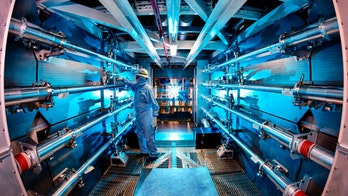
December 13, 2022 US scientists produce first successful nuclear fusion reaction resulting in net energy gain Energy officials announced Tuesday that scientists at a California laboratory had produced the first successful nuclear fusion reaction resulting in net energy gain.
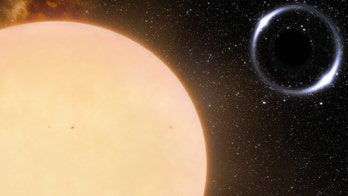
November 4, 2022 Closest known black hole to Earth discovered after years-long hunt Astronomers have reportedly discovered the closest-known black hole to Earth. Named Gaia BH1, the dormant black hole is about 10 times more massive than the sun.
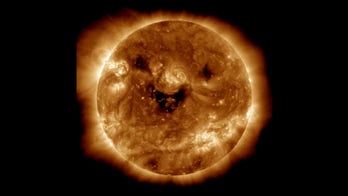
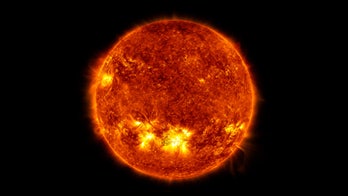
October 31, 2022 NASA captures a 'smiling' sun NASA shared a video taken by its Solar Dynamic Observatory showing dark patches on the sun, giving the illusion of a smile. (Credit: @NASASun / Twitter)
October 25, 2022 The last solar eclipse of 2022 stuns skywatchers A partial solar eclipse was visible for skywatchers across Europe, Asia and Africa. For North America, the next total solar eclipse is slated for April 8, 2024.
October 19, 2022 Skin care secrets: Dermatologist reveals best ways to keep skin looking ageless New York dermatologist Fayne Frey, M.D., shared that the best skin care routine for achieving a healthy complexion is much simpler than expected. Here are great skin care tips for a healthy life.
September 22, 2022 Get ready for the autumn equinox: How is it different from a solstice? Get your sweaters ready. The autumn equinox will mark the official end of the summer season and the start of fall on Thursday, Sept. 22, at 9:04 pm EST.
August 3, 2022 Solar eruptions, flares could impact Earth, NASA says Solar eruptions and flares could cause problems on Earth. NASA scientists have predicted that this increase in solar activity will continue through 2025.
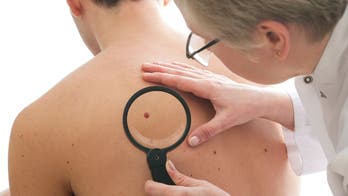
July 17, 2022 Men's skin cancer deaths are higher than women's: New analysis Men have a higher skin cancer diagnosis and death rate compared to women, according to an analysis published by Cancer Research UK. Here's how you can stay safe.
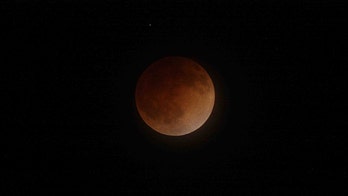
May 13, 2022 Lunar eclipse: How to spot the 'blood moon' This lunar eclipse -- the first eclipse of the year -- will take place on Sunday and Monday. A total lunar eclipse takes place approximately every 1.5 years.
May 10, 2022 'Blood moon' total lunar eclipse: What to know The first eclipse of the year is slated for this weekend. According to NASA, "blood moon" will be visible across the Americas, Europe and Africa – or anywhere the moon is visible above the horizon.